The over-ear wireless headphone category is where most people's audio journeys begin — and where the sharpest disappointments tend to happen. Spend too little and you get hollow sound, a battery that dies mid-commute, and a cable that frays within months. Spend a little more without research and you end up with features you will never use and quality you cannot hear a difference in.
The boAt Rockerz 460 positions itself as neither a throwaway purchase nor a compromise. It makes specific bets — long battery life, genuine portability, wired backup, and daily-use durability — and largely honours them. Where it cuts corners, it does so quietly. This review names both sides clearly.
At a Glance
Key specifications before you read on
Our Scores
Scores are editorial assessments based on full specification analysis and real-world use patterns at this price tier.
Design, Build, and Physical Experience
How the Rockerz 460 looks, feels, and survives daily life
A Headphone That Actually Fits Into a Bag
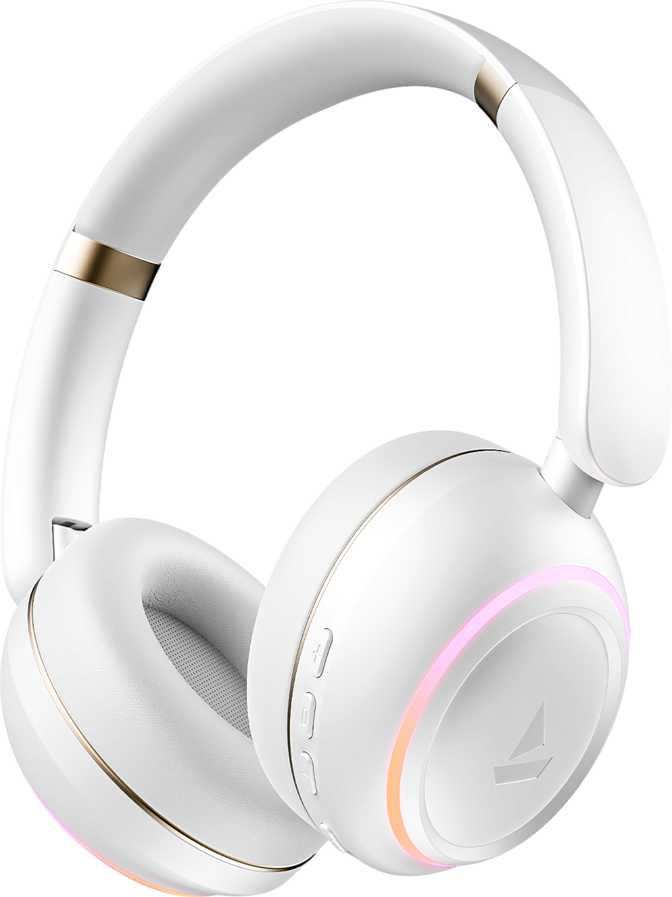
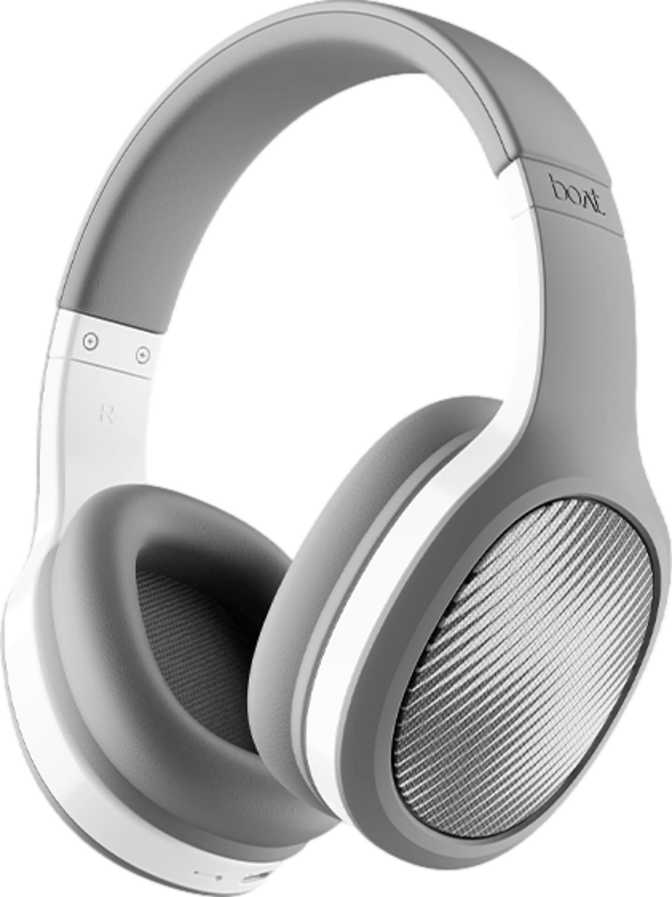
The Rockerz 460 earns its portability claim through a proper folding mechanism. The earcups rotate inward toward the headband, reducing the headphone to a compact, flat profile that fits into a jacket pocket or the main compartment of a backpack without the usual wrestling match. This is not a token fold that saves two centimetres — it is a meaningful reduction in footprint that makes daily carry practical.
No carrying case is included in the box. If you want protection from scratches or compression during transit, factor in the cost of a separate pouch before purchasing. It is a minor gap, but worth knowing before the packaging hits the bin.
The audio cable is detachable, and that detail matters more than it appears on a spec list. Cables are the most failure-prone component of any headphone. When the cable eventually wears at the plug — as they almost all do — you replace the cable for a few dollars rather than the headphone. The cable itself has a tangle-resistant design, which holds up well during the daily ritual of unpacking and repacking a bag.
Fit, Seal, and the Closed-Back Advantage
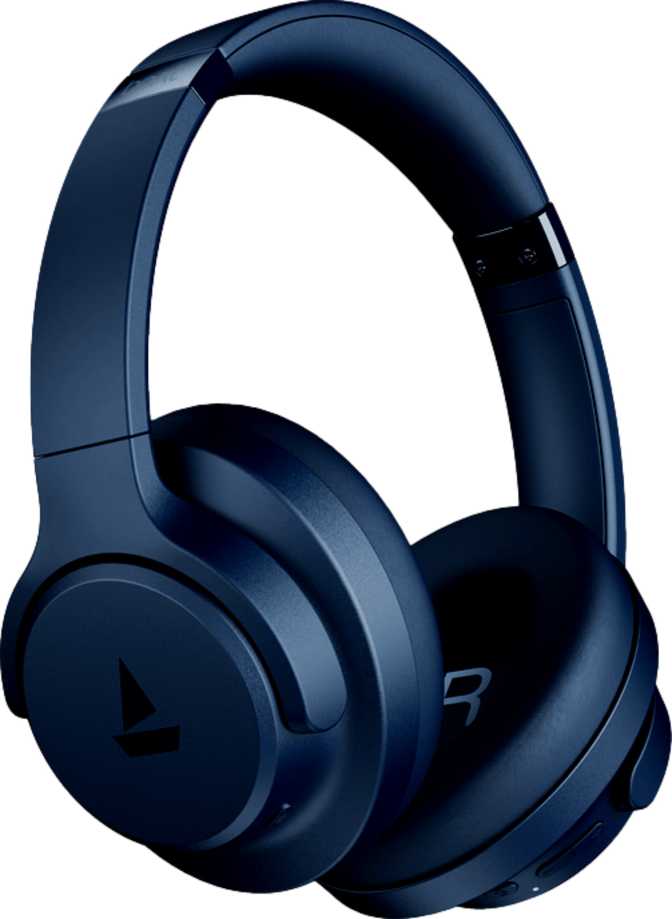
Over-ear means the earcups encircle your ears completely rather than resting on them. This delivers two direct benefits: significantly better passive isolation, and greater comfort during long sessions because there is no pressure on the ear itself. The trade-off is bulk and warmth — over-ear headphones are inherently larger and the sealed cup traps heat during extended wear or physical activity.
The closed-back construction keeps low-frequency energy contained within the cup, which typically gives these headphones a more present, physical bass response compared to vented open-back designs. Audio leakage outward is minimal, so others nearby will not hear what you are listening to — a genuine advantage on public transport and in shared workspaces.
-
Folds flat for compact storageEarcups rotate inward toward the headband
-
Detachable audio cableReplace the cable, not the whole headphone
-
Tangle-resistant cable designReady to use straight from your bag
-
Closed-back, over-ear fitPassive isolation with minimal audio leakage outward
-
USB-C chargingSame cable as modern phones and laptops
-
No carry case includedA separate protective pouch is recommended
Sound Performance: What 40mm Drivers Actually Mean
Drivers, isolation, and the real ceiling on wireless audio quality
Driver Size and Frequency Coverage
The Rockerz 460 uses 40-millimetre drivers — the standard size for full-size over-ear headphones at this tier. The significance of driver size is about air displacement: a larger driver moves more air per cycle, which generally produces a more impactful bass response and a broader sound stage compared to the tiny drivers found in earbuds.
These drivers cover the full range of human hearing — from the deep, felt-more-than-heard low end that gives bass guitars and kick drums their weight, all the way to the highest registers where cymbals, string harmonics, and vocal sibilance live. For the vast majority of music, podcasts, and video content, that full-spectrum coverage is all you need. There are no frequency gaps that would cause instruments or voices to disappear.
Passive Noise Reduction vs. Active Cancellation
The Rockerz 460 does not include active noise cancellation. ANC uses onboard microphones to sample ambient sound and generate an opposing signal that electronically cancels it — particularly effective against consistent low-frequency noise like aircraft cabin hum or air conditioning drone.
What this headphone offers instead is passive isolation: the physical barrier created by the sealed over-ear design blocks a meaningful portion of ambient sound from reaching your ears. For typical environments — office background noise, a commuter train, a café — passive isolation is practically sufficient. For genuinely loud or persistent environments like long-haul flights or industrial settings, the absence of ANC is a meaningful gap.
A Note on Magnet Type
The drivers in the Rockerz 460 do not use neodymium magnets — the standard in most consumer headphones. Neodymium is lightweight and magnetically strong, contributing to efficient, responsive driver movement. Headphones using alternative magnet materials are generally heavier per driver and may require more power for equivalent sensitivity. In a closed over-ear design this rarely becomes a dealbreaker, but it is a component choice that informed buyers should be aware of.
Sound Specifications
- Driver Size
- 40 mm (Full-size)
- Frequency Range
- Full human audible spectrum
- Noise Reduction
- Passive (closed-back seal)
- Active Noise Cancellation
- Not Available
- Spatial Audio
- Not Available
- Stereo Configuration
- Conventional Stereo
Battery Life and Charging: The Real Numbers
Thirty hours explained in the context of your actual weekly routine
Battery Endurance vs. Category Average
Most alternatives in the same approximate price bracket offer between 20 and 25 hours of wireless playback. The Rockerz 460's 30-hour mark sits genuinely above that range — a differentiator that shows up in your weekly charging frequency, not just a spec sheet comparison.
Reference scale: 40-hour maximum. Category average reflects typical competing headphones in this price bracket.
What 30 Hours Means Week to Week
At eight hours of daily listening — which most people do not sustain — that is nearly four full days between charges. For a typical listener using headphones three to five hours per day, the weekly charging cycle works out to roughly once every five to seven days. The Rockerz 460 simply does not demand your attention on the charging front.
This runtime sits meaningfully above the 20–25 hour figure common among competitors at this tier, where battery life is often the first sacrifice made to keep production costs down.
Full recovery in just under an hour and a half — enough to restore a full week of listening in less time than a lunch break, using the same USB-C cable as your phone or laptop.
Charging Summary
- USB-C charging — no proprietary cables
- Battery level indicator on the headphone itself
- Sealed rechargeable battery
- No wireless (Qi) charging — cable required
- Battery is sealed — not user-replaceable
Connectivity: An Honest Assessment
Bluetooth 5.2, wireless range, codec reality, and dual-mode flexibility
Bluetooth 5.2 in Everyday Use
The wireless connection runs on Bluetooth 5.2. In practice, this version delivers more reliable connections in environments dense with wireless signals — offices, airports, public spaces — along with lower power consumption and smoother re-pairing after the headphone has been off for a period. Compared to older Bluetooth 4.x headphones, version 5.2 is a genuine step forward in connection consistency.
The working wireless range sits at around ten metres under typical indoor conditions. For commuting or standard room use, this is entirely adequate. Stepping through a wall or into a different room may begin introducing dropouts. First-time pairing uses the standard Bluetooth settings menu on any device — no NFC tap-to-pair and no Google Fast Pair integration, so pairing is a manual process.
Codec Support: The Critical Wireless Audio Limitation
All Bluetooth headphones transmit audio using a codec — a method of compressing audio for wireless transmission. Premium codecs like aptX, AAC, and LDAC apply less compression, preserving more of the original audio's detail and dynamics in the wireless signal. The Rockerz 460 supports none of the premium codecs. Wireless audio is transmitted using SBC — the baseline codec present in every Bluetooth device by default.
Wired Backup: Why It Matters
The detachable cable allows connection to any device with a 3.5mm headphone jack. Use wireless for day-to-day convenience; use wired when audio quality matters most, when the battery runs low, or when connecting to devices without Bluetooth — older televisions, desktop setups, in-flight entertainment systems. This dual capability is not universal at this price point.
Bluetooth Codec Support
| Codec | Status | Audio Tier |
|---|---|---|
| SBC | Supported | Baseline — universal |
| AAC | No | Apple-optimised |
| aptX | No | Android-optimised |
| aptX HD | No | High-definition |
| aptX Adaptive | No | Adaptive bitrate |
| LDAC | No | Sony hi-res |
| BT LE Audio | No | Next-generation |
Up to 10 metres under typical indoor conditions. Walls and RF-dense environments reduce practical range.
3.5mm detachable cable for any standard audio output — no Bluetooth or battery required.
Microphone and Call Functionality
What to expect when using the Rockerz 460 as a headset
The Rockerz 460 includes a built-in microphone and functions as a full headset — voice calls, video conferencing, and audio communication are all supported. The controls are mounted on the earcup itself rather than on the cable, keeping the cord clean and uncluttered and reducing the chance of an inline remote snagging on clothing.
There is no dedicated mute button on the headphone. Muting yourself during a call requires using the mute function in your calling application or on the phone itself. For personal calls and casual video conferencing, this is a minor inconvenience. For remote workers who are frequently on back-to-back calls and mute often, the absence of a physical mute button is a genuine friction point worth weighing before purchasing.
There is no in-line control panel on the cable — all controls sit on the earcup. The microphone is integrated rather than boom-positioned, so it works well for standard personal calls and conferencing but will not compete with a dedicated USB headset for professional-grade call clarity.
Headset Feature Check
- Built-in microphone for calls
- Earcup-mounted control panel
- No physical mute button
- No in-line cable control panel
- No ambient / transparency mode
- No in-ear detection (auto-pause)
Who the boAt Rockerz 460 Is Built For
Match your needs to the headphone before you commit
Strong Fit
- Daily commuters and students who need reliable wireless playback and a folding design for transit, without having to charge every single night.
- Work-from-home users who need a capable headset for calls and want background music throughout the day without an interruption for charging.
- Budget-conscious buyers who want a genuine full-size over-ear experience with passive isolation rather than settling for smaller alternatives at a similar price.
- Flexible-use listeners who need both wireless freedom and a wired fallback for devices without Bluetooth or for serious listening sessions.
Consider Alternatives
- Audiophiles and critical listeners who stream lossless audio — the SBC-only wireless connection is a ceiling this headphone cannot break through, regardless of driver quality.
- Frequent flyers and noisy-environment workers who need active noise cancellation as a daily tool — passive isolation alone will not handle persistent heavy background noise.
- Mobile gamers and video professionals who require precise audio-to-visual sync — without a low-latency codec, wireless audio may drift noticeably from on-screen action.
- Fitness users — no sweat or water resistance is present. Intense exercise sessions, particularly in heat or humidity, are outside this headphone's design intent.
How It Sits Against the Competition
Where the Rockerz 460 leads, where it falls behind, and what a step up buys you
At the segment it occupies, the Rockerz 460 competes primarily on battery endurance and practical flexibility. Most alternatives in the same approximate price bracket offer between 20 and 25 hours of wireless playback, making the 30-hour mark a genuine differentiator. The combination of USB-C charging, a proper folding design, and a detachable cable is difficult to find assembled in a single headphone at this price point — competitors typically excel on one or two of these and compromise on the rest.
Where competing headphones may pull ahead is codec support. Several options at a slightly higher price include AAC — which noticeably improves wireless audio quality on Apple devices — or aptX for Android users on compatible hardware. If wireless audio fidelity is your primary concern, spending incrementally more to access a headphone with codec support is a reasonable move. The ANC divide is another consideration: entry-level active cancellation has appeared in some budget-adjacent headphones, though its effectiveness at that tier varies considerably.
| Feature | boAt Rockerz 460 | Typical Budget | Mid-Range Step-Up |
|---|---|---|---|
| Wireless Battery | 30 hours | 20–25 hours | 20–30 hours |
| Charging Port | USB-C | Often Micro-USB | USB-C |
| Active Noise Cancellation | No | No | Basic (some models) |
| Premium Codec | SBC only | SBC only | AAC or aptX |
| Foldable Design | Varies | Typically yes | |
| Detachable Cable | Usually yes | ||
| Wired Backup Option | Sometimes |
General category observations based on this review's analysis. Individual model specifications vary.
Strengths and Weaknesses: The Balanced View
The honest account — for buyers who want the full picture before committing
Where the Rockerz 460 Shines
The Rockerz 460's most compelling characteristic is its battery-to-simplicity ratio. It lasts long, charges quickly via a universal cable, and does so without loading you with complex software, companion apps, or firmware dependencies. There is nothing to configure — what you see is what you get, and for many users that is a relief rather than a limitation.
The foldable form factor is executed well — not just as a nominal checkbox but as a practical design decision for how real people carry things. The detachable cable reflects actual use patterns: a cable that can be replaced independently is more practically durable than one that takes the headphone with it when it fails.
The USB-C charging port and the onboard battery indicator are small, sensible decisions that prevent common frustrations. Collectively, these details make the Rockerz 460 a headphone that disappears into daily life rather than becoming a management task.
Where It Falls Short
The SBC-only wireless codec is the most significant technical limitation and should not be minimised. The wireless experience is bottlenecked at the transmission layer regardless of driver quality. The wired connection bypasses this entirely — but that requires using a cable, which partially undermines the wireless convenience most buyers are seeking.
The absence of ANC matters in specific contexts, the 10-metre Bluetooth range will not satisfy those who want to move freely between rooms, and the missing mute button is a daily friction point for remote workers on frequent calls. The lack of an included carry case is a small but genuine omission for a headphone positioned as portable.
None of these weaknesses are hidden — they are the trade-offs a buyer at this price tier should evaluate honestly. This review states them plainly so they are visible before, not after, the decision.
Common Buyer Questions
The questions real people search for before purchasing this headphone
The Final Verdict
The boAt Rockerz 460 is a competent, honest product. It delivers on the metrics that matter most for its target audience: exceptional battery endurance, quick USB-C charging, physical flexibility through a proper folding design, and the practical insurance of a wired fallback option.
If you are a daily listener who wants a wireless headphone that will not need charging every day, charges quickly via a universal cable, and can fall back to wired when needed — this is a rational, well-rounded choice. If you are an audio purist seeking the best wireless sound or someone who genuinely needs active noise cancellation, look up the price ladder. The Rockerz 460 does not compete in that space and does not pretend to. Purchase it knowing what it is: a practical, flexible everyday headphone with exceptional battery stamina.