boAt Rockerz 512 ANC Review: Battery Champion With Real Trade-Offs
HeadphonesBudget ANC headphones make the same promise everywhere: premium-brand quiet at a fraction of the price. The boAt Rockerz 512 ANC does not follow that script. It stakes its claim on battery endurance that competes with headphones costing three times as much, while delivering active noise cancellation, sweat resistance, and a complete travel package in one box. Whether those priorities align with yours is the whole question — and this review answers it without spin.
Strong Daily Driver
Best for commuters, gym users, and budget travelers
Category Scores
Key Specifications
Design, Build Quality, and Day-to-Day Wearability
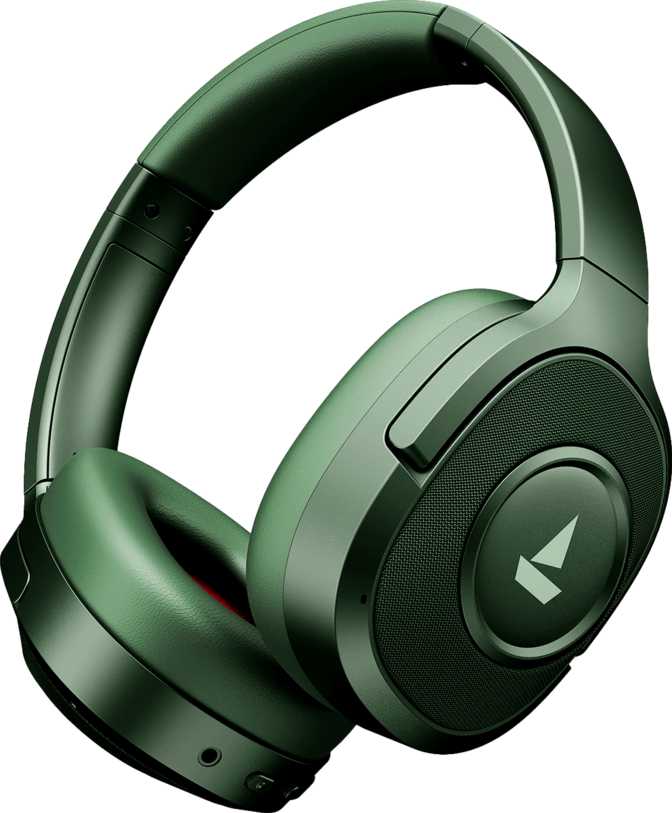
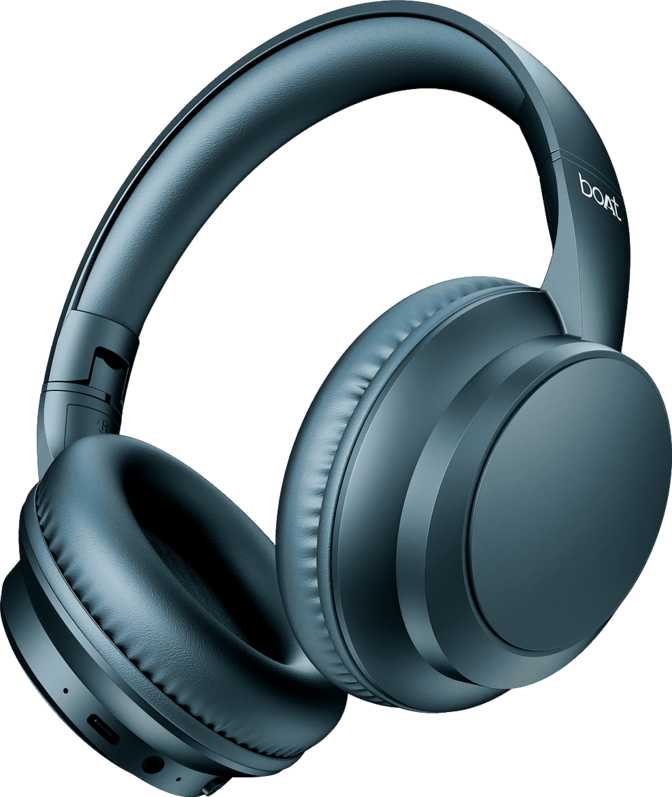
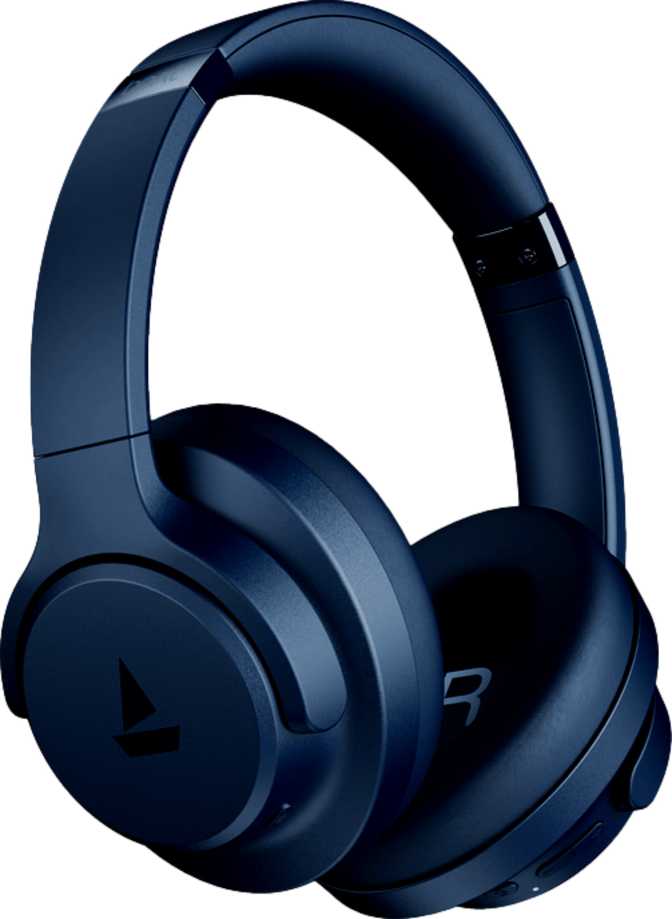
The Rockerz 512 ANC follows a conventional over-ear silhouette — full ear cups that surround rather than press on the ear. That distinction matters more than most people realize. Over-ear headphones create a passive sound seal around the ear, which means the ANC system has less environmental noise to contend with before it even switches on. The closed-back construction reinforces that isolation further, making this a sealed design well-suited to noisy environments: public transit, open-plan offices, and gym floors.
The headphones fold flat for storage, and boAt includes a travel bag in the box — a detail that genuinely elevates the ownership experience at this price point. A foldable headphone without a carrying case is a mild daily frustration; its inclusion here shows that real thought went into how this product actually gets used beyond the spec sheet.
On the durability side, the IPX4 sweat-resistance rating covers splashing from any direction — gym sessions, light rain, and accidental liquid contact are all within tolerance. This is not waterproofing for submersion, but it is practical protection for active daily use, and it is protection that several notable competitors in this price range lack entirely.
All playback controls and the ANC toggle sit on the ear cup with no in-line cable alternative, which suits a wireless design cleanly. One notable omission: there is no ear-detection sensor, meaning there is no automatic pause when you remove the headphones. Music continues playing when you set them down or pull them around your neck mid-conversation. Users who frequently handle brief interruptions will notice this friction every time it occurs.
Sound Quality: What the Specs Reveal and What They Don't
Most headphones in this category — and well above it — use neodymium magnets in their driver assemblies. Neodymium is a rare-earth element that produces an exceptionally strong magnetic field relative to its size, which translates to better driver efficiency, lighter hardware, and typically stronger bass response per unit of volume. The Rockerz 512 ANC uses a different magnet type, most likely ferrite.
Ferrite magnets are larger, heavier, and require more power to achieve the same output as neodymium alternatives of similar size. In practical terms, expect these headphones to feel slightly heavier than neodymium-equipped competitors and the drivers to work harder for equivalent loudness levels. This is not a disqualifying flaw — ferrite drivers can produce full, enjoyable sound — but it represents a genuine engineering trade-off that informed buyers should understand before purchasing.
The 40mm driver size is standard for over-ear headphones and a sensible choice: large enough to produce meaningful low-frequency response, compact enough to keep the cups from becoming bulky. The frequency coverage spans the complete range of human hearing from the deepest bass to the upper limit of what the ear can detect. On paper, nothing is cut off at either extreme.
What specifications alone cannot tell you is how evenly those frequencies are represented — that depends on tuning decisions made in hardware and software. What the connectivity data does make clear is that audio is transmitted via SBC — the baseline Bluetooth codec. However well the physical drivers perform, the signal reaching them during wireless playback is constrained by transmission quality before it ever arrives.
The Key Technical Trade-off
Without neodymium drivers or premium audio codecs, the Rockerz 512 ANC prioritizes efficiency and endurance over raw acoustic performance. For casual music, podcasts, and calls — which represent most real-world usage — this is entirely acceptable. For critical listening or lossless streaming, the budget origins are unmistakable.
Active Noise Cancellation and the Ambient Sound Mode
The presence of ANC on a headphone at this price point is the headline feature, and a legitimate one. In plain terms: microphones on the outside of the ear cups continuously capture surrounding noise and generate a precisely opposing sound wave that cancels it before it reaches your ears. The result is a significant reduction in low-frequency, continuous noise — engine rumble on planes, HVAC hum in office buildings, the vibration of a train carriage.
Where ANC provides less benefit is against sudden, sharp sounds — a voice calling your name, a transit announcement, a vehicle horn. This limitation is consistent across all ANC headphones at any price and is not specific to this model. The closed-back passive isolation actually helps in these cases, physically blocking higher-frequency sound before the active system even needs to engage. The result is a two-layer defense against environmental noise that performs better together than either mechanism alone.
The ambient sound mode — sometimes marketed as transparency mode on competing products — intentionally pipes external audio through the headphones, allowing you to catch an announcement, hold a brief conversation, or maintain pedestrian awareness outdoors without removing the headphones entirely. Having both ANC and ambient mode in a single budget product is not a given. Their combination covers the full practical range of commuter listening behavior, which is a genuine everyday convenience.
Battery Life: The Number That Makes You Look Twice
Eighty hours. That claimed figure demands context, because it does not just compete with other budget headphones — it beats the high end of what is commonly considered excellent endurance across all price tiers. For reference: Sony's mid-range ANC headphones typically deliver 35–50 hours per charge. Most budget over-ear ANC competitors land between 20 and 40 hours. Eighty hours approaches double the high end of that entire range.
Two things are important to understand about manufacturer battery claims. First, they are measured under controlled, optimized conditions — steady volume, stable connection, and frequently with ANC turned off. Real-world use with ANC running continuously will produce a lower figure. That caveat applies to every ANC headphone on the market, not specifically this one. Even if the actual figure with ANC active is half the claimed maximum, the Rockerz 512 ANC still ranks among the most enduring options in its category.
Second, the battery achieving this endurance is relatively modest in capacity by headphone standards. That the headphone extracts such range from a smaller reservoir points to meaningful power efficiency — likely aided by the improvements Bluetooth 5.4 brings over earlier versions in connection overhead and processing load.
Charging uses USB-C, which is the right call. The days of carrying a separate micro-USB cable for headphones should be firmly behind us. A built-in battery level indicator lets you check remaining charge without reaching for your phone, which is a small but genuinely daily-use convenience. Wireless charging is not present — expected and acceptable at this price tier.
Bluetooth 5.4: The Newest Standard With Codec Compromises
The Rockerz 512 ANC ships with Bluetooth 5.4 — the most current version of the specification available. Most over-ear headphones, including products priced significantly higher, use Bluetooth 5.2 or 5.3. The newer version delivers genuine improvements in connection stability, energy efficiency, and latency management. On this front, the Rockerz 512 ANC is ahead of direct competition.
Here is where the picture becomes complicated for audio enthusiasts: despite carrying the most modern Bluetooth version, this headphone supports none of the premium audio transmission codecs. No aptX, no aptX HD, no aptX Adaptive, no LDAC, no AAC. Audio defaults entirely to SBC — the baseline codec that has existed since the early days of wireless audio. Most listeners cannot reliably distinguish it from premium codecs during casual listening, but it is the floor, not the ceiling of what wireless audio can deliver.
For subscribers to lossless streaming services, the lack of a premium codec creates a transmission bottleneck that limits audio quality before it ever reaches the drivers — a somewhat paradoxical constraint given the otherwise forward-looking Bluetooth implementation. The adoption of Bluetooth 5.4 without enabling any of its advanced audio pathways suggests the newer standard was selected for its efficiency benefits, not its audio fidelity potential.
The stated audio latency is approximately 40 milliseconds. For music, the brain does not register this as perceptible drift. For video content, sensitive ears may occasionally detect subtle lip-sync awareness. For gaming, where audio cues tie to reaction timing, 40ms without a low-latency codec is a meaningful handicap. This headphone was not designed for gaming.
The Bluetooth range reaches approximately 10 meters under optimal, line-of-sight conditions. In real environments — walls, furniture, competing wireless signals — reliable range realistically sits closer to 6–7 meters. Many competing headphones claim ranges three times greater. The Rockerz 512 ANC is designed for close-proximity use, not for untethered movement around a home or office.
Codec Support Overview
| Audio Codec | Supported | What It Means in Practice |
|---|---|---|
| SBC | Included | Universal compatibility; works with all devices but represents baseline quality |
| AAC | Not Supported | iPhone and iPad users cannot access the higher-quality transmission Apple devices provide |
| aptX / aptX HD | Not Supported | Android audiophiles lose access to improved wireless fidelity and reduced audio artifacts |
| LDAC | Not Supported | Lossless streaming quality is bottlenecked at transmission, not at the source |
| Bluetooth LE Audio | Not Supported | Next-generation audio features remain unavailable despite the BT 5.4 hardware |
Microphone Performance: Practical for Calls, Not Content Creation
The built-in microphone includes a noise-canceling system on the pickup end — a separate mechanism from the ANC that handles what you hear. This microphone-side processing actively suppresses background noise before transmitting your voice to the other end of a call. For commute calls, video conferences, and daily communication, this is a meaningful quality-of-life feature that makes the Rockerz 512 ANC a functional headset, not merely a listening device.
It will not replace a dedicated USB microphone for podcasting or professional audio capture. The microphone is optimized for voice intelligibility in everyday communication settings — the kind of call quality that makes conversations clear and natural on both ends. For that purpose, in typical call environments, it should perform competently.
Who Should Buy the Rockerz 512 ANC — And Who Should Not
The right headphone is always relative to what you need it to do. Here is an honest breakdown based on the full feature and specification picture.
A Strong Match If You...
- Commute regularly and want noise cancellation without spending on a premium brand
- Work out regularly and need sweat-resistant audio that handles gym conditions reliably
- Travel frequently and want all-day listening without managing a charging cable every night
- Make regular calls and need a microphone that handles background noise competently
- Pack carry-on only and want a foldable headphone that comes with its own protective case
Look Elsewhere If You...
- Prioritize audio fidelity and use lossless streaming — the codec constraint limits your experience regardless of source quality
- Play games or need any activity where tight audio-to-action timing is important
- Want to move freely around your home while listening — the limited Bluetooth range restricts room-to-room movement
- Rely on automatic pause when removing headphones mid-conversation — there is no ear-detection sensor
- Own Apple devices and need seamless multi-device switching — without AAC or fast pairing, the Apple experience is less fluid
How the Rockerz 512 ANC Compares to the Competition
Measured against logical alternatives at a similar price tier, the boAt offers trade-offs that clearly favor endurance and durability over audio fidelity.
| Feature | boAt Rockerz 512 ANC | JBL Tune 770NC | Soundcore Q45 | EarFun Wave Pro |
|---|---|---|---|---|
| Battery Life | ~80 hours | ~70 hours | ~50 hours | ~80 hours |
| Bluetooth Version | BT 5.4 | BT 5.3 | BT 5.3 | BT 5.3 |
| Active Noise Cancellation | Yes | Yes | Yes | Yes |
| Ambient Sound Mode | Yes | Yes | Yes | Yes |
| Premium Codec Support | SBC Only | AAC | LDAC, AAC | LDAC, aptX Adaptive |
| Ear Detection / Auto-Pause | No | Yes | No | Yes |
| Wireless Charging | No | No | No | No |
| IPX Water Resistance | IPX4 | None | None | None |
| Travel Case Included | Yes | No | No | Yes |
Honest Strengths and Real Limitations
Where It Delivers
The Rockerz 512 ANC excels at what commuters and gym-goers care about most: keeping music playing for days between charges, blocking environmental noise without demanding a premium price, and surviving sweat without hesitation.
The foldable design paired with an included travel case shows genuine product team awareness of how this headphone will actually be used. Many competitors at this price level ship without any case, which shows in the scratches and cosmetic wear that accumulate in a bag. That boAt addresses this out of the box is a meaningful everyday advantage.
The combination of active noise cancellation and ambient mode in a single budget product is not a given. Having both — the ability to shut out the world when you need concentration and to let it back in when you need awareness — covers the full practical range of daily commuter listening in one device.
Where It Shows Its Price
The most transparent limitation lies in the audio transmission layer. Defaulting to SBC at a time when AAC is effectively expected on wireless headphones — and LDAC is increasingly common at this tier — caps the sound ceiling regardless of driver quality. Adopting Bluetooth 5.4 without enabling its advanced audio pathways confirms the standard was chosen for efficiency, not fidelity.
The 10-meter Bluetooth ceiling is genuinely restrictive for users who keep their phone in one room and move around. It eliminates the headphone from consideration for any use case that involves meaningful distance from the source device.
The absence of ear detection feels less like a deliberate product decision and more like a cost omission. Auto-pause is inexpensive to implement and creates meaningfully better daily usability — every user who takes headphones off mid-conversation will notice its absence within the first few days of ownership.
Common Questions Buyers Ask Before Purchasing
These are the questions real buyers search for — answered directly and without hedging.
Final Verdict
Is the boAt Rockerz 512 ANC Worth Buying?
The boAt Rockerz 512 ANC is not trying to be the best-sounding headphone at its price. It is trying to be the most reliable daily companion — the pair you grab without checking the battery level, that survives workouts, folds away without drama, and keeps environmental noise at bay on a budget.
On those terms, it largely delivers. The battery endurance is exceptional and class-leading. The sweat resistance is genuine and surpasses most direct competitors. The ANC and ambient mode combination is competent for its price tier. USB-C charging and an included travel case round out a package that has been thought through for real-world use, not just for the spec sheet.
The trade-off is real and worth stating plainly: audio enthusiasts who stream lossless music, gamers who need tight latency, or users who rely on Bluetooth range beyond a single room will find the limitations more than minor inconveniences. These are not unusual edge cases — they represent common usage patterns for a significant share of headphone buyers.
Buy It
Your priority is all-day battery endurance, ANC for commuting or the gym, genuine sweat resistance, and a complete travel package at a price that does not demand a premium.
Skip It
Codec quality, ear detection, Bluetooth range, or Apple ecosystem fluency matter more to you than endurance — competing options deliver some of those features at a similar price without fully compromising battery life.