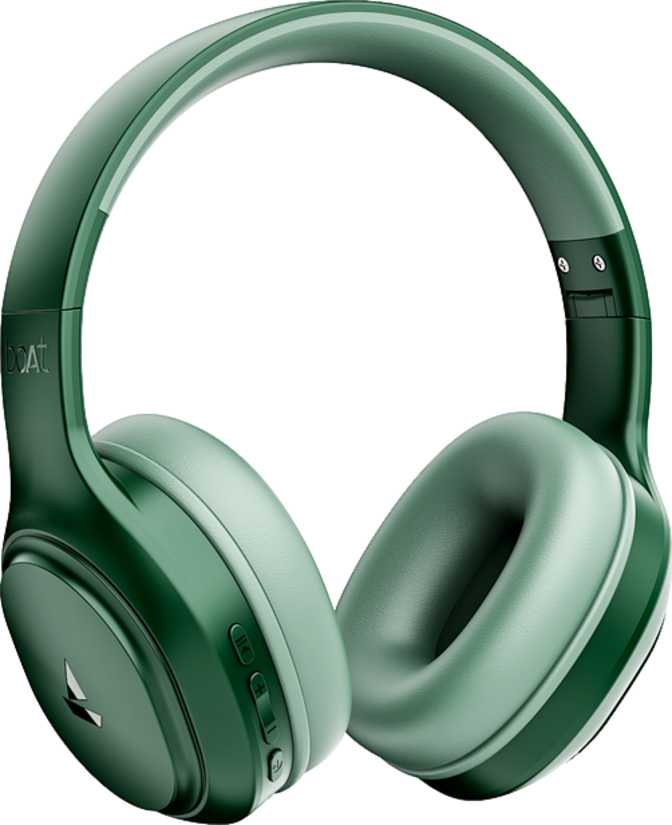
Budget over-ear headphones have an image problem. Most people assume that choosing one means accepting mediocrity across the board — tinny audio, a battery that barely lasts a workday, an outdated wireless chip, and a cable that fuses into a permanent knot by week two. The boAt Rockerz 430 does not fix every problem in this category, but it attacks the right ones with surprising conviction. It carries a battery capable of running for the better part of a week on a single charge, a Bluetooth version that matches current flagship devices, and a construction detail — a properly detachable, tangle-free cable — that most rivals in this price bracket skip entirely. Whether those advantages outweigh the trade-offs depends entirely on what you are actually asking a pair of headphones to do.
Design and Build: Full-Size Fit With One Notable Compromise
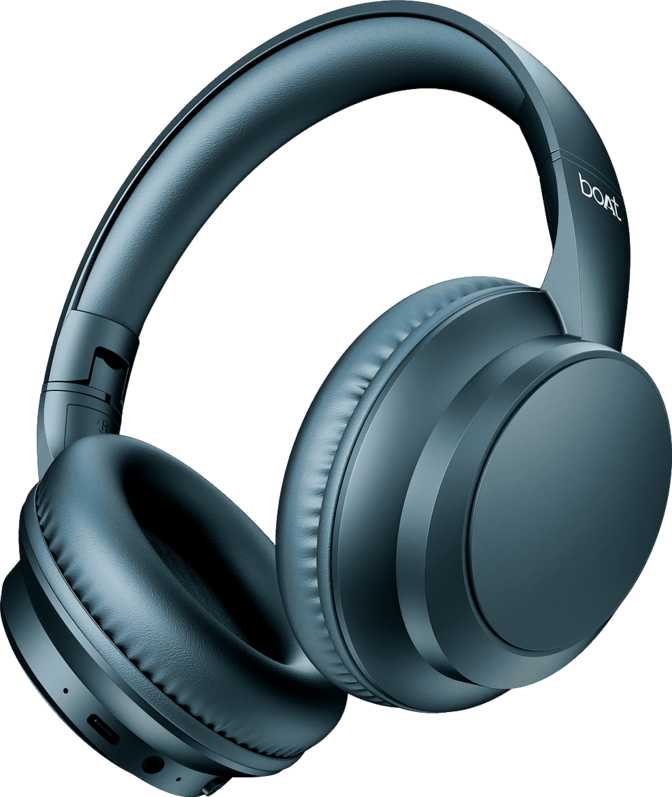
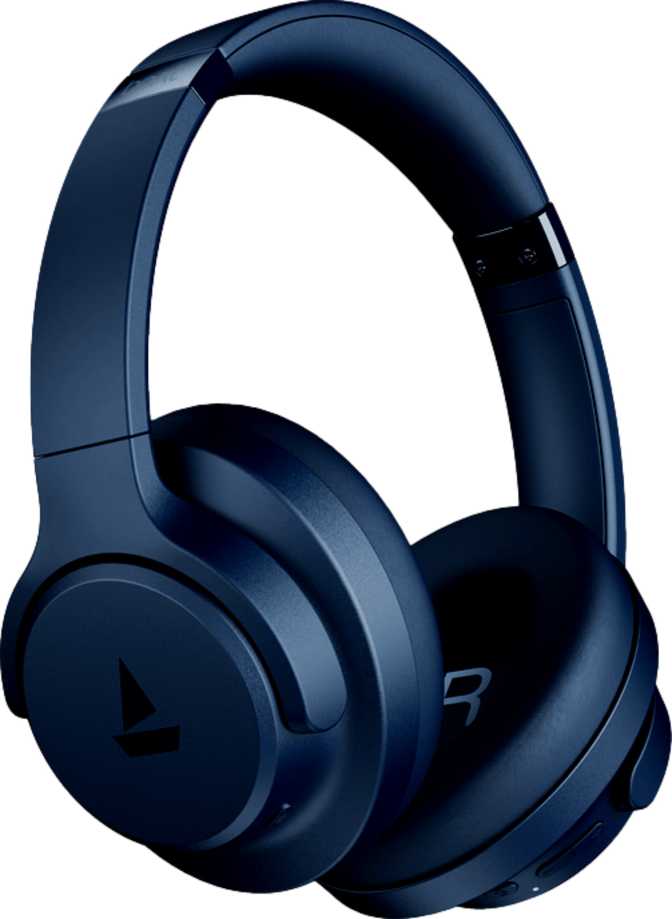
The Rockerz 430 is a closed-back, over-ear headphone, meaning the ear cups wrap fully around the ear rather than resting on top of it. That physical difference matters more than buyers often expect. When the ear cup forms a complete seal around the ear, the weight and clamping force of the headphone distribute across the cartilage rim rather than pressing directly onto it. The practical result is that four-hour, six-hour, even eight-hour listening sessions are far more sustainable than they would be with an on-ear design. Anyone who has abandoned a pair of cheaper on-ear headphones midway through a long workday because their ears started aching will understand immediately why this matters.
The closed-back design also serves a secondary purpose: it physically traps sound in both directions, reducing how much noise bleeds out to those around you and how much ambient noise from your environment reaches your ears.
What Works Well
-
Over-ear comfort for long sessions
Ear cups encircle the ear entirely, distributing pressure across the cartilage rim rather than pressing against it.
-
Detachable, tangle-free cable
Replace only the cable if it fails. Switch freely between wired and wireless without carrying extras.
-
Stereo closed-back design
Keeps your audio in and ambient noise out without requiring active electronics to do so.
Know Before You Buy
-
Does not fold flat
No collapsible hinge means these stay full-size — not suited for small bags or jacket pockets.
-
No travel case included
If you plan to carry these regularly, budget separately for a protective case.
-
Conventional magnet system
The driver does not use neodymium magnets — a cost trade-off that can affect driver efficiency.
Bottom line on build: These headphones are built for sustained use at a desk, on a commute, or around the neck between listening sessions — not for compressing into a small space. If they will live on a desk or travel inside a larger bag, the non-folding form factor is entirely irrelevant. If you need something pocketable, look elsewhere.
How the Rockerz 430 Actually Sounds
Passive Noise Isolation
This is the most important distinction to understand before buying. Active noise cancellation — ANC — uses onboard microphones to sample incoming sound and generates an opposing audio signal that cancels it out electronically. It is especially effective against low-frequency, steady-state noise: airplane engines, air conditioning hum, road noise. The Rockerz 430 does not have ANC.
What it has instead is passive noise isolation: the physical seal of the closed-back ear cup against your head simply blocks sound the way earmuffs do. This works well for moderate, consistent background noise — the hum of an air conditioner, ambient office noise, a washing machine in another room.
Against dynamic, high-intensity noise — loud conversations, noisy flights, heavy traffic — you will hear significantly more than ANC headphones would allow through.
Wireless Audio Quality
The headphone delivers stereo audio through full-size drivers in each ear cup. For casual music listening, podcasts, audiobooks, and video calls, the sound quality is satisfying. The drivers handle a reasonable frequency range, and stereo separation is clearly defined.
The constraint is the wireless audio codec. The Rockerz 430 transmits audio over SBC — the baseline Bluetooth audio standard. It does not support AAC, aptX, aptX HD, or LDAC. SBC delivers pleasant, listenable audio, but a trained ear will notice a ceiling on fine detail compared to higher codecs.
Plugging in the detachable cable bypasses wireless compression entirely, delivering uncompressed audio for more critical listening sessions.
On spatial audio: Not supported, which only affects content specifically encoded for 3D sound processing. For standard stereo music and podcasts — the vast majority of use cases — this has no practical impact whatsoever.
Battery Life: The Strongest Reason to Consider This Headphone
Hours
on a single charge
If there is one aspect that defines the Rockerz 430's competitive position, it is battery endurance. To translate forty hours into real daily life — at five to six hours of listening on a heavy day, this headphone needs charging roughly once a week. For lighter users, the interval between charges could stretch closer to ten days.
This changes the ownership experience in a way that the number alone does not fully capture. Headphones with a twenty-hour battery become a source of low-level anxiety: you need to remember to charge them every two to three days, and if you forget, you are scrambling for a cable mid-commute. The Rockerz 430 essentially removes battery anxiety from the equation for most users.
2-Hour Full Charge
A quick top-up before leaving covers most realistic daily scenarios.
USB-C Port
Same cable as your phone and laptop. No proprietary charger required.
Battery Indicator
Check remaining charge at a glance — no guessing when you will run out.
Weekly Charging
At 5–6 hours daily, one charge per week is all most users will need.
Wireless Performance: Current-Generation Where It Counts
The Rockerz 430 uses Bluetooth 5.4, one of the most recent versions of the standard available in consumer headphones at any price. This is not a specification to skip past — it has three practical consequences for daily use.
Connection Stability
Bluetooth 5.4 handles radio frequency interference better than older versions. In dense offices, apartment buildings, or crowded commuter environments where multiple wireless signals compete, the connection is more likely to stay clean and dropout-free.
Power Efficiency
Newer Bluetooth generations progressively reduce how much power the wireless radio draws per hour. This efficiency contributes to the overall battery endurance figure and means the chip does less work to maintain a stable link throughout the day.
Future Longevity
A current-generation chip maintains compatibility with a wider range of devices as operating systems and hardware continue to evolve. This headphone is less likely to encounter pairing friction or compatibility issues over its lifespan.
Wireless Range
The connection covers approximately a standard room — sufficient for moving between rooms in a home or working at a distance from a laptop. Not intended to bridge an entire floor of a large building, which is consistent with the practical range of virtually every Bluetooth headphone in this category.
Audio Latency
The wireless signal introduces approximately forty milliseconds of delay. For music and podcasts, this is irrelevant. For video streaming, most platforms compensate automatically through sync correction. For real-time competitive gaming, this latency is perceptible — a dedicated gaming headset will serve that use case better.
Calls and the Microphone
A single built-in microphone with noise reduction processing handles voice input. For the scenarios most buyers use a microphone in a headphone — video calls from home, phone conversations, voice messages — a single processed microphone is entirely sufficient. The noise reduction helps isolate your voice from background noise in typical home or office environments.
Physical controls for playback, volume, and call management sit on the earcup. This keeps interaction direct and tactile, with no in-line remote to locate on the cable. The controls work in both wired and wireless modes, and the headphone functions as a full headset for simultaneous listening and speaking.
No on-headphone mute button
Muting during a call requires reaching for the device you are calling from — a phone screen, laptop, or conferencing interface. For users who mute themselves frequently during moderated meetings, this will be a recurring friction point.
Microphone Summary
- Microphone count 1 built-in
- Noise reduction Yes — processed
- Full headset mode Yes
- Mute button on device No
- In-line cable controls No
- Ambient sound mode No
Who Should Buy the Rockerz 430 — and Who Should Not
This Is a Strong Choice If:
-
Students and remote workers
Long hours in headphones every day benefit most from a battery that charges weekly rather than every other day.
-
Commuters on moderate-noise transit
Passive isolation handles buses, light rail, and general urban environments without requiring ANC electronics.
-
Podcast, music, and call listeners
No demanding gaming or audiophile requirements — just a reliable daily driver for the most common listening scenarios.
-
Users who switch between devices
The detachable cable enables wired fallback for any device — airplane ports, older laptops, dead-battery situations.
-
Budget buyers who want modern hardware
Bluetooth 5.4 and USB-C are current-generation specs that most budget rivals have not yet adopted.
Look Elsewhere If:
-
Frequent flyers and loud-environment users
Aircraft cabin noise and heavy machinery require active noise cancellation — passive isolation will not be enough.
-
Audio enthusiasts and discerning listeners
No aptX, AAC, or LDAC support means wireless audio has a ceiling. Wired fallback helps, but it is a workaround.
-
Daily bag-packers who need compact headphones
No fold, no included case. Traveling with these requires deliberate packing space.
-
Competitive gamers
Wireless latency is too high for real-time gaming where audio timing is performance-relevant.
-
Heavy meeting participants
No on-device mute button means reaching for your laptop or phone every time you need to mute mid-call.
Competitive Positioning
How the Rockerz 430 measures up against typical competition at this price tier.
| Feature | boAt Rockerz 430 | Typical Budget Rival |
|---|---|---|
| Battery Endurance | ~40 hours | 20–30 hours |
| Bluetooth Generation | 5.4 (current) | 5.0 – 5.2 (common) |
| Charging Port | USB-C (universal) | Micro-USB (still common) |
| Cable Design | Detachable, tangle-free | Often fixed, varies |
| Active Noise Cancellation | Rare at this price; varies | |
| Foldable Design | ||
| Higher Codecs (AAC / aptX) | Occasionally on select models | |
| Wired Fallback | Varies widely |
The Rockerz 430 leads on battery and wireless generation — two advantages that matter for daily usability and long-term ownership. It trails on portability and codec flexibility, where some alternatives offer at least AAC for Apple users. Buyers who can accept the non-folding form factor gain significantly more battery endurance in return.
Honest Assessment: Strengths and Where It Falls Short
The battery on the Rockerz 430 is genuinely exceptional for this price range — not a marketing exaggeration to be discounted, but a real-world advantage that changes how often you interact with a charger. Pairing that with USB-C and a two-hour charge window makes this one of the least frustrating headphones in the segment to live with day to day.
Bluetooth 5.4 is a forward-looking choice that peers at this price rarely match. While the difference between an older and a newer Bluetooth generation is not dramatic in optimal conditions, it handles interference meaningfully better in congested wireless environments and positions the headphone for stronger compatibility as devices and operating systems continue to update.
The dual wired/wireless capability with a detachable, tangle-free cable is underrated. It means the headphone survives a dead battery, works on airplane seat-back screens, and offers a genuine audio quality improvement when connected directly — bypassing the wireless codec ceiling entirely.
Where the Rockerz 430 Makes Concessions
There is no active noise cancellation. For buyers who have experienced good ANC, the difference in noisy environments is hard to ignore. The SBC-only wireless transmission is appropriate for the price but sets a ceiling on audio detail that higher-codec headphones clear. The non-folding form factor is the most significant physical limitation — folding alternatives exist at comparable prices and pack considerably smaller.
The absence of a mute button, ambient sound mode, in-ear detection, and auto-pause are all features that appear on more expensive headphones. Daily users — particularly those on frequent calls — may find themselves wishing for at least the mute function.
One detail worth knowing: the driver uses a conventional magnet system rather than the high-strength neodymium configuration common in most headphone drivers. This is a cost reduction with potential implications for driver efficiency and overall headphone weight, though the real-world audible impact depends on execution rather than component selection alone. The headphone comes with a one-year manufacturer warranty covering production defects.
Questions Real Buyers Ask Before Purchasing
Final Verdict
The boAt Rockerz 430: Buy or Skip?
The boAt Rockerz 430 is a focused, sensibly designed budget headphone that wins where it chooses to compete: battery life, wireless chip generation, and the quiet quality-of-life advantage of a proper detachable cable. For its intended audience — students, remote workers, and casual listeners — it delivers meaningfully more than its price typically suggests.
Reasons to Buy
- Battery endurance that charges weekly, not daily
- Bluetooth 5.4 — ahead of most budget competition
- USB-C charging with just two hours to full
- Detachable cable for wired fallback and longevity
- Over-ear comfort suits extended listening sessions
Reasons to Skip
- No active noise cancellation for loud environments
- SBC-only wireless — no AAC, aptX, or LDAC
- Does not fold — not suited for small-bag travel
- Wireless latency too high for competitive gaming
- No mute button — inconvenient for heavy meeting use
Our recommendation: Buy the Rockerz 430 if battery endurance, modern wireless reliability, and wired/wireless flexibility define your priorities. Skip it if ANC, foldable portability, or high-fidelity codec support are non-negotiable — those needs require stepping up to a different price tier. Within its intended space, few headphones at this price offer as complete a package for the everyday listener.