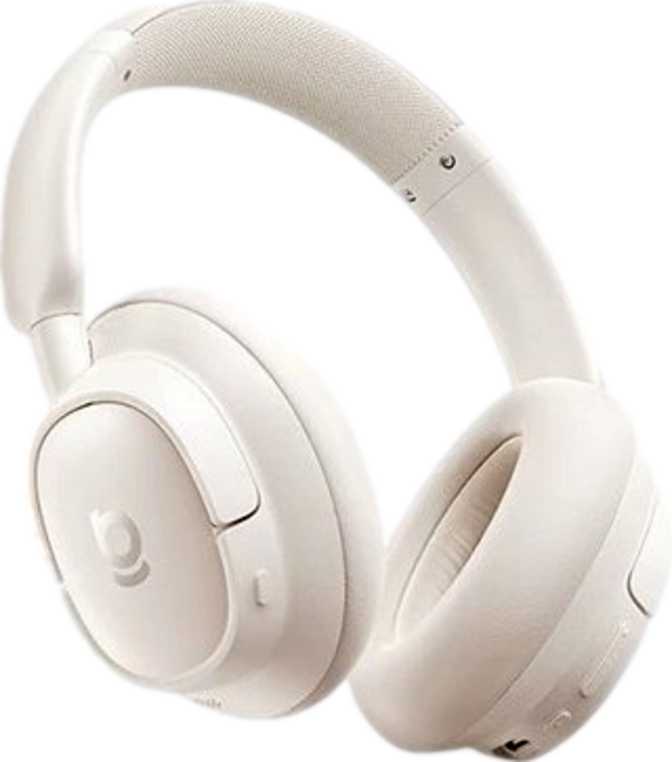
Baseus BH1 Review: Outstanding Stamina, Honest Trade-Offs
HeadphonesWalk into any major electronics retailer and you'll find the same conversation happening at every headphone display: "Which one has the best noise cancellation?" The Baseus BH1 doesn't play that game. With an 80-hour battery, ten microphones, LDAC support, and Bluetooth 6.0 — but no active noise cancellation — it makes a deliberate argument for different priorities. Whether that argument is right for you depends entirely on how honestly you assess your actual daily listening habits.
Performance at a Glance
Design, Build Quality, and Physical Experience
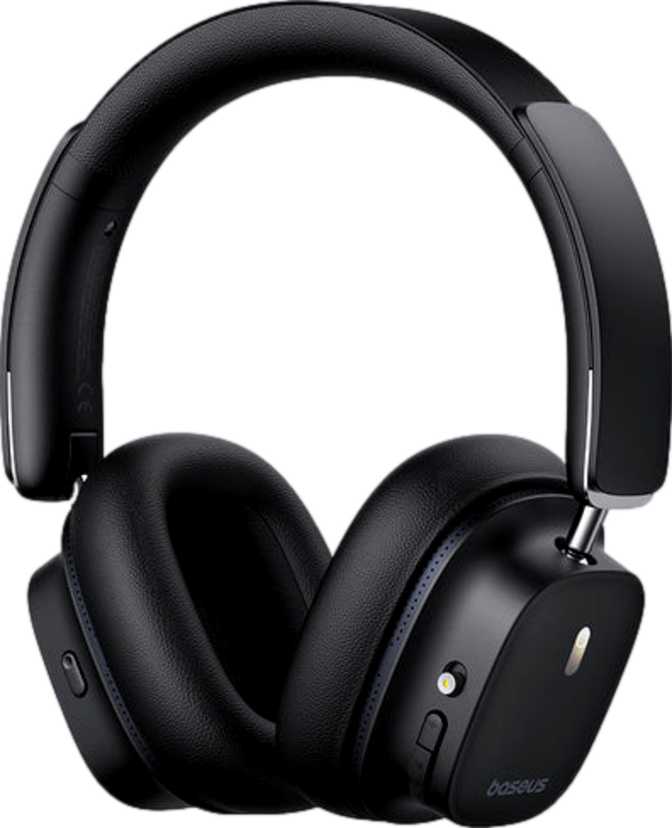
At 238 grams, the BH1 sits toward the lighter end of over-ear headphone territory. Most over-ear designs range from roughly 220 to 320 grams, with premium noise-cancelling models typically heavier due to additional electronics. The BH1's weight won't create fatigue during extended listening sessions — a meaningful advantage for anyone wearing headphones through a full workday.
Over-Ear Closed-Back Construction
The over-ear design means cushioned ear cups fully enclose your ears, distributing the headphone's weight around the ear rather than pressing against it. For shared or public spaces, this is the correct architecture — it contains your audio and physically blocks more ambient sound than on-ear alternatives.
The sealed closed-back shells have no external acoustic venting, which shapes both the sound character and the isolation profile. Closed-back designs suit commuters and office workers; open-backed headphones trade that isolation for a more spacious soundstage favored in stationary, private listening environments.
Detachable, Tangle-Resistant Cable
The detachable cable serves two practical purposes: it lets you switch to wired operation whenever you choose, and it makes the cable itself replaceable. If a cable fails at its most vulnerable point — the connector junction — you replace the cable, not the headphones.
The tangle-resistant construction reduces the knotting behavior that makes standard cables a frustration when pulled from a bag. All physical controls sit on the ear cups; there are no in-line controls on the cable itself.
IP68 Protection: Built for Real-World Conditions
The BH1 carries an IP68 designation — the highest tier for liquid resistance in the standard Ingress Protection rating system. The "6" indicates complete protection against dust intrusion; the "8" represents the top liquid-resistance category. For a headphone, this places the BH1 among the most durable over-ear options available, relevant for listeners who sweat heavily during exercise, work outdoors, or live in humid environments. IP ratings are assigned under standardized lab conditions, so real-world performance varies — but the designation signals genuine durability engineering, not marketing language.
Sound Performance: Where the BH1 Makes Its Strongest Case
The BH1's audio is delivered through 40mm drivers — one per ear cup. Driver diameter alone doesn't predict sound quality, since acoustic chamber design and tuning matter equally, but 40mm is the established reference size for quality over-ear headphones. It provides enough surface area to reproduce bass frequencies — kick drums, bass guitars, deep synthesizer tones — with their intended weight rather than rolling off prematurely. One specification worth noting for technically minded buyers: the BH1's drivers do not use neodymium magnets. Neodymium is the premium choice in most competing headphones due to its exceptional magnetic strength-to-weight ratio, which produces more responsive transient performance. Alternative magnet materials tend to be heavier and less efficient — whether this translates into a perceptible sonic difference depends on the specific engineering and tuning.
LDAC: The Wireless Codec That Changes the Quality Ceiling
Standard Bluetooth audio compresses your music to fit within the limited data bandwidth of wireless transmission. The most widely used baseline codec delivers audio at a quality level that is audibly lower than the source — detail, dynamics, and high-frequency resolution are all reduced in the process. LDAC transmits roughly three times more data per second than the baseline standard, bringing wireless quality close enough to a wired connection that many listeners cannot reliably distinguish the two in controlled listening tests.
If you subscribe to a lossless or high-resolution streaming tier, your source material contains detail that standard Bluetooth discards before it reaches your ears. LDAC keeps that detail intact through the wireless connection. This only works when your source device supports LDAC output — most modern Android flagships do. iPhones do not: Apple devices use AAC as their preferred codec, which the BH1 also supports. AAC delivers meaningful quality above the baseline for Apple users, but does not reach LDAC quality levels.
Spatial Audio Support
Spatial audio expands the perceived sound field from a flat left-right stereo image into a three-dimensional space — instruments, voices, and environmental effects positioned above, below, and around you. The feature is most impactful with content specifically mixed for spatial listening: certain streaming platform releases, film soundtracks, and gaming audio. For conventional stereo music, the effect varies by personal preference.
Passive Noise Isolation
The BH1's noise reduction relies entirely on the physical seal the ear cups create around your ears. This is effective against steady, consistent background sounds — office ventilation, consistent road noise, building systems — and performs without processing artifacts, battery draw, or the subtle pressure sensation some listeners associate with ANC circuitry.
No Active Noise Cancellation — The Most Important Fact to Know
ANC is highly effective against constant, low-frequency sounds: aircraft engine drone, train hum, highway traffic, air conditioning. In a rush-hour commuter train, a crowded café, or an airplane cabin, ANC-equipped headphones will provide noticeably better isolation than the BH1's passive approach. This is the single most important specification for most buyers to understand before purchasing, and there is no software update or workaround that changes it.
Battery Life: The Number That Reframes Everything
Eighty hours on a single charge is not a figure you encounter often in this category. A listener averaging four hours of daily use would need to charge approximately once every three weeks. A frequent traveler boarding a 14-hour long-haul flight arrives at their destination with over sixty hours remaining. The endurance is so far beyond typical daily requirements that battery management effectively stops being a consideration in your day.
When demanding audio processing features are active — with LDAC running at maximum fidelity — runtime settles at approximately 55 hours. Even at this reduced figure, the BH1 outlasts the majority of competing wireless headphones operating at their standard, undemanding settings. Most alternatives in this tier deliver between 25 and 40 hours per charge at best.
The sealed internal cell is non-removable, which is standard practice for the category. Starting from 80 hours, there is significant headroom before degraded capacity becomes a real inconvenience — even at 70% of original capacity after years of use, runtime would still exceed what most competing headphones deliver when new.
Connectivity: Bluetooth 6.0 and What It Actually Delivers
The Bluetooth 6.0 Advantage
Bluetooth 6.0 is the most current generation of the wireless standard, placing the BH1 ahead of the majority of products on the market, which still ship with 5.0 through 5.3. The 6.0 specification improves interference management, connection stability in dense wireless environments, and radio efficiency. In buildings crowded with competing signals — offices, airports, apartment complexes — these improvements translate into fewer audio dropouts and more consistent connection quality than earlier implementations deliver.
Dual-Device Multipoint
The BH1 maintains simultaneous Bluetooth connections to two devices. Your laptop and phone both stay connected at the same time, and the headphones manage audio priority automatically. When music plays through your laptop and a call arrives on your phone, audio transitions without manual intervention. For remote workers who remain reachable by phone while working, multipoint removes the daily friction of manually re-pairing between sources entirely.
Wired Operation
When connected via the detachable cable, Bluetooth, codec limitations, latency, and battery dependency are all irrelevant. Wired mode makes the BH1 compatible with airplane seatback audio systems (with an adapter), audio interfaces, and Hi-Fi equipment. For critical listening or situations where wireless is restricted, the wired option is a practical contingency that most users will rarely need and genuinely appreciate when they do.
Pairing Process
Neither fast-pair protocols nor NFC tap-to-connect are supported. Initial device pairing follows the standard Bluetooth process: hold the pairing button, select the headphones in your device's Bluetooth menu, connect. This is a one-time setup step per device. Since multipoint maintains two active connections simultaneously, most users won't need to re-pair regularly after initial setup.
Ten Microphones: Built for Calls, Not as an Afterthought
The BH1's array of ten microphones is disproportionate for a headphone in this price tier, and it reveals where Baseus directed its engineering resources in the absence of ANC circuitry. Standard wireless headphones deploy two to four microphones — often with pickups assigned to ANC sampling rather than voice capture. All ten of the BH1's pickup points serve one purpose: capturing your voice accurately while isolating it from background noise in transmitted audio.
More microphone data points give signal processing more to work with when separating a voice from environmental noise, producing cleaner call audio in the imperfect environments where most calls actually happen. For remote workers spending significant hours on video calls, this is a genuine differentiator — the difference in clarity is audible to the people on the other end of your calls.
Two Features Not Included
No Ambient Sound Mode
There is no transparency mode — you cannot hear your surrounding environment while wearing the BH1. For pedestrians on busy streets, cyclists, parents listening for children, or anyone who regularly needs situational awareness while listening, this is a safety and usability consideration that should factor meaningfully into the purchase decision. It is not a minor quality-of-life gap.
No Automatic Ear Detection
There is no auto-pause when you remove the headphones. Audio continues playing when you lift or set them aside, requiring a manual pause before conversations. For users accustomed to this feature, it becomes a behavioral adjustment that will be noticed daily.
Who the Baseus BH1 Is For — and Who Should Look Elsewhere
Strong Fit For
- Remote workers who spend significant daily time on calls and need the other party to hear them clearly in noisy or imperfect acoustic environments
- Frequent travelers on long-haul flights and multi-city itineraries where charging access is limited and battery anxiety is a real, recurring constraint
- LDAC-compatible Android device owners who want wireless audio quality approaching wired fidelity when listening to high-quality source material
- Multi-device users who work between laptop and phone simultaneously and want seamless automatic audio switching without manual management
- Active users who need headphones that hold up in humid conditions, sweaty sessions, or outdoor environments where moisture exposure is expected
Wrong Choice For
- Commuters on loud transit, frequent flyers, and open-plan office workers who depend on ANC to function in their primary listening environments
- Runners, cyclists, urban pedestrians, or parents who need transparency mode as a routine safety feature to remain aware of their surroundings
- Competitive gamers where audio cues drive split-second reactions — the BH1 lacks a low-latency gaming mode and was not optimized for competitive play
- Users invested in aptX HD or aptX Adaptive ecosystems — these codecs are not supported, and if your other hardware depends on them, the BH1 won't honor that investment
- iPhone users who want the highest wireless quality tier — iOS does not support LDAC, so you'll access AAC performance, not the best this hardware can deliver
How the Baseus BH1 Compares to the Competition
The BH1's most direct competitors are wireless over-ear headphones in the mid-range tier. The table below reflects typical category specifications rather than individual named products, providing context for where the BH1 sits relative to the market.
| Specification | Baseus BH1 | Typical ANC Mid-Range | Budget Over-Ear |
|---|---|---|---|
| Battery Life | Up to 80 hours | 25–40 hours | 30–60 hours |
| Active Noise Cancellation | None | Yes | None |
| Ambient Sound Mode | None | Yes | Rare |
| Primary Hi-Quality Codec | LDAC + AAC | Varies (aptX / LDAC) | AAC or SBC only |
| Microphone Count | 10 | 2–6 | 1–2 |
| Bluetooth Version | 6.0 | 5.0–5.3 | 5.0–5.2 |
| Multipoint Connections | 2 devices | 1–2 (varies) | Rarely supported |
| Wired Option | Yes, detachable | Sometimes | Usually |
| Moisture Protection | IP68 | IPX4 or None | Rarely rated |
Category-average figures. Individual products vary. Designed to provide market context, not compare to specific named competitors.
Real Buyer Questions Answered
Final Verdict
The Baseus BH1 makes a specific argument and makes it well: for a meaningful number of buyers, 80 hours of battery life and a ten-microphone call system are more practically valuable day-to-day than active noise cancellation.
Remote workers who spend hours on calls, travelers who measure trips in days rather than hours, and LDAC-compatible listeners who want to stop treating wireless audio as a quality compromise will find the BH1 delivers on its core promises with genuine capability. The Bluetooth 6.0 implementation and dual-device multipoint ensure that the surrounding connectivity infrastructure matches the hardware ambition.
For buyers who need ANC to function in their daily environment, or who rely on ambient mode for safety and situational awareness, the BH1 is the wrong product — and that is a clean, unambiguous conclusion. Those are legitimate requirements this headphone does not address, and no amount of battery life compensates for a feature that is needed daily.
Genuine Strengths
- Category-leading battery performance at 80 hours
- 10-microphone call quality that outperforms competitors
- LDAC on Bluetooth 6.0 — top-tier wireless audio ceiling
- IP68 durability for real-world conditions
- Dual-device multipoint for seamless laptop/phone switching
Honest Limitations
- No active noise cancellation — a real gap in loud environments
- No ambient/transparency mode — a safety concern for some users
- 10-meter Bluetooth range limits same-room freedom
- No wireless charging support
- No auto-pause on ear removal — daily behavioral friction