Amazon Fire TV Soundbar Review: Simple Upgrade, Honest Trade-Offs
SoundbarsA focused, no-frills stereo soundbar that meaningfully improves on built-in TV audio. Best for casual viewers who want cleaner sound with minimal setup — not for home theater enthusiasts chasing Dolby Atmos or smart audio features.
What Kind of Soundbar Is This, Really?
Most televisions — even expensive ones — ship with speakers that disappoint the moment you turn up the volume. They're thin, flat, and unable to fill a room. Amazon's answer is the Fire TV Soundbar: a compact, no-frills audio upgrade designed to work particularly well within the Fire TV ecosystem, without demanding a lot of money, shelf space, or technical knowledge from the person setting it up.
This is not a Dolby Atmos showpiece. It won't suspend sound overhead or shake the walls. What it offers instead is a focused, honest proposition — cleaner dialogue, fuller mid-range sound, and a meaningful step up from built-in TV audio, all from a single bar that connects in minutes.
At a Glance
- 2-channel stereo, 40W total output
- DTS:X spatial audio support
- HDMI eARC & ARC connectivity
- Bluetooth with aptX & AAC
- No Dolby Atmos decoding
- No Wi-Fi or voice assistant
- 609mm wide, 1.8kg, remote included
Design and Build: Understated and Functional
Size and Physical Presence
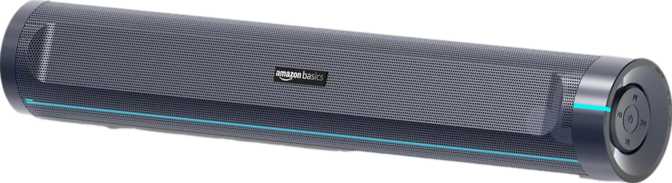
At roughly 609mm wide — close to 24 inches — the Fire TV Soundbar fits comfortably beneath most televisions in the 40- to 55-inch class. Its slim 88mm height and 63mm depth mean it won't block IR signals from your TV remote or dominate the space in front of your screen.
Weighing 1.8kg (just under 4 pounds), it's light enough to handle alone and easy to reposition. The compact footprint suits both TV stands and wall-mounted display setups equally well.
Aesthetic and Controls
Amazon has taken a restrained, clean approach to the physical design. A control panel is built directly into the unit — a practical touch that means you're never entirely dependent on the remote if it's out of reach or the battery runs low.
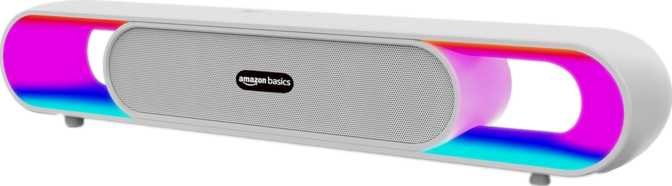
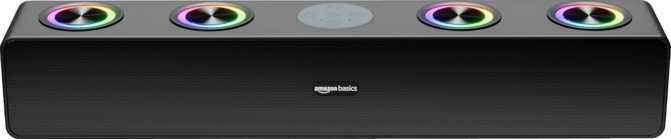
The overall look is designed to disappear rather than draw attention, prioritizing compatibility with a wide range of TV setups over making a visual statement.
Audio Performance
What 40 watts actually does in a living room — and where the ceiling starts to show.
Power and Channel Configuration
The Fire TV Soundbar runs a stereo configuration — two dedicated audio channels powered by 40 watts total (20 watts per channel). For context, most mid-range televisions output somewhere between 10 and 20 watts total across all internal speakers, often split across multiple small drivers with limited frequency range.
Doubling or quadrupling that effective output, combined with larger drivers inside a dedicated acoustic enclosure, produces a noticeably different listening experience: cleaner dialogue, fuller music, and action sequences with real body.
Surround Sound: DTS:X Without Dolby Atmos
The Fire TV Soundbar supports DTS:X — a modern, object-based surround format found across a significant portion of Blu-ray discs and streaming content. DTS:X produces widened, immersive soundscapes even from a stereo bar, using psychoacoustic processing to create spatial cues without physical rear or overhead speakers.
However, it does not support Dolby Atmos. Atmos content will play, but it will be downmixed to standard stereo rather than decoded spatially. The soundbar also supports Dolby Digital — the foundational format used across broadcast TV, DVDs, and much streaming content — but not Dolby Digital Plus, the enhanced version used by services like Netflix for premium audio streams.
Audio Codec Support Summary
| Format | Supported | What It Means for You |
|---|---|---|
| DTS:X | Spatial audio processing from a stereo bar — found on many Blu-rays and streaming titles | |
| Dolby Digital | Standard surround format for broadcast TV, DVDs, and most streaming platforms — plays correctly | |
| Dolby Atmos | Content plays but is downmixed to stereo — no height or spatial processing | |
| Dolby Digital Plus | Used by Netflix and others for enhanced audio — not decoded, plays as standard stereo | |
| aptX Bluetooth | Higher-quality, lower-latency Bluetooth audio from Android phones and compatible devices | |
| AAC | Clean, low-latency Bluetooth connection for iPhone and iPad users | |
| aptX Adaptive | The latest Bluetooth audio evolution is absent — expected at this price tier |
Connectivity: Flexible Enough for Most Setups
From the latest eARC televisions to older sets with only optical out — the connection options cover significant ground.
HDMI eARC / ARC
A single HDMI cable carries both the video signal to your TV and the audio signal back to the soundbar — eliminating extra cables. eARC, the upgraded version, supports uncompressed, higher-quality audio formats. Connect once and the setup is functionally complete.
Bluetooth (aptX + AAC)
aptX reduces the compression artifacts and audio latency common with standard Bluetooth. AAC support ensures Apple device users get a clean, low-latency wireless connection. No NFC pairing is present — standard manual pairing applies. Solid for music streaming from a phone or tablet.
Optical & AUX
An S/PDIF optical port supports older televisions without HDMI ARC. A 3.5mm AUX input allows direct analog connection from laptops, older CD players, or any portable device. This makes the soundbar genuinely compatible with televisions going back many years, not just recent models.
What's Missing from the Connectivity List
Smart Features: Deliberately Limited
Despite carrying the Amazon Fire TV name, this soundbar makes a very deliberate set of choices about intelligence — and they're worth understanding clearly before purchasing.
The Fire TV Soundbar has no microphones and supports no voice commands. It does not work with Alexa, Google Assistant, or Siri. There is no dedicated smartphone app. The Fire TV branding refers to its ecosystem compatibility and intended pairing with Fire TV devices — not to an onboard smart speaker capability.
Control is handled through the physical panel on the unit and the included remote control. The remote is battery-powered (not rechargeable), which is standard at this price point.
Buyers expecting to say "Alexa, turn up the volume" to this soundbar will need to look elsewhere. Buyers who just want clean audio controlled the traditional way will find the simplicity genuinely refreshing.
- Alexa voice control
- Google Assistant
- Siri / Apple HomeKit
- Built-in microphones
- Smartphone app
- Rechargeable remote
- On-unit control panel
- Included remote control
Who Should Buy This Soundbar (And Who Should Not)
Real-world fit matters more than spec sheets. Here's an honest assessment of who this product genuinely serves.
- Fire TV device owners who want their streaming setup to feel complete without a complex audio configuration
- Casual TV watchers in apartments, bedrooms, or average-sized living rooms upgrading from built-in TV speakers for the first time
- Setups where simplicity matters — one cable, no app, no account, no Wi-Fi network required
- Older TV owners who need optical or analog fallback connections alongside modern HDMI ARC
- Bluetooth music listeners who also want better TV audio from a single device
- Home theater builders who need Dolby Atmos or Dolby Digital Plus decoding from their soundbar
- Buyers who want multi-room audio or whole-home music streaming via Wi-Fi
- Users who rely on voice assistants for controlling home audio
- Anyone needing to stream audio to multiple devices simultaneously or requiring Wi-Fi audio routing
- Large open-plan spaces where 40 watts of stereo output may fall short of filling the room comfortably
Competitive Positioning
How the Amazon Fire TV Soundbar stacks up against logical alternatives in the same price bracket.
| Feature | Amazon Fire TV Soundbar | Typical Atmos Competitor | Budget Stereo Competitor |
|---|---|---|---|
| Total Power | 40W stereo | 40–80W varies | 40W stereo |
| DTS:X | Often No | Rarely | |
| Dolby Atmos | Yes | ||
| Dolby Digital Plus | Often Yes | Sometimes | |
| HDMI eARC | Sometimes | ||
| Wi-Fi / Streaming | Often Yes | Rarely | |
| Voice Assistant | Often Yes | ||
| AUX Input | Rarely | Often | |
| Optical Output | Sometimes | ||
| Smartphone App | Usually Yes | Rarely |
Honest Assessment: Strengths and Where It Falls Short
No soundbar is perfect. Here's what the Amazon Fire TV Soundbar genuinely gets right — and where it genuinely asks for compromise.
What It Gets Right
The connection story is clean — one HDMI cable, legacy fallback options built in, Bluetooth for wireless audio when needed. DTS:X support brings genuine spatial processing to a stereo bar, and aptX ensures Bluetooth audio doesn't arrive degraded. The physical dimensions are well-suited to the televisions most buyers in this category own.
The design philosophy — make your TV sound better with minimum friction — works brilliantly for buyers who share it. No Wi-Fi configuration, no app download, no voice assistant account. One cable. Done.
Where It Asks for Patience
The absence of Wi-Fi isn't a cost-cutting oversight — it's a design philosophy. But that philosophy frustrates buyers who expect multi-room audio, app control, or direct streaming to the soundbar over a network.
The codec support gap is the harder limitation to work around. Dolby Atmos content is everywhere now, and Dolby Digital Plus is the default on most major streaming platforms. This soundbar won't fail to play that content — it simply delivers it as standard stereo. Casual viewers may never notice. Enthusiasts absolutely will.
Common Questions Buyers Ask Before Purchasing
Real questions from real shoppers — answered directly and without marketing spin.
Final Verdict
The Amazon Fire TV Soundbar earns its place in the market as an honest, uncomplicated audio upgrade for everyday TV viewing. If your goal is to make dialogue clearer, give music more presence, and stop fighting with thin TV audio — it does that job well, simply, and without demanding much from you in return.
The limitations are real and shouldn't be minimized: no Dolby Atmos decoding, no Wi-Fi, no voice control, no streaming app. For buyers who live in those ecosystems, this soundbar is the wrong tool.
For buyers who want a clean stereo upgrade with solid connectivity, DTS:X support, aptX Bluetooth, and zero-fuss installation — particularly those already using Fire TV devices — the Amazon Fire TV Soundbar delivers exactly what it promises, without pretending to be something it isn't.
Purchase Verdict
Casual viewers and first-time soundbar buyers seeking a simple, effective TV audio upgrade.