Amazon Basics SB18R: Full Review of a Focused Bluetooth Soundbar
SoundbarsThere's a specific kind of buyer who makes the Amazon Basics SB18R worth reviewing in detail. They're not building a home cinema. They're not looking to join a smart speaker ecosystem. They have a small TV producing flat audio, or a monitor with built-in speakers that sounds like a tin can, and they want to fix that without thinking hard about it. The SB18R pitches itself directly at that person — stripped of smart features, remote controls, and complex inputs, down to the essentials of Bluetooth audio and a wired fallback. Whether that focused simplicity is a virtue or a limitation depends entirely on what you actually need from your sound setup.
Design and Physical Footprint
Build quality, dimensions, and the day-to-day physical experience
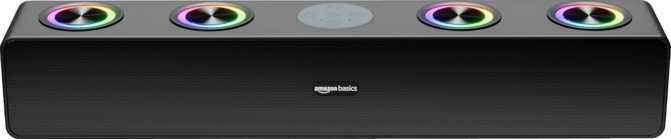
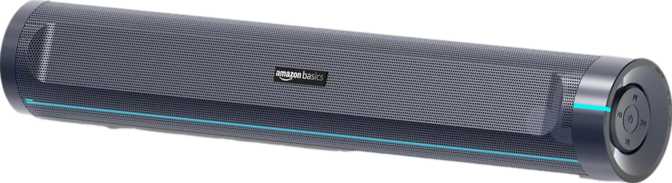
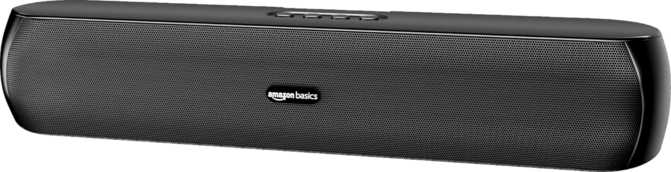
The SB18R is compact by soundbar standards. At roughly 17 inches wide, under 4 inches tall, and just under 3 inches deep, it fits naturally in front of a small to medium television without overwhelming the space, and sits cleanly beneath a desktop monitor without blocking the screen.
Weight is just over a pound and a half — light enough to move freely, position easily, and place on any shelf or desk surface without structural concern. There is no mount hardware complexity here. You set it down, and it works.
Controls are located on the unit itself. This keeps the hardware lean, but it also means the only physical interface is the soundbar's surface — no remote, no companion app to reach for. More on why that matters for different setups shortly.
- Width ~17 in (430 mm)
- Height ~3.7 in (95 mm)
- Depth ~2.8 in (72 mm)
- Weight ~1.6 lb (723 g)
- Channels 2.0 Stereo
What Connections Are Available
Every input option — and the critical compatibility check before you buy
The SB18R connects to your devices in two ways: Bluetooth wireless, or a wired AUX connection for devices with a standard headphone-style output. That is the full list.
There is no HDMI port, which rules out HDMI ARC — the connection type most modern televisions use to route audio to a soundbar with a single cable and volume control from the TV remote. There is no optical input either, which is the second most common way soundbars integrate with televisions. Both omissions are significant if your TV's audio output relies on either of those formats.
Bluetooth
Works with most modern smart TVs, all smartphones, laptops, and tablets. This is the primary connection method most buyers will use.
3.5mm AUX Input
Accepts any device with a standard headphone output — older TVs, laptops, media players, or phones with a headphone jack.
HDMI ARC & Optical
Neither HDMI ARC nor optical (S/PDIF) inputs are present. TVs that output audio only through these formats cannot connect to this soundbar.
Check Your TV Before Buying
There is no Wi-Fi, NFC pairing, Chromecast, AirPlay, Spotify Connect, or voice assistant integration of any kind. If your television's only audio outputs are HDMI ARC or optical, the SB18R has no compatible connection point. Confirm your TV supports Bluetooth audio output or has a 3.5mm headphone jack before purchasing.
Bluetooth Quality: Where the SB18R Earns Attention
For a budget soundbar with stripped-down features, the wireless audio specification genuinely surprises
Most budget audio hardware defaults to SBC — the universal Bluetooth codec that works with every device but delivers the lowest audio quality and highest latency of any modern option. The SB18R includes three codecs, and the combination is unusual for this price tier.
Bluetooth 5.3
The Bluetooth version here is more current than most competitors in this class carry. Version 5.3 brings measurable improvements over the 5.0 or 5.1 implementations common in similarly-priced soundbars — more stable connections in environments with wireless interference, slightly more power-efficient transmission, and faster reconnection after a signal drops. None of these are dramatic changes you will notice in a side-by-side test, but they contribute to the kind of reliable everyday dependability that matters more than you might expect over months of use.
Supported Bluetooth Audio Codecs
AAC
Apple's preferred Bluetooth audio codec. iPhones, iPads, and Macs prioritize it automatically — meaning Apple device users get meaningfully cleaner wireless audio than the SBC default without configuring anything.
aptX
Qualcomm's higher-quality codec, available on most modern Android phones and many laptops. It transmits more audio detail than SBC and handles latency more cleanly — important when audio needs to stay aligned with on-screen video.
aptX Adaptive
An adaptive codec that adjusts its transmission bit rate in real time based on signal conditions. When signal is clean, it pushes higher audio quality. When interference appears, it scales down gracefully without dropping out. Also supports low-latency operation — relevant for video where audio sync matters.
aptX Adaptive: What If My Device Does Not Support It?
aptX Adaptive requires the source device to also support it. Certain Android phones and Qualcomm-enabled laptops qualify — most iPhones, smart TVs, and older Android devices do not. If your device does not support aptX Adaptive, the SB18R automatically falls back to aptX or AAC, both of which still outperform the default SBC codec used by most budget audio hardware. You do not lose anything; you either use the full capability or benefit from the next best option available.
Audio Output: Honest Stereo, Nothing More
Two-channel stereo performance — and a frank look at what is absent from the spec sheet
The SB18R produces two-channel stereo sound — a left driver and a right driver delivering clean separation without any surround effect processing. There is no Dolby Atmos, no DTS:X, no virtual surround mode, and no Dolby Digital decoding.
These are not features that belong in a unit this compact at this price. Implementing object-based audio properly requires hardware investments that would push the cost far beyond where this soundbar sits. What you get instead is the format most audio content was actually mixed in: stereo. Music, podcasts, YouTube, TV dialogue, and casual streaming all improve noticeably over built-in TV or laptop speakers.
Stereo Works Well For
- Music, podcasts, and YouTube
- TV dialogue and news programming
- Casual streaming — series, sitcoms, reality TV
- Video call audio from a desk setup
Not Designed For
- Cinematic surround-sound immersion
- Dolby Atmos or DTS:X decoded content
- Replacing a 2.1 or multi-channel setup
- Dedicated home cinema environments
For film content specifically, the absence of surround sound decoding means the soundbar receives a standard left-right audio signal rather than processing a discrete surround track. For casual viewing, the gap is rarely noticeable. For anyone dedicated to cinematic audio, this is the wrong product category entirely.
Who This Soundbar Actually Serves
Specific contexts where the SB18R excels — and where it will disappoint
The SB18R finds its best use in specific contexts. Getting clear on which those are before buying saves significant frustration.
-
Desktop and monitor setups — dimensions fit in front of a monitor without blocking the screen. The audio improvement over built-in laptop or monitor speakers is immediate and audible.
-
Bedroom televisions — clear dialogue, acceptable music reproduction, and easy Bluetooth pairing from a phone. That is exactly what a secondary TV needs.
-
Shared or communal spaces — no app setup, no account creation. Anyone can pair a phone and play audio without any instructions.
-
Student rooms and temporary setups — light, easy to move, no permanent installation required. Sets up in minutes and packs away the same way.
-
Large living rooms — volume output is not designed to carry comfortably across a large space.
-
HDMI ARC or optical-only TVs — without these inputs, the soundbar simply cannot connect to the television.
-
Couch-based volume control — no remote means adjusting volume requires accessing the source device or the unit directly.
-
Smart home configurations — there is no voice control or platform integration of any kind.
-
Upgrading from surround sound — stereo output is a step down from any multi-channel system in terms of audio immersion.
How It Compares to the Alternatives
SB18R versus typical entry-level soundbar competition at similar price points
At this size and price tier, the SB18R sits alongside entry-level soundbars from brands like Anker's Soundcore range, Majority's compact models, and Vizio's two-channel options. The feature set comparison makes the trade-offs clear at a glance.
| Specification | Amazon Basics SB18R | Typical Entry-Level Competition |
|---|---|---|
| Bluetooth Version | 5.3 | 5.0–5.2 most common |
| aptX Adaptive Support | Included | Uncommon at this tier |
| AAC Codec Support | Included | Varies by model |
| HDMI ARC Input | Not present | Present on some models |
| Optical (S/PDIF) Input | Not present | Present on many models |
| Remote Control | Not included | Usually included |
| Wi-Fi Connectivity | Not present | Occasional at this price |
| Physical Width | ~17 inches | 24–32 inches more typical |
| Voice Assistant | Not present | Occasionally included |
The SB18R leads meaningfully on Bluetooth codec quality — aptX Adaptive at this price point is a genuine differentiator. It trails on physical connectivity and daily convenience. The compact form factor is a real advantage for desk setups where a full-size soundbar would be impractical.
Strengths and Weaknesses, Honestly Assessed
A balanced look at where this soundbar delivers and where it comes up short
The Bluetooth capability is the SB18R's clearest strength. Bluetooth 5.3 with aptX Adaptive is a specification you would typically expect on a more expensive product. For buyers whose primary connection will be wireless, it delivers audio quality that genuinely exceeds what most competitors in this class manage. Pairing is stable, reconnection is fast, and for devices that support aptX Adaptive, the audio quality ceiling is noticeably higher than budget alternatives.
The form factor is also a genuine advantage in its intended contexts. Compact, light, and setup-free. There is no learning curve, no configuration menu, no ecosystem to commit to. For buyers who have historically avoided soundbars because they seem complicated, the SB18R proves that a simple audio upgrade can take minutes.
The missing remote control is the most persistently noticeable limitation. Bluetooth volume control from the source device partially compensates — adjusting volume on a phone or laptop also adjusts the soundbar's output level — but for AUX connections, or for anyone used to controlling a TV setup from a sofa, the absence introduces daily inconvenience.
The connectivity gap is structural. Without HDMI ARC or optical input, a meaningful portion of TVs on the market simply cannot connect to this soundbar at all. This should be the first thing a prospective buyer verifies, not an afterthought after purchase.
The two-channel output, while appropriate for the product category, means this soundbar will not satisfy buyers arriving from a 2.1 or surround setup. Stereo is an upgrade over built-in speakers; it is not an upgrade over a soundbar with a dedicated subwoofer.
Common Questions Before You Buy
Answers to what real buyers search for before making a purchase decision
Final Verdict
A direct recommendation based on everything above
The Amazon Basics SB18R makes a specific trade deliberately: smart features, HDMI connectivity, and a remote control are all absent so the unit can stay compact, simple, and focused on delivering better-than-baseline Bluetooth audio for modest setups.
For desk use and small bedroom TVs where Bluetooth is the primary connection, it delivers well above what its simplicity suggests. The aptX Adaptive Bluetooth support is a legitimate differentiator at this price — wireless audio quality that most budget soundbars in this class simply cannot match. Setup takes minutes and requires no technical knowledge whatsoever.
The HDMI ARC and optical omissions are real limitations, not minor footnotes. Before committing, confirm your TV can actually connect. If it can, and if a compact footprint and clean Bluetooth performance are what you need, the SB18R earns its place as a sensible, low-friction audio upgrade.
Buy This If...
- Your TV or computer connects over Bluetooth or 3.5mm
- Your setup is compact — a desk, bedroom, or small room
- You want an audio upgrade without apps, accounts, or configuration
Look Elsewhere If...
- Your TV's only audio outputs are HDMI ARC or optical
- You need a remote control for comfortable daily use
- You are upgrading from a surround system and expect comparable performance