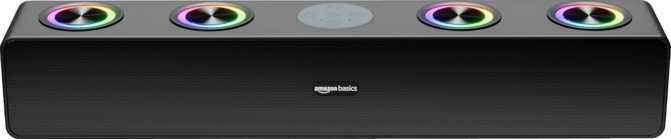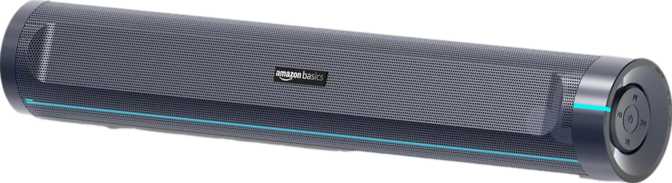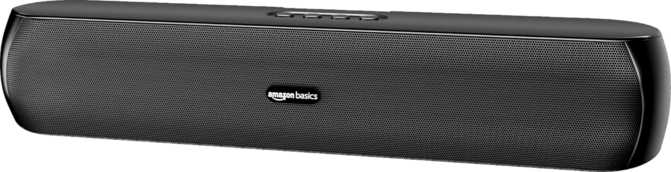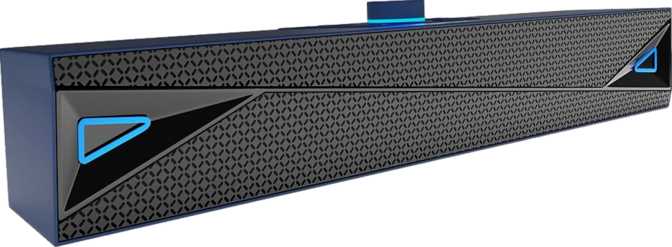
Amazon Basics X20R Review: Premium Codec, No-Frills Bluetooth Speaker
SoundbarsAmazon's own-brand electronics line has built its reputation on functional, no-drama hardware at prices that don't need defending. The X20R fits precisely into that approach: a stereo Bluetooth speaker built for clean, wire-optional listening, with one specification that genuinely stands out at this price tier. At roughly 418mm wide and weighing just under 700 grams, it occupies a practical middle ground between a dedicated desk speaker and something casual enough to move between rooms — and one technical detail makes it worth examining closely.
The X20R supports aptX Adaptive — Qualcomm's highest-tier Bluetooth audio codec — a specification typically reserved for speakers at a much higher price point. For Android users pairing a compatible device, this is the specification that changes the conversation entirely.
Premium codec in a purposefully simple package
- Audio CodecExcellent
- ConnectivityBasic
- Smart FeaturesNone
- Value for MoneyStrong
Design and Build Quality
Form factor, physical dimensions, and everyday usability
Form Factor and Physical Feel
The X20R's 418mm width places it in the elongated bar-style speaker category — wide enough to project a convincing stereo image across a desk or small room, compact enough to sit on a shelf without dominating it. At 681 grams, it carries enough weight to feel substantial without being awkward to relocate.
This is not a pocket speaker. It is designed to live in a specific spot and be picked up occasionally, not hauled between locations daily. Think: desktop companion, bedroom shelf, or home office audio upgrade.
Controls and Interaction
All interaction happens through the on-device control panel — volume, pairing, and source switching are managed directly on the unit. There is no remote control and no companion smartphone app. Whether this is a convenience or a limitation depends entirely on placement.
- Within arm's reach? You will not miss the remote.
- Across the room on a TV stand? The lack of one becomes real, daily friction.
Audio Performance
Stereo output, Bluetooth codec analysis, and what each means for your ears
Stereo Output — Two Channels Done Right
The X20R outputs audio across two dedicated channels, meaning left and right audio information are handled separately. This matters more than it sounds: many budget speakers at this size collapse everything into a mono or pseudo-stereo signal that sounds wide but flat.
With genuine stereo at 418mm wide, instruments, vocals, and effects have actual spatial placement. The result is a soundstage that feels cohesive and dimensional rather than like audio emanating from a single point.
Bluetooth 5.3 — The Modern Standard
The X20R uses Bluetooth 5.3, the current mainstream standard for audio devices. Practically, this means faster initial pairing, a more stable wireless connection, and better performance in homes crowded with competing wireless signals from routers and smart devices.
For anyone who has dealt with older Bluetooth audio — hesitant pairing, stuttering playback, dropouts while walking to the next room — version 5.3 removes those frustrations cleanly.
aptX Adaptive is Qualcomm's highest-tier Bluetooth audio codec. When audio travels wirelessly from your phone to a speaker, it must be compressed and then reconstructed. The codec determines how faithfully that reconstruction happens — and aptX Adaptive does it better than anything else currently available over Bluetooth, adjusting its bitrate dynamically in real time to maintain the best possible quality under any signal condition.
AAC — Solid Fallback for Apple Users
For iPhone, iPad, or Mac users, the X20R defaults to AAC — Apple's preferred Bluetooth codec. AAC is a meaningful step above the bare-minimum Bluetooth standard and delivers genuinely good quality on Apple hardware. Streaming music at high quality over AAC sounds excellent. It is not equivalent to aptX Adaptive, but it is far from a compromise for casual and everyday listening.
Codec Compatibility by Source Device
| Source Device | Codec Used | Quality |
|---|---|---|
| Android (aptX Adaptive phone) | aptX Adaptive | Best |
| Android (aptX phone) | aptX | Very Good |
| iPhone / iPad / Mac | AAC | Good |
| Any other device | SBC (fallback) | Acceptable |
Connectivity
How the X20R connects to your devices — and where its inputs end
Bluetooth and AUX: The Complete Input List
The X20R connects via Bluetooth or a 3.5mm AUX jack — and that is the complete list of inputs. No Wi-Fi module, no network integration, no built-in streaming service support of any kind. Your phone, laptop, or tablet is always the audio source.
The AUX input is an underrated practical asset. Any device with a headphone jack connects directly by cable — older laptops, desktop computers, televisions, game consoles, or a turntable running through a phono preamp. It also functions as a zero-pairing wired fallback whenever Bluetooth isn't preferred.
No Wi-Fi — What That Means in Practice
Wi-Fi speakers — Sonos, Amazon Echo, and similar — receive audio directly from the internet and can synchronize audio across multiple rooms. Your phone's location is irrelevant once the stream begins. The X20R cannot do any of this.
For single-room, personal listening at a desk or shelf, this is rarely a problem. For anyone wanting synchronized audio across an entire home, this is the wrong product. That boundary is firm and worth knowing before purchase.
What You Get
- Bluetooth 5.3 wireless
- 3.5mm AUX input
- On-device control panel
What Is Absent
- Wi-Fi
- NFC pairing
- HDMI / Optical / S-PDIF
- Remote control
- Microphone input
Smart Features — Deliberately Absent
Why the lack of smart integration is a design choice, not an oversight
The X20R includes no Spotify Connect, no Chromecast, no AirPlay, and no voice assistant integration of any kind — no Alexa, no Google Assistant, no Siri. There is no microphone in the unit, so voice commands and speakerphone functionality are both off the table entirely.
This is as much a philosophical stance as a cost decision. Smart features introduce complexity, require ongoing software maintenance, create privacy surface area, and depend on cloud platforms that can be changed or discontinued without notice. The X20R sidesteps all of that.
For listeners who have watched smart home integrations quietly break after a platform update — or who simply want audio without an ecosystem attached — this stripped-back approach is a genuine advantage. It pairs. It plays. Nothing else requires attention or maintenance.
- Alexa / Google Assistant / Siri
- Spotify Connect
- Chromecast Built-in
- AirPlay
- Dedicated Smartphone App
- Dolby Atmos / DTS:X
- Voice Commands of Any Kind
Who Should Buy the Amazon Basics X20R
Matching this speaker's genuine strengths to the right kind of listener
- Desktop listeners who want quality personal audio without the expense of a full monitor speaker setup
- Android users with aptX Adaptive phones who want to maximize Bluetooth audio quality at a budget price
- Simplicity seekers — no apps, no accounts, no ecosystem commitments of any kind
- Upgraders moving from laptop speakers or a compact mono Bluetooth device
- AUX users who need a speaker that works with older TVs, computers, or non-Bluetooth gear
- Multi-room audio setups — no Wi-Fi means no room grouping of any kind
- Home theater users — no HDMI, no Dolby Atmos, no optical input for TV audio
- iPhone users chasing maximum quality — aptX Adaptive's advantage is entirely lost on Apple devices
- Hands-free users — no microphone means no call handling and no voice commands
- Smart home integrators — no Alexa, HomeKit, or Google Home compatibility of any kind
Competitive Positioning
How the X20R compares to typical alternatives at a similar size and price
| Feature | Amazon Basics X20R | Typical Competitor |
|---|---|---|
| Bluetooth Version | 5.3 | Often 5.0 – 5.1 |
| aptX Adaptive Support | Yes | Rare at this price tier |
| Wi-Fi | No | Sometimes included |
| Voice Assistant | None | Often Alexa or Google |
| Dedicated App | None | Often present |
| AUX Input | Yes | Common |
The X20R's codec support is the real differentiator at this price point. Competitors typically offer Bluetooth 5.0 with standard aptX at best, then compensate with smart integrations this speaker deliberately skips. If audio quality matters more than ecosystem connectivity, the X20R's specifications are difficult to match dollar-for-dollar.
Honest Assessment
Where this speaker earns its place — and where it runs out of road
The aptX Adaptive implementation is the X20R's defining strength. This wireless audio codec tier is unusual at this price, and it delivers a genuinely audible advantage for Android users pairing with a compatible phone. Combined with Bluetooth 5.3's connection stability, the wireless audio experience is technically ahead of most products in the same size and price class.
The stereo configuration also deserves credit. At 418mm wide, the physical driver separation is sufficient to project a convincingly wide soundstage — noticeably more spatial than what a compact single-body speaker can achieve. For desk listening in particular, this produces a presentation that sounds natural and dimensional rather than like audio coming from a box.
The absence of Wi-Fi, Spotify Connect, and voice assistant support is deliberate — but it means this speaker is invisible to every modern smart home platform. Your phone is always the source, always in range, and always the control point. There is no way around this.
The missing remote control moves from minor inconvenience to genuine friction depending on where the speaker lives. Placed across the room, it becomes a real daily frustration with no workaround available.
The absence of a battery specification in the product data indicates mains power, which makes this a stationary speaker by design. It should not be purchased with any expectation of portability.
Questions Buyers Actually Ask
Straight answers to the most common pre-purchase questions about this speaker
Final Verdict
The Amazon Basics X20R is a focused, well-specified Bluetooth speaker that trades smart features and ecosystem integration for something rarer at this price: genuinely high-quality wireless audio codec support. The aptX Adaptive implementation alone sets it apart from most competitors in its size and price class, and Bluetooth 5.3 ensures the connection is reliable enough to keep up. Its purposeful simplicity — no apps, no accounts, no platform dependencies — is either its greatest strength or its core limitation, depending entirely on what you need from a speaker.
Buy it if:
You want the best possible Bluetooth audio quality in a simple, desk-ready stereo speaker — with no app dependencies, no ecosystem lock-in, and no unnecessary complexity. Android users with aptX Adaptive phones will hear a clear, genuine advantage.
Pass on it if:
Your setup depends on smart speakers, multi-room audio, voice control, or home theater integration. This product does not live in that world, and no amount of workarounds changes that reality.
A clear recommendation for listeners who prioritize wireless audio quality over smart home integration — without paying premium brand prices to get it.