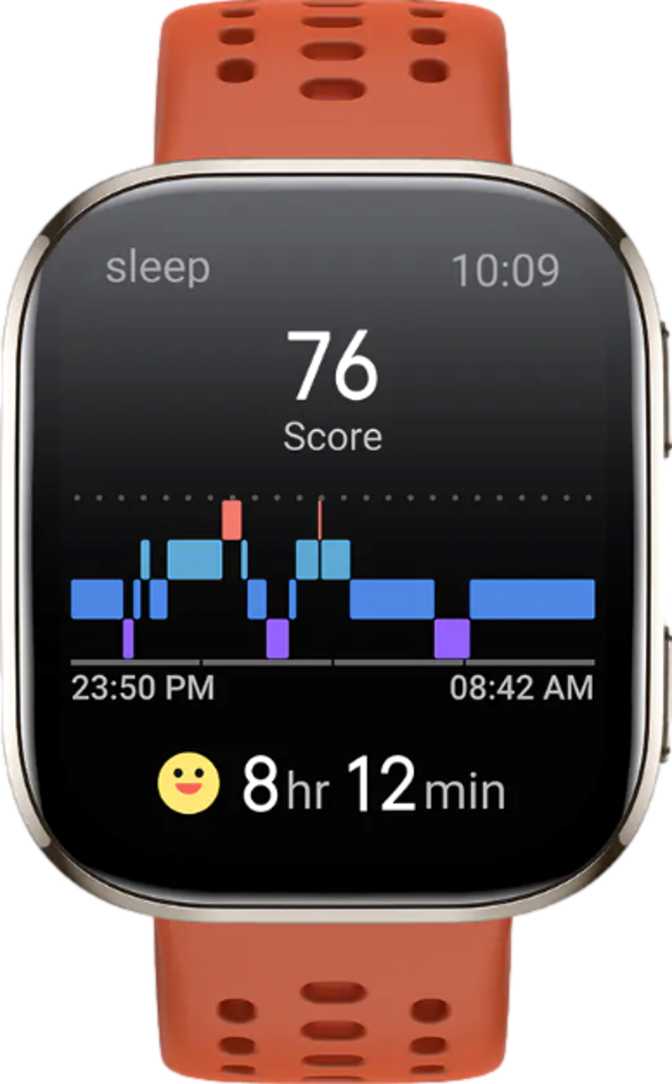
Amazfit Bip 6 Full Review: Lightweight Smartwatch That Earns Its Price
SmartwatchesThe Amazfit Bip 6 targets the space where most buyers actually live — wanting genuine health tracking, real GPS, and a display worth glancing at, without flagship pricing or the frustration of charging every two days. Here is the full picture: what works, what falls short, and who this watch is genuinely built for.
Design and Build Quality
Physical experience and construction
At just under 28 grams and roughly 10.5mm thick, the Amazfit Bip 6 is the kind of watch you stop noticing after the first hour of wearing it. Many fitness-focused smartwatches land in the 40–50 gram range, and even budget trackers often feel bulkier. The Bip 6's dimensions — roughly 46mm tall and 40mm wide — produce a modern, slightly rectangular silhouette that works on smaller and larger wrists alike without looking oversized.
The 22mm band width is a practical choice. Standard-width replacement bands are widely available from third-party sellers, and the band is user-replaceable without any tools. This matters more than it sounds for a watch you will likely wear every single day.
One honest note on durability: the display does not use Gorilla Glass or sapphire crystal. Neither is unusual to omit at this price tier, but the screen is more susceptible to scratches from everyday contact with hard surfaces. A low-cost screen protector is worth applying if you are rough on your gear.
Physical Specifications
| Height | 46.3 mm |
| Width | 40.2 mm |
| Thickness | 10.45 mm |
| Weight | 27.9 g |
| Band Width | 22 mm (user-replaceable) |
| Water Resistance | 5 ATM / IP68 / 50m |
| Display Glass | Standard (no Gorilla/Sapphire) |
| Bluetooth | 5.2 |
| Warranty | 1 year |
Screen Quality: AMOLED Done Right
The 1.97-inch AMOLED display is the Bip 6's most immediately impressive feature. AMOLED technology means true blacks — pixels simply switch off rather than being backlit — along with excellent contrast in all lighting conditions and vivid colors that hold up in direct sunlight. At 302 pixels per inch with a 390 × 450 resolution, text and watch face graphics are sharp with no visible pixelation at normal viewing distance.
The always-on display mode allows the screen to show time and basic stats at low power even when you are not actively interacting with the watch. This is a convenience feature many people find themselves unwilling to give up once they have used it — though enabling it will reduce the stated two-week battery figure.
Display At a Glance
- 1.97" AMOLED panel
- 390 x 450 px resolution
- 302 ppi pixel density
- Always-on display mode
- Full touchscreen control
- No hardened glass
Performance and Sensor Analysis
What the hardware actually delivers in daily use
Heart Rate & Cardiovascular
The optical heart rate sensor runs continuously throughout the day, triggering alerts when your heart rate climbs or drops unusually during rest — a passive safety net that goes well beyond workout data.
HRV tracking (Heart Rate Variability) feeds into a daily readiness and recovery score. HRV measures the slight variation between heartbeats and is one of the more meaningful indicators of cardiovascular health — most budget smartwatches skip it entirely.
VO2 Max estimation tracks aerobic fitness improvement over time as a relative benchmark, while blood oxygen (SpO2) monitoring rounds out the cardiovascular picture for post-workout recovery assessment.
GPS and Navigation
Onboard GPS means no phone needed during workouts. The watch supports both the standard GPS constellation and Galileo — the European navigation system that improves accuracy in dense urban environments and at higher latitudes where satellite geometry is less favorable.
In a GPS endurance mode, the battery holds for approximately 32 hours of continuous tracking — enough for a full day hike, an ultramarathon, or multiple workout sessions without recharging mid-way.
One limitation: the specs do not indicate fast GPS acquisition. Initial lock times in challenging conditions — dense tree cover or urban canyons — may be slower than on higher-end GPS watches.
Motion and Orientation
The accelerometer and gyroscope handle step counting, sleep movement detection, and automatic activity recognition without manual input. The compass adds directional orientation useful during outdoor navigation and route tracking.
Notable absence: there is no barometer. Elevation data comes from GPS rather than air pressure measurement. GPS-based elevation is less accurate — especially for shorter climbs or rapid altitude changes.
Hikers and trail runners who care about precise cumulative elevation gain should weigh this limitation carefully. For general outdoor use, the GPS-derived figures remain directionally useful.
Activity Tracking: Breadth Over Depth
Daily fitness and health monitoring capabilities
- Steps, distance, and real-time pace
- Sleep stages with detailed nightly reports
- Route mapping via onboard GPS
- Elevation tracking during outdoor activities
- Swim stroke counting for pool and open water
- Automatic activity detection without manual logging
- Calories burned and calorie intake logging
- Cadence monitoring during runs and cycling
- Manual exercise tagging for workout history
- No multi-sport mode — limited dedicated sport profiles vs. rivals
- No ECG — no electrocardiogram for clinical-grade heart monitoring
- No body temperature sensor — wrist temperature tracking is absent
- No barometer — elevation via GPS only, less accurate for serious hikers
- No fall detection — safety-conscious buyers should note this absence
- Not rated for diving — pool and surface swimming only
- No golf mode — no course mapping or shot tracking
Battery Life: The Bip 6's Defining Advantage
Endurance across every usage mode
The 14-day standard battery life is the figure most buyers will care about day-to-day. Charge once at the start of a fortnight and, without extended GPS sessions, you should reach the end without plugging in. That halves the charging friction compared to watches demanding weekly power-ups. Here is how endurance holds across the main usage modes:
Smart Features: More Than a Fitness Tracker
Connectivity and daily utility beyond health monitoring
Call Answering
A built-in microphone lets you answer calls directly from the wrist when your phone is nearby via Bluetooth — leaving your phone in a bag during a meeting and still managing calls is a genuine daily convenience.
Smart Notifications
Message and app notifications display on your wrist from any compatible iOS or Android app. Vibration alerts and a silent alarm mode let you manage interruptions without reaching for your phone.
Voice Commands
Voice command support allows hands-free control of watch functions. The watch also acts as a remote camera shutter for your phone — a small but genuinely useful feature for solo photos without a tripod.
Phone Finder
Trigger your phone to ring from the watch when it is misplaced nearby. Works with both iOS and Android via Bluetooth 5.2 without any additional configuration required.
Connectivity Limitations Worth Knowing
No NFC — contactless tap-to-pay is not supported
No Wi-Fi — Bluetooth is the sole wireless connection to your phone
No cellular — a phone must be nearby for notifications to reach your wrist
No local music storage — playback control from your phone works; offline audio playback does not
These are deliberate trade-offs that preserve battery life and keep costs accessible — not hidden defects. Understanding them upfront prevents disappointment after purchase.
The Zepp App: Free, Ad-Free, and Feature-Rich
Software experience and data access
The Amazfit Bip 6 pairs with the Zepp app on iOS and Android — completely free to download with no advertisements or subscription paywalls. Every health feature, including sleep analysis, HRV trends, VO2 Max tracking, and women's health data, is accessible at no ongoing cost. The feature set is genuinely comprehensive for an app that costs nothing:
The Zepp app is mobile-only — there is no desktop application for Windows or macOS. All data management happens through the smartphone app, which is also compatible with external Bluetooth heart rate monitors for users who prefer chest strap accuracy during intense training sessions.
Who Should Buy the Amazfit Bip 6
Matching the watch to the right buyer
- You want comprehensive daily health tracking — steps, sleep, HRV, SpO2, VO2 Max — without premium pricing
- You are a casual to intermediate runner who wants GPS route mapping and pace data without carrying a phone
- You swim and want a genuinely water-safe watch with stroke counting built in
- You are tired of charging a smartwatch every two days and want a reliable two-week companion
- You prefer a lightweight build that stops competing for your attention after the first hour of wear
- You want women's health features — cycle, ovulation, and fertile window tracking — at no extra cost
- You expect a no-subscription app where your own health data is always fully accessible
- You need NFC contactless payments — the Bip 6 cannot do this at all
- You require ECG readings for clinical-grade cardiac monitoring
- You are a multi-sport athlete who needs a long list of sport-specific workout modes
- You want to leave your phone at home and stream or play stored audio from the watch itself
- You are a serious hiker who needs barometric elevation accuracy for trail data recording
- You need fall detection as a passive safety feature
- You work with your hands and need hardened glass display protection against surface scratches
How the Bip 6 Compares to the Competition
Competitive positioning at its price tier
The Amazfit Bip 6 competes against entry-level trackers below it and mid-range rivals at a similar price. The table below maps where it leads, where it matches, and where it concedes:
| Feature | Amazfit Bip 6 | Typical Budget Tracker | Typical Mid-Range Rival |
|---|---|---|---|
| Display size & type | 1.97" AMOLED | 1.3–1.5" LCD | 1.7–1.9" AMOLED |
| Always-on Display | Rarely | Sometimes | |
| Watch weight | ~28g | 25–35g | 35–50g |
| Onboard GPS | |||
| Daily battery life | ~14 days | 5–7 days | 7–10 days |
| HRV tracking | Sometimes | ||
| VO2 Max estimate | |||
| Call answering | Sometimes | ||
| NFC payments | Sometimes | ||
| ECG monitoring | Rarely | ||
| Free app, no subscription | Varies | Varies |
Honest Assessment: Strengths and Limitations
A balanced look at where the Bip 6 really lands
Where It Excels
The Bip 6's strongest suit is the overall value of its core experience. The combination of a large, sharp AMOLED display, onboard GPS with Galileo support, meaningful health sensors including HRV and VO2 Max, and a two-week battery — all in a watch light enough to forget you are wearing — is genuinely difficult to find at this price point.
The watch benefits from a coherent health ecosystem. Readiness scores, recovery tracking, and the full women's health suite in the Zepp app make it a capable daily health companion for a broad range of users, not just dedicated athletes.
The subscription-free app experience should not be understated. Many competitors restrict detailed health trend data behind ongoing fees. The Zepp app gives you access to everything — including HRV history and sleep stage data — at no cost, and it is genuinely feature-rich compared to what rivals offer for free.
Where It Falls Short
The absence of a barometer limits elevation data quality for serious hikers. The lack of multi-sport mode reduces appeal for multi-discipline athletes who want a single watch to log cycling, skiing, or rowing alongside runs. These are deliberate trade-offs, not oversights, but real buyers need to register them before purchasing.
No NFC rules the Bip 6 out as a payment device. Without Wi-Fi or cellular, it remains tethered to a nearby phone for notifications — it cannot operate as a standalone device in any meaningful sense beyond offline fitness recording.
The glass durability question deserves plain honesty. Without hardened Gorilla Glass or sapphire, everyday scratches from hard surfaces are a genuine long-term risk. This is a cosmetic concern more than a functional one, but it affects the watch's appearance over time — especially for buyers who work with their hands.
Common Questions Answered
What real buyers search for before purchasing
Final Recommendation
Verdict: A Confident Buy for the Right Buyer
The Amazfit Bip 6 earns a clear recommendation for anyone who wants a genuinely wearable, feature-complete health and fitness smartwatch without flagship pricing or flagship compromises on battery life. It does the fundamentals — GPS tracking, heart rate monitoring, sleep analysis, smart notifications — with a display quality and physical comfort that few rivals match at this tier.
Buy it if your priorities are daily comfort, long battery life, GPS-based workouts, and comprehensive health tracking through a capable free app. Buy it if you swim, run, or simply want to know more about your health without checking your phone constantly.
Look elsewhere if you need NFC payments, ECG monitoring, barometric elevation accuracy, or an extensive library of sport-specific workout modes. At the price tier above, dedicated sports watches offer those additions — at the cost of heavier hardware and notably shorter battery life. For the majority of everyday users who want a reliable, light, long-lasting health watch that delivers on its monitoring promises, the Amazfit Bip 6 is one of the most sensible choices in its category.
Our Overall Rating
4 / 5
Excellent value smartwatch
- 14-day outstanding battery
- Large, vivid AMOLED screen
- Ultralight 27.9g build
- Built-in GPS with Galileo
- HRV, VO2 Max + free app
- No NFC, ECG, or barometer