1More SonoFlow Mini Review: Exceptional Battery, Real Tradeoffs
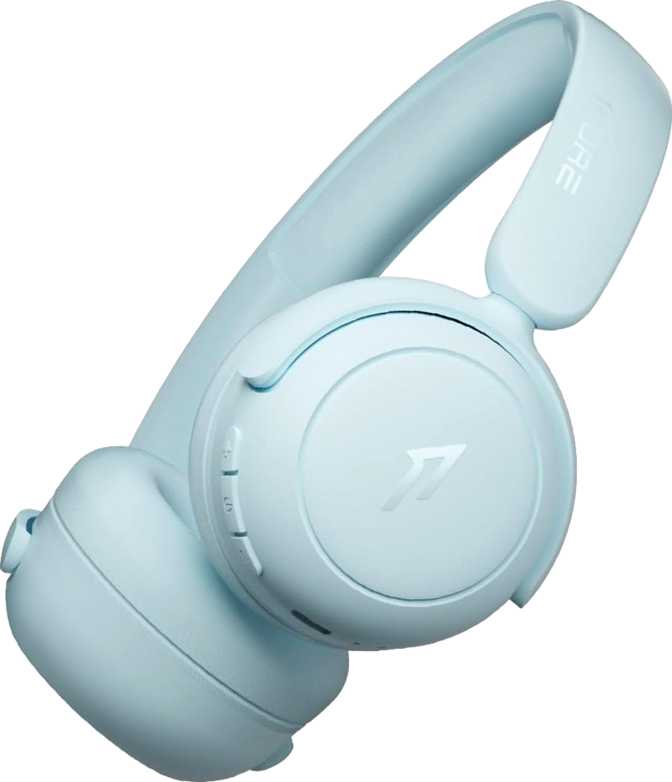
HeadphonesThere is a surprisingly crowded gap in the wireless headphone market between cheap, disposable earbuds and feature-laden adult flagships. Children and budget-conscious buyers who want a legitimate over-ear wireless experience — without ANC they don't need, codecs they'll never use, and a price tag that stings — are often left sorting through mediocre options. The 1More SonoFlow Mini is a direct answer to that gap. It is a folding, lightweight, Bluetooth over-ear headphone built explicitly for younger listeners, with a battery life that is, frankly, one of the most practical figures in its entire product category. It also makes deliberate tradeoffs — particularly around audio codec support and wireless range — that buyers need to understand before committing.
Design and Build: Sized to Fit the People Who'll Actually Wear It
Weight and Wearability
At 181 grams, the SonoFlow Mini sits at the lighter end of the wireless over-ear category. To frame that usefully: many popular adult over-ear headphones fall in the 250–300 gram range, and that difference — roughly the weight of a full glass of water — is the difference between forgetting the headphones are on and adjusting them repeatedly throughout the day. For a child wearing these through a school afternoon or a long car journey, the lighter construction is not a minor detail. It directly determines whether the headphones stay on or get taken off.
The over-ear design — where the ear cushions encircle the ear entirely rather than pressing against it — distributes that modest weight around the ear's perimeter rather than compressing the ear cartilage directly. This is the correct ergonomic choice for extended wear, and it is particularly important for children, whose ear geometry and pressure tolerance differ from adults.
Folding and Portability
The headphone collapses at the hinges, bringing the ear cups inward to a compact flat form. For a product targeting younger users, this is not optional — it is essential. Headphones that cannot fold get left behind, sat on, and damaged more frequently than those that pack down small enough for a school bag.
Practical note: No carrying case or travel pouch is included in the box. Given the target user and the portability emphasis of the design, this is a genuine oversight. A basic third-party sleeve adds minimal cost and meaningfully extends the lifespan of the hinges, which are the most vulnerable part of any folding headphone.
Closed-Back Construction
The ear cups use a sealed, closed-back design, which means sound does not escape outward to disturb nearby people. In a library, classroom, shared car, or airplane, this is exactly the right call. It also contributes to the passive sound isolation discussed in the audio section below. For a headphone designed for kids in shared spaces, an open-back design would have been the wrong choice entirely.
Audio Performance: What the Hardware Implies
The Drivers and What to Expect From Them
The SonoFlow Mini uses dynamic drivers in the 40mm size range — the mainstream choice for wireless over-ear headphones, capable of moving enough air to produce bass presence, midrange body, and reasonable high-frequency extension for typical listening. This is not an audiophile driver configuration, nor is it attempting to be. At this price tier and for this audience, 40mm dynamic drivers are the sensible, proven choice for general media consumption.
The impedance and sensitivity specifications tell a useful story for technical buyers: this headphone is easy to drive. Smartphones, tablets, and children's devices all have sufficient power in their Bluetooth output to push the SonoFlow Mini to appropriate listening volumes without strain. There is no risk of underpowering this headphone from a portable source device, which is a practical advantage over higher-impedance options sometimes found in more expensive over-ear designs.
1More has built a genuine reputation in accessible audio — their product history includes earbuds and headphones that consistently earned positive attention from the audio community despite operating at accessible price points. The SonoFlow Mini inherits the brand's tuning DNA, and the expectation is a listenable, musical presentation rather than analytically neutral or heavily bass-boosted.
Passive Noise Isolation: Practical and Appropriate
The SonoFlow Mini does not use active noise cancellation. ANC works by using microphones to sample ambient noise and generating an opposite signal to cancel it electronically — it is excellent at attenuating consistent low-frequency noise like airplane cabin hum, HVAC systems, and train engines. It adds meaningful cost and draws down battery life.
What the SonoFlow Mini offers instead is passive noise reduction: the physical seal created by the over-ear cushions against the head blocks a meaningful amount of ambient sound simply through attenuation and absorption. This handles most everyday noise environments well — a living room with background television, a slightly noisy car ride, a busy library — without any battery cost.
For a headphone targeting children specifically, the absence of ANC also has a safety dimension. ANC-equipped headphones, when engaged, can substantially reduce a child's awareness of their surroundings. Passive isolation provides some environmental quiet without fully removing the child's audio connection to the world around them. That tradeoff has real value in home and outdoor settings.
Where ANC genuinely earns its place — long-haul flights, open-plan offices with sustained mechanical noise — the SonoFlow Mini will underperform. That is a contextual limitation, not a design failure.
The Codec Situation: Read This Before Buying
This is the most technically significant aspect of the SonoFlow Mini for informed buyers, and it deserves a clear, complete explanation.
Bluetooth headphones use audio codecs to compress and transmit music from a phone or tablet to the headphones wirelessly. The quality of that codec determines how much audio detail survives the wireless transmission. The baseline codec — SBC — is supported by every Bluetooth headphone and is entirely functional, but it applies heavier compression than the alternatives, which can affect perceived clarity and detail in the upper midrange and treble, particularly at lower bitrates.
Premium codecs include AAC (Apple's native format, used by iPhones and iPads), aptX and aptX HD (common on Android devices), and LDAC (Sony's high-resolution option). These deliver noticeably better fidelity when matched with a compatible source device.
The SonoFlow Mini does not support any premium codecs — no AAC, no aptX, no aptX HD, no LDAC. Regardless of whether you are using an iPhone, an Android phone, or a high-end tablet, the audio is transmitted via SBC. For a child watching YouTube videos or listening to streaming playlists, this is genuinely not a problem. For a college student or adult using these for attentive music listening, the SBC limitation will be audible to critical ears.
Battery Life: The Number That Changes Daily Life
The SonoFlow Mini's single most outstanding specification is its endurance: approximately 65 hours of playback on a full charge.
Battery Life Comparison
Comparison figures represent typical category ranges. Actual performance varies by product and usage conditions.
To put that into concrete daily terms: a child using the headphones for two hours on school days and several hours on weekends could go two to three weeks between charges. For a parent managing a household where chargers, cables, and low-battery warnings are a persistent background stress, this is meaningful friction reduction. For a traveler, a single charge comfortably survives multiple long-haul flights plus return travel.
Charges via the current universal standard, compatible with most existing home charging setups. No proprietary or legacy cables required.
Check remaining capacity at a glance — no companion app or smartphone notification required to know when a charge is needed.
Wireless charging is not supported, which keeps costs down and is unlikely to be missed given how infrequently a charge is actually needed.
Connectivity, Controls, and Practical Features
Bluetooth Version and Real-World Range
The SonoFlow Mini runs on Bluetooth 5.4, a recent version of the standard that brings improved connection efficiency and stability relative to older Bluetooth 4.x generations. The version upgrade matters even without advanced codecs because it reduces the risk of dropout and pairing instability that can affect older-standard headphones in environments with wireless congestion.
The specified wireless range is 10 meters — an honest but modest claim. That figure represents ideal, unobstructed conditions. In a typical furnished room with walls, furniture, and competing wireless signals, real-world effective range is closer to 6–8 meters. For the primary use cases of this headphone — a child at a desk with a tablet nearby, or in a living room with a phone on the couch — this is adequate. For scenarios where the source device stays in one room while the listener moves freely through a house or apartment, the range ceiling will occasionally become a noticeable constraint.
Multipoint Connection: A Genuinely Useful Feature
The SonoFlow Mini can maintain an active Bluetooth connection to two devices simultaneously. In everyday use, this means the headphone remains paired to both a tablet and a smartphone at once. When audio starts playing from the phone, the headphone switches to it automatically; when that audio stops and the tablet starts playing, it switches back. When a call arrives on the phone while a video is playing from the tablet, the headphone handles the transition without requiring manual re-pairing.
For a child who uses a family tablet for entertainment and a phone for messaging or calls, this removes a recurring annoyance. Multipoint pairing is a feature that often appears only on mid-tier and premium headphones; finding it at this price point is a genuine practical bonus.
Controls and Microphone
Physical controls are located directly on the ear cup, which is the right choice for a headphone aimed at younger users. Button-based controls are more intuitive and reliable than capacitive touch panels for children, and on-cup placement avoids the awkwardness of in-cable controllers.
A single built-in microphone handles calls and voice-activated commands. One-microphone setups perform adequately in quiet environments — voice will be clear and intelligible for calls and video chats from a calm room. In noisy surroundings, a single microphone cannot filter out background noise the way a dual or array microphone system can, and ambient sound will bleed into the transmitted audio noticeably.
Is the 1More SonoFlow Mini Right for You?
Who This Headphone Is For
-
Children from school age through early teenswho need a durable, lightweight, and long-lasting wireless headphone for school, travel, and home use, and for whom audio codec performance is not a priority
-
Parentslooking for a low-maintenance headphone that reduces the frequency of charging, tantrums over dead batteries, and the general overhead of managing a child's electronics
-
Budget-conscious buyerswho want a real over-ear wireless headphone without paying for ANC or premium codec support they don't need
-
Casual travelerswho want folding wireless headphones with genuinely exceptional endurance for video and light music listening on the move
Who Should Look Elsewhere
-
Music enthusiastswho care about wireless audio codec quality and want AAC, aptX, or LDAC transmission — the SBC-only connection is an audible limitation for critical listening
-
Office workers or frequent flyersin sustained high-noise environments where active noise cancellation is the difference between productive focus and constant distraction
-
Users who need situational awareness controlwithout an ambient sound mode, there is no way to hear surroundings without removing the headphones entirely
-
Buyers who need long wireless rangeif the source device is across a house or in another room, the modest Bluetooth reach will produce frequent dropouts
Competitive Positioning
The wireless kids' and budget over-ear headphone market has grown considerably. Here is how the SonoFlow Mini stacks up against the key categories a buyer would naturally compare it to.
| Feature | 1More SonoFlow Mini | Budget ANC Over-Ears | Premium Kids' Headphones |
|---|---|---|---|
| Active Noise Cancellation | (typical) | Occasionally | |
| Battery Life | ~65 hours | 20–40 hrs (typical) | 20–35 hrs (typical) |
| Bluetooth Codec Support | SBC only | SBC + AAC or aptX (typical) | Varies widely |
| Foldable Design | Commonly yes | Usually yes | |
| Multipoint Pairing | Yes (2 devices) | Occasionally | Rarely at this tier |
| Weight | ~181g | 200–280g (typical) | 150–220g (typical) |
| Wireless Charging | Occasionally | Rarely | |
| USB-C Charging | Common at mid-tier | Varies | |
| Auto-Pause (Ear Detection) | Sometimes | Rarely |
Comparison figures represent typical category ranges based on common market options. Individual products vary.
An Honest Assessment
Where It Earns Confidence
The battery endurance is not a marketing exaggeration — 65 hours is a standout figure that meaningfully changes the maintenance burden of owning a wireless headphone, especially in a household with children. The lightweight construction and foldable design make it genuinely portable in a way that many competing headphones claim but underdeliver on. The addition of multipoint pairing at this price tier is a practical bonus that competitors frequently reserve for more expensive models.
The 1More name carries genuine credibility in the audio space. The brand has consistently produced headphones and earbuds that outperform their prices on sound tuning, and there is reasonable expectation that the SonoFlow Mini inherits that attention to acoustic detail even in a stripped-back form factor.
Where It Makes Compromises
The codec limitation is the most significant technical shortcoming, and it deserves an honest appraisal rather than a footnote. SBC-only wireless audio is a step behind most modern Bluetooth audio products, and the absence of even AAC support will be felt by some buyers — particularly those in the Apple ecosystem. Bluetooth range is another area where the specification is honest but modest, leaving no room for the casual home roaming that a longer-range headphone enables.
The single microphone limits call quality in anything but quiet surroundings. And the lack of a carrying case is a small but genuine oversight for a product explicitly targeting younger users who are likely to drop, stack, or compress whatever goes into their bag.
Questions Real Buyers Ask
Final Verdict
The 1More SonoFlow Mini is a focused, well-considered product that does a specific job exceptionally well. If you are equipping a school-age child with a wireless headphone — or if you simply need a lightweight, long-lasting over-ear headphone for everyday casual use and aren't concerned about audiophile-grade codec performance — this is an easy recommendation.
The battery life alone justifies serious attention. Two to three weeks between charges is a practical luxury that dramatically reduces the low-grade friction of managing a child's accessories. The lightweight construction and genuine foldability make it a natural fit for bags and travel. The multipoint pairing for two simultaneous devices is a feature above its expected station.
The tradeoffs are real but contextual. SBC-only audio, a 10-meter Bluetooth ceiling, a single microphone, and no active noise cancellation are all limitations — but they are limitations that only matter to the wrong buyer for this headphone. To the right buyer, they are irrelevant details.
Buy it if your priority is a durable, long-running, kid-appropriate wireless over-ear that delivers solid sound and stays charged between school pickups.
Skip it if audio codec quality, ANC, or extended wireless range are non-negotiable requirements for your use case.