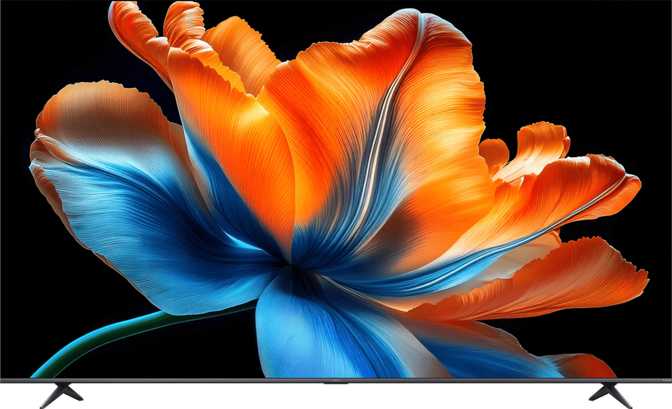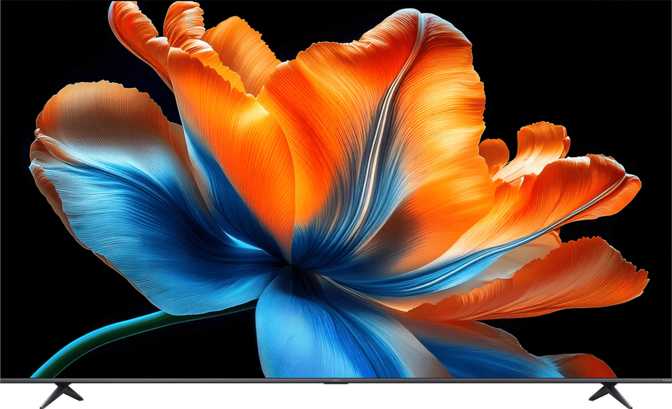
Xiaomi TV S Mini LED 2026 98-Inch: Full Review and Honest Verdict
TVsThere are televisions, and then there are room-defining experiences. At 98 inches diagonal, the Xiaomi TV S Mini LED 2026 sits firmly in the second category — a screen so large that the question stops being is it good? and starts being is my room ready for it? This is Xiaomi's most ambitious consumer display yet, combining a cutting-edge backlighting architecture with a feature set that punches hard against rivals costing significantly more. But sheer size alone has never sold a television worth owning. What matters is whether the picture, the sound, and the software live up to the physical spectacle — and that answer is nuanced enough to deserve careful reading before committing to a purchase of this scale.
Design and Physical Presence
Build quality, dimensions, and what 98 inches actually looks like in a room
Size in Real Terms
The numbers on a spec sheet rarely prepare you for reality. At just over 2.17 metres wide and 1.25 metres tall, this television is wider than most sofas and taller than a kitchen countertop standing upright. Before anything else, measure your intended wall or stand space carefully.
The panel itself sits at 84mm deep — slim for its category, though far from invisible. At approximately 50.8 kilograms, installation is a two-person job at minimum. Wall-mounting without professional help is not advisable.
Build Quality and Mounting
VESA mounting is supported, making wall installation the preferred option for most rooms where a stand would position the screen awkwardly or consume too much floor space. Ensure any furniture used as a stand is rated well above the panel's weight and has sufficient surface depth for the base footprint.
The 84mm profile is a genuine engineering achievement for a screen this size using Mini-LED backlighting, which requires substantially more physical depth than standard LED panels. The industrial design is clean and understated — this panel is built to showcase content, not itself.
- Screen Size98 inches diagonal
- Width2,179 mm
- Height1,246 mm
- Depth84 mm
- Weight50.8 kg
- VESA MountSupported
- Resolution3,840 × 2,160 px
- Pixel Density45 ppi
- Panel TypeMini-LED, QLED, LCD
- Operating Temperature0°C – 40°C
Display Technology: What Mini-LED + QLED Actually Means
Understanding the backlighting architecture, brightness, HDR formats, and refresh rate in real-world terms
The Backlighting Advantage
Traditional LED televisions use a relatively small number of light zones behind the panel. Mini-LED technology replaces those with thousands of far smaller LEDs, allowing the TV to control light with much finer precision — brightening one part of the screen dramatically while simultaneously keeping another part near black. The result is deeper contrast, more convincing HDR, and far less of the "halo" glow around bright objects on dark backgrounds that plagued older LED sets.
The QLED layer adds a quantum dot filter between the backlight and the LCD panel, converting light into purer, more saturated colour. This is how the television achieves its 1.07 billion colour shades — a 10-bit panel capable of rendering smooth gradients without the stepping or banding that affects lesser displays.
Brightness and HDR Performance
At 1,200 nits of typical brightness, this panel has the headroom to make HDR content genuinely impactful. Most mid-range televisions in the 65–75 inch class manage 400–600 nits. Budget panels often cap at 300. At 1,200 nits, specular highlights — the glint off a car hood, a shaft of sunlight through leaves — punch through in a way that feels viscerally real rather than just "brighter than normal."
Full Support for All Four Major HDR Formats:
The 144Hz Refresh Rate — For Whom It Matters
A 144Hz panel refreshes 144 times per second, compared to the 60Hz of most budget televisions and the 120Hz found in most premium sets. For streaming movies and television, the practical benefit is in motion processing quality — sports and fast-moving content appear sharper and more fluid.
The more significant beneficiary is gaming. With three HDMI 2.1 ports capable of carrying 4K signals at up to 120 frames per second and a panel that can display 144Hz, this television pairs well with current-generation consoles and high-end gaming PCs. Variable refresh rate content is handled smoothly, reducing screen tearing without the input lag penalties of older synchronisation methods.
Viewing Angles
Both horizontal and vertical viewing angles reach 178 degrees — effectively the full arc visible to the human eye from either side. At 98 inches, this matters more than on any smaller screen: family and social viewing naturally spreads people across a wide seating arrangement. The picture holds colour accuracy and contrast integrity from well off to the side, not just dead-centre.
Anti-Reflection and Ambient Light
The anti-reflection coating keeps the panel usable in rooms with windows or overhead lighting — without it, a glossy screen at this size would act like a massive mirror during the day. The ambient light sensor adjusts brightness automatically, pulling back luminance in dark rooms to prevent eye fatigue and pushing up in bright daylight conditions. Both can be disabled manually for those who prefer absolute control over picture settings.
Audio: Capable, But Know Its Limits
A transparent look at the built-in speaker system and how to get the most from it
The Built-In Speaker System
The Xiaomi TV S Mini LED 2026 carries a stereo speaker system delivering 30 watts of total output power across two channels. It supports Dolby Atmos decoding, Dolby Audio processing, and Dolby Digital Plus — meaning it can receive and process object-based audio tracks from streaming services and pass them to external audio systems with full fidelity.
To be direct: 30 watts of stereo output from a flat-panel television is adequate for casual viewing in a medium-sized room. It will not fill a large open-plan space with convincing sound at cinematic volume, and it cannot replicate the low-frequency weight of a dedicated subwoofer. For a panel of this size and calibre, the audio system is the most common point where buyers choose to invest further.
The Soundbar and eARC Connection
The HDMI eARC port (enhanced Audio Return Channel) allows this TV to send full-resolution, uncompressed audio — including Dolby Atmos object-based tracks — to a compatible soundbar or AV receiver over a single HDMI cable, without any quality loss. Standard ARC is also supported for older external audio equipment. The optical digital output serves legacy systems that do not use HDMI at all, and a 3.5mm headphone output provides a private listening option.
- Output Power2 × 15W (30W total)
- ConfigurationStereo
- Dolby AtmosSupported
- Dolby Digital PlusSupported
- Dolby AudioSupported
- HDMI ARCYes
- HDMI eARCYes
- Digital Optical OutYes
- 3.5mm Headphone OutYes
Smart TV Platform and Connectivity
Google TV ecosystem, physical ports, wireless features, and built-in broadcast tuner coverage
Google TV Ecosystem
The Xiaomi TV S Mini LED 2026 runs a smart TV platform with Google Assistant built in, supporting Chromecast and voice commands. Chromecast built-in allows any phone, tablet, laptop, or Chrome browser to cast content to the TV without additional hardware. AirPlay support extends this to Apple devices — iPhones, iPads, and Macs can mirror or stream content natively, without needing an Apple TV box.
This dual compatibility — Google and Apple — covers the full spectrum of households regardless of which ecosystem their phones belong to. Miracast adds a third wireless display option for compatible Android devices in direct peer-to-peer mode.
Physical Ports
| Port | Count | Notes |
|---|---|---|
| HDMI 2.1 | 3 | One with ARC, one with eARC; full 4K/120fps bandwidth |
| USB | 2 | Media playback and USB recording to external drive |
| Ethernet (RJ45) | 1 | Wired network for stable 4K streaming |
| 3.5mm Audio Out | 1 | Headphones or analog audio device |
Wireless and Broadcast
Wi-Fi 6 (802.11ax) places this television at the current standard for wireless networking — delivering faster throughput and better performance in dense environments where many devices compete for bandwidth simultaneously. Bluetooth 5.2 handles wireless audio accessories and headphones. Backward compatibility with Wi-Fi 5 and Wi-Fi 4 ensures it works with older routers.
The built-in tuner suite covers DVB-T, DVB-T2 (aerial), DVB-C (cable), and DVB-S/DVB-S2 (satellite) — meaning broadcast television reception requires no set-top box across virtually all European and many global markets. Combined with USB recording, it functions as a complete broadcast solution out of the box.
Real-World Scenarios: Who This TV Is For
Matching the Xiaomi TV S Mini LED 2026 98" to the right buyer — and flagging where it falls short
The Home Cinema Builder
Someone converting a dedicated room into a cinema-quality viewing space. At 4K across 98 inches, sharpness holds at typical seating distances of 2.5 to 4 metres. Full Dolby Vision means Netflix, Disney+, and Apple TV+ content arrives in the best quality those platforms offer.
Ideal FitThe Multi-Console Gamer
Three HDMI 2.1 ports at 144Hz mean this TV serves as a gaming hub for multiple consoles simultaneously — PlayStation, Xbox, and a PC all connected without a switch box. Variable refresh rate support and a fast panel make it suitable for both competitive and immersive gaming.
Ideal FitLarge Family and Entertaining
A 98-inch screen fills a large open-plan living area in a way that 75 or 85-inch panels simply cannot. Near-180-degree viewing angles mean guests seated well off-axis still see an accurate picture. For sports, gatherings, or game nights, the scale becomes a practical feature, not an indulgence.
Ideal FitWho Should Look Elsewhere
Rooms under 15 square metres where sitting too close makes viewing uncomfortable. Households requiring native Amazon Alexa smart home integration. Buyers expecting the built-in speakers to carry the full audio load — the speaker system needs a soundbar companion to match the visual experience.
Consider CarefullyCompetitive Positioning
How the Xiaomi TV S Mini LED 2026 98" stacks up against the logical alternatives at this screen size
At the 98-inch tier, this television occupies a competitive bracket. No OLED television currently exists in a 98-inch consumer format at any accessible price point, removing one of the usual arguments for that technology at this size. The principal competition comes from premium brands' Neo QLED and QNED 98-inch ranges — both of which carry a significantly higher price tag for comparable or modestly better specifications.
| Feature | Xiaomi TV S Mini LED 2026 98" | Typical 98" OLED | Typical 98" Premium Mini-LED |
|---|---|---|---|
| Panel Technology | Mini-LED QLED | WOLED (if available) | Mini-LED QLED |
| Peak Brightness | ~1,200 nits | ~800–1,000 nits | ~1,500–2,000 nits |
| Refresh Rate | 144Hz | 120Hz | 144Hz |
| HDMI 2.1 Ports | 3 | 4 (on some models) | 4 (on some models) |
| HDR Formats | All 4 major | All 4 major | All 4 major |
| Wi-Fi Standard | Wi-Fi 6 | Wi-Fi 6 | Wi-Fi 6 |
| Amazon Alexa | Varies | Some models | |
| Relative Price | Strong Value | Rare / Very Expensive | More Expensive |
Honest Assessment: Strengths and Weaknesses
What genuinely impresses, and where the budget pressure shows
- Picture quality leadership. Mini-LED local dimming at 1,200 nits with full Dolby Vision support places it among the strongest performers at this screen size. In a darkened room with premium streaming content, the results are genuinely striking.
- Three HDMI 2.1 ports. Serves real-world multi-device setups — console, soundbar, and streaming device — without compromise or the need for a switch box.
- Dual ecosystem wireless. Chromecast and AirPlay compatibility means both Android and Apple households use it naturally without purchasing additional streaming hardware.
- 144Hz gaming capability. Combined with variable refresh rate support, it is a genuine high-performance gaming display — not just a large screen with gaming listed in the spec sheet.
- Complete HDR format coverage. HDR10, HDR10+, Dolby Vision, and HLG are all supported, ensuring every source plays at its best quality without any manual format switching.
- Wi-Fi 6 and wired Ethernet. Networking flexibility that cheaper sets cut to reduce cost — meaningful in dense wireless environments with many simultaneous connected devices.
- Audio system is the weakest link. Thirty watts of stereo output is a starting point, not a destination. A soundbar should be factored into the total budget for most buyers considering this panel.
- One-year warranty only. For a significant investment, the standard warranty period feels conservative. Extended coverage options should be explored at point of purchase.
- No Amazon Alexa support. Households embedded in the Amazon smart home ecosystem will need to use workarounds or manage without native Alexa voice control.
- No Apple HomeKit / Siri. Smart home control via Apple's ecosystem is not natively supported — a limitation for Apple-centric households beyond basic AirPlay content streaming.
- No external memory card slot. Media storage is limited to USB-connected drives — a minor practical limitation, but worth noting for users who prefer card-based media workflows.
- Requires a large room. In rooms under 15 square metres or with seating under 2.5 metres from the screen, the viewing experience is uncomfortable rather than immersive.
Questions Real Buyers Ask
Answers to the searches that brought you here
Final Verdict
The Xiaomi TV S Mini LED 2026 in 98 inches makes a compelling case as the value benchmark at this screen size. It delivers specifications — Mini-LED local dimming, 1,200 nits, 144Hz, all-format HDR, three HDMI 2.1 ports, Wi-Fi 6 — that premium brands charge considerably more to match. The picture quality is where this television earns its purchase price: in a properly darkened room with Dolby Vision content, it competes meaningfully with the best large-format displays on the market.
The audio system and one-year warranty are the two areas where budget pressure shows most clearly. Neither is a deal-breaker, but both require honest acknowledgement before purchase — factor a soundbar into your total budget, and explore extended warranty options at point of purchase.
You are building a large-format home cinema or entertainment room and want flagship-grade visual performance without flagship-brand pricing, and are prepared to address audio separately.
Your room is small, you require deep Amazon Alexa smart home integration, or you expect the built-in speakers to carry the full audio load without a soundbar.