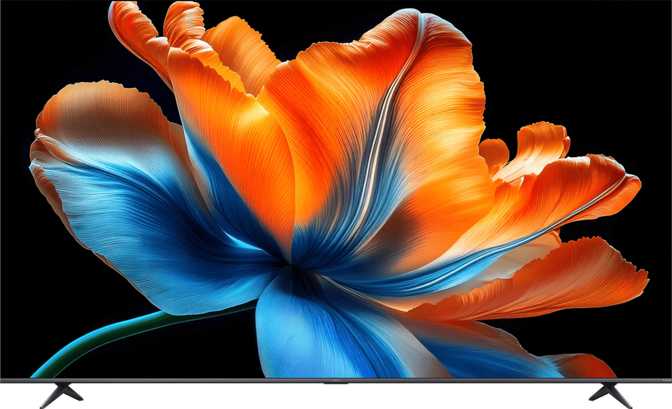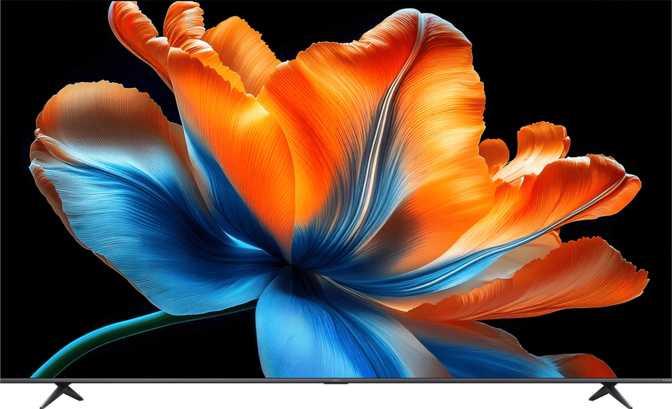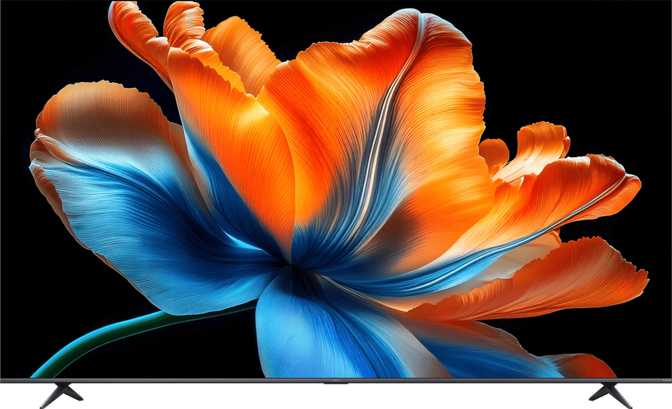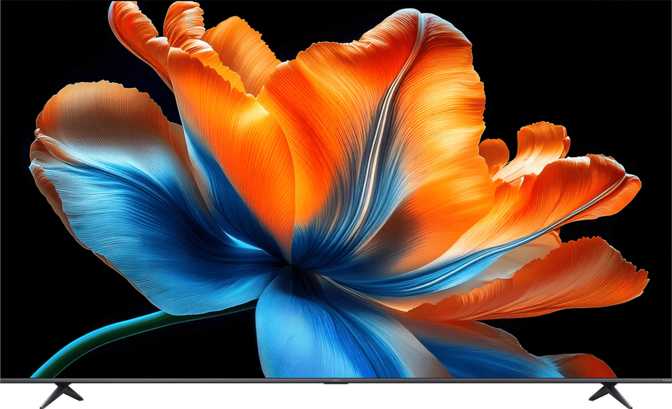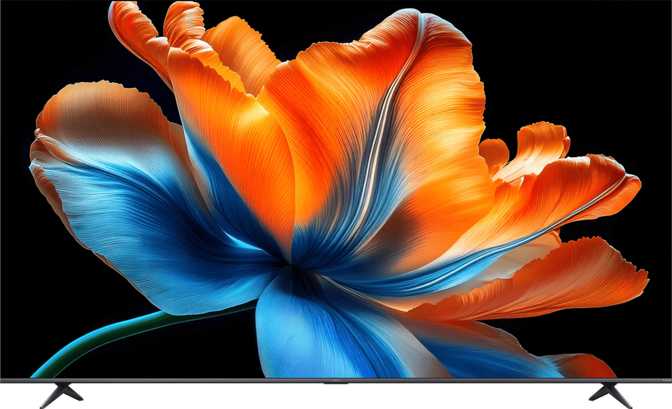
Xiaomi TV S Mini LED 2026 55" Review: Brilliant Picture, Real Value
The 55-inch television market is one of the most contested battlegrounds in consumer electronics, and for good reason — it hits the sweet spot between screen real estate and living-room practicality. Most buyers land here after rejecting a 65-inch as too large and a 43-inch as insufficient. What Xiaomi has done with the TV S Mini LED 2026 is bring a display technology that was, until recently, reserved for flagship pricing into this mainstream segment. That alone makes it worth a serious look.
Mini-LED backlighting changes the fundamental performance ceiling of an LCD television. Understanding why that matters — and where the trade-offs still live — is the difference between a confident purchase and buyer's remorse.
Review Score
- Exceptional brightness for any room
- All three inputs are full HDMI 2.1
- Supports all four major HDR formats
- AirPlay and Chromecast both built in
- Only one year of warranty coverage
- No Amazon Alexa integration
Design and Build Quality
How It Looks in a Room
The Xiaomi TV S Mini LED 2026 55″ arrives wearing the clean, understated aesthetic that has become a signature of Xiaomi's television lineup. At just 77mm deep, it sits flat and unobtrusive against a wall. At 11.7kg the panel is manageable for a single-person wall mount, though a second pair of hands is always the safer choice when working at height.
The bezels are slim enough that the panel appears to float when wall-mounted, and the overall impression is of a product that doesn't try to announce itself — exactly right for a living-room centrepiece that should disappear when off and command attention only when on. VESA mount compatibility means you're not locked into Xiaomi's stand if your setup calls for an arm or a wall bracket.
Ports and Physical Access
The physical port layout is practical throughout. Three HDMI inputs, two USB ports, and a dedicated Ethernet jack are all present and accessible. The inclusion of a 3.5mm headphone output is a useful touch that many rivals at this tier have quietly dropped. There is no external memory card slot, so local media playback runs through the USB ports or over the network.
Physical Specifications
| Screen Size | 55 inches |
| Width | 1,226 mm |
| Height | 709 mm |
| Depth | 77 mm |
| Weight | 11.7 kg |
| VESA Mount | Supported |
| Operating Range | 0°C – 40°C |
Display Performance
What Mini-LED Actually Means for Your Picture
Traditional LED televisions use a relatively small number of large LED zones behind the panel. When bright content sits next to dark content — a white subtitle over a black letterbox bar, for instance — the entire zone lights up, creating a visible halo around the bright element. Mini-LED backlighting replaces those large LEDs with thousands of much smaller ones, allowing far more precise control over which areas of the screen are bright and which remain genuinely dark.
The practical result is a picture that holds deep blacks alongside brilliant highlights in the same frame — something previously only achievable with OLED technology, which carries a higher price and a risk of permanent image retention on static content.
Brightness That Handles Any Room
The panel reaches a peak brightness of 1,200 nits. Most mid-range sets in this class manage 300–500 nits, and well-regarded upper-mid-range panels rarely exceed 700 nits without boost modes. At 1,200 nits, this television holds its image in a sunlit room where most competitors visibly wash out, and it delivers the full intended punch of HDR content exactly as the material was graded.
Colour Depth and Accuracy
The combination of QLED quantum dot technology with the Mini-LED backlight produces colour output that only becomes possible with genuine 10-bit processing. Gradients look like gradients rather than stepped colour bands, skin tones appear natural rather than processed, and sunset scenes retain the subtle orange-to-pink transition that cheaper panels reduce to a muddy smear.
HDR Format Support: All Four Standards Covered
Supporting all four major HDR formats is not guaranteed at this price. Some rivals force you to choose between the Dolby and Samsung ecosystems. Here, there is no choice necessary — whatever HDR signal arrives at the TV, it will be processed correctly.
| HDR Format | Supported | What It Means for You |
|---|---|---|
| HDR10 | Universal standard; works with all HDR streaming content and Blu-ray discs | |
| HDR10+ | Dynamic frame-by-frame metadata; used by Amazon Prime Video and select Blu-rays | |
| Dolby Vision | Dynamic metadata covering Netflix, Disney+, and Apple TV+ HDR content | |
| HLG | Broadcast HDR standard; live sports and select streaming services |
Motion and Gaming Performance
For Viewers
The 144Hz native refresh rate keeps fast sports, action films, and nature documentaries sharp. Football panning shots and on-court tennis stay crisp rather than trailing into blur. Motion interpolation for lower frame-rate content is also available — though this remains a matter of personal taste.
For Gamers
Three HDMI 2.1 ports at 144Hz places this television in direct competition with dedicated gaming monitors. A PlayStation 5 or Xbox Series X outputs at 4K/120fps — the TV handles it natively. PC gamers with high-end hardware can push to 144fps at 4K, a combination no gaming monitor at this screen size can match.
Wide Viewing Angles and Screen Treatment
The panel's 178-degree viewing angle in both horizontal and vertical planes means picture quality holds up whether you're watching from the centre of the sofa or from across the room at a wide angle. Contrast and colour don't shift dramatically as you move off-axis, which matters enormously in living rooms where not everyone sits directly in front of the screen.
The anti-reflection coating scatters direct light from windows and lamps, reducing the mirror-like glare that makes darker scenes unwatchable on cheaper panels. The built-in ambient light sensor adjusts backlight output automatically based on measured room brightness — brighter during the day, softer at night — without requiring manual adjustment.
Audio Performance
What 30 Watts Gets You
The built-in speaker system delivers 30 watts total across a stereo pair — above average for a television at this screen size, where 20 watts is typical and many manufacturers treat internal audio as an afterthought. For casual daily viewing, the speakers are entirely adequate. For films and series, the audio holds up better than most built-in systems at this size.
Dolby Atmos processing is included. Genuine Atmos requires upward-firing speakers or an external soundbar, but Dolby's TV-optimised processing still produces a more open, three-dimensional soundstage than standard stereo decoding. Serious home cinema setups should budget for a soundbar — and this TV's connection options support one very well.
Audio Output Options
-
HDMI eARCFull lossless passthrough — Dolby TrueHD, DTS-HD, uncompressed PCM
-
HDMI ARCCompressed audio via HDMI — no separate optical cable needed
-
Digital Optical OutputLegacy connection for older soundbars and AV receivers
-
Bluetooth 5.0Wireless headphones for late-night viewing without disturbing others
-
3.5mm Headphone JackWired audio for legacy headphones and equipment
Smart TV Platform and Connectivity
Google TV: The Complete Ecosystem
The TV runs on Google TV, which sits on top of Android TV and brings a unified home screen aggregating content from across your subscriptions. Netflix, YouTube, Disney+, and Amazon Prime Video all appear in a single recommendation feed rather than requiring you to jump between individual apps. Google Assistant responds to voice commands via the remote, enabling hands-free search, playback control, and smart home management.
The TV does not support Amazon Alexa or Apple HomeKit natively — a relevant consideration if your smart home runs on those ecosystems. For the majority of households, Google TV is the more complete platform, but Amazon-ecosystem households will notice the absence.
Wireless and Wired Networking
Wi-Fi 5 (802.11ac) provides reliable dual-band wireless connectivity adequate for all current 4K HDR streaming demands. The dedicated Ethernet port is the right choice for home cinema setups where the TV is near the router, eliminating wireless interference entirely. Miracast support provides an additional screen-mirroring path for Android devices and Windows PCs.
Physical Connections at a Glance
| Port | Qty | Key Note |
|---|---|---|
| HDMI 2.1 | 3 | All three support 4K/144Hz; one port carries eARC |
| USB | 2 | Media playback and USB recording to external drives |
| Ethernet (RJ45) | 1 | Wired network for stable streaming and gaming |
| 3.5mm Audio Out | 1 | Headphones or legacy audio equipment |
| Digital Optical | 1 | Legacy soundbar and AV receiver connection |
Power Consumption and Practical Running Costs
Operating power consumption sits at 230 watts — on the higher end of what a 55-inch television draws, reflecting the demands of the Mini-LED backlight and the processing hardware required to drive a 144Hz 4K panel. For a household watching four hours of television per day, this equates to roughly one kilowatt-hour daily — a meaningful but not unusual figure for a display of this performance tier.
Standby consumption drops to just half a watt, which is negligible across a full year. The operating temperature range of 0°C to 40°C is worth noting for non-standard installations — a garden room or unheated conservatory in winter may fall outside the safe operating envelope.
Who Should Buy This TV
Ideal Buyers
If your main viewing is Netflix, Disney+, Amazon Prime, and Apple TV+, this television covers all the HDR formats those services use, has the brightness to hold its image in afternoon sunlight, and runs a smart platform that aggregates all those apps in one place.
Three HDMI 2.1 ports at 144Hz is a specification you would normally pay significantly more for on a gaming-specific display. If you have a current-generation console and want the full resolution and frame-rate capability on a large screen, this TV delivers it without compromise.
Different household members watch different content in different lighting. The ambient sensor, wide viewing angles, and comprehensive HDR coverage mean the TV performs well across a wide range of scenarios without anyone adjusting picture settings manually.
The combination of AirPlay and Chromecast means both iPhone and Android households get native casting, removing the main friction point iPhone users typically encounter with non-Apple smart televisions.
Look Elsewhere If…
Mini-LED is excellent, but OLED still produces superior black levels and per-pixel contrast for pure dark-room cinematic viewing. If you watch mostly at night with lights off and prioritise absolute black depth above everything else, an OLED in a comparable size may better serve that specific need — though at a higher price and with burn-in considerations for gaming content.
The absence of Alexa support means voice control and smart home integration must run through Google Assistant. If your lights, locks, and thermostats are all Alexa-controlled, this TV will not integrate with that ecosystem via voice commands.
This television is priced as a premium mid-range product and its specification set reflects that. Buyers seeking purely the cheapest 4K screen will find less expensive options — though none will offer Mini-LED backlighting, 144Hz, or full HDMI 2.1 across all ports.
How It Compares to the Competition
The Xiaomi TV S Mini LED 2026 55″ sits in a tier occupied by a defined group of alternatives. Here is how the core specifications compare against the likely shortlist a buyer in this segment would consider.
| Feature | Xiaomi TV S Mini LED 2026 55″ | Typical QLED (Non-Mini LED) | Typical OLED 55″ |
|---|---|---|---|
| Backlight Technology | Mini-LED (thousands of zones) | Standard Full-Array LED | Self-emissive (no backlight) |
| Peak Brightness | ~1,200 nits | ~600–800 nits | ~700–900 nits |
| Black Level | Near-black via precise zone dimming | Zone dimming with more bloom | Absolute black (per-pixel) |
| Native Refresh Rate | 144Hz | 60Hz or 120Hz typical | 120Hz typical |
| Full HDMI 2.1 Ports | 3 | Usually 1–2 | Usually 1–2 |
| HDR Format Coverage | All four major formats | Often HDR10 and HLG only | Usually HDR10 and Dolby Vision |
| Burn-in Risk | None | None | Present with static content |
| Price Tier | Premium mid-range | Mid-range | Premium |
Honest Assessment: Strengths and Weaknesses
What It Does Well
The brightness output is the standout quality. At 1,200 nits, this TV performs in real domestic environments the way most televisions only perform in a dimmed showroom. Paired with the anti-reflection coating and ambient light sensor, picture quality holds up through the full range of daily viewing conditions without manual intervention.
The 144Hz refresh rate with three HDMI 2.1 ports is genuinely unusual at this price tier and makes this a credible large-screen gaming display without the compromises typically associated with that category. Most manufacturers offer one premium gaming input and fill the rest with older connections. Xiaomi's decision to standardise all three ports at the current specification is a practical benefit that will remain relevant for the full lifespan of the television.
The HDR format coverage — all four major standards including both Dolby Vision and HDR10+ — eliminates format anxiety. Whatever streaming service you subscribe to, whatever disc you play, the TV processes the HDR signal correctly.
Where It Falls Short
The speaker system, while above average for a built-in configuration, will not satisfy viewers who have experienced quality external audio. Dolby Atmos processing helps, but two drivers inside a flat cabinet face a physical constraint that no signal processing can fully overcome. Budget for a soundbar if audio quality is a priority.
The one-year warranty period is shorter than some competing manufacturers offer, and is worth factoring into the purchase decision at this price point. It is not unusual in this product category, but it is not generous either.
The Wi-Fi 5 standard, while adequate for current streaming demands, is one generation behind Wi-Fi 6 — a consideration for households that expect streaming requirements to grow. The absence of Alexa compatibility is a genuine limitation for Amazon smart home users, affecting a meaningful percentage of potential buyers.
Questions Real Buyers Ask Before Purchasing
Final Verdict
The Xiaomi TV S Mini LED 2026 55″ earns its position in the premium mid-range tier through a combination of specifications that would, in most competing product lines, require significantly more spending. The Mini-LED backlight paired with 1,200 nits of peak brightness and QLED colour technology produces a picture that performs visibly better than standard LED-LCD sets in real-world domestic lighting — not just in a darkened showroom.
The 144Hz refresh rate with three full-specification HDMI 2.1 ports is a gaming-ready configuration that almost no rival at this price matches. Full HDR format coverage across all four major standards means the TV is properly equipped for every streaming service and physical media format currently available.
The weaknesses — modest internal audio, a shorter warranty than some rivals, Wi-Fi 5 rather than 6, and no Alexa integration — are real and worth naming. But none of them diminishes the core picture quality performance that you are primarily buying a television for. For buyers who want a large-format display that handles streaming, gaming, and broadcast television without compromise in a normally-lit living room, this is a strong and considered choice.