Xiaomi Redmi Buds 8 Active: Full Review for Budget TWS Buyers
Wireless EarbudsMost truly wireless earbuds under $30 ask you to compromise on everything at once — sound, build, connectivity, or call quality. The Xiaomi Redmi Buds 8 Active takes a different approach: pick a few things and do them well enough to matter. Whether that trade-off works for you depends entirely on what you're buying earbuds for. This review breaks down exactly where these earbuds deliver, where they pull back, and whether your money goes further here than anywhere else in this price tier.
Design and Build: Light, Practical, No Frills
How the Redmi Buds 8 Active feels in hand, in ear, and in real-world conditions.
Featherlight at 7.6 Grams
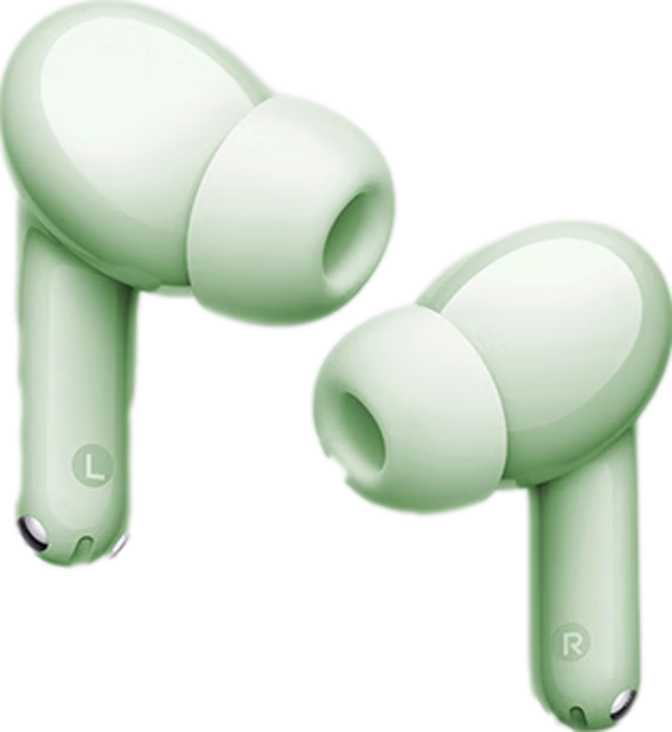
At just 7.6 grams per earbud, these sit on the lighter end of the true wireless spectrum. Less weight means less ear-canal fatigue during extended commutes, long calls, or multi-hour listening sessions. The standard earbud fit — no wingtips, no ear hooks — keeps the housing universal, though buyers whose ears don't naturally grip this profile should note there's no supplementary retention hardware to lock them in place.
IP54 — Sweat and Splash Ready
The IP54 certification covers dust resistance and multi-directional splash protection. In practice: gym sessions, light rain caught off guard, and a bathroom counter tumble are all handled without concern. These won't survive submersion — IP54 isn't a diving rating — but for active everyday wear it's more protection than the price tier typically offers. Sweat resistance is explicitly confirmed in the hardware spec.
No Gimmick Hardware
No RGB lighting, no case display, no UV sanitizing module. Far from a shortcoming, this signals that the engineering budget was directed toward driver size, battery capacity, and microphone quality — the components that actually affect daily performance. Both earbuds operate completely cable-free as a fully true wireless system, with no neckband and no connecting wire between the two buds.
Sound Quality: What That 14.2mm Driver Actually Delivers
Driver size, impedance, and codec support — translated from spec sheet to real-world meaning.
The Driver Size Advantage
The single most impactful hardware decision in any earbud is driver size. The Redmi Buds 8 Active uses a 14.2mm dynamic driver — notably larger than the 10mm to 12mm units common at this price tier. Larger drivers move more air, which typically translates to better low-frequency extension and more physical presence in the sound, particularly for bass-forward music genres like hip-hop, electronic, and pop.
The frequency response covers the complete range of human hearing — from the deepest bass a person can feel to the highest treble detail a healthy ear can detect. The driver size gives reasonable confidence that the hardware can genuinely perform across that range, rather than just meeting the specification on paper.
Impedance and Source Compatibility
At 32 ohms impedance, these earbuds sit at the upper boundary of what most smartphones drive effortlessly. Lower impedance earbuds are easier to push to volume from any source, while higher impedance units reward better amplification. A current-generation flagship phone drives these well. Older or budget Android devices with weaker output stages may find headroom slightly tighter — not a dealbreaker, but worth noting if your primary device is an entry-level handset.
Codec Support: AAC Is Present, LDAC Is Not
The Buds 8 Active supports AAC alongside standard Bluetooth transmission — the codec both Apple and most current Android devices use for higher-quality wireless audio. What isn't included is LDAC, aptX, aptX HD, or any of the high-resolution wireless codecs marketed by premium earbuds. For the majority of listeners streaming Spotify, Apple Music, or YouTube, AAC delivers adequate quality with no perceptible limitation. For listeners with hi-res audio libraries who want lossless wireless transmission, this is a genuine ceiling.
No Active Noise Cancellation
These earbuds have no ANC. The physical seal of the earbud tips is the only noise barrier. In quiet offices and casual outdoor use this is perfectly workable. On loud commuter rail, in open-plan offices with heavy ambient noise, or on aircraft, the difference from ANC earbuds is noticeable. This is the single most significant trade-off and the most important factor to weigh against your personal daily environment.
- Driver Size
- 14.2mm dynamic — large for this tier
- Impedance
- 32 Ohms
- Codec Support
- AAC (no LDAC or aptX)
- Active Noise Cancellation
- Not included
- Spatial Audio
- Not supported
Battery Life and Charging: The Numbers Decoded
How far the battery actually gets you, and what the charging experience looks like day-to-day.
How Long Will They Actually Last?
Seven hours of continuous playback from the earbuds alone is a genuinely usable number. A full workday of background music, two long-haul flight segments, or a full week of typical one-to-two-hour daily commutes — all achievable on a single charge from the buds without opening the case. The case then adds another 30 hours on top, pushing total system endurance well past five full working days before any wall outlet is needed.
In weekly terms: the case needs charging roughly once a week for most users. At this price point, that total endurance figure is competitive with earbuds costing two or three times as much — battery management is one of the clearest wins the Buds 8 Active holds over its competition.
Charging: USB-C, Fast Charging, No Wireless
The case uses USB-C — the current standard — rather than the outdated Micro-USB still found on some budget competitors. A full case recharge from empty takes 1.5 hours, which is reasonable. Fast charging support means a short charge window can recover meaningful playback time even when the battery is nearly depleted.
There is no wireless Qi charging — the cable is always required. A battery level indicator on the case means you'll always know how much reserve remains before plugging in. There's no guessing whether you have enough charge for the day ahead.
Connectivity: Bluetooth 5.4 and What It Changes
Why the Bluetooth version matters and how multipoint connection works in actual daily use.
Bluetooth 5.4 — A Genuine Upgrade
Bluetooth 5.4 is among the most current versions available in consumer earbuds today. Compared to the 5.2 and 5.3 versions common in competing budget models, version 5.4 delivers improved connection stability, lower power draw during transmission, and better performance in wireless-dense environments like gyms, offices, and airports. The real-world result is fewer audio dropouts and a more dependable link between your phone and your ears throughout the day.
Multipoint: Two Devices, Zero Re-Pairing
Simultaneous connection to two devices — a feature many budget earbuds skip entirely — is included here. In practice: your laptop and your phone stay connected at the same time. When a call comes in on your phone, audio switches automatically. When you start playback on your laptop, it takes over. No manual re-pairing required. For anyone who splits time between a personal phone and a work computer, this removes a daily friction point that competing earbuds at this price rarely address.
Fast Pair and Wireless Range
Fast pairing support means first-time connection to a compatible device happens through an automatic prompt rather than manual Bluetooth menu navigation — setup takes seconds, not minutes. The stated maximum wireless range is 10 meters, reflecting standard open-space performance. Walls and obstacles reduce this in practice, but staying within a typical room or moving to an adjacent room from your source device presents no issues under normal conditions.
Microphone and Call Performance
Four microphones and dedicated call-path noise cancellation that punches well above the price tier.
Four Microphones, One Clear Goal
Each earbud houses a microphone array — four total across the pair — combined with active noise cancellation applied specifically to the microphone signal. This is a dedicated call-quality system, entirely separate from any audio playback noise reduction. The four-microphone configuration enables beamforming: the system focuses on sound coming from your mouth while deprioritizing ambient noise from behind and around you.
For a price tier where microphone quality is routinely treated as an afterthought, this is a meaningful differentiator. Remote workers, people who take frequent calls during commutes, and anyone using these for regular video meetings will find the voice reproduction noticeably better than the price tag would suggest.
Voice Features That Matter Day-to-Day
Voice prompts provide audio feedback for pairing status, battery levels, and connection events — no need to remove the earbuds and check your phone to know what's happening. A dedicated mute function lets you silence your microphone mid-call with a single tap control, which is a small but genuinely appreciated feature for anyone who takes regular conference calls or video meetings.
- 4 total microphones (2 per earbud)
- Dedicated call-path noise cancellation
- Beamforming for voice focus
- One-tap mute function during calls
- Fully usable as a headset for calls
- Voice prompts for system feedback
- No notification reading aloud
- No ambient sound passthrough mode
Controls and Companion Features
What's built into the earbuds, what comes in the box, and what's absent from the feature list.
On-Earbud Controls
The control panel is built directly into the earbud housing. Without an in-line cable remote, all interactions — play/pause, track skip, call answer and end, and the mute toggle — happen through touch or button controls on the buds themselves. This is standard for true wireless earbuds and eliminates any dangling remote or wire to deal with during movement or workouts.
There is no in-ear detection. Music will not automatically pause when you pull one bud out — a convenience feature present on premium earbuds that's commonly omitted at this price tier. Similarly, there's no ambient sound passthrough mode, so catching a conversation or a transit announcement means physically removing an earbud.
Complete Feature List
- Fully true wireless — zero cables
- On-earbud touch/button controls
- Mute function for calls
- Find My Earbuds via companion app
- Voice prompts for system events
- Travel / carrying pouch included in box
- USB-C charging case with battery indicator
- No in-ear auto-pause detection
- No ambient sound passthrough
- No wireless (Qi) charging
- No NFC pairing
Who Should Buy the Redmi Buds 8 Active
The clearest signal that a product is well-designed is knowing exactly who it's for — and who it genuinely isn't.
- Daily commuters and office workers
Who need reliable all-day audio in moderate noise environments and don't require ANC to get through their workday comfortably.
- Gym users and active commuters
Who need IP54-rated sweat resistance and want earbuds they don't have to treat as delicate equipment during workouts.
- Frequent callers and remote workers
Who need microphone quality that holds up on professional calls — the 4-mic system handles this at a price tier where most competing mics are an afterthought.
- Multi-device users
Who split time between a phone and laptop and want automatic audio handoff without manual re-pairing each time they switch devices.
- First-time true wireless buyers
Who want a capable, no-fuss entry point without paying a premium for advanced features they may not use yet.
- Loud-environment commuters
Who rely on subway, commuter rail, or regular air travel. Without ANC, there's no active noise management — only whatever the earbud tips physically block.
- Audiophiles and critical listeners
Who need LDAC, aptX HD, or aptX Adaptive for lossless wireless playback from hi-res audio libraries. The Buds 8 Active tops out at AAC.
- Convenience-feature power users
Who expect auto-pause on removal, ambient sound passthrough for conversations, or ANC toggling — none of these features are present here.
- Users on older or budget phones
Whose handsets have weak Bluetooth output stages. The 32-ohm impedance can limit maximum volume on devices with underpowered audio circuits.
How It Compares to the Alternatives
A structured look at how the Redmi Buds 8 Active stacks up against typical competing categories at the same price.
| Feature | Redmi Buds 8 Active | Budget ANC Earbuds | Premium TWS Earbuds |
|---|---|---|---|
| Driver Size | 14.2mmLarge for this tier | 10–12mm typical | 10–11mm (driver size less critical at high tier) |
| Active Noise Cancellation | Not included | Yes (often limited effectiveness) | Yes (high quality) |
| Bluetooth Version | 5.4Current generation | 5.2–5.3 typical | 5.3–5.4 |
| Codec Support | AAC | AAC / SBC | LDAC / aptX Adaptive |
| Total Battery Life | ~37 hours | ~25–30 hours typical | ~24–30 hours |
| Multipoint Connection | Yes (2 devices) | Sometimes included | Yes |
| Microphone Array | 4-micWith call ANC | 2-mic typical | 2–6 mic |
| IP Rating | IP54 | IP44–IP54 | IPX4–IP57 |
| Wireless Charging | Cable only | Sometimes included | Usually included |
The key insight: The Redmi Buds 8 Active trades ANC — the most heavily marketed feature in the budget TWS segment — for a larger driver, a more current Bluetooth version, longer total battery, and a stronger microphone setup. If you've previously tried budget ANC earbuds and found the noise cancellation barely outperformed passive isolation anyway, this trade-off is a reasonable and well-reasoned counterargument.
Honest Assessment: Strengths and Weaknesses
A candid look at what the Redmi Buds 8 Active does well and where it genuinely falls short.
Where It Delivers
The Redmi Buds 8 Active's strengths are real and differentiating. The 14.2mm driver puts it above almost everything in the sub-$30 category on raw sound potential — not a marginal edge but a structural advantage that results from a deliberate engineering choice to skip flashy features in favor of the transducer that actually produces the sound.
Bluetooth 5.4 is genuinely newer than what most competitors at this price point offer, and the practical benefits — fewer dropouts, better stability in crowded wireless environments — are tangible day-to-day, not theoretical spec-sheet claims. The 37-hour combined battery means the charging routine essentially disappears: plug in once a week and the earbuds are always ready.
The four-microphone call system punches noticeably above its price tier. For remote workers or anyone who takes regular calls through their earbuds, this is the feature most likely to produce a genuine surprise given the price. Dual-device multipoint works as advertised and removes a daily frustration that most budget earbuds simply never address.
Where It Falls Short
The weaknesses are equally real and worth naming plainly. The absence of active noise cancellation is a hard line — not a subtle limitation or a minor inconvenience, but a binary absence that will materially affect the experience in loud environments. Loud commuters, open-office workers with significant ambient noise, and frequent flyers should treat this as a disqualifying factor rather than a trade-off to rationalize away.
There's no wireless charging, no ambient sound passthrough, no in-ear detection for auto-pause, and no support for high-resolution audio codecs. Users arriving from mid-range or premium earbuds will notice each of these absences in their daily routine. The 1.5-hour charge time, while reasonable, isn't the quick 30-minute turnaround some similarly priced competitors offer.
The standard earbud fit with no wingtips is worth evaluating carefully in the return window. It works well for many ear shapes, but buyers who have historically struggled with earbud fit stability should test early before losing the option to exchange.
Common Questions Before You Buy
Answers to what real buyers search for before making a decision.
Final Verdict
A focused, honestly engineered product that earns its price.
The Xiaomi Redmi Buds 8 Active is built around clear priorities, and understanding those priorities makes the purchase decision straightforward. If your days involve long stretches of music or podcast listening, regular phone or video calls, multi-device switching between phone and computer, and you're not dependent on noise cancellation to survive your environment — these are an exceptionally strong value proposition at their price point.
The battery will outlast most competing earbuds at the same price. The call quality will impress anyone who has previously tolerated a two-microphone budget earbud. The 14.2mm driver gives the sound a body and presence that smaller transducers at this tier rarely match. And Bluetooth 5.4 is genuinely more current than what the vast majority of sub-$30 earbuds offer.
If active noise cancellation is non-negotiable for you — if your daily commute, work environment, or travel routine genuinely requires it — then this is not the right product, and investing slightly more in a dedicated ANC model is the correct call. For everyone else, this is one of the more thoughtfully engineered budget true wireless earbuds available, and the price-to-performance ratio is difficult to argue with.