Xiaomi Pad 8 Review: A 144Hz Tablet That Punches Above Its Price
TabletsThe mid-range Android tablet market has long been a graveyard of compromised displays and underpowered chips. The Xiaomi Pad 8 makes a compelling argument that you no longer need to spend flagship money to get a genuinely great tablet experience. It brings a processor architecture typically reserved for premium devices, a screen that refreshes fast enough to make everything feel alive, and a battery that will outlast most of your weekends — but it also ships with a handful of omissions that will be dealbreakers for a specific type of buyer.
Editor's Score
- Outstanding display value
- Premium-tier chipset
- Exceptional battery life
- No GPS or cellular
- eMMC storage limitation
Design and Build Quality
Physical experience, dimensions, and materials
The Pad 8 is built around dimensions that put it squarely in the 11-inch productivity-meets-entertainment category. At just under 5.8mm thick, it is one of the slimmer tablets available at this tier — most books you'd stack next to it on a nightstand are thicker. The weight sits at 494 grams, which is light enough to hold one-handed during a commute without your wrist protesting, yet substantial enough to feel like quality hardware rather than a hollow shell.
The footprint — roughly 251mm wide and 173mm tall — gives you an aspect ratio that sits comfortably between a widescreen movie experience and a portrait reading orientation. It won't feel cramped when browsing in landscape, and it won't feel comically long when held upright.
The display is protected by branded damage-resistant glass. It isn't sapphire, but it provides a meaningful layer of scratch and drop protection beyond bare glass — which matters on a device you'll likely carry in a bag alongside keys and other hazards.
- Weight
- 494 g
- Thickness
- 5.8 mm
- Dimensions
- 251.2 × 173.4 mm
- Glass Protection
- Damage-resistant glass
- Water Resistance
- None
- Stylus Included
- Not Included
The Display: Where the Xiaomi Pad 8 Earns Its Price Tag
Panel quality, refresh rate, and HDR performance
Panel Quality and Resolution
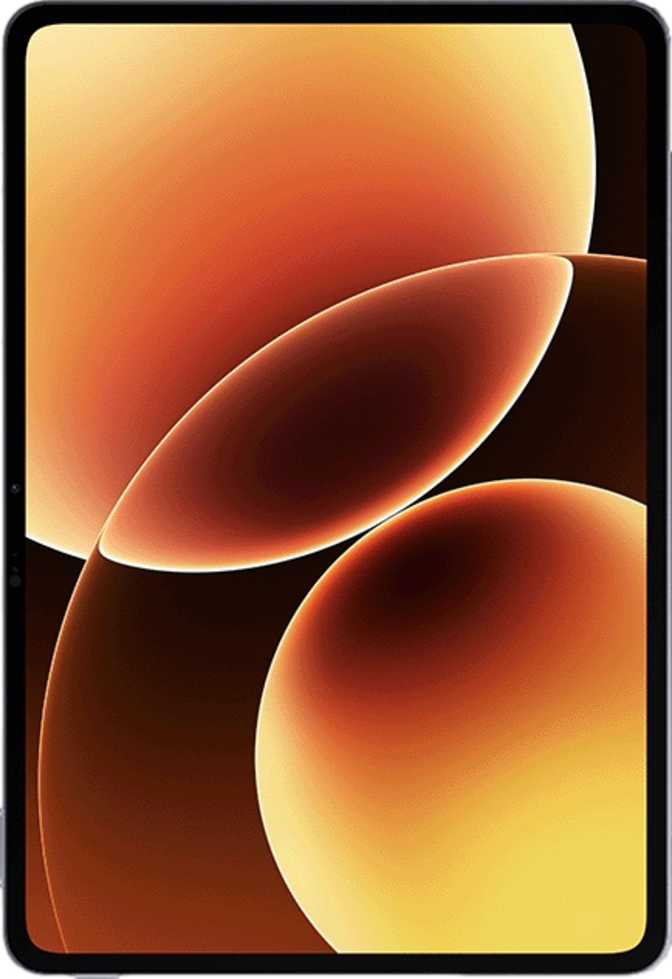
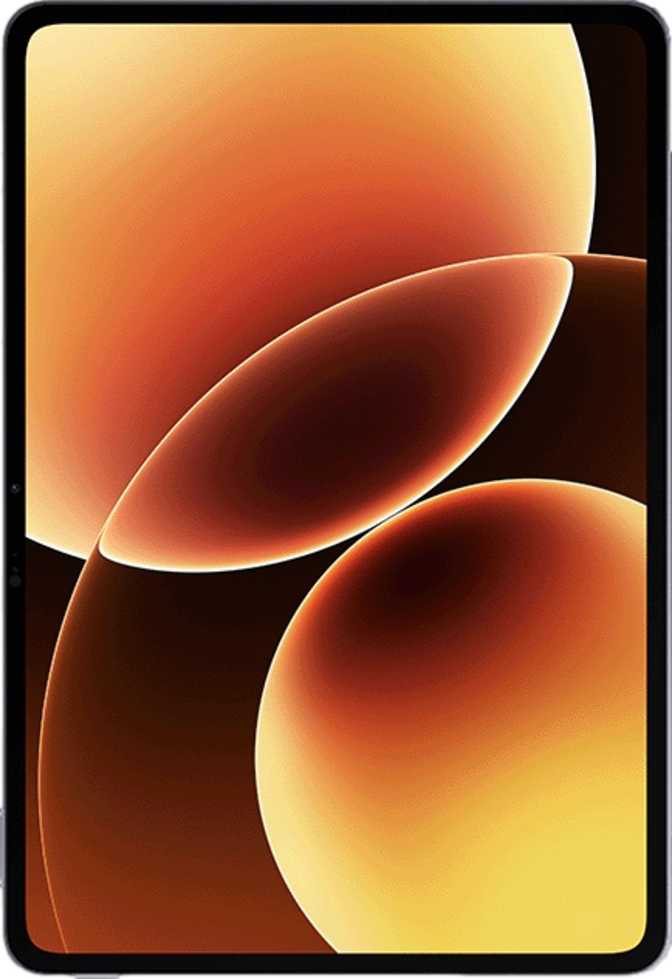
The 11.2-inch IPS LCD panel is one of the strongest arguments for choosing the Pad 8 over its competition. IPS gets a bad reputation next to OLED, but at this size and with this resolution, the difference is far less dramatic than the marketing would have you believe — and the Pad 8's panel has clear advantages in certain areas.
The resolution of 3,200 × 2,136 pixels produces a pixel density of 344 pixels per inch. That number means you will not see individual pixels under normal viewing conditions. Text is crisp, fine details in photos are preserved, and reading for extended periods is comfortable. What you're getting here is genuinely sharp — not "sharp for an Android tablet."
Refresh Rate and Touch Response
The 144Hz refresh rate is the feature that transforms daily use on this device. Every scroll, every swipe, every transition looks noticeably smoother than on a standard 60Hz tablet. On a large display, that difference is even more pronounced than on a smartphone.
The 240Hz touch sampling rate means the screen polls your finger's position 240 times per second. In practical terms, this makes handwriting and drawing feel closer to pen on paper, and fast-paced games feel more responsive. Even if you're not a gamer, you'll notice it in how accurately fast swipes register.
The display supports both HDR10 and Dolby Vision — the two major HDR standards. Dolby Vision is the more demanding certification; content mastered in it dynamically adjusts the image scene by scene rather than applying a static HDR profile. Netflix, Disney+, and Apple TV+ all stream Dolby Vision content, which means you'll see a genuine visual upgrade when watching supported titles.
One gap worth noting: there is no anti-reflection coating. In bright indoor environments or near windows, you may encounter glare — a real-world limitation if your primary use case involves outdoor or brightly lit spaces.
Performance: A Chipset Punching Above This Tier
Snapdragon 8s Gen 4, RAM architecture, and storage analysis
What the Snapdragon 8s Gen 4 Means for You
The Snapdragon 8s Gen 4 is not the absolute top-end Snapdragon — that designation belongs to the flagship 8 Gen series — but it is built on the same 4-nanometer manufacturing process as those flagship chips. The "s" indicates a slightly more efficiency-focused configuration, but the practical distance between this chip and its premium sibling is considerably smaller than the marketing hierarchy implies.
The processor uses a heterogeneous core architecture: a mix of high-performance cores running above 3GHz, mid-tier cores for balanced workloads, and efficiency cores for background tasks. This means the chip can sprint through demanding tasks and then pull back to conserve power during lighter use, rather than burning full throttle all the time.
RAM and Memory Architecture
Twelve gigabytes of DDR5 memory running at 4,800MHz provides both the speed and capacity headroom to keep many apps open simultaneously without the system quietly killing background processes. DDR5 at this speed represents a meaningful step up from DDR4 found in older alternatives — the memory bandwidth of 76.8 GB/s contributes directly to how quickly the CPU and GPU can move data during intensive operations.
The memory ceiling extends to 24GB total when virtual RAM expansion is enabled, drawing on storage to supplement physical RAM for additional multitasking headroom.
These scores reflect the chip's real-world performance ceiling for app workloads, gaming, and creative tasks.
Comfortably handles all Android apps, video editing, and demanding games
Strong per-core speed — determines snappiness of app launches and UI
- Chipset
- Snapdragon 8s Gen 4
- Process Node
- 4nm
- GPU
- Adreno 825 @ 1,150MHz
- RAM
- 12GB DDR5 (up to 24GB)
- Storage
- 256GB eMMC 5.1
- Android Version
- Android 16
The 256GB internal storage uses the eMMC 5.1 standard — the most significant technical limitation on this specification sheet. eMMC is slower than the UFS 3.1 or UFS 4.0 found in flagship phones and premium tablets. This primarily affects large file transfers, app installation speeds, and loading times for very large game assets. For everyday use — browsing, streaming, social media, office apps — you likely won't notice. For someone regularly moving large video files or playing AAA mobile games with multi-gigabyte assets, the storage limitation becomes a genuine bottleneck. There is no microSD card slot to supplement this.
Battery Life: The Quiet Superpower
Endurance, charging, and daily usage expectations
Larger than most competing tablets in this price segment, which typically ship with 7,000–8,000mAh cells
The 9,200mAh battery is large even by tablet standards. Combined with the power-efficient 4nm chipset, this translates into real-world stamina that most users will measure in days rather than hours.
For typical tablet usage patterns — a few hours of browsing, an hour or two of streaming, some messaging — you will generally have meaningful charge remaining at the end of a full day. Heavy users pushing gaming sessions and 4K video playback back-to-back will close in on the lower end of battery life, but even they should comfortably complete a day without hunting for a charger.
The 144Hz display can dial back to lower refresh rates during static content to conserve power, and ramp up during fast-moving content — the large battery reserve means even sustained high-refresh use does not produce critically short battery life.
Audio: Competent Stereo That Matches the Display
Speakers, Bluetooth, and wireless audio codec support
Stereo speakers are present, which is the baseline requirement for a tablet used for media consumption. Without a 3.5mm headphone jack, wired audio connections require a USB-C adapter or a Bluetooth solution. Bluetooth 5.4 handles wireless headphones well, with a stable connection and bandwidth to support modern wireless audio codecs.
There is no aptX, aptX HD, or LDAC certification, which means audiophiles who rely on high-resolution wireless audio codecs should factor that in. For most people using standard true wireless earbuds or headphones, Bluetooth 5.4 provides a perfectly reliable connection.
- Stereo Speakers Yes
- Bluetooth 5.4 Yes
- 3.5mm Jack No
- aptX / aptX HD No
- LDAC No
Software and Smart Features
Android 16, HyperOS capabilities, and privacy controls
The Pad 8 runs Android 16, which places it among the most current Android software available. The HyperOS layer Xiaomi applies brings a number of quality-of-life features worth highlighting for both productivity and family use.
Cameras: Functional, Not a Feature
What to realistically expect from tablet cameras at this tier
- 4K video at 30 fps
- Phase-detection autofocus
- HDR mode
- Panorama shooting
- Manual ISO, exposure, white balance
- Continuous autofocus in video
- No optical image stabilization
- No slow-motion recording
- No timelapse
- f/2.3 aperture — solid for video calls
- HDR support
- No front flash
Tablet cameras are always a compromise. The Pad 8's cameras are best understood as tools for document scanning, video calls, and quick captures — not photography. The absence of optical image stabilization means handheld video requires steady hands. The front camera is well-suited for video calls, which is its primary use case.
Connectivity: Wi-Fi 7 Headline, Important Gaps Below
Wireless standards, USB, Bluetooth, and critical omissions
Wi-Fi 7: A Meaningful Upgrade
The Pad 8 supports Wi-Fi 7 (802.11be), the current highest Wi-Fi standard. This means the tablet can take full advantage of Wi-Fi 7 routers as they become more common — delivering lower latency and higher throughput than the Wi-Fi 6 found in most competing devices. If you have an older router, the Pad 8 is fully backward compatible with Wi-Fi 6, Wi-Fi 5, and Wi-Fi 4.
USB 3.2: Fast Wired Transfers
The USB-C port supports USB 3.2, enabling meaningful wired data transfer speeds and allowing the Pad 8 to connect to USB hubs, external storage, and compatible displays. This is a step above the USB 2.0 found on many budget tablets.
The Pad 8 is a Wi-Fi-only device. There is no SIM card slot and no 5G or LTE capability. Navigation apps will not function without a Wi-Fi connection because there is also no GPS module. If you need a tablet that works as a standalone connected device on the go, or want turn-by-turn navigation without a phone nearby, this device does not support those use cases.
| Feature | Status |
|---|---|
| Wi-Fi 7 (802.11be) | |
| Bluetooth 5.4 | |
| USB-C 3.2 | |
| Gyroscope | |
| Compass | |
| Accelerometer | |
| GPS | |
| NFC | |
| 5G / LTE | |
| Fingerprint Scanner | |
| 3.5mm Headphone Jack | |
| Wireless Charging |
Who Should Buy the Xiaomi Pad 8 — and Who Should Not
Real-world usage scenarios and purchase fit assessment
-
Students and remote workers who want a capable, portable screen for note-taking, document editing, video calls, and cloud-based work — all on Wi-Fi.
-
Media consumers who stream a lot of content and want Dolby Vision quality, a smooth 144Hz display, and a battery that doesn't require mid-afternoon charging.
-
Casual to mid-core gamers who want a large, high-refresh display and a processor capable of handling modern mobile games without frame drops.
-
Families looking for a multi-user tablet with parental controls and enough performance headroom to stay relevant for several years.
-
Upgraders from entry-level or mid-range tablets who will notice an immediate, dramatic improvement in display smoothness and performance.
-
Buyers who need offline navigation or standalone cellular connectivity. The absence of GPS and LTE is a hard constraint, not a minor inconvenience.
-
Professional creatives who transfer large files frequently and need fast storage throughput. eMMC storage will frustrate anyone with a workflow built around moving large video or RAW photo files.
-
Stylus and keyboard users who want accessories out of the box. Both require separate purchases and are not bundled.
-
Audiophiles who depend on high-resolution wireless audio codecs. The standard Bluetooth implementation won't satisfy that use case.
-
Outdoor or workshop users who need a rugged or waterproofed device for demanding environments.
How the Xiaomi Pad 8 Compares to the Competition
Competitive positioning against logical alternatives in the same price range
| Feature | Xiaomi Pad 8 | Typical Android Rival (Same Price) | Apple iPad (10th Gen) |
|---|---|---|---|
| Display Refresh Rate | 144Hz | 60–90Hz common | 60Hz |
| Chipset Generation | Snapdragon 8s Gen 4 (4nm) | Snapdragon 7-series or older | Apple A14 Bionic |
| HDR Standard | HDR10 + Dolby Vision | HDR10 in most cases | True Tone, no Dolby Vision |
| Wi-Fi Standard | Wi-Fi 7 | Wi-Fi 6 typical | Wi-Fi 6 |
| Storage Interface | eMMC 5.1 | UFS 2.2 or eMMC 5.1 | NVMe-class (significantly faster) |
| Cellular Option | No | Often available as SKU | Yes, separate SKU |
| OS Updates | Via Xiaomi | Via manufacturer | Direct from Apple, multi-year |
| Battery Capacity | 9,200mAh | 7,000–8,000mAh typical | ~7,600mAh equivalent |
The Pad 8 wins on display refresh rate, HDR certification, battery size, and chipset modernity against most Android alternatives. It loses to Apple on storage speed, software longevity, and ecosystem integration — and to Android competitors that offer cellular variants if connectivity is a priority.
Questions Real Buyers Ask Before Purchasing
Direct answers to the most common pre-purchase searches
The Xiaomi Pad 8 Is the Best Display Value at Its Price — With Caveats You Must Know
A clear, direct recommendation for every type of buyer
The Xiaomi Pad 8's strongest quality is the combination of its display and processor, and how those two things reinforce each other. The 144Hz panel doesn't feel like marketing padding — it genuinely changes how the device feels to use. Pair that with a chip that can sustain the frame rates to fill that display, and the result is a tablet that feels faster and more responsive than most of what you'll encounter in its price bracket.
The battery size is a legitimate standout. Competitors routinely underspec battery capacity at this tier, and the Pad 8's reserve here means it can absorb heavy use days without the anxiety of watching the percentage tick downward by lunchtime.
Where the device asks for compromise: the eMMC storage is the most technically backward choice in an otherwise forward-looking spec sheet. The absence of a fingerprint scanner is also an unusual omission for a device at this level — face unlock is the only biometric option, and that has real limitations in low light or mask-wearing situations. The Wi-Fi-only design means this device is tethered to your home network or a mobile hotspot in ways that some buyers simply cannot accommodate.
You stream content, do light to moderate productivity work, game casually, and use a connected home environment. You'll notice the better screen and performance every single time you pick it up.
You need cellular, GPS, fast storage for large files, included accessories, or a guaranteed multi-year update pipeline. Those needs are real, and this device does not cover them.