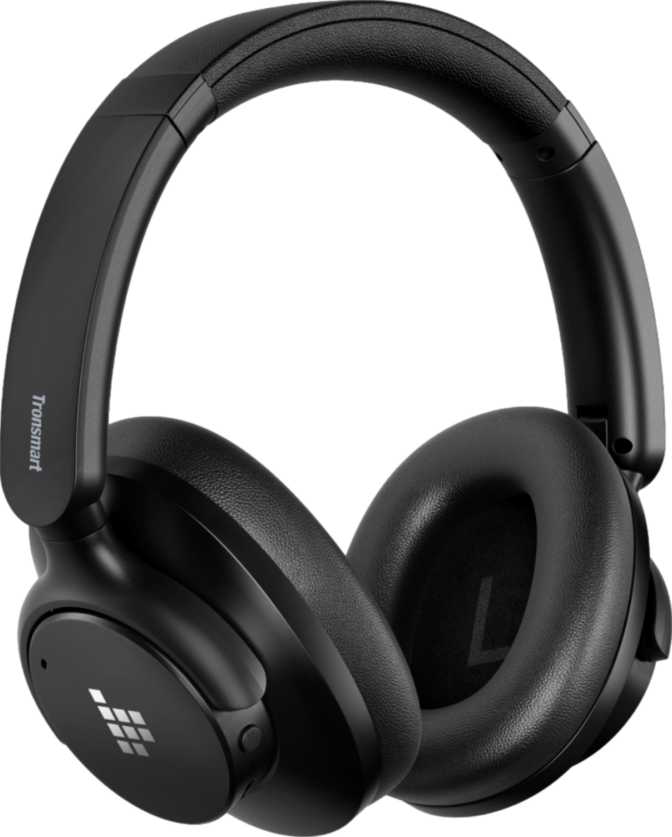
The Sounfii Q20S earns its place on merit: extraordinary battery endurance and practical active noise cancellation at a budget price. The one honest concession is Bluetooth audio codec support, which falls short of some competing options. For everyday listeners who value charge-free days over maximum fidelity, this headphone delivers more than its price implies.
Why the Sounfii Q20S Deserves a Second Look
When a budget headphone leads with a battery claim that most flagship models cannot match, healthy skepticism is the right first reaction. Battery figures get stretched, lab conditions rarely mirror real life, and the number on the box often collapses under actual use. But the Tronsmart Sounfii Q20S makes that endurance figure its central argument — and even applying a conservative real-world discount, what remains still outpaces most of what occupies this price bracket by a meaningful margin.
Layer in active noise cancellation, a foldable build, sweat resistance, wired-plus-wireless flexibility, and a noise-canceling microphone for calls, and the picture becomes more interesting than a single headline spec usually allows. The Q20S is not trying to compete with five-hundred-dollar headphones. It is trying to be the most practical headphone at its price — and that is a different, more winnable fight.
Design and Build Quality
Portability and Build
The Q20S folds flat — ear cups rotating inward against the headband — so it fits in a bag rather than demanding its own dedicated compartment. Its weight sits at the lighter end of the over-ear category, comparable to carrying a small paperback on your head. That lightness stops registering after the first few minutes of wear. Construction is plastic throughout, with stable hinges and a headband that adjusts across a wide enough range for most head shapes. No carrying case is included; a soft pouch is advisable for travel.
Detachable Cable
The detachable audio cable earns its place more than most accessories do. When the battery empties mid-journey, plug in and keep listening. Airplane seat jacks, gym machine audio ports, audio interfaces — the cable makes those scenarios functional without compromise. It also resists tangling by design, a practical improvement that is only truly noticed once you no longer have to untangle a knotted cable from a bag at speed.
Sweat Resistance
The Q20S carries an IPX4 moisture resistance rating — the tier that covers perspiration and incidental splashes without damage. Wear it on the treadmill, the bike, or through light rain on a morning commute without concern. It is not designed for submersion or sustained heavy rain. For most active listeners, this protection level covers everything they will realistically encounter during a normal workout or commute.
Sound Quality and Noise Cancellation
How the ANC Works in Practice
Active noise cancellation on the Q20S follows the approach used in most consumer ANC headphones: microphones outside the ear cups sample incoming ambient noise, the headphone's processing generates a counter-signal, and the two waveforms cancel each other before reaching your ears. The technology targets steady, low-frequency noise — aircraft engine drone, HVAC hum in offices, the background rumble of trains and buses.
At this price tier, ANC reduces rather than eliminates the outside world. Think of it as turning the world's volume down substantially rather than pressing mute. For commuting, office focus work, and travel, that reduction is enough to meaningfully improve both comfort and concentration.
Ambient Sound Mode
The transparency mode uses the headphone's microphones to relay external audio directly to your ears while the headphones remain on. Useful for quick conversations, navigating a transit station, or catching an airport announcement without removing the headphones. The effect has a slightly processed character compared to open air, but it is functional enough for the brief real-world interactions it is designed to handle.
Layered Noise Isolation
The Q20S combines active cancellation with the passive isolation a closed-back, over-ear design provides inherently. The ear cups physically seal against your head, blocking sound through material absorption and the barrier of the cups — a technique that requires no battery and works across the full frequency spectrum.
Drivers and Frequency Coverage
The drivers aim to cover the complete spectrum of human hearing — from the deepest bass to the highest treble the human ear can detect. No portion of the musical range is excluded by design.
Battery Life and Charging
The Headline Claim, Interrogated Honestly
Most ANC headphones in this price bracket fall between 25 and 40 hours of claimed endurance — already a multi-day figure for most users. The Q20S claims a ceiling well above that. If it delivers even 75 percent of its stated figure under daily conditions with ANC engaged, the result is a headphone that a person listening four to six hours daily might charge only once a week. That genuinely changes battery management from a recurring task to an occasional afterthought.
ANC consumes additional power when running, so expect real-world performance to fall below the maximum claim. Treat the figure as a ceiling rather than a guarantee — and understand that even at a meaningful real-world discount, the Q20S leads the category on endurance.
USB-C charging compatible with any modern phone charger or laptop port. No proprietary cable required — the cable you already own is the one you need.
Check remaining charge directly on the headphone without pairing a phone or opening an app. Most useful exactly when it matters most — before a long flight or the start of a full workday.
Consistent with this price tier and not a practical gap for the audience this headphone serves. A 2.5-hour overnight top-up fits any routine without effort.
Connectivity and Bluetooth Performance
Bluetooth Connection Quality
The Q20S runs on current-generation Bluetooth, delivering practical improvements in connection stability, energy efficiency, and performance in signal-congested environments over earlier iterations. Fewer dropouts in offices, airports, and transit where dozens of wireless signals compete for bandwidth — and marginally better chip-level battery efficiency as a side effect.
Wireless range is effective across a large open room. Move through a wall into an adjacent space and the signal degrades before it breaks. Ideal for desk use, commuting with a phone in your pocket, and office environments where the source device stays in the same room. Less suited for users who routinely leave their phone in one room and move freely across multiple floors.
- Same room, open plan — stable and consistent
- Phone in pocket during commute — no issues
- Through walls or across floors — signal degradation expected
- Free roaming across large multi-room spaces — not well suited
The Codec Situation — Read This Before Buying
This is the Q20S's most consequential limitation, and the specification most likely to affect your actual listening experience. It takes 60 seconds to understand — and it may determine whether this is the right headphone for you.
The Q20S does not support any enhanced Bluetooth audio codec. No AAC, no aptX in any variant, no LDAC, no LDHC. The active codec is SBC — Bluetooth's universal baseline. Every device supports SBC, but it represents the lower ceiling of wireless audio quality transmission.
| Codec | Q20S | Who Is Affected |
|---|---|---|
| AAC | iPhone users receive lower-quality Bluetooth audio than AAC-capable headphones deliver on the same device | |
| aptX / aptX HD | Android users on Qualcomm-powered phones face the same wireless quality ceiling | |
| LDAC | High-resolution audio listeners cannot unlock better wireless fidelity | |
| SBC | Universal baseline — works with all Bluetooth devices without exception |
Features That Matter in Daily Use
Call Microphone Quality
The noise-canceling microphone filters ambient sound from your transmitted voice before the other person hears it. In a busy open-plan office, on a street, or in a café — call recipients hear you more clearly than they would from a phone held at a distance. Competent for professional video calls and everyday voice communication. Not a substitute for dedicated recording equipment, but for its primary purpose it delivers reliably.
On-Device Controls
All physical controls sit directly on the ear cups — playback, volume, and mode switching without reaching for your phone. No inline remote on the cable, which is the correct design call for an over-ear headphone where cup-mounted controls are more natural and immediately accessible. The placement means controls are always exactly where your hand expects them to be.
No Auto-Pause on Removal
The Q20S does not detect when it has been removed from your head. Competing products at comparable prices now commonly include ear-detection sensors that pause audio automatically when you take the headphones off. This is a manual-pause headphone — exactly how headphones have always worked, but a convenience step behind products that have introduced that habit. Worth knowing before buying if auto-pause is something you already rely on.
Who the Q20S Is Built For — and Who It Isn't
A Strong Match For
-
Commuters and long-haul travelersMulti-hour journeys without charging anxiety — this is where the battery advantage registers most clearly
-
Remote workers on extended callsAll-day comfort and a microphone that performs in noisy home environments without fatigue
-
Gym and active listenersSweat resistance and wireless freedom without needing to charge before every session
-
First-time ANC buyersComprehensive feature set without complex setup or a steep learning curve
-
Casual streamersSpotify, YouTube Music, and standard-bitrate services where the Bluetooth codec ceiling is largely imperceptible
A Poor Match For
-
Audiophiles and hi-res listenersThe Bluetooth codec ceiling creates a real fidelity limitation that better-specified alternatives don't impose
-
iPhone users who prioritize sound qualityWithout AAC, iOS devices cannot deliver their preferred Bluetooth audio quality tier through this headphone
-
Multi-device switchersNo seamless multi-point pairing — switching sources requires manual reconnection each time
-
Large-space roamersModerate wireless range means the source device needs to remain in the same room
-
Auto-pause and touch-control usersNeither ear-detection nor touch controls are present — physical buttons only throughout
How It Compares to the Competition
The budget ANC over-ear category is genuinely competitive. The Q20S doesn't lead every dimension, and it doesn't need to. Here is where it stands on the factors that actually determine purchase decisions at this price tier.
| Feature | Tronsmart Sounfii Q20S | Typical Budget ANC Rivals |
|---|---|---|
| Battery Endurance | Class-Leading | 25 – 40 hours typical |
| Active Noise Cancellation | ||
| Transparency / Ambient Mode | Not always included | |
| Bluetooth Audio Codec | SBC Only | AAC commonly included |
| Foldable Design | Varies by model | |
| USB-C Charging | ||
| Sweat Resistance (IPX4) | Not universal | |
| Detachable Audio Cable | Varies by model | |
| Noise-Canceling Microphone | ||
| Auto-Pause / Ear Detection | Increasingly common | |
| Carrying Case Included | Varies |
The trade the Q20S makes is explicit: extraordinary battery endurance, in exchange for a Bluetooth audio codec selection that doesn't match what some competing options include. Whether that's a favorable trade depends entirely on which row above matters most to you.
Honest Assessment: Strengths and Real Limitations
What It Gets Definitively Right
The battery story is not a marketing flourish — it represents a genuine functional advantage that users feel every day they own the headphone, not just when they read the spec sheet for the first time. For anyone who has arrived at an airport to find their headphones at 15%, the prospect of charging once a week changes how the headphone fits into a weekly routine.
The combination of ANC and passive isolation works better together than either system alone. The closed-back design contributes meaningfully to noise blocking at no additional battery cost, and the ambient mode is implemented with enough functional usefulness that you'll actually reach for it during real-world interactions.
The practical design decisions compound well: the fold, the detachable cable, the sweat resistance, and the USB-C charging together produce a headphone that handles real-world use with genuine flexibility. Wired fallback when the battery depletes, IPX4 protection at the gym, folded flat in a bag — these are features built for Tuesday morning, not the specification sheet.
Where It Comes Up Short
The codec situation is the Q20S's genuine weak point, and there is no constructive way to reframe it. No AAC means Apple device users receive a lower-quality Bluetooth signal than competing headphones deliver on the same device. No aptX means the same is true for Qualcomm-powered Android devices paired with quality sources. For casual streaming this is largely imperceptible; for quality-conscious listeners it represents a real ceiling that better-specified alternatives don't impose.
The wireless range is functional for typical room use but limits true freedom of movement. The absence of auto-pause is a small but genuine inconvenience — a feature now common enough at this price that its absence registers on first use for anyone who has grown accustomed to it.
The missing carrying case leaves a practical gap that a pouch or padded bag pocket resolves — but requires a separate purchase or repurposed gear. Small omission, real cost.
Questions Real Buyers Are Asking
The Verdict
The Tronsmart Sounfii Q20S makes one trade clearly and consistently: exceptional battery endurance, capable ANC, genuine build flexibility, and a complete everyday feature set — in exchange for Bluetooth audio codec support that falls short of some competing options.
For the audience this headphone targets — commuters, remote workers, gym users, casual streamers, and first-time ANC buyers who need reliable all-day and multi-day performance without constant charging management — the Q20S delivers considerably more than its price implies. The battery advantage alone separates it from most of what it competes against at this tier. The rest of the package holds up that lead.
For audio enthusiasts, iPhone users who prioritize sound quality, and anyone for whom high-fidelity Bluetooth transmission is a baseline requirement, the codec ceiling is a real cost that competing options absorb better. Know which group you belong to — and this becomes an easy call.
Endurance and practical versatility matter more than maximum wireless audio fidelity.
Bluetooth audio quality is your first evaluation criterion.