Suunto Spark Review: Open-Ear Sport Earbuds for Active Lifestyles
Wireless EarbudsWhat the Suunto Spark Actually Is — and Why That Changes Everything
Most earbuds compete to block the world out. The Suunto Spark takes the opposite stance.
Built around an open-ear design, it's engineered for people who need to hear what's around them just as much as what's in their ears — whether that's traffic on a morning run, a teammate calling out on the court, or simply a preference for not feeling cut off from the environment.
Suunto has long been associated with the demands of outdoor and athletic use, and the Spark reflects that DNA. This isn't a casual listening earbud dressed up in sport clothing. It's a purpose-built wireless audio tool for active lifestyles — and understanding that framing is the key to evaluating everything else about it.
Design and Build: Light, Secure, and Honest About Its Purpose
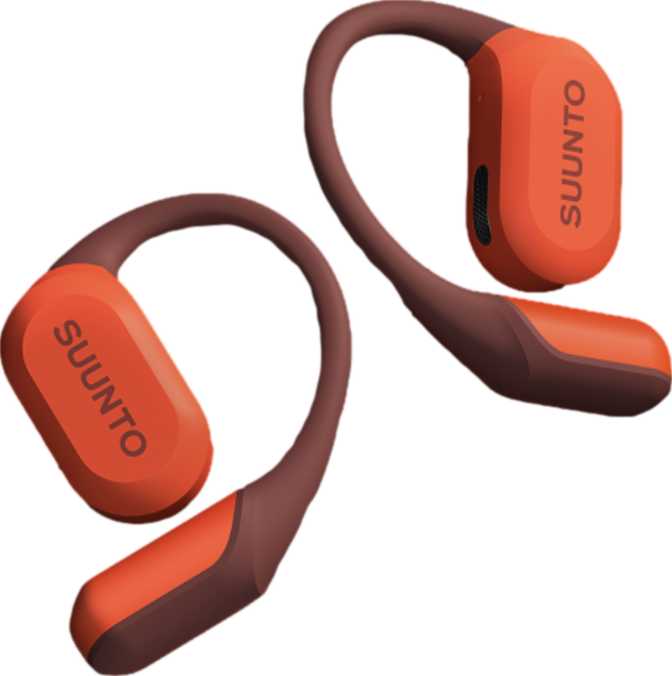
At 18 grams for the complete pair, the Suunto Spark qualifies as genuinely lightweight. Many competing sport earbuds with comparable features land between 20 and 28 grams — the Spark's sub-20g figure translates to noticeably less fatigue during long sessions.
The open-ear fit means the earbuds rest outside the ear canal rather than inside it. There's no silicone tip being pushed into your ear. For some users, this is the single biggest selling point — no ear canal pressure, no plugged-up feeling after hours of wear. For others, especially those who prioritize audio isolation, it requires a genuine adjustment in expectations. This is a fundamental design philosophy, not a feature to toggle.
Wingtips are included to anchor the earbuds during movement. Open-ear earbuds have less mechanical grip than in-canal designs by nature, so the wingtips do real structural work keeping the units stable during runs, workouts, or trail hikes.
The aesthetic is entirely functional — no RGB lighting, no display, no decorative hardware. That aligns precisely with who this product is built for.
- Total Weight 18g
- Fit Style Open-ear
- Water Rating IP55
- Wingtips Included Yes
- True Wireless Yes
- RGB / Display None
Sound Quality: What Open-Ear Means for Audio Performance
Important context: Open-ear earbuds will always sound different from in-canal designs. Because there's no seal creating an acoustic chamber, bass extension feels lighter and low-frequency energy is naturally reduced. This is physics, not a flaw — and it defines what to expect from the Spark.
The Spark covers the complete audible spectrum of human hearing. At 32 Ohms impedance, the drivers are well-matched to the output power of smartphones and tablets without requiring additional amplification. Active noise cancellation is absent, which is expected and appropriate: ANC requires a sealed acoustic environment to function and is fundamentally incompatible with open-ear design.
Codec Support and Audio Transmission Quality
The codec stack is where the Spark distinguishes itself from basic sport earbuds. LDHC support enables high-resolution audio transmission at significantly higher bitrates than standard Bluetooth audio — capable of CD-quality and beyond when paired with a compatible source. AAC support covers Apple devices and AAC-optimized Android devices. Together, these codecs place the Spark well above earbuds limited to SBC-only transmission.
| Codec | Supported | Audio Quality Level | Best For |
|---|---|---|---|
| LDHC | Hi-Res (CD-quality+) | LDHC-compatible Android & DAPs | |
| AAC | High quality | iPhones & AAC-enabled Android | |
| LDAC | Hi-Res | Sony ecosystem — not supported | |
| aptX / aptX HD | High / Hi-Res | Qualcomm devices — not supported | |
| LE Audio | Next-gen standard | Not supported |
Connectivity: Bluetooth 5.4 and What That Means Day-to-Day
Bluetooth 5.4 is among the most current versions of the standard available in consumer audio. The practical benefits over older versions include more stable connections, lower power consumption during transmission, and better handling of congested wireless environments — think gym floors crowded with devices, or busy urban areas.
Multipoint connectivity allows the Spark to maintain simultaneous pairing with two devices. This is genuinely useful for users who switch between a phone and a laptop throughout the day — the earbuds can receive audio from either source without manual re-pairing.
There is no NFC pairing and no fast-pair support, so initial setup follows the standard Bluetooth pairing process. The specified range of 10 meters is on the conservative end — in open-air conditions Bluetooth 5.4 typically maintains usable connection well beyond that figure, though the official rating sets appropriate expectations for obstructed environments such as multi-room buildings.
- Bluetooth Version5.4
- Multipoint Devices2 simultaneous
- Rated Range10 m
- Charging PortUSB-C
- NFC PairingNo
- Fast PairNo
- Wireless ChargingNo
Battery Life: Real-World Stamina
Microphone Performance: Four Mics for Calls That Actually Work
The Spark carries four microphones — two per earbud — with active noise cancellation applied specifically to voice capture. For a sport-oriented product, this is a meaningful specification. Outdoor calling environments are acoustically challenging: wind noise, traffic, ambient crowd noise, and movement all degrade call quality on lesser setups.
The microphone frequency response covers the full intelligibility range of human speech, meaning callers on the other end should hear a clear, natural-sounding voice rather than a thin or filtered signal.
The physical mute function is particularly useful in work-from-anywhere scenarios — a dedicated mute prevents the kind of live background noise bleed that open mics cause in remote meeting contexts. Voice prompts provide audio feedback for connection status and battery levels, reducing the need to visually check a device mid-activity.
- Total Microphones4
- Noise-Canceling MicYes
- Frequency Range100 Hz – 10 kHz
- Headset UseYes
- Mute FunctionYes
- Voice PromptsYes
Key Features at a Glance
Who Should Buy the Suunto Spark
- Runners, cyclists, and hikers who need to hear traffic and trail conditions while listening to audio
- Workers who spend long hours in earbuds and find in-canal designs physically uncomfortable over time
- Users who take frequent outdoor calls and need reliable microphone performance in wind and ambient noise
- Anyone managing phone and laptop simultaneously who wants effortless multipoint switching
- Athletes who value secure fit during intense movement without sacrificing environmental awareness
- Commuters or open-plan office workers who need to block environmental noise — the open-ear design offers zero isolation by design
- Audiophiles prioritizing deep, impactful bass — open-ear physics limit low-frequency presence regardless of driver quality
- Swimmers or anyone needing submersion-level waterproofing — IP55 covers sweat and rain, not underwater use
- Users who prefer passive listening through noise isolation; the Spark requires you to remain present in your environment
How the Suunto Spark Compares to Alternatives
The Spark's closest competitive category is open-ear true wireless sport earbuds — a smaller segment than standard in-ear options. Compared to sealed ANC in-ear alternatives and bone conduction designs, the trade-offs become clear, and so does who the Spark is genuinely the best choice for.
| Feature | Suunto Spark | ANC In-Ear Sport | Bone Conduction Sport |
|---|---|---|---|
| Ear Awareness | Full — by design | Limited (ANC reduces) | Full |
| Comfort — Extended Wear | High — no canal seal | Moderate | High |
| Bass Performance | Light | Strong | Very Light |
| Call Quality | 4-mic noise-canceling | Usually 2–3 mics | Often limited |
| Sport Fit Security | Wingtip anchored | Ear tip friction | Wraparound clip |
| Water Resistance | IP55 | IP54–IP57 (varies) | IP67 typical |
| Audio Codec | LDHC + AAC | Varies — AAC / aptX | SBC typical |
Honest Assessment: Strengths and Weaknesses
What It Gets Right
Bluetooth 5.4 and LDHC codec support represent a more capable wireless audio stack than many earbuds in this category. The four-microphone system with noise cancellation for calls is a specification usually reserved for premium products — and it addresses a genuine weakness common in outdoor sport earbuds.
At 18 grams, the weight is low enough that ear fatigue over multi-hour sessions is genuinely reduced compared to most sport alternatives. The combined 36-hour battery capacity is competitive for the category, and fast charging means a short top-up before a session recovers several hours of playback.
The IP55 rating handles real-world conditions reliably. The weight and fit design are tuned for extended wear. The inclusion of a travel bag adds meaningful real-world value for users who regularly transport their audio gear.
Where It Falls Short
The ten-meter specified Bluetooth range is modest. In practice, Bluetooth 5.4 typically performs well beyond that in open-air conditions, but the official figure doesn't inspire confidence for use cases where range is critical.
Wireless charging is absent from the case — a convenience gap that users of premium-tier competitors with Qi-compatible cases will notice immediately.
The light bass response inherent to open-ear designs is a genuine audio limitation that prospective buyers need to genuinely accept rather than rationalize. And LDHC, while technically capable, is less universally supported than LDAC across mainstream Android devices — meaning many users will fall back to AAC rather than benefit from high-res transmission.
Frequently Asked Questions
Final Verdict
The Suunto Spark is a well-considered product for a specific type of user — and it's honest about that.
If you spend significant time exercising outdoors, need your ears open to the environment, and want a wireless earbud that won't compromise on call quality or audio codec capability, the Spark addresses all of those needs with a technically current feature set.
The Bluetooth 5.4 connection, LDHC high-resolution codec, four-microphone noise-canceling call system, and 36-hour total battery life represent genuine capability for active-use earbuds. The IP55 rating handles real-world conditions. The weight and fit design are tuned for extended wear.
The one condition: The open-ear format is non-negotiable. If you want bass-heavy sound, noise blocking, or complete audio isolation, this isn't built for you — and no appreciation of its other qualities changes that.
Runners, outdoor athletes, multi-device workers, and anyone frustrated by the long-term discomfort of in-canal earbuds who wants a technically capable open-ear alternative with premium call quality.
Noise isolation, deep bass, active noise cancellation, or submersion-level waterproofing are non-negotiable for your use case — the Spark's open-ear design cannot deliver any of these.