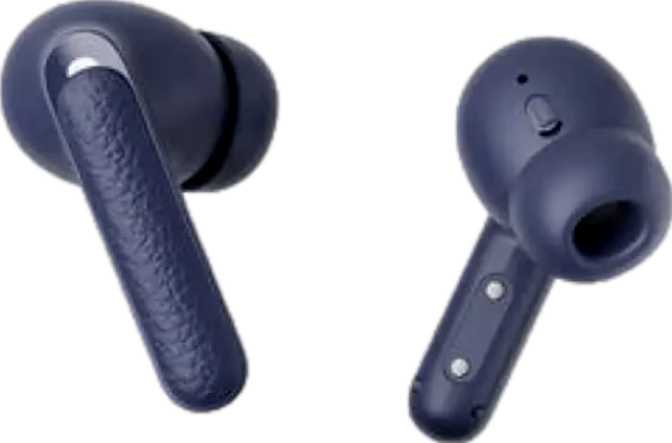
QCY HT15 Review: Budget ANC Earbuds With Six Microphones
Wireless EarbudsActive noise cancellation used to be a luxury reserved for premium headphones costing several times what most people are willing to spend on a pair of earbuds. The QCY HT15 arrives squarely in the budget-to-mid tier and makes a case that effective ANC no longer requires a premium price tag. But earbuds at this price point always come with trade-offs — knowing exactly where those trade-offs land is what separates a smart purchase from a regrettable one.
This review breaks down everything that matters: sound, call quality, battery endurance, connectivity, and honest limitations — so you can decide with confidence before spending a single cent.
- Active Noise Cancellation
- 6-Microphone Call Array
- Bluetooth 5.4
- ~25 Hours Total Battery
- USB-C Fast Charging
- IPX4 Sweat Resistance
- Ambient Sound Mode
- No AAC / aptX / LDAC Codec
- No Wireless Case Charging
- No Ear Detection Auto-Pause
Design and Build: Understated, Practical, and Comfortable
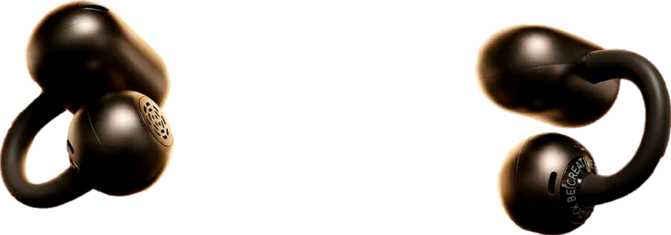
The QCY HT15 follows the now-standard true wireless stem design — a format that has proven its ergonomic worth across millions of earbuds. There are no neckbands, no wing tips, and no physical cables of any kind. What you get are two independent earbuds that sit in-ear with a snug passive seal, a compact charging case, and a USB-C cable.
The absence of wing tips is worth noting. Users with smaller ear canals who rely on silicone stabilizer fins for fit security may find the HT15 less locked-in during high-intensity activity. For commuting, office use, and casual workouts, the standard in-ear fit is perfectly adequate.
IPX4 Water Resistance Rating
The IPX4 rating means the earbuds handle sweat and light rain without issue — sufficient for gym sessions and a sudden drizzle, but not designed for swimming or submersion. Think of it as protection against real life, not waterproofing.
There is no RGB lighting, no display on the case, and no gimmicks. The design communicates purpose over aesthetics, which is either refreshing or boring depending on your preferences.
One welcome inclusion: a travel bag comes in the box. At this price tier, that is a genuine value-add — not something to take for granted.
Sound Quality: Full-Range Tuning with Noise Control Built In
Frequency Range and Audio Tuning
The HT15 covers the full 20 Hz to 20,000 Hz spectrum — the complete range of human hearing. On paper, every set of earbuds claims this range; what matters is how the driver handles each region in practice.
The HT15 uses a conventional dynamic driver setup without the neodymium magnets found in higher-tier earbuds. This omission is unusual at this price tier and may point toward a cost-optimized driver configuration. Audiophiles chasing tight, fast transient response and deep sub-bass extension should factor this into their expectations. For the majority of listeners — streaming music, podcasts, video calls, and casual listening — the tonal difference is unlikely to be noticeable.
There is no spatial audio, Dolby Atmos, or virtual surround processing. The HT15 delivers straightforward stereo reproduction. For most content — pop, hip-hop, electronic, podcasts, and streaming video — stereo is exactly what you want. Spatial audio features tend to be impactful primarily with supported gaming and cinematic content, so their absence here is not a significant loss for the target audience.
Active Noise Cancellation
ANC is present and functional. The system works in conjunction with passive noise isolation — the physical seal created by the in-ear design itself — to provide a layered approach to blocking ambient sound.
Passive isolation handles consistent mid-range background noise well on its own: the hum of office air conditioning, the ambient murmur of a coffee shop. When you layer ANC on top of that physical seal, the HT15 can meaningfully reduce lower-frequency droning sounds like airplane cabin noise, train rumble, and road noise in transit.
Realistic ANC Expectation
At this price bracket, ANC performance is best described as effective rather than exceptional. The HT15 offers a real, noticeable reduction in ambient noise — enough to improve focus and reduce listening fatigue — without matching the near-total isolation of earbuds costing two to three times more.
Ambient Sound Mode
The transparency mode passes environmental audio through to your ears while you're wearing the earbuds. This is genuinely useful for hearing announcements, holding a quick conversation without removing the earbuds, or staying aware of your surroundings during outdoor exercise. The six-microphone array contributes to how natural this passthrough sounds.
Call Quality: Six Microphones Doing Real Work
The six-microphone configuration is one of the HT15's most compelling specifications. Most budget earbuds ship with two microphones; some mid-range options step up to four. Six microphones in this price range is notable — here is how that compares to the competitive landscape:
6
Microphones
2–4
Microphones
4–6
Microphones
The practical benefit is noise cancellation applied to your outgoing voice — the microphones work together to isolate your speech and suppress background noise before it reaches the person on the other end of the call. In environments like busy streets, open offices, or public transit, this results in significantly cleaner call audio than earbuds with simpler microphone setups.
The earbuds support full headset functionality, and a dedicated mute function is available through the touch controls. For remote workers, commuters who take frequent calls, or anyone spending meaningful time on voice and video meetings, the microphone setup here punches well above what the price typically delivers.
Battery Life: A Full Day in Two Charges
5.5h
Per Charge
19.5h
Case Reserve
~25h
Total Combined
1h
Full Recharge
On a Single Charge
The earbuds themselves deliver approximately five and a half hours of playback per charge. This is honest, middle-of-the-road endurance for true wireless earbuds with ANC enabled. Most ANC earbuds in any price range sacrifice battery life when noise cancellation is active — so whether the HT15's figure is measured with ANC on or off matters. Without explicit clarification, assume active ANC reduces playback time, putting real-world figures toward the lower end of that range during demanding use. For a typical workday — a morning commute, a few hours of focus listening, a lunch break walk — a single charge is generally enough.
Total Endurance with the Case
The charging case extends total available listening time to just under twenty-five hours when combining earbud capacity with case storage. That translates to roughly three to four full recharges carried in your pocket or bag — multiple full days of use before needing to find a wall outlet.
Charging Speed and Port
A full recharge from empty takes one hour, and fast charging is supported — a short stint in the case when you're running low will buy meaningful extra listening time. The case charges via USB-C, the current universal standard that eliminates the frustration of proprietary cables. Wireless charging is not supported, which is a relevant limitation if you rely on a Qi charging pad as part of your daily routine.
Connectivity: Bluetooth 5.4 with Practical Trade-Offs
Bluetooth Version and Range
Bluetooth 5.4 is the connection backbone here — a current-generation standard that offers improved connection stability and efficiency compared to the 5.0 and 5.1 implementations still common in budget earbuds. In practical terms: pairing is reliable, signal dropout in typical urban environments is uncommon, and battery consumption from the wireless connection is lower than on older Bluetooth versions. The usable wireless range reaches up to ten meters in unobstructed conditions; in a real home or office environment with walls and furniture, expect a comfortable stable connection of five to seven meters with the source device in another room.
Codec Support: The Honest Picture
This is where the HT15 shows its budget-tier DNA most clearly. The absence of AAC is particularly notable since it is the codec used by Apple devices to deliver higher-quality wireless audio to compatible earbuds. Without it, iPhone and iPad users receive standard SBC-quality audio. For casual listeners streaming at standard quality or making calls, the difference is subtle. For music enthusiasts who stream at high quality with trained ears, this is a real ceiling worth acknowledging.
| Codec | QCY HT15 | Impact on Audio Quality |
|---|---|---|
| SBC (Standard) | Default fallback — works on all Bluetooth devices | |
| AAC | Better quality on Apple iOS and Mac devices | |
| aptX / aptX HD | Higher quality on compatible Android devices | |
| LDAC | High-resolution audio streaming on Sony-compatible devices | |
| Bluetooth LE Audio | Next-gen multi-device sharing and hearing aid support |
Latency and Pairing
The measured audio-to-video latency is 68 milliseconds — within the range where most users may notice a slight delay watching video content, depending on sensitivity. Many streaming platforms offer latency compensation that reduces the perceived gap. For competitive gaming that demands tight audio-visual synchronization, 68ms may be perceptible. For casual gaming, Netflix, and YouTube, it is unlikely to cause frustration. NFC pairing and Google Fast Pair are not supported; initial pairing requires the standard Bluetooth process through your device settings — a minor inconvenience, not a dealbreaker.
Controls and Day-to-Day Usability
Touch controls are integrated directly into the earbud housing, allowing access to playback, volume, ANC modes, and call functions without reaching for your phone. Voice prompts provide audio feedback for connection status, mode changes, and battery notifications. A battery level indicator keeps you informed of remaining charge.
What the Controls Offer
- Playback and volume control
- ANC and ambient mode switching
- Call answer, end, and mute function
- Voice prompts for status feedback
- Battery level indicator
Notable Omissions
- No ear detection — earbuds keep playing when removed
- No find-my-earbuds tracking feature
- No in-line cable remote (expected for TWS)
The absence of ear detection means the earbuds continue playing when removed — a minor usability gap compared to earbuds with proximity sensors. Similarly, the lack of a find-my-earbuds feature means you're relying on your own memory if you misplace one.
Who Should Buy the QCY HT15
- Want effective ANC for commuting, office work, or travel without spending premium-tier prices
- Take frequent calls and need a microphone setup that performs in noisy environments
- Primarily use Android devices, where the codec limitations are less impactful
- Want a reliable Bluetooth 5.4 daily driver with a full day of battery across the case
- Need USB-C charging and value fast charging support
- Are an iOS-primary user who values AAC codec performance for high-quality music streaming
- Need maximum ANC depth comparable to premium over-ear headphones or flagship in-ear systems
- Require tight audio-visual sync for competitive gaming or professional audio work
- Depend on wireless case charging as part of your daily routine
- Need ear detection auto-pause for convenience or battery preservation
How the HT15 Compares to Its Logical Alternatives
Compared against representative specs at adjacent price tiers — not specific named models, but what you typically get at each level.
| Feature | QCY HT15 | Budget ANC Rival | Mid-Range ANC Rival |
|---|---|---|---|
| Microphone Count | 6 | 2–4 | 4–6 |
| Bluetooth Version | 5.4 | 5.2–5.3 | 5.3–5.4 |
| USB-C Charging | Often Yes | ||
| Wireless Case Charging | Rare | Sometimes | |
| AAC Codec | Sometimes | Usually Yes | |
| Fast Charging | Rarely | Often | |
| Ambient Sound Mode | Sometimes | ||
| ANC Depth | Moderate | Light | Moderate–Strong |
| Total Battery (w/ Case) | ~25 hours | ~20–24 hours | ~28–36 hours |
Honest Assessment: Strengths and Limitations
The QCY HT15 gets a lot right for the money. The combination of ANC, six-microphone call quality, and Bluetooth 5.4 in a true wireless package at this price represents genuine value. The fast charging and USB-C support are practical wins that improve daily usability. The included travel bag adds a polish that is uncommon at this tier.
The weaknesses are real but manageable. The codec situation — no AAC, no aptX, no LDAC — means this is not the right choice for audiophiles who have invested in high-quality audio sources and want the full chain to match. The lack of ear detection feels like a missed convenience feature, and users who depend on wireless charging will need to adjust their routine.
The ANC works, and that matters. But if your primary motivation for buying the HT15 is near-silence during a long-haul flight, you will likely find yourself wishing for more. For office environments, public transport, and everyday focus sessions, the noise reduction is genuinely useful. For commuters, remote workers, students, and everyday listeners who prioritize call quality and noise reduction on a budget, the QCY HT15 is a well-considered choice.
Questions Real Buyers Ask
Common questions about the QCY HT15 answered directly.
Final Verdict
The QCY HT15 is a focused, capable pair of budget ANC earbuds that earns its place in the market by nailing the features that matter most to its intended audience. If you want active noise cancellation, strong call microphone performance, and Bluetooth 5.4 reliability without spending premium money, the HT15 delivers on all three counts.
It is not a perfect product. The codec support is bare-bones, the ANC is not class-leading, and the absence of ear detection and wireless charging will frustrate users who have come to expect those features. These are acceptable trade-offs at the price, but they must go into your calculation.
Recommended For
- Android users and budget commuters
- Remote workers who take frequent calls
- Budget-conscious listeners seeking ANC
- Everyday listeners who prioritize call clarity
Look Elsewhere If
- AAC or high-res codec support matters to you
- You need flagship-grade noise cancellation
- Wireless case charging is part of your daily routine
- You're a serious iOS audiophile