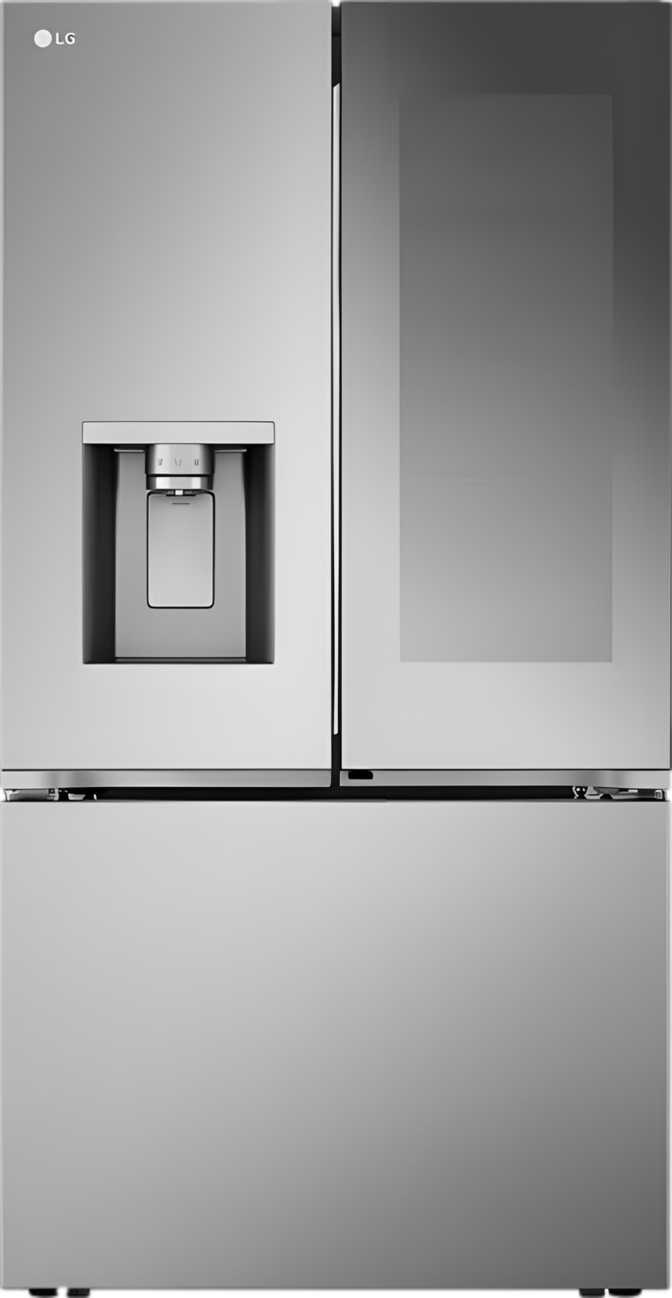
Replacing a refrigerator is rarely an impulsive decision. It is a long-term infrastructure purchase that shapes how a household functions every single day — how groceries are stored, how long food stays in good condition, and how much friction exists between a well-stocked kitchen and the chaos of daily life. The LG LRYKS3106S positions itself as a serious answer for households that have outgrown a smaller unit or are building a kitchen around genuine large-scale storage needs. With a French door layout, substantial total capacity, an integrated door-in-door access panel, certified energy efficiency, and practical smart connectivity, this is a refrigerator with clear ambitions and a defined target buyer. What it actually means to live with — its real strengths, its genuine limitations, and the household types it genuinely serves — is what this review covers in full.
Key Specifications at a Glance
30+
Cu Ft Total Storage
8+
Door Bins + Door-in-Door
755
kWh/Yr • Energy Star
Wi-Fi
LG ThinQ App Control
ADA
Accessibility Certified
$90–150
Est. Annual Running Cost
Dimensions and Physical Reality: Measure Before You Order
At just under 36 inches wide, the LRYKS3106S falls into the standard large-refrigerator width bracket that most kitchen designers and cabinetmakers plan around when building out appliance spaces. It slides into a standard 36-inch opening without requiring cabinet adjustments — which matters because custom millwork is expensive and disruptive. That said, if your existing kitchen was built around a 30-inch or 33-inch opening, this refrigerator cannot be substituted without structural modification.
At just over 70 inches tall — slightly under six feet — the unit clears standard 8-foot kitchen ceilings with generous room above. Cabinet overhangs above the refrigerator opening vary by kitchen design; verify those specific clearances individually before purchase.
The depth is the most consequential physical consideration for many buyers. At just over 34 inches deep, this is a full-depth refrigerator. Unlike counter-depth models, which sit roughly flush with the countertop's front edge, this unit protrudes significantly beyond the counter. Full-depth units hold substantially more because they use the full cabinet bay depth, while counter-depth models sacrifice that interior volume for a cleaner, flush-mounted appearance.
Important: Counter-Depth Buyers
If your kitchen design prioritizes a flush, built-in look, the LRYKS3106S is the wrong choice. There is no workaround for its full-depth profile. Counter-depth alternatives sacrifice storage volume but deliver the integrated aesthetic this unit cannot provide.
Physical Dimensions Translated
| Dimension | Approx. | What It Means |
|---|---|---|
| Width | ~35.7 in | Fits standard 36" opening |
| Height | ~70.3 in | Clears 8-ft ceilings easily |
| Depth | ~34.4 in | Full-depth; protrudes beyond counter |
| Weight | ~350 lbs | Professional delivery required |
Build Quality and Design: Practical Signals Worth Reading
The French door configuration — two side-by-side doors for the fresh food section with the freezer in a pull-out drawer below — is the layout most favored by organized households for a straightforward reason: fresh food, accessed many times daily, sits at eye level and comfortable arm reach, while the freezer occupies the lower position where less-frequent access is less burdensome. This arrangement is ergonomically superior to older top-freezer and bottom-freezer designs because daily refrigerator interaction does not require bending or reaching overhead.
Door-in-Door Access
One French door opens an outer compartment independently, letting you grab condiments, beverages, and daily items without swinging the full refrigerator door. Cold air loss is dramatically reduced across dozens of daily interactions — contributing to energy savings and more stable temperatures for food stored deeper inside the main cavity.
Concealed Hinges
Exposed hinge hardware collects kitchen grease, grime, and degrades visibly over years of use. Concealed hinges on both French doors produce a cleaner exterior profile and a longer-lasting finish. Their presence on this unit is a quality signal more commonly found in premium appliance tiers — a meaningful detail for longevity-focused buyers.
Dedicated Freezer Light
Large pull-out freezer drawers without proper illumination become frustrating storage problems. Dedicated freezer lighting means you can see and manage everything stored inside without removing items layer by layer — a practical detail that matters most when the freezer is fully stocked and frequent access is required.
Storage Capacity: What Over 30 Cubic Feet Actually Means
Total food storage here is substantial — the fresh food section alone carries roughly 20 cubic feet of usable space, with the freezer adding just over 10 cubic feet below. A commonly used guideline for refrigerator sizing suggests approximately four to six cubic feet per adult in a household; this refrigerator serves a household of five to six adults at the upper end of that range, or a family of four with significant grocery-buying habits and meal prep volume.
Household sizing note: Single-person and most two-person households should consider whether this unit's capacity matches their actual needs. A large refrigerator operating half-empty costs the same energy to run as a full one. A smaller, well-matched refrigerator is the more efficient and economical choice when this unit's scale consistently exceeds typical use.
Door Storage: 8 Bins + Quick-Access Zone
Eight door bins across both French doors gives this refrigerator notably more door storage positions than many competitors at this size tier, where five to six bins is more typical. Practically, eight bins means dedicated real estate for tall beverage bottles, condiment clusters, child-accessible snack containers, and frequency-based organization. The door-in-door compartment is carved out of this storage without reducing the total bin count — a design decision that works in the user's favor.
Interior Shelves: Full Adjustability and Spill Containment
Four interior shelves, all adjustable in height, allow the fresh food cavity to be reconfigured from standard weekly grocery storage to accommodating a full holiday turkey, a large catering tray, or a batch-cooking session. All four shelves feature raised spill-containment borders that hold liquid from a tipped container in place, preventing it from cascading onto lower shelves. Having this feature on every shelf — not just the top two — is a quality-of-life advantage that becomes viscerally apparent the first time something tips inside a refrigerator without it.
Produce Drawers: Independent Humidity Control
Two dedicated produce drawers with independent humidity controls let you set a high-moisture environment for leafy greens and herbs, and a lower-moisture environment for fruits and moisture-sensitive vegetables. Storing everything in one undifferentiated drawer means accepting faster deterioration in one category regardless of arrangement. Independent control means produce that previously lasted three days can now last five or six — a difference that accumulates into meaningful food savings across a month of household use.
Freezer: Three Organized Compartments
The pull-out freezer drawer is divided into three distinct compartments. Maintaining a functional organizational system in frozen storage — raw proteins in one section, prepared meals in another, frozen vegetables and desserts in a third — requires that physical separation. A single open bin where everything accumulates makes a large freezer frustrating rather than functional. Three compartments make the full freezer space genuinely usable rather than simply large.
Freshness Technology: The Infrastructure Keeping Food in Better Condition
Three temperature sensors distributed across the interior allow the refrigerator's management system to read conditions simultaneously from multiple positions rather than relying on a single thermostat reading from one fixed point. In a large refrigerator cavity, temperature gradients develop naturally — the zone nearest the cooling element runs colder, while the zone nearest the door warms slightly with each opening. Multi-point monitoring allows the system to detect and respond to these variations rather than averaging them into a single reading. For food preservation quality, temperature consistency throughout the cavity over time matters more than the set-point temperature alone.
Automatic defrost manages the frost accumulation cycle invisibly and without any user intervention. Over time, moisture from food and air entering during door openings accumulates as frost on the refrigerator's internal cooling elements. Unmanaged frost buildup restricts airflow, strains the cooling system, and reduces available storage space. Automatic defrost monitors and addresses this cycle in the background, fully transparently to the user.
Freshness Features
3 Independent Temperature Sensors
Multi-zone monitoring for more consistent conditions throughout the entire cavity
Integrated Air Filtration
Continuously captures odor particles; filter change indicator alerts when replacement is needed
Independent Humidity Controls
Each produce drawer tunable independently — high for greens, low for fruits
Automatic Defrost
Frost management cycle runs transparently with no manual intervention required
Water and Ice Dispensing: Daily Convenience Without Opening the Door
Both filtered water and ice are accessible through an exterior dispenser mounted in one of the French doors, meaning every glass of water or handful of ice is drawn without opening the refrigerator cavity. This is both a convenience feature and an efficiency one — the interior temperature is not affected by dispenser use, unlike refrigerators that require door access for beverages.
The filter change indicator ties directly to the water filtration system, providing a visible, timely prompt when the internal filter requires replacement. Using a water filter past its rated effectiveness means dispensing increasingly unfiltered water; the indicator eliminates that guesswork entirely.
A direct connection to the home's water supply line is required for dispenser operation, as with any refrigerator featuring integrated ice and water service. This is a routine part of appliance installation and is handled by most professional delivery and installation teams as standard.
Dispensing: What Is and Is Not Included
- Filtered water dispenser — exterior access, no door opening required
- Ice dispenser — exterior access, no door opening required
- Filter change indicator — alerts when replacement is due
- Internal water filtration — no separate external filter needed
- Carbonated or sparkling water: not included
Smart Connectivity: Practical Rather Than Performative
Wi-Fi connectivity in the LRYKS3106S pairs with LG's ThinQ smartphone app, and the implementation reflects a clear priority: practical appliance management, not technology demonstration. The most operationally valuable element is the smartphone diagnostic system — when a potential issue arises or a diagnostic check is initiated, the refrigerator runs a self-assessment of its systems and communicates the results through the app. In cases requiring service, that diagnostic data can be shared directly with LG's service infrastructure, meaningfully reducing the back-and-forth typical of appliance service calls where a technician often visits once to diagnose before returning with the correct parts.
Smart Features Included
-
Wi-Fi Connectivity
Pairs with LG ThinQ smartphone app for remote management
-
Smartphone Diagnostic System
Self-assessment runs and reports to app; shareable directly with LG service
-
Refrigerator Alerts
Door-open, temperature deviation, and filter replacement notifications to phone
-
Child Lock
Lockable controls for households with young children
-
Filter Change Indicator
Visible prompt for both water and air filter replacement schedules
Smart Features Not Included
-
Amazon Alexa / Google Assistant
No voice control integration of any kind is supported
-
Interior Camera
Remote inventory viewing via smartphone is not available
-
Touch-Screen Control Panel
Controls are physical, not touch-based
-
Vacation Mode
Manual temperature adjustments required before extended absences
-
Grocery Management
No in-app inventory tracking or grocery list feature
Energy Efficiency and Annual Operating Costs
An annual energy draw of approximately 755 kilowatt-hours earns the LRYKS3106S both Energy Star certification and a top energy efficiency rating — independent third-party benchmarks confirming efficient operation relative to its size category. At electricity rates typical across US residential markets, running this refrigerator costs roughly $90 to $150 per year depending on local utility pricing.
For buyers replacing an older large refrigerator — particularly one that is a decade or more old — the efficiency differential is meaningful. Large refrigerators from previous generations commonly consumed well over 1,000 kilowatt-hours annually. Replacing one with a current-generation Energy Star certified unit at this capacity could reduce the household's refrigeration electricity cost by $40 to $100 or more per year. Over a normal appliance ownership period of ten to fifteen years, that compounds into a genuine offset against the purchase price.
The use of an eco-friendly refrigerant aligns with stricter global regulations phasing out refrigerants with high climate impact — a manufacturing-level environmental choice for buyers who factor the full lifecycle footprint of major appliances into their decisions. The door-in-door system also contributes to energy performance: because frequently accessed items are reachable without opening the full refrigerator door, cold air loss per interaction is substantially reduced.
Energy Overview
Annual Energy Consumption
At continuous household usage
Estimated Annual Running Cost
Based on average US electricity rates
Accessibility: A Specification That Deserves More Attention
The LRYKS3106S meets ADA (Americans with Disabilities Act) compliance standards — meaning its control panels, dispensers, and interior reach zones have been designed to be operable by users who are seated, whether due to wheelchair use or other mobility considerations. Most refrigerators are designed exclusively around a standing adult's interaction zones; ADA compliance indicates deliberate engineering to serve a wider range of users.
For multi-generational households, homes where any family member has mobility considerations, or buyers who are future-proofing a kitchen against changing needs, this is genuine practical value. For households where accessibility is not a current consideration, the compliance adds no cost or inconvenience — control heights and dispenser positions accessible to seated users are equally ergonomic for standing adults.
Who This Refrigerator Is Built For — and Who Should Look Elsewhere
Ideal For
-
Large families and high-volume households
Designed for households that do substantial weekly grocery runs, cook in volume, or value a well-stocked refrigerator throughout the week without constant space management
-
Organized households that want a functional system
Eight door bins, door-in-door zone, three-compartment freezer, full shelf adjustability, and independent humidity drawers reward buyers who organize food storage with any degree of intentionality
-
Buyers focused on total cost of ownership
Energy Star efficiency, eco refrigerant, and ThinQ diagnostics that reduce service call friction all contribute to a lower long-term cost of ownership
-
Multi-generational or accessibility-conscious households
ADA compliance is designed-in and functional, making the unit genuinely accessible across a wider range of physical abilities than most competing units
Look Elsewhere If You Need
-
A flush, counter-depth profile
The LRYKS3106S is full-depth and protrudes beyond the countertop edge. There is no workaround for buyers whose kitchen design requires a seamless, integrated look
-
Voice control and interior camera access
No Amazon Alexa, no Google Assistant, no interior camera, no touch-screen display. Smart features here are practical and maintenance-focused, not experience-driven
-
A refrigerator sized for a small household
Two-person households and single occupants will consistently under-utilize this unit's capacity, paying to cool unused air rather than food
-
Frequent long-term travelers
Without a vacation operating mode, manual temperature adjustments are required before extended absences. For households that regularly leave their home empty for weeks, this is a meaningful gap
How the LG LRYKS3106S Sits Against the Competition
At the large French door refrigerator tier, the LRYKS3106S competes with offerings from Samsung, GE, Whirlpool, and others. The table below reflects how it positions relative to typical market options at this capacity level.
| Feature | LG LRYKS3106S | Typical Competitors at This Size Tier |
|---|---|---|
| Door-in-door access | Available on select models; more closely associated with LG | |
| Voice assistant integration | Available on select models at a higher price point | |
| Interior camera | Available on select models, typically at a premium | |
| Touch-screen control panel | Available on select premium-tier models | |
| All shelves spill-containment | Often partial — upper shelves only on many models | |
| ADA compliance | Not consistently specified across brands | |
| Eco refrigerant | Increasingly common; not yet universal | |
| Vacation mode | Present on many competing models | |
| Smartphone diagnostics | Varies by brand; LG's ThinQ implementation is mature | |
| Grocery management app | Rare; found on a limited set of premium models |
Strengths and Honest Limitations
What This Refrigerator Gets Right
The storage engineering is genuinely thoughtful — not simply large in scale, but well-organized at scale. The door-in-door access, eight-bin door storage, three-compartment freezer, full spill-containment across every shelf, height adjustability on all four interior levels, and independently controlled humidity in the produce drawers reflect real design attention to how households actually use refrigerator space day to day, not just how many liters can theoretically fit inside.
The freshness management infrastructure — multi-sensor temperature monitoring, active air filtration, and humidity-controlled produce zones — is more substantial than what many competing refrigerators at equivalent capacity offer. For a high-use household, this translates into less food waste and more consistent quality across the week.
Energy performance at this storage scale is a genuine accomplishment. Achieving certified top-tier efficiency ratings in a refrigerator this large requires sustained engineering discipline, and the combination of Energy Star certification, eco-friendly refrigerant, and door-in-door efficiency benefits makes the operating cost case more compelling here than for many competing large-capacity units.
Where It Falls Short
The full-depth profile is a physical constraint that no feature advantage changes. It is either appropriate for the kitchen or it is not, based solely on measurements and design priorities — and buyers who discover this after purchase will find no workaround.
The absence of voice assistant integration and interior camera access will frustrate buyers who have built connected home expectations around their major appliances. These are deliberate omissions rather than oversights, but that distinction does not help a buyer who genuinely needs them.
The lack of vacation mode is a functional gap for specific household patterns. The absence of sectional climate controls means the fresh food section operates as a single managed temperature zone rather than independently tunable sub-zones — buyers who want to keep part of the refrigerator at a slightly different temperature for specific food categories will not find that capability here.
For buyers who have come to expect touchscreen interfaces on major appliances, the physical control panel will feel less modern than current premium alternatives, regardless of its reliability advantages.
Answers to Questions Buyers Commonly Ask
Final Verdict: Who Should Buy the LG LRYKS3106S
The LG LRYKS3106S is a strong, well-engineered French door refrigerator for households that genuinely need large-capacity food storage, value thoughtful organization infrastructure, and want practical connected features without paying a premium for technology they will not use day to day.
Buy It If You Are
A large family, a serious home cook, a high-volume household, a buyer evaluating appliances across their full useful life, or a household with accessibility requirements. This refrigerator delivers exactly what it promises for these buyers.
Skip It If You Need
A counter-depth profile, voice control or interior camera access, a refrigerator sized for a small household, or a vacation mode for extended absences. No feature advantage compensates for a fundamental mismatch in these areas.
The LRYKS3106S does not attempt to be the most technically dazzling refrigerator in its size tier. It focuses on doing the core job — keeping food in good condition, efficiently, in a well-organized large-capacity cabinet — at a level above what many simpler competitors at this size deliver. For the buyer who needs exactly that, without the surcharge attached to features they would rarely use, it is a durable investment in a kitchen cornerstone appliance.