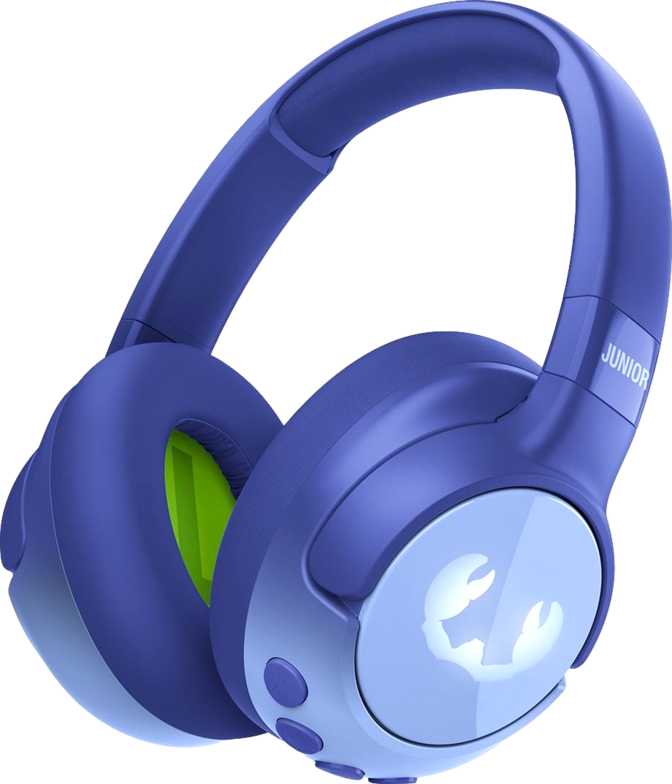
Fresh 'n Rebel Clam Junior: The Full Kids' Headphone Review
HeadphonesParents face a frustrating paradox when buying headphones for children: the market is full of products that look safe without actually being safe. The Fresh 'n Rebel Clam Junior approaches this problem differently. Its key engineering decisions — a volume ceiling enforced at the hardware level, active noise cancellation rare at this price tier, and battery life that makes weekly charging the exception rather than the rule — reveal genuine priorities. Whether those priorities match your situation is what this review determines.
Quick Verdict
- Hardware-enforced 85dB hearing protection
- Category-leading 60-hour battery life
- Active noise cancellation at this price tier
- Foldable with a detachable, tangle-free cable
- No water or moisture resistance
- No carrying case included
Design and Build: Practical Choices for Real Kids
How the Clam Junior is physically constructed reveals the priorities behind it — durability, longevity, and day-to-day usability in a child's hands.
Foldable Frame
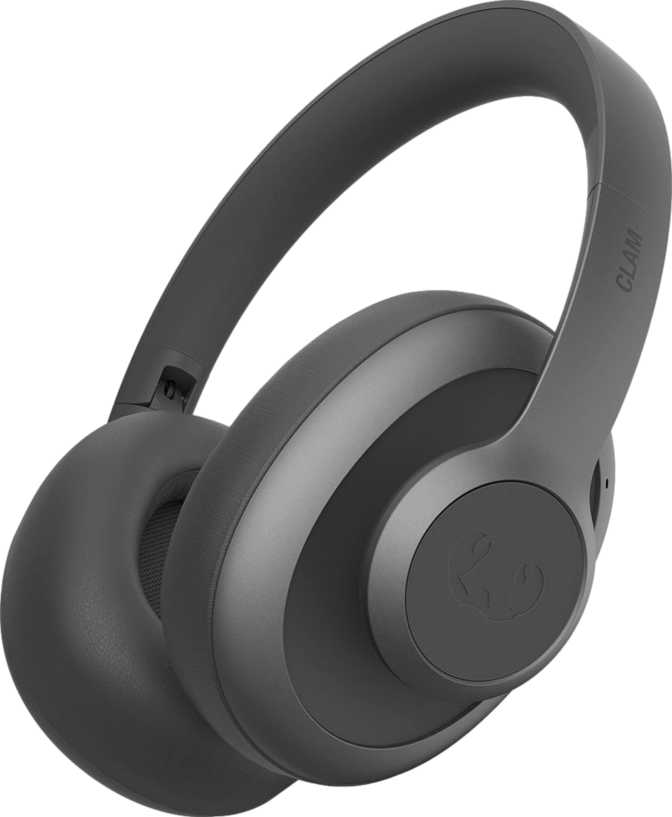
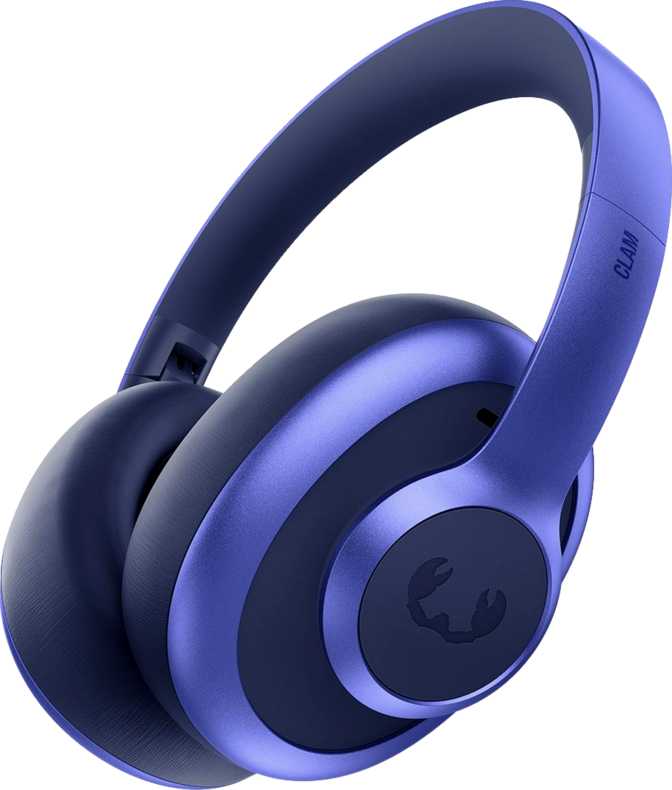
The Clam Junior collapses flat, small enough to disappear into any school bag. Children do not carry cases — a folding frame is a direct engineering response to that reality. It meaningfully extends lifespan by protecting the headphone in the environments children actually use.
Detachable Cable
When a cable is yanked — and with children, it will be — the stress is absorbed at the connector rather than at the driver housing. A detachable cable turns a potential write-off into a simple, low-cost replacement. The cable also resists tangling, making wired mode genuinely usable for younger children.
Over-Ear Fit
The earcups enclose the ears fully rather than pressing against them. This over-ear design is more comfortable for extended listening sessions and creates a natural acoustic seal that passively reduces ambient intrusion — a benefit that requires no electronics and no battery.
No carrying case or travel pouch ships with the Clam Junior — a meaningful gap for a foldable headphone marketed partly on portability. The headphone also carries no water or moisture resistance, meaning it should be kept away from rain, splashes, and physically active use. Both gaps require active management from parents.
Sound Quality and Hearing Safety
The most important specifications in any children's headphone are not about audio fidelity. They are about protecting ears during the years when damage accumulates most easily.
Volume Limiting at the Hardware Level
The Clam Junior enforces an 85-decibel output ceiling — the international threshold above which prolonged exposure begins to cause hearing damage. Most consumer headphones comfortably exceed 100 decibels at full volume, a level at which measurable damage can occur in under fifteen minutes of continuous exposure.
What distinguishes this approach is that the limit is built into the driver hardware itself. It is not a software restriction that resets on reconnection, nor a parental control toggle a curious child might discover and disable. The loudest setting on these headphones is the safe setting.
Active Noise Cancellation: A Safety Feature in Disguise
ANC uses built-in microphones to sample ambient sound and generate opposing signals that cancel low-frequency background noise before it reaches the ears — engine hum in cars and planes, air conditioning, the drone of public transport.
For children, the safety logic is direct. Without noise cancellation, a child in a loud car or plane will instinctively turn the volume up to compete with the background. With ANC suppressing that background, the same comfortable level is achievable at a lower output. The volume ceiling and the ANC reinforce each other: the cancellation removes the ambient noise that would otherwise push a child toward unsafe volume levels.
Battery Impact of Running ANC
Wireless Audio Codecs: A Deliberate Trade-Off
Bluetooth audio quality is partly determined by the codec used to compress and transmit audio from device to headphone. The Clam Junior uses the standard baseline wireless transmission protocol — it does not support the optional higher-efficiency codecs found in audiophile-oriented headphones. For its target audience, this is sensible engineering prioritization rather than an oversight. The audible gap between standard and premium codec transmission is something experienced listeners detect on high-quality source material in controlled conditions — not something a child streaming music or watching a film will perceive. Parents who plan to use these headphones regularly alongside their child should factor this in; for the children they were designed for, the difference is effectively invisible.
Battery Life: The Standout Specification
On a single charge, the Clam Junior outlasts the competition by a margin wide enough to change how ownership actually feels.
Days Between Charges
With ANC switched off, the Clam Junior runs for sixty hours on a single charge — over two and a half days of continuous audio. With ANC active the entire time, runtime holds at forty hours. A child listening for two hours daily would charge these roughly once a week without ANC, or every four to five days with it running. That effectively eliminates the scenario where the headphones are dead just as a long journey begins.
Compared to the fifteen to twenty-five hours typical of children's wireless headphones, the Clam Junior is in a different category entirely. The gap is not marginal — it is transformative for how these headphones function in a real household with real usage patterns.
Charging Practicalities
A full charge takes approximately two hours through the USB-C port — the same connector used by most modern smartphones, tablets, and laptops. Families with USB-C devices throughout the household won't need to source a proprietary or dedicated cable.
A battery level indicator lets a parent or child check remaining charge before committing to a long journey, removing any guesswork. Wireless charging is not supported, which is expected at this product tier and unremarkable in context.
Battery Comparison
Connectivity
The Clam Junior connects wirelessly via Bluetooth or by cable, and includes a built-in microphone for voice and video use.
Bluetooth 5.4
The current generation of Bluetooth delivers improved connection stability, lower radio power consumption, and more reliable behavior in environments dense with competing devices — classrooms, airports, and busy households where multiple Bluetooth products operate simultaneously. Effective wireless range extends to approximately ten meters, covering a typical living room comfortably.
Pairing uses the standard Bluetooth settings process on the connected device. No fast-pair shortcut or NFC tap-to-pair is included — an omission that presents no meaningful inconvenience for most users.
Wired Fallback
The detachable cable enables wired connection to any device with a standard headphone jack — useful on aircraft, in cars with older entertainment systems, or simply when the battery depletes on a long trip. The critical detail: wired mode functions even with a completely flat battery.
This battery-independent fallback matters on extended journeys where charging isn't available — the headphone remains usable regardless of charge state, unlike wireless-only designs that become inoperable when drained.
Built-In Microphone
An integrated microphone makes the Clam Junior a full headset for video calls, remote learning, and gaming — uses central to how children engage with technology today. The microphone is housed in the headphone unit itself rather than on an in-line cable, which makes it more durable and less vulnerable to cable-related damage.
Suited to standard voice communication. Not designed for audio recording or professional capture.
Who This Is For — And Who Should Look Elsewhere
The Clam Junior does specific things exceptionally well. Whether those things match your situation determines whether it is the right purchase.
This Is the Right Fit If...
-
Your family travels frequently Extended battery life, ANC, and a foldable frame make long journeys significantly easier — no charging anxiety, no noise fatigue for child or parent.
-
You want genuine hearing protection If hardware-enforced volume limiting that cannot be overridden by the child is a priority, the Clam Junior is one of the few genuine options at this tier.
-
Your child attends online classes or video calls Bluetooth 5.4 connection stability and the built-in microphone make it well-suited for remote learning, family calls, and casual gaming.
-
Your child is between 5 and 12 in daily use Over-ear comfort, exceptional battery, and hardware hearing protection are most valuable for children using headphones for multiple hours each day.
Consider Alternatives If...
-
Your child is active outdoors or near water No moisture protection means any accidental liquid exposure is an unmitigated risk. A splash-resistant model is a better fit for physically active children.
-
You expect a complete travel bundle The missing carrying case means portability comes without protective packaging. Plan to source a compatible pouch separately if on-the-go durability matters.
-
You have audiophile audio quality expectations Standard-only wireless codec support means the audio transmission ceiling is fixed. Adults with high-fidelity expectations should look at higher-tier options.
-
Wireless use must span multiple rooms The ten-meter Bluetooth range is standard but fixed. Expect dropouts if the source device is in a separate room or at the far end of a large space.
How It Compares to the Alternatives
The children's headphone market splits into three broad tiers. Here is where the Clam Junior sits — and what separates it from each level.
| Feature | Fresh 'n Rebel Clam Junior | Budget Kids' Headphone | Mid-Range Kids' Headphone |
|---|---|---|---|
| Volume Limiting | Hardware-enforced | Often absent or software only | Usually present |
| Active Noise Cancellation | Rarely included | ||
| Wireless Battery Life | ~60 hours | Wired only | 15–25 hours typical |
| Bluetooth Generation | 5.4 | 5.0 or older | 5.0–5.1 |
| Detachable Cable | Usually no | Sometimes | |
| Foldable Design | Sometimes | Usually | |
| Water Resistance | Occasionally | ||
| Carrying Case | Sometimes | Sometimes |
The Clam Junior's key differentiators — active noise cancellation and category-leading battery endurance — are absent from nearly all competing children's headphones. For buyers who prioritize both features together, the alternatives narrow quickly.
Honest Assessment
Every product has a clear case for it and a clear case against it. Here is an unvarnished look at both sides.
Where It Excels
The Clam Junior does three things exceptionally well. The battery life is category-leading by a wide margin — it effectively removes charging anxiety from the ownership experience. A parent who charges these on Sunday will not think about the battery again until the following weekend.
The hearing protection is hardware-level and reliable, not a marketing checkbox. This is the product's foundation. Everything else builds around that priority. Choosing to protect hearing at the driver level rather than through a software toggle reflects a genuine understanding of what children's headphones are actually for.
The inclusion of ANC at this price tier is unusual enough to constitute a real competitive advantage — and it reinforces the volume ceiling rather than competing with it. The folding frame, detachable cable, tangle-resistant design, and USB-C port all suggest a product team that considered real-world use rather than specification benchmarks.
Where It Falls Short
The weaknesses deserve to be stated plainly. The complete absence of water or moisture resistance is a significant gap for a product designed for children — who are reliably near water, food, and other hazards. A splash-proof rating would have been a reasonable inclusion at this tier; without it, parents must actively manage where and how the headphones are used.
The missing carrying case is a genuine oversight for a foldable headphone marketed partly on portability. The fold solves the space problem; nothing in the box solves the protection problem. Scratches and dust accumulate, and sourcing a compatible pouch is an additional cost and effort the product should have absorbed.
The standard-only wireless codec support is a deliberate choice in favor of battery life and hearing protection over high-fidelity audio. It is the right priority for a children's headphone — but worth naming for parents who also plan to use them regularly.
Questions Real Buyers Ask
The questions parents search for before purchasing — answered directly based on the headphone's actual specifications.
Final Verdict
The Fresh 'n Rebel Clam Junior earns a clear recommendation for parents who take children's hearing seriously.
The hardware volume limit is the product's foundation. Everything else — the ANC, the exceptional battery, the foldable frame, the USB-C port — builds around that core decision. A parent who wants to hand a child headphones without worrying about hearing damage, charging logistics, or cable failure has a strong, well-supported case for the Clam Junior.
The caveats are real: no moisture protection requires careful management of where the headphones are used, and the absent carrying case is an oversight you will need to address separately. But these are gaps you can work around with an inexpensive pouch. The hearing protection and battery endurance are built into the product itself — they cannot be added later by any accessory. For parents willing to invest in a headphone built around long-term wellbeing, the Clam Junior delivers on its core promises.