Claw SM90 Review: A Wired Over-Ear Headset Built for the Desk
HeadphonesKey Specifications at a Glance
The wired over-ear headphone category doesn't generate headlines anymore, but it never stopped being useful. While the industry fixates on wireless, ANC, and companion apps, a steady group of PC users, desk-bound workers, and gamers has quietly stuck with wired audio — because it eliminates latency, removes battery anxiety, and typically delivers more driver performance per dollar. The Claw SM90 is built specifically for this group. It's a closed-back, wired-only over-ear headphone with a generously long cable, large dynamic drivers, and a built-in microphone — a desktop-first tool that makes no apologies for what it isn't and a clear argument for what it is. Whether that argument is convincing depends entirely on where and how you plan to use it.
Design and Build: Engineered for the Desk, Not the Bag
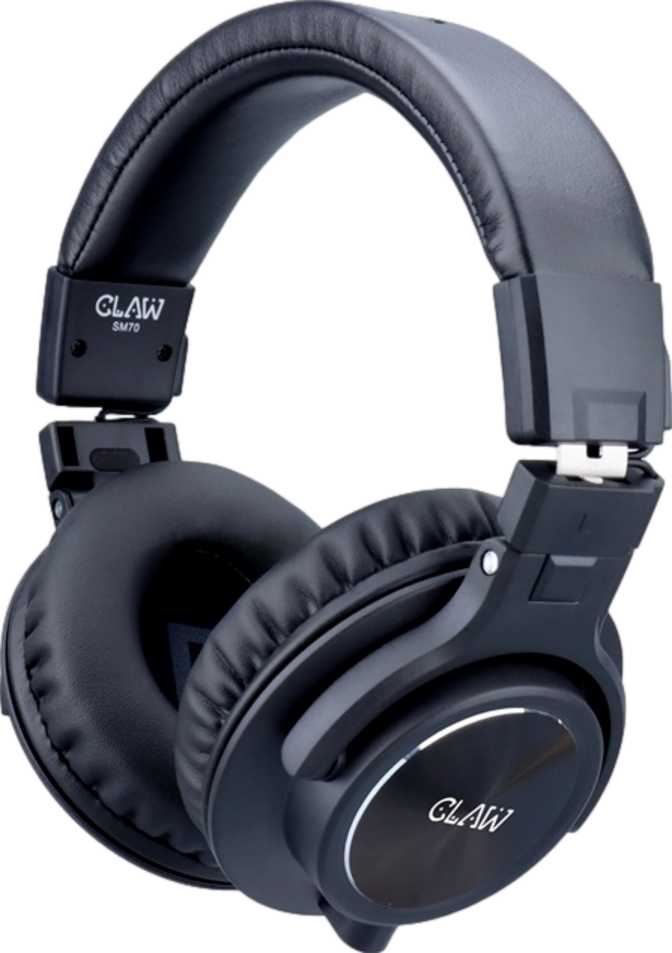
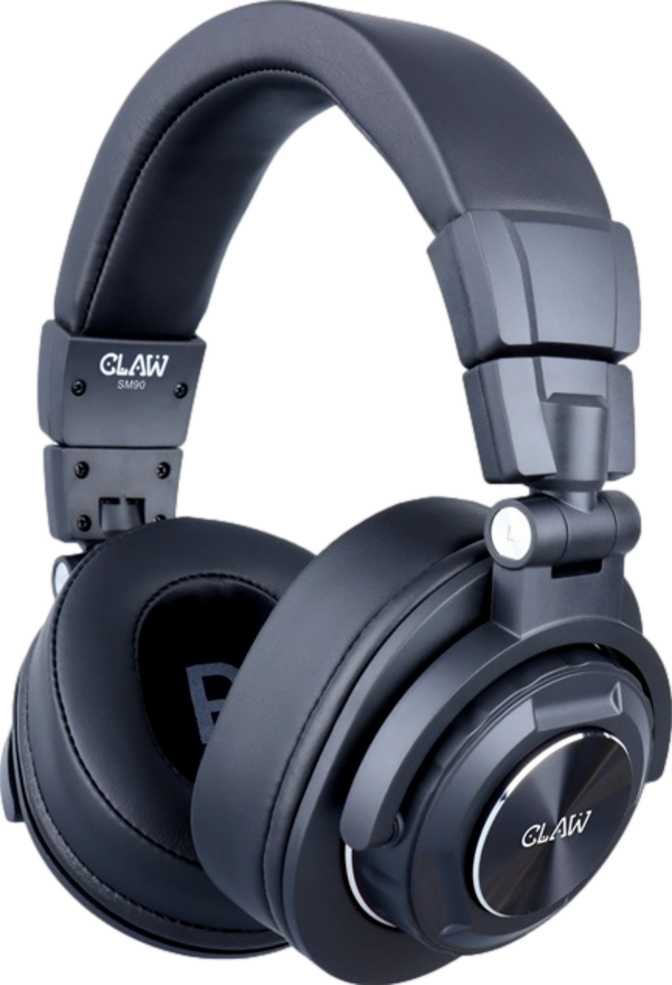
The SM90 is a full-size over-ear headphone with a closed-back construction. Over-ear means the ear cups completely encircle your ears rather than resting on top of them — the distinction matters more than it sounds. Over-ear designs distribute clamping pressure around the ear rather than against it, which is a meaningful comfort advantage during three-, four-, or five-hour sessions. For the gaming marathons, work-from-home days, and extended listening blocks this headphone is designed for, that build decision is the right one.
The closed-back housing seals the rear of each ear cup. This is an intentional engineering trade-off: closed-back designs keep sound in and reduce ambient sound leaking in, at the cost of a slightly more "inside-your-head" soundstage compared to open-back alternatives. Open-back headphones can sound more spacious and natural, but they bleed sound outward and provide almost no isolation — making them unsuitable for shared spaces, voice communication, or any context where you don't want your audio audible to those around you. The SM90's closed-back approach is the correct choice for its stated use cases.
The headphones do not fold flat. This is a fixed-geometry design that prioritizes structural stability and long-term durability over compact portability. A travel bag is included — best understood as a quality protective case for desk storage and scratch prevention during transport, rather than gear for a daily commute. If you store headphones properly or toss them in a backpack alongside other gear, the included bag earns its place immediately.
The Cable: Its Length Tells You Everything About Who This Is For
The SM90 ships with a cable that spans four meters — roughly the distance from the edge of a standard computer desk to most of the floor plan of a typical home office. For a tower PC sitting below a desk, a receiver in an entertainment center, or a desktop audio interface on a shelf, this length eliminates the taut-cable frustration that shorter headphone cables introduce the moment you lean back or turn your head. You can move around your workspace without ever feeling the cable run out of slack.
Detachable Construction
Cable failure — fraying at the connector, an intermittent short from repeated coiling, a damaged sheath — is the most common cause of early death for wired headphones. When the cable detaches, that failure mode becomes an inexpensive fix rather than a reason to replace the entire headphone. This is one of the SM90's most underrated ownership advantages.
Tangle-Resistant Build
The cable uses a tangle-resistant construction, which pays off as a small daily convenience every time you retrieve it from storage. These details don't make headlines but add up to a noticeably better ownership experience over months and years of daily use.
Portability note: For portable use, this cable is a genuine liability. Four meters of cable is impractical outside a fixed workstation — there's no way to manage it comfortably on a commute, in a café, or during exercise. The SM90 is transparent about its identity, and the cable is the clearest signal of that identity.
Sound Quality: What Those Drivers Actually Mean
50mm Drivers and the Frequency Range Case
The SM90 uses 50-millimeter dynamic drivers — larger than the 40mm units that appear in most mid-range consumer headphones. Driver diameter matters because a larger diaphragm can move more air, and moving more air efficiently is how headphones produce low-frequency weight and physical presence. The bass response that distinguishes a satisfying mix from a thin one comes from this physical capacity. A 50mm driver doesn't guarantee excellent bass — tuning, cup seal, and driver quality all contribute — but the size indicates that bass reproduction is part of the design intent, not an afterthought.
The frequency range extends downward into sub-bass territory: the region where pitch perception ends and physical pressure sensation begins. The deepest notes in electronic music, film scores, and bass-forward genres live here. The rated low-frequency extension suggests the driver is tuned to reach this range rather than rolling off where cheaper designs typically stop.
On the high end, the driver extends well beyond the ceiling of human hearing. The practical implication is that the upper registers of the audible range — the shimmer on cymbal hits, the air in a vocal recording, the definition in a high-resolution string section — should not be the point where the driver runs out of capacity. The specifications imply a driver that isn't artificially limited at the top of the audible band.
Driver Engineering: Neodymium Magnets
The SM90's drivers are built around neodymium magnets — a rare-earth material substantially more powerful than the ferrite magnets used in older and lower-cost designs. A stronger magnet controls the driver diaphragm more precisely, allowing it to start and stop quickly in response to sudden dynamic changes. This contributes to tighter transient response — the crack of a snare hit, the attack of a plucked string, the punch of a kick drum. At the SM90's product level, neodymium magnets are baseline competence rather than a premium differentiator, but their presence confirms the driver assembly is built to a credible standard rather than cut down to hit a cost floor.
Impedance, Sensitivity, and Source Compatibility
The SM90's impedance sits at a level that any mainstream audio output handles without difficulty. Laptop headphone jacks, gaming console controllers, desktop motherboards, smartphones, and USB audio adapters all have sufficient output voltage to drive the SM90 to comfortable listening volumes. There is no need for a dedicated headphone amplifier.
Enthusiasts who already own a DAC/amp unit will find that cleaner source output can reduce background noise and improve audio clarity — but this is an optional upgrade, not a requirement. The SM90 is genuinely plug-and-play with any device you're likely to own.
Passive Noise Isolation: The Case for Going Without ANC
The SM90 has no active noise cancellation. ANC systems work by using onboard microphones to sample incoming sound waves, processing them, and generating an opposing signal that partially cancels them before they reach your ears. The technology is most effective against consistent, low-frequency drone — aircraft engines, subway cars, persistent highway traffic. It requires a microphone array, dedicated processing hardware, and a battery to power it all.
The SM90 blocks noise through physical means alone: the closed-back ear cups create a passive seal over your ears, and that seal attenuates incoming sound without any electronics involved. For typical indoor environments — home offices, gaming rooms, apartments, shared houses — passive isolation handles the job adequately. Steady HVAC hum, refrigerator noise, and general ambient sound are partially attenuated; voices, alerts, and sharp transient sounds will still penetrate.
| Factor | ANC Headphones | SM90 Passive |
|---|---|---|
| Technology | Microphone + signal processing | Physical ear cup seal |
| Battery Required | Yes | No |
| Best Environment | Transit, aircraft | Home office, desktop |
| Audio Signal Impact | Processing artifacts possible | None — signal untouched |
| Cost Premium | Significant | Minimal |
Where passive isolation falls short is in loud, continuous-noise environments: airplane cabins, busy subway cars, and high-traffic open-plan offices where background noise is intense and unrelenting. In those contexts, a well-tuned ANC system has a measurable advantage. If your primary use case involves commuting in loud vehicles, the SM90 is the wrong tool. For the desk-bound context the SM90 is designed for, the passive approach is sufficient and appropriate — and not having ANC hardware means there's nothing to charge, nothing to toggle, and no sound-quality penalty from processing artifacts.
Headset Capability: Microphone and On-Device Controls
The SM90 includes a built-in microphone, making it functional as a full headset for online gaming, video calls, and voice communication. For users building a desktop audio setup who would otherwise need a separate microphone for communication, this is a practical consolidation — one device handles both listening and speaking.
Controls are located on the headphone body itself rather than on an inline module along the cable. The advantage of this approach is durability: inline cable controls are a common failure point, and removing them from the cable simplifies its construction and reduces wear points. Controls built into the headphone body are also easier to locate by feel without looking away from a screen.
What the Headset Delivers
- Full two-way communication — microphone and stereo playback in one device
- On-device control panel for volume and playback management
- Compatible with gaming chat, video calls, and standard conferencing software
What's Missing
- No hardware mute button — requires software or keyboard shortcut to mute
- No in-line cable controls
- Microphone characteristics not individually quantified in specifications
Key limitation for headset users: The SM90 does not include a dedicated hardware mute button. For anyone using this as a primary communication headset — in games, meetings, or calls — muting requires navigating software controls, a keyboard shortcut, or a voice app's interface. Gaming headsets typically treat one-button mute as a near-mandatory feature, and by that standard, the SM90's omission is a genuine gap that surfaces every time you need to go quiet.
Who the Claw SM90 Is For — And Who Should Look Elsewhere
A Strong Match For
- PC gamers who want wired audio for zero-latency performance, won't miss battery management, and need voice communication without a separate microphone purchase
- Work-from-home users spending long days on calls and in focused listening mode, who need over-ear comfort and communication capability without the wireless premium
- Home listeners who want dedicated desktop headphones — a meaningful step up from
laptop speakers or earbuds — without moving into dedicated audiophile hardware territory - Students who use headphones through long desk sessions for classes, media, and calls and want a durable single-device solution
Consider Alternatives If
- You commute or travel and need a headphone that goes with you — the cable length and non-folding build make the SM90 impractical outside a fixed workstation
- Exercise is part of your use case — no water resistance means sweat exposure carries real durability risk, and a long-cabled over-ear is physically inconvenient for movement
- Your primary concern is aggressive noise isolation in loud transit environments — passive isolation has real limits that ANC is specifically designed to overcome
- You want modern smart-headphone features — spatial audio, ambient sound passthrough, automatic wear detection, and wireless Bluetooth are all absent and will not be added via firmware
How the SM90 Stacks Up Against the Alternatives
The SM90 competes primarily against wired gaming headsets and entry-level audiophile wired headphones. The comparison below reflects category-level characteristics across the three groups.
| Feature | Claw SM90 | Wired Gaming Headsets | Entry Audiophile Wired |
|---|---|---|---|
| Driver Size | 50mm | 40–50mm (typical) | Varies widely by design |
| Cable | 4m, detachable, tangle-resistant | 1–2m, commonly fixed | 1–3m, often detachable |
| Source Requirements | Any device, no amp needed | Any device | Often higher-impedance; benefits from amp |
| Noise Blocking | Passive (closed-back) | Passive (closed-back) | Passive (open or closed) |
| Folding Design | No | Mixed | Rarely |
| Built-in Microphone | Yes | Yes (standard) | Rarely included |
| Wireless Option | No | Common at this tier | Rare |
| Hardware Mute Button | No | Usually Yes | Not applicable |
vs. Gaming Headsets: The SM90's detachable cable is a genuine advantage — fixed cables are a durability vulnerability common in this category, and the SM90 handles it correctly. The driver size is competitive. The missing hardware mute button is a clear disadvantage by gaming headset conventions.
vs. Entry Audiophile: The SM90 adds microphone capability that audiophile headphones rarely include, while audiophile alternatives often feature more refined driver tuning and higher impedance designs that scale with better amplification.
Strengths and Honest Shortcomings
Where the SM90 Gets It Right
The SM90 gets the fundamentals right for its intended context. The detachable cable is one of the most practically valuable features a wired headphone can offer — not glamorous, but consequential for long-term ownership, since cable failure is the most common reason wired headphones get replaced prematurely.
The four-meter cable length is correctly matched to desktop use. The 50mm drivers with neodymium magnets represent a credible driver assembly, not an entry-level cost compromise. The low-impedance design ensures the headphone works correctly with any device in your setup, no exceptions.
The closed-back construction provides appropriate isolation for the target environment. The included travel bag and tangle-resistant cable reflect a thoughtful approach to daily ownership rather than just headline specifications.
Where the SM90 Falls Short
The absent hardware mute button is the most consequential omission on a product sold partly as a communication headset. In practical daily use across gaming, calls, and meetings, reaching for software mute versus pressing a physical button is a friction point that recurs constantly. It's the kind of detail that doesn't read as significant on a spec sheet but becomes noticeable within the first day.
The non-folding design is the right call for build integrity but restricts the headphone to fixed-location use. There is no practical middle ground where this becomes a grab-and-go option. The complete absence of water resistance limits its environment to dry, sedentary settings.
Buyers arriving from feature-rich wireless headphones will notice the deliberate minimalism — no ambient mode, no wear detection, no spatial processing, no Bluetooth. These are intentional omissions that free up cost and complexity for audio hardware, but they require buyers to consciously accept the trade.
Common Questions Real Buyers Ask
Answers to the questions people actually search before purchasing the Claw SM90.
Final Verdict: The Right Tool for the Right Desk
The Claw SM90 is a headphone that knows exactly what it is and builds toward that identity without distraction. Wired, long-cabled, closed-back, and microphone-equipped — every specification reflects a product designed for someone sitting at a desk for extended periods who wants reliable audio without the ongoing overhead of charging, pairing, or managing a wireless connection.
The 50mm drivers and extended frequency range set reasonable expectations for capable audio performance. The detachable, tangle-resistant cable is an ownership-quality decision that pays dividends over the life of the product. The low-impedance design ensures broad compatibility with any source device. The passive isolation is appropriate for the intended environment.
The mute button omission is the SM90's most frustrating daily limitation — it matters more in actual use than it appears on paper, especially for voice-communication-heavy users. The non-folding, long-cabled form factor is correct for the desk but inflexible for any other context.
Buy the SM90 if:
Your use case is a fixed desktop workstation and you want wired audio with microphone capability, without paying the wireless premium for features you won't use while sitting at your desk.
Look elsewhere if:
You need portability, serious noise cancellation for transit, exercise compatibility, or smart-headphone features. The SM90 is built for one context — and that context has to be yours.