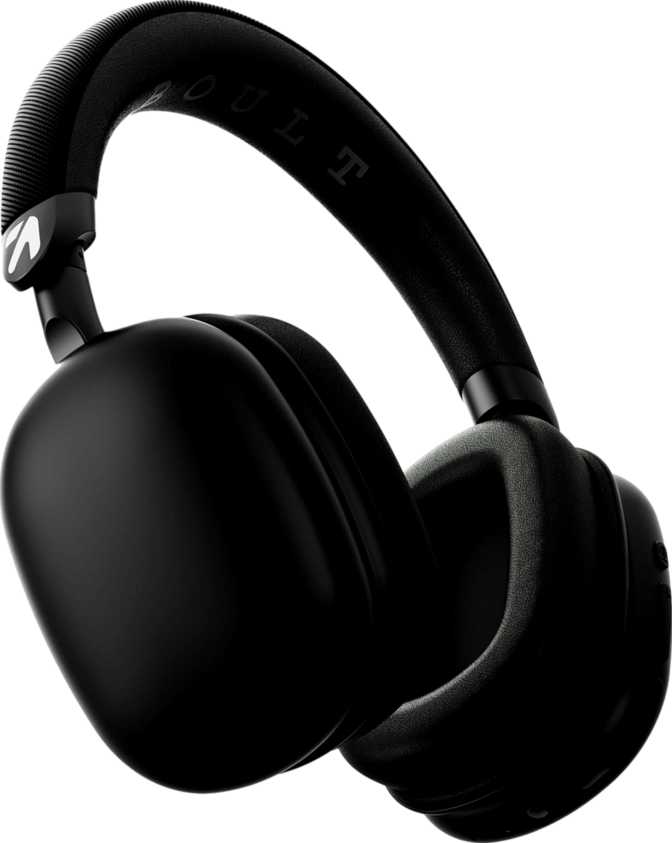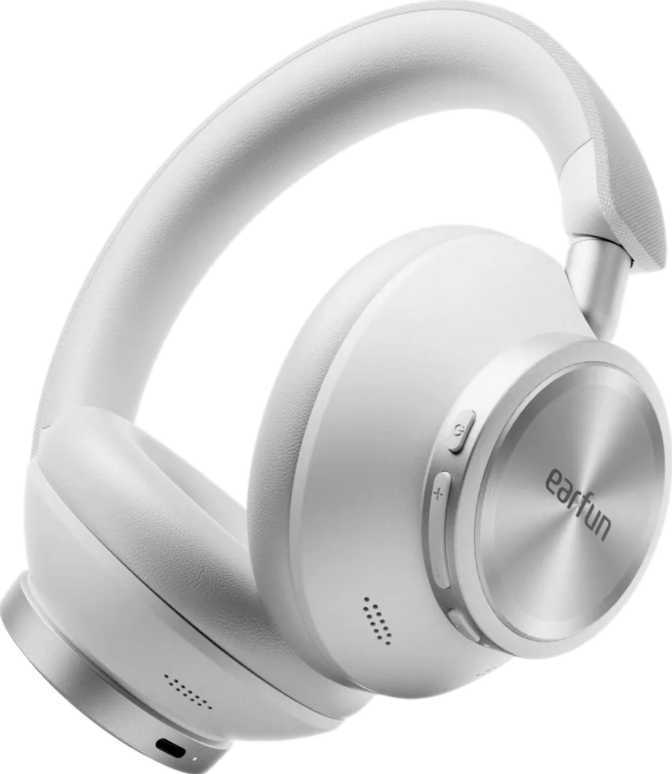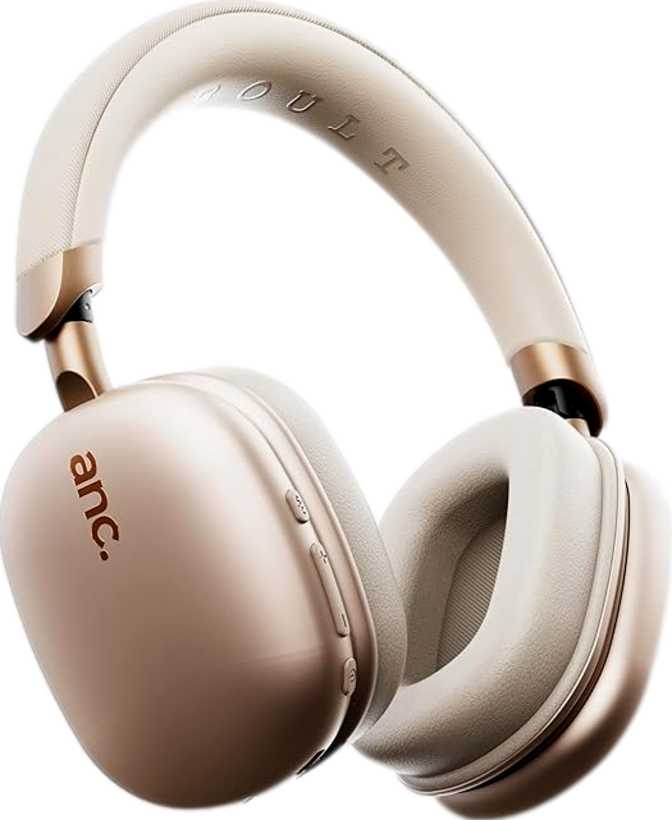
Boult Audio Fluid X Pro Review: Exceptional Battery, Real Compromises
HeadphonesMore Headphone Than You Would Expect at This Price
When a pair of headphones promises active noise cancellation, a week-plus of battery life, and a modern Bluetooth chipset — all at a price that leaves most of your budget intact — the natural instinct is to look for the catch. With the Boult Audio Fluid X Pro, the catch is real but narrow. Everything else lands far closer to the premium end than the price tag suggests.
This is a closed-back, over-ear wireless headphone designed for commuters, remote workers, and everyday listeners who want real features without a painful outlay. The Fluid X Pro does not compete with Sony's XM series or Bose's QuietComfort line — it aims squarely at the growing crowd who refuse to settle for toy-quality audio. Understanding exactly where it wins, where it holds its own, and where it quietly steps aside tells you everything you need to know before spending money.
- 60-hour wireless battery life
- Bluetooth 5.4 — most current standard
- Active and passive noise cancellation
- USB-C charging, wired and wireless modes
- 205g lightweight, foldable design
- SBC-only wireless codec — no aptX or LDAC
Design and Build: Light, Foldable, and Meant to Travel
Physical construction, materials, and what the design includes — and excludes
The Physical Experience
Weighing in at 205 grams, the Fluid X Pro is meaningfully lighter than most over-ear ANC headphones, which commonly land between 240 and 280 grams. That 35-to-75-gram difference sounds trivial until you are four hours into a work-from-home session and your neck disagrees. The lighter build here is a genuine quality-of-life advantage, not a side effect of cheap construction.
The headphones fold at both earcups, collapsing into a compact shape that fits inside a standard carrying case or a backpack accessory pocket without forcing anything. Foldability at this price point is a practical feature that many competing models skip, and the Fluid X Pro includes it without making the folding mechanism feel flimsy.
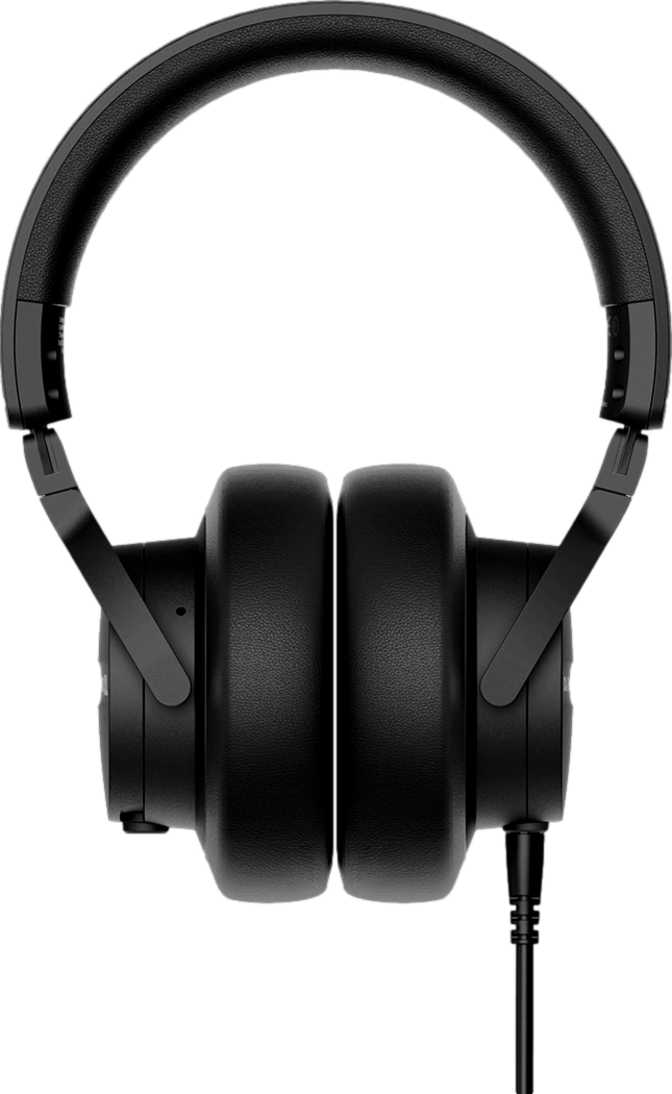
The cable design is handled well on two counts: it is tangle-resistant in construction and — more importantly — it detaches from the headphone itself. A detachable cable means a yanked or damaged cable is a straightforward replacement rather than a headphone funeral. It also means you can switch to wired mode whenever you want, with real implications for latency and audio quality covered below.
What the Design Does Not Include
The closed-back construction — sealed ear cups rather than an open mesh at the rear — is the correct design choice for a noise-canceling headphone. It contributes to passive sound isolation before the electronics even activate, prevents audio bleed that would disturb people nearby, and reinforces the low-end character typical of sealed over-ear headphones.
- Foldable for easy transport and storage
- Detachable, tangle-resistant cable included
- Closed-back sealed earcups for isolation
- Stereo drivers, full over-ear fit
- No water or sweat resistance whatsoever
Sound Performance: What the Drivers Actually Deliver
Driver hardware, tuning character, and the wireless audio codec you need to know about
Understanding the Hardware
The Fluid X Pro uses 40-millimeter driver units — the standard size for this class of headphone, large enough to move air efficiently across the full audible frequency range. These are paired with neodymium magnets, the modern standard for driver construction. Their ability to create a strong magnetic field in a compact space allows for faster, more controlled driver movement, contributing to tighter bass and cleaner highs.
The frequency response nominally spans the entire range a human ear can register, from sub-bass rumble to the upper edge of high-frequency detail. The closed-back design and 40mm driver size typically produce a consumer-oriented sound profile: elevated low-end presence, a reasonably defined midrange, and highs that are present without being harsh. This tuning suits the streaming generation, and the Fluid X Pro is built for it.
The Codec Conversation
Bluetooth audio is transmitted using codecs — compression formats that determine how much audio data gets through wirelessly and how faithfully sound is reconstructed at the headphone end. Premium and mid-range headphones support higher-quality codecs like aptX, aptX HD, AAC, or LDAC, which preserve more of the original audio signal across the wireless connection.
The Fluid X Pro supports none of these. Wireless audio transmits via SBC — the default Bluetooth codec that every device falls back to when nothing better is available.
For the majority of listeners streaming from Spotify, YouTube Music, or standard platforms, the difference is subtle enough that most people genuinely will not notice in daily use. But for audiophiles with high-resolution audio libraries or lossless streaming subscriptions, the wireless transmission will compress the signal regardless of source quality. That is an honest limitation worth stating plainly.
iPhone Users: A Specific Note
Apple devices default to the AAC codec when connecting to compatible headphones, and AAC generally delivers noticeably better transmission quality than SBC. Since the Fluid X Pro does not support AAC, iPhone users will receive SBC-quality audio rather than the improved quality available from AAC-compatible competing headphones. It functions — but it is not optimal for the Apple ecosystem.
Active Noise Cancellation: Two Layers of Quiet
How passive and active noise reduction work together — and what to realistically expect from each
Passive Reduction
The first layer is physical. The over-ear, closed-back design creates a seal around the ears that blocks ambient sound before any processing occurs. Good earcup padding and appropriate clamp force trap a pocket of quiet air between the driver and your ear. This passive attenuation is always active whether or not electronics are involved — no battery required, no processing lag.
Active Cancellation
Microphones on the headphone sample the ambient environment, and the ANC circuitry generates opposing sound waves to cancel it out. At this price point, ANC performs best against steady, predictable, low-frequency noise: airplane cabin hum, air conditioning systems, commuter train engines. These sounds reduce meaningfully and, in many environments, almost entirely.
Variable or high-frequency sounds — a sudden voice nearby, a phone ringing — respond less completely to ANC at any price. The Fluid X Pro should be expected to perform in line with that reality.
Ambient Sound Mode
When you need to hear what is happening around you — a platform announcement, a colleague speaking — the ambient sound mode activates without removing the headphones. It pulls in outside audio through the microphones and plays it into your ears, letting you stay aware without breaking focus entirely. This passthrough feature is a genuinely useful addition that many budget-tier headphones skip entirely.
Battery Life: The Fluid X Pro's Clearest Advantage
How 60 hours compares to the market — and what it means for your actual charging routine
Battery Life Comparison
What 60 Hours Means in Practice
- Casual listeners (4–6 hrs/day) go 10–15 days between charges
- Heavy users (8 hrs/day) recharge roughly once a week
- USB-C charges with the same cable as your phone or laptop
- Built-in battery indicator warns you before depletion — no sudden shutoffs
- Wireless charging is not supported at this price tier
Most ANC over-ear headphones — including models from established brands that cost considerably more — typically deliver somewhere between 20 and 35 hours per charge with ANC running. Sixty hours is more than double the category average. The practical impact is that battery management largely stops being a task you think about. These headphones outlast your week.
Bluetooth Connectivity: Current Standard, Honest Range
What Bluetooth 5.4 delivers in practice — and what the connection specifications do not include
What Bluetooth 5.4 Brings
The Fluid X Pro uses Bluetooth 5.4, the most current iteration of the standard. Practically, this means a more stable connection with less susceptibility to interference in congested wireless environments — crowded train stations, open-plan offices with many active devices, busy urban centers. It also contributes meaningfully to power efficiency, which is part of how the exceptional battery life figure is achievable.
The wireless range is rated at 10 meters — the standard specification for this type of device. For the primary use case — device in a bag or pocket, headphones on your head — 10 meters is more than sufficient in virtually every scenario. Leaving your phone in a different room while moving around a larger home may challenge the reliable range, particularly through thick walls.
Connectivity Feature Checklist
- Bluetooth 5.4 — stable and power-efficient
- Wired and wireless modes both supported
- No NFC pairing — standard Bluetooth setup required
- No Google Fast Pair support
- No Bluetooth LE Audio
- No aptX, LDAC, AAC, or Auracast
- 10-meter Bluetooth range — standard, not extended
Microphone and Call Performance
Call clarity, on-device controls, and the two usability gaps that matter most for frequent callers
The Fluid X Pro includes a noise-canceling microphone designed to suppress background noise on your end during calls. This is distinct from the ANC protecting your ears — the call mic faces outward and attempts to pick up your voice while attenuating ambient sound before it reaches the other person. For standard phone calls and video conferencing, the mic performs adequately across mainstream platforms.
Controls are physical buttons placed on the earcup — a preference many users hold over touch-sensitive surfaces, particularly in cold weather or for users who find accidental activation frustrating. Physical buttons provide tactile confirmation that a command has been issued.
The headset supports phone calls, video conferencing, and voice assistant activation. The absence of in-line cable controls means all management happens from the earcup directly, which is the more common configuration for over-ear headphones at this tier.
- Noise-canceling mic for cleaner calls
- Physical on-device control buttons
- Full headset use for calls supported
- No dedicated mute button on headphone
- No automatic ear detection or auto-pause
- No in-line cable control panel
Who the Fluid X Pro Is Built For — And Who Should Look Elsewhere
An honest assessment of the audiences this headphone serves well — and those it does not
-
A commuter or frequent traveler who wants ANC for transit noise and a battery that outlasts long journeys without hunting for a charging point along the way.
-
A remote worker or student needing focused quiet in a busy home or shared space, with a usable noise-canceling mic built in for video calls.
-
A first-time ANC buyer stepping up from budget earphones who wants to experience what noise cancellation actually feels like without committing to flagship pricing.
-
An Android user streaming from standard platforms like Spotify or YouTube Music, where the codec limitation will never surface as a meaningful issue in everyday use.
-
An audiophile or hi-res audio enthusiast — SBC-only wireless transmission is the ceiling, and the higher-quality codecs in competing headphones break through it meaningfully.
-
A gym user or outdoor athlete — no water or sweat resistance makes the Fluid X Pro unsuitable for any physical activity environment without exception.
-
A gamer or video editor sensitive to audio latency — no low-latency codec means wireless audio will not stay synchronized with video content on screen.
-
An iPhone-first user reliant on AAC quality — iPhones default to AAC for compatible headphones, and the Fluid X Pro falls back to lower-quality SBC transmission instead.
Competitive Positioning: Where the Fluid X Pro Stands
How it compares to what else is available at similar and higher price points in the ANC headphone category
| Specification | Boult Audio Fluid X Pro | Typical Budget ANC | Typical Mid-Range ANC |
|---|---|---|---|
| Bluetooth Version | 5.4 | 5.0–5.1 | 5.2–5.3 |
| Battery Life (wireless) | ~60 hours | 20–35 hours | 25–40 hours |
| Premium Codec Support | None — SBC only | Often includes AAC | aptX / LDAC common |
| Detachable Cable | Yes | Rarely included | Sometimes included |
| Wireless Charging | No | Rarely included | Sometimes included |
| Weight | ~205g (lighter end) | 200–270g | 230–280g |
| Water Resistance | None | Rarely included | Occasionally IPX4 |
| Auto Ear Detection | No | Sometimes | Often |
| Ambient Sound Mode | Yes | Sometimes | Usually |
Competitor data represents category averages across commonly available models in each tier. Individual products vary.
Honest Strengths and Real Limitations
A balanced assessment of what the Fluid X Pro genuinely excels at — and where it asks for compromise
The Fluid X Pro earns the most credit for what it gets undeniably right. Sixty hours of wireless playback is not a marketing rounding — it resets expectations for a category where "great battery life" used to mean 30 hours. Combined with USB-C charging and a battery level indicator, power management on these headphones is simply not a daily concern, which is more than can be said for many headphones costing twice as much.
The lightweight design genuinely makes a difference during extended wear. The foldability and detachable cable add up to a headphone built for daily life, not just a product page — these design decisions save money and frustration over the real lifespan of ownership.
The ambient sound mode is a thoughtful inclusion at this tier. Bluetooth 5.4 is a forward-looking connectivity choice that most budget competitors have not yet adopted. These are meaningful advantages, not box-ticking additions.
Where the Fluid X Pro shows its cost is in wireless audio transmission. SBC-only Bluetooth is the honest limiting factor, and it matters more or less depending entirely on who is listening and from what source. A Spotify listener streaming at high quality will not reach the ceiling. A hi-res audio subscriber or someone with a trained ear will. The absence of AAC support specifically narrows the Fluid X Pro's fit within the iPhone ecosystem.
The missing auto-pause feature is a small but daily inconvenience. The absent mute button will matter to remote workers more than to casual listeners. The 10-meter Bluetooth range means these headphones will not suit walking around a large home with your phone left in another room.
None of these are dealbreakers for the target audience. All of them are worth knowing before purchase. An informed buyer makes a better owner.
Questions Real Buyers Ask Before Purchasing
Answers to the most common searches and concerns about the Boult Audio Fluid X Pro
Should You Buy the Boult Audio Fluid X Pro?
An honest recommendation for the listener this headphone was designed to serve
The Boult Audio Fluid X Pro earns a straightforward recommendation for the listener it was designed for: someone who wants ANC, exceptional battery life, and everyday practicality without paying for features they do not need or would not use.
The 60-hour stamina alone sets it apart from headphones costing significantly more. Bluetooth 5.4 is a forward-looking addition that most competitors in this range have not yet adopted. The foldable build, detachable cable, and USB-C charging make this a headphone that fits real life — not just a spec sheet.
The trade is codec support. SBC-only wireless transmission places a ceiling on audio quality that higher-end Bluetooth codecs break through. For Spotify listeners and casual media consumers, that ceiling is high enough that it will never feel confining. For audiophiles, it is a non-starter.
Buy It If You
Prioritize endurance, connection stability, and real-world value — especially if you stream from standard platforms on Android where the codec ceiling stays comfortably out of reach.
Look Elsewhere If You
Prioritize wireless audio fidelity, rely on the Apple ecosystem's AAC transmission quality, or need moisture protection for any form of active use. The codec limit is real.