Akko Verge Review: The Dual-Wireless Headset for Gamers on the Go
PC and Gaming HeadsetsThe Akko Verge sits at a rare crossroads: a headset that serves PC gamers through a dedicated 2.4GHz wireless link, then transitions instantly to Bluetooth 5.3 for your phone or laptop — all in a frame light enough to fold into a shoulder bag. With battery endurance that defies category norms, the Verge makes a genuinely compelling case for anyone who refuses to carry two separate pairs.
Design and Build Quality
Physical form, materials, and everyday usability
Physical Form and Materials
The Akko Verge weighs 270 grams — lighter than many gaming headsets with comparable driver hardware. Anything below 300 grams in this category sits comfortably in the extended-wear zone; beyond 350 grams, most users start feeling fatigue within the first hour of use. The Verge clears that threshold with room to spare.
The headset folds flat, which meaningfully elevates it beyond desk-only territory. Whether you are sliding it into a carry-on or a shoulder bag between home and the office, the folding mechanism gives the Verge portability credentials that most gaming-first headsets simply lack.
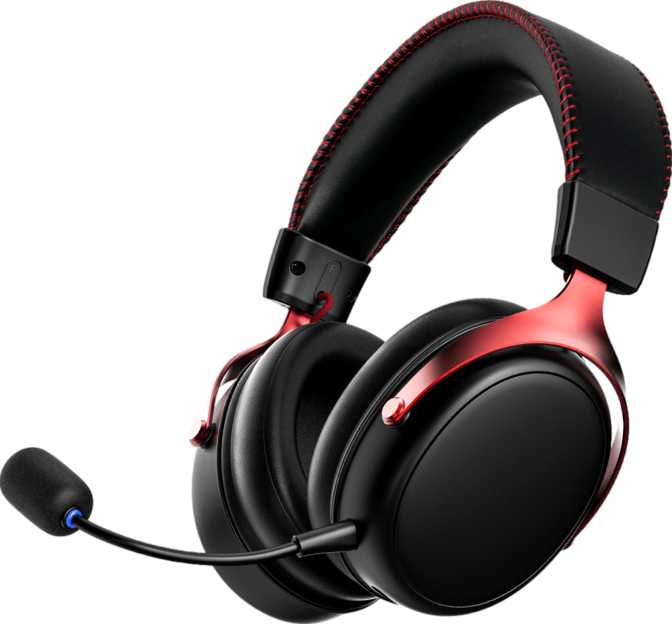
The closed-back earcup design seals the drivers in an acoustic chamber, shaping the sound signature toward bass presence and a more enveloping character. It also helps keep your audio from bleeding into a quiet room. To be direct: the Akko Verge does not include dedicated passive noise isolation. If you expect the world to go quiet when you put these on, you will be disappointed.
No detachable cable and no travel bag are included in the box — reasonable omissions at this price tier, but worth knowing before purchase.
Design at a Glance
- Over-ear fit — full earcup coverage for immersion and extended comfort
- Foldable frame — collapses flat for bags, travel, and storage
- Closed-back design — adds bass character and limits outward audio leakage
- On-device controls — all functions accessed from the earcup
- USB-C charging — universal connector, no proprietary cable
- No hardware mute button — mic muting requires software
For a gaming-oriented headset with an included microphone, the absence of a physical mute button is the Verge's most friction-creating design decision. In competitive gaming or voice-heavy multiplayer sessions, muting through your OS, game, or communication app adds a step at exactly the wrong moment. This is a point Akko should address in any future revision of this headset.
Connectivity: Two Wireless Modes, One Headset
Which connection to use and when
2.4GHz Wireless
Best for GamingA dedicated USB dongle delivers audio with imperceptible latency — critical in games where audio cues like footsteps and positional sounds must arrive in precise sync with what is happening on screen. Unlike Bluetooth, the 2.4GHz band avoids the processing delay that makes Bluetooth connections unsuitable for competitive play. This mode is what separates the Verge from lifestyle headsets that only claim gaming credentials.
Bluetooth 5.3
Best for Mobile & LaptopBluetooth 5.3 is the current mainstream standard, offering improved connection stability and better power efficiency compared to earlier generations. The Verge uses it for phones, tablets, and laptops — making this a genuinely dual-purpose headset with a rated 10-meter range that covers most indoor environments.
One technical detail audiophiles must know: the Verge does not support premium audio codecs like aptX, LDAC, or AAC. Audio travels over the baseline SBC codec — functional for gaming and casual listening, not for high-fidelity Bluetooth music.
Sound Performance: The 53mm Drivers Explained
Technical specifications translated into real listening experience
Driver Size and What It Means
The Verge uses 53-millimeter drivers — the moving elements inside each earcup that convert electrical signals into sound. Most consumer headphones use drivers in the 30–40mm range. At 53mm, the Akko Verge is in large-format territory, with significantly more surface area to move air. More surface area generally means more potential for bass extension and higher volume output.
What this signals about the sound character: Akko is chasing a big, enveloping presentation — tuned for gaming and cinematic content rather than studio accuracy. Each driver is powered by a neodymium magnet, the industry standard for high-efficiency driver design, contributing to responsive audio reproduction from a compact magnetic unit.
Frequency Range in Plain Terms
The Verge covers a frequency range from 12Hz at the low end to 22,000Hz at the top. Human hearing typically tops out around 20,000Hz, so the upper ceiling exceeds practical limits — a common spec practice indicating the driver can reach that threshold. The more interesting number is 12Hz at the low end, which falls below the audible floor. This suggests the headset is tuned for you to feel sub-bass content as much as hear it — explosion impact, deep engine rumble, and cinematic low-frequency presence in games and film.
Spatial Audio and Virtual Surround
The Akko Verge supports spatial audio and virtual surround — software-processed effects that simulate directional audio from multiple directions using just the two physical drivers. For gaming, this can meaningfully help with positional awareness in titles designed around directional audio cues. To be precise: this is digital signal processing that manipulates timing and frequency to create the directional illusion. It is not hardware multi-driver surround. Some users find it genuinely useful; others find the processing too apparent. Both reactions are reasonable.
Audio Specifications
In wireless mode, the Verge's built-in amplifier handles the 64 Ohm load entirely — no issue for everyday use. This only becomes relevant if you use the headset passively wired through a low-output source, such as an older 3.5mm audio jack on budget hardware, where the maximum volume ceiling may be lower than expected.
Microphone: Removable and Noise-Canceling
What the mic delivers and where it falls short
The Verge includes a removable microphone — a design choice that serves both use cases the headset targets. At the gaming desk, attach it. On the commute or in a meeting room, remove it and the headset reads as a standard pair of headphones rather than gaming gear.
The microphone includes noise-canceling processing, which filters out background sounds — keyboard clatter, room ambience, fan noise — before transmitting your voice. At its rated sensitivity, the mic is tuned to pick up speech at a normal talking distance without requiring you to lean in toward a boom arm.
One limitation bears repeating clearly: there is no hardware mute function on the headset. With only one microphone and no dedicated mute button, controlling mic privacy during any session requires software. For gaming, this is the single feature absence that most affects day-to-day experience. It creates friction at exactly the moments — quick-mute before stepping away, silencing background noise mid-call — where a physical button would be instant.
Mic at a Glance
- Noise-canceling processing
- Physically removable design
- -38 dBV/Pa sensitivity
- No hardware mute button
Battery Life: 250 Hours Is Remarkable
What this number means in practice and how it compares to the category
How It Compares to the Category
Most quality gaming headsets deliver between 20 and 50 hours per charge; even highly regarded long-life options in this space typically peak at 70–100 hours. The Verge's 250-hour figure is achieved through a combination of Bluetooth 5.3 efficiency improvements, optimized 2.4GHz wireless circuitry, and conservative power state management when audio is passive or idle.
For a typical user wearing the headset two to four hours per day, this means potentially months of use between charges. Battery anxiety — the background awareness that your headset is running low — effectively disappears as a concern with this product.
The headset includes a battery level indicator, so you always know where you stand. The battery is integrated rather than user-replaceable, which is standard for this category — you charge it rather than swap it.
Who This Headset Is For — and Who Should Look Elsewhere
Matching the Akko Verge to the right buyer profile
Well-Suited For
- PC gamers who want dual-use capability — low-latency 2.4GHz at the desk, Bluetooth 5.3 when away from it
- Hybrid workers and remote professionals — one headset for gaming at home and Bluetooth calls at the office
- Casual to mid-level gamers — who prioritize battery endurance and wireless flexibility over audiophile codec support
- Frequent travelers — foldable frame and Bluetooth pairing work equally well on transit and in temporary workspaces
Should Look Elsewhere
- Audiophiles and music enthusiasts — LDAC, aptX HD, and AAC are absent; Bluetooth audio is limited to SBC only
- Users needing strong noise isolation — closed-back design provides minimal passive isolation; no ANC is included
- Competitive gamers requiring instant mic mute — no hardware mute means every mic cutoff goes through software
- Wired-first audiophile listeners — 64 Ohm impedance can underperform through low-power passive audio sources
Competitive Positioning: How It Stacks Up
Akko Verge vs. typical alternatives at a comparable price tier
| Feature | Akko Verge | Budget Wireless Gaming Headset | Mid-Range Bluetooth Headset |
|---|---|---|---|
| Wireless Modes | 2.4GHz + BT 5.3 | 2.4GHz only | Bluetooth only |
| Battery Life | ~250 hours | 20–40 hours | 30–60 hours |
| Driver Size | 53mm | 40–50mm | 30–40mm |
| Active Noise Cancellation | Rarely included | Often included | |
| Bluetooth Codec | SBC only | N/A | aptX, AAC, LDAC |
| Foldable | Rarely | Common | |
| Removable Mic | Often yes | Rarely | |
| Hardware Mic Mute | Usually yes | N/A |
The Verge occupies a precise intersection: dual-wireless flexibility typically found in more expensive headsets, with battery life that outperforms nearly everything in its range, while making concessions on codec support and mic controls that a more specialized product might not.
Honest Assessment: What Works and What Doesn't
A balanced look at where the Akko Verge earns its recommendation and where it falls short
Where It Delivers
- Dual-wireless design is genuinely useful — 2.4GHz for the desk and Bluetooth for everything else solves a real problem most headsets in this range ignore
- 250-hour battery endurance is the kind of specification that sounds like marketing until you stop thinking about charging your headset for months at a time
- 53mm drivers point toward a large, impactful sound character well-suited to gaming and cinematic content
- Spatial audio support adds genuine positional utility for games designed around directional audio cues
- Removable microphone lets the headset transition from gaming to commuting without looking out of place
Where It Falls Short
- No hardware mute button on a gaming headset with an included mic is the most irritating daily omission — a clear candidate for Akko's first revision
- Bluetooth audio is capped at SBC — premium wireless audio quality for music listening is not on offer here
- Minimal passive noise isolation — closed-back design helps slightly, but this is not a solution for loud open offices or busy transit
- No active noise cancellation — buyers expecting ANC at this price point will need a dedicated ANC headset
- 64 Ohm impedance can underperform in passive wired mode through low-power output sources
Common Buyer Questions Answered
Answers to what real buyers search for before purchasing the Akko Verge
Final Verdict
The Akko Verge gets its fundamental premise right. The combination of 2.4GHz wireless for gaming and Bluetooth 5.3 for everything else, housed in a foldable over-ear frame, solves a real problem — most wireless headsets force you to choose between gaming-grade and commuter-friendly. The Verge gives you both.
The 250-hour battery life is the kind of figure that sounds like marketing copy until you actually stop thinking about charging a headset for weeks at a time. The 53mm drivers suggest a sound character built for presence and impact. Spatial audio adds real utility for positional gaming. The removable mic keeps the design flexible across use cases.
The weaknesses are real and worth naming: no hardware mute button creates the most daily friction; Bluetooth audio is limited to SBC; passive noise isolation is minimal; ANC is absent. These are not fatal flaws — they are constraints that define exactly who this headset is and is not for.
Recommended for hybrid gamers and dual-use users who prioritize wireless flexibility, exceptional battery endurance, and portability. Pass if your primary need is high-fidelity Bluetooth audio, active noise cancellation, or a physical mic mute button.