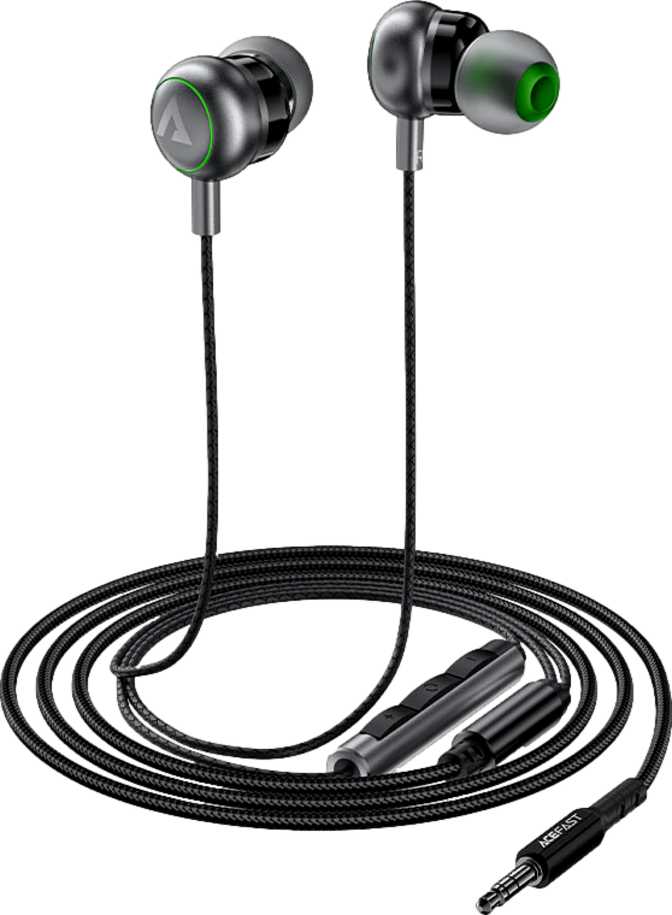
Acefast L4 Review: A Lightweight Wired Earphone for Daily Use
HeadphonesIn a market saturated with wireless earbuds demanding constant charging and firmware updates, the wired earphone has quietly held its ground for a specific group of people — those who plug in and get on with it. The Acefast L4 is built for exactly that crowd. No pairing rituals, no battery anxiety, no connectivity dropouts in crowded subway cars. It is a straightforward wired in-ear with an inline microphone, passive sound isolation, and a tangle-resistant cable, positioned as a reliable daily driver for people who want audio without complexity.
Whether you are an office worker who makes calls from a laptop, a student who listens through a phone still equipped with a headphone jack, or someone who considers wireless earbuds an unnecessary expense, the L4 speaks directly to your use case. What follows is a complete breakdown of whether it actually delivers on that promise.
- Weight17 g — Featherlight build
- ConnectionWired — 3.5mm analog
- Frequency Range20 Hz – 20,000 Hz Full Spectrum
- Microphone1 inline mic, no noise filtering
- Cable1.2 m — tangle-free construction
- Warranty2 Years — above category average
Design & Build: Compact, Unobtrusive, Honestly Lightweight
Physical construction, cable engineering, and what the form factor means day to day
Physical Profile & Comfort
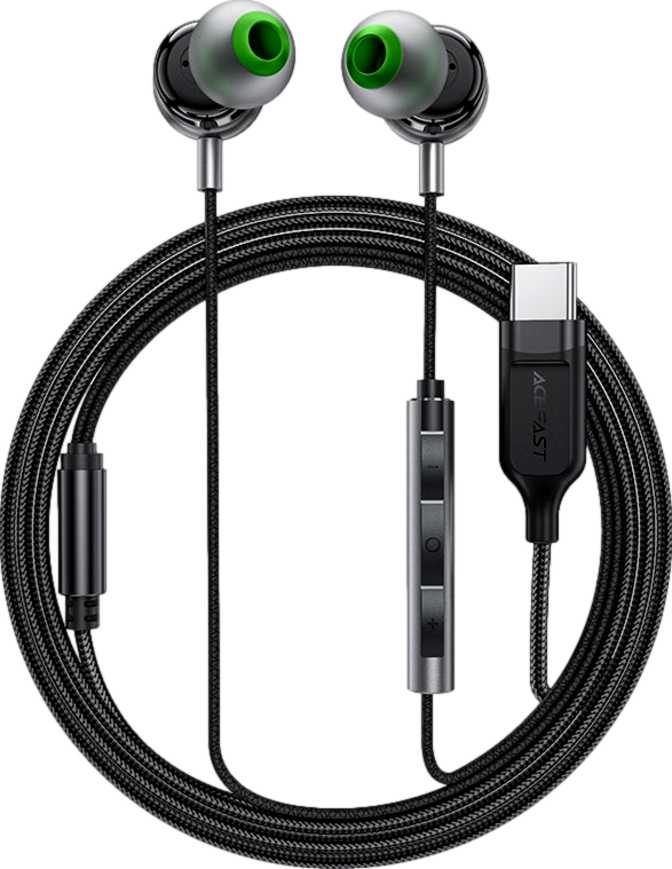
The entire Acefast L4 unit — both earpieces, cable, and inline remote — weighs just 17 grams. To put that in perspective, it is lighter than a standard AA battery. For anyone who has worn heavier in-ears during a long desk session and noticed the fatigue that accumulates in the ear canal over hours, that figure is genuinely meaningful. The earpieces use a standard in-canal fit, where the silicone tip presses gently into the ear canal to form a passive seal. The housing follows a closed-back construction, keeping sound focused inward and ambient noise further out.
Cable Design: Tangle Problem Solved
The tangle-free cable construction resists looping and knotting when stored loosely. Pull it from a jacket pocket after a day’s use and it comes out ready — not as a puzzle to be untangled. The 1.2-meter length, just under four feet, is ideal for seated use: long enough for comfortable head movement with a device on a desk, short enough to avoid problematic slack during a commute.
What’s Missing
- No Water or Sweat Resistance
There is no moisture protection of any kind. Gym sessions, outdoor runs, and rainy commutes are hard exclusions. This is a clear design boundary.
- No Carrying Case
No storage pouch is included. Protecting the earphones between uses is the owner’s responsibility.
Sound Performance: What the Specifications Actually Mean
Frequency range in plain terms, driver technology explained, and passive isolation in context
Full-Range Coverage, Practically Grounded
The Acefast L4 covers the complete range of human hearing, from the lowest bass frequencies a healthy ear can detect to the upper limits of high-frequency perception. That full-spectrum coverage is a standard claim across the earphone category and, in isolation, tells you relatively little about actual listening experience. What matters is how faithfully different portions of that range are reproduced, and that depends heavily on driver technology and — critically — fit.
Tip Fit Is Everything
A tight, well-sealed tip locks in bass energy and enhances overall clarity. An ill-fitting tip bleeds that energy out, resulting in hollow-sounding audio. Spending two minutes finding the right tip size from the included set yields dramatically better results than any other adjustment the user can make.
Passive Isolation: Quiet Without Batteries
The L4 relies on passive noise reduction — the physical blocking effect of the closed in-ear seal — rather than active noise cancellation. Active systems use microphones and signal processing to generate sound waves that electronically cancel ambient noise; passive systems simply block it physically. No power required, no electronic artifacts.
For office environments, library settings, or public transit at moderate noise levels, this level of isolation is genuinely effective. In louder environments — construction work nearby, airplane cabins during flight, a loud open kitchen — passive isolation alone will not produce the focused quiet that ANC delivers, and the gap becomes noticeable.
The L4 uses a driver built without a neodymium magnet. Neodymium is the dominant magnet material in modern audio drivers because its extremely high magnetic strength allows compact, efficient designs that respond quickly across the full frequency range. Non-neodymium drivers require physically larger structures and tend to operate at lower efficiency.
Features: What Each Specification Means in Practice
Inline controls, microphone performance, and notable absences explained plainly
Inline Controls
A small module on the cable handles playback controls without reaching for the device. Play, pause, and track skipping are found by touch, which becomes second nature quickly. No controls are placed on the earpiece housings.
Inline Microphone
A single mic built into the inline module makes the L4 a full headset. In quiet rooms it captures voice clearly. It has no noise-filtering processing, so noisy environments bleed into the call for the other party. Functional but context-dependent.
No Mute Button
There is no mute button anywhere on the unit. Muting on a video call requires using the software mute in the app. For frequent conference users who mute and unmute constantly, this is a real daily friction point.
2-Year Warranty
Two years of manufacturer coverage is above average for this category. Most budget wired earphones offer one year or less. This coverage against driver failure, cable degradation, or module faults contributes meaningfully to long-term ownership value.
| Feature | Status | Practical Impact |
|---|---|---|
| Tangle-Free Cable | Daily quality-of-life improvement; pulls cleanly from pocket or bag | |
| Active Noise Cancellation | Absent; passive isolation only — sufficient for moderate environments | |
| Ambient Sound / Transparency Mode | Must physically remove earpiece to hear surroundings | |
| Auto-Pause on Ear Removal | Playback continues; must pause manually before removing | |
| Spatial Audio | Standard stereo only; immersive audio not supported | |
| Stereo Sound | Full left/right channel separation for music, calls, and video | |
| Headset Use (calls & mic) | Fully functional as a voice call and conferencing headset | |
| Water / Sweat Resistance | None. Not suitable for exercise or outdoor wet-weather use |
Who the Acefast L4 Is Built For — and Who It Isn’t
Real-world usage scenarios and honest buyer profiling
- Desk-Based Listeners & Remote WorkersPrimarily using earphones at a desk for listening and calls; no battery to manage, no dongle to charge.
- Students on a BudgetLong study sessions benefit from the lightweight comfort, and the 2-year warranty outlasts the typical student budget earphone.
- Commuters with a Headphone JackA reliable wired option that just works, with tangle-free cable that survives daily bag-and-pocket cycling.
- Wired-First ListenersAnyone who values zero-latency, zero-pairing, zero-battery-anxiety audio over wireless convenience.
- Exercise or Work OutZero moisture protection makes the L4 unsuitable for gym use, running, cycling, or any high-sweat activity.
- Need ANC for Noisy EnvironmentsConsistently loud open offices, airplane cabins, or busy urban commutes are better served by active noise cancellation.
- Heavy Video Conference Users in NoiseNo noise-filtering mic and no mute button create compounding friction for back-to-back video calls in noisy settings.
- Audio EnthusiastsThose prioritizing maximum driver fidelity and high-frequency resolution will find better-matched options among neodymium-equipped alternatives.
Competitive Positioning: Where the Acefast L4 Sits
How the L4 compares against logical budget wired earphone alternatives
| Feature | Acefast L4 | JBL Tune 110 | Sony MDR-EX110AP | Sennheiser CX 80S |
|---|---|---|---|---|
| Tangle-Free Cable | ||||
| Driver Magnet Type | Ferrite | Neodymium | Neodymium | Neodymium |
| Inline Microphone | ||||
| Mic Noise Cancellation | ||||
| Active Noise Cancellation | ||||
| Water Resistance | ||||
| Inline Controls | ||||
| Warranty Coverage | 2 Years | 1 Year | 1 Year | 2 Years |
The pattern is clear: on driver technology, the JBL, Sony, and Sennheiser entries carry a measurable advantage through neodymium magnets. On cable management and warranty, the Acefast L4 matches or outpaces this group. The L4’s case is strongest against the Sony and JBL entries for buyers who weight the tangle-free cable and extended warranty heavily relative to driver specification. Against the Sennheiser CX 80S — which shares those same two advantages while pairing them with a neodymium driver — the comparison becomes less favorable on pure performance, though pricing at point of purchase may shift that calculation.
The Honest Assessment: Strengths and Real Weaknesses
What the Acefast L4 genuinely does well, and where it genuinely falls short
The tangle-free cable eliminates one of the most persistent irritations of wired earphone ownership. At 17 grams, it is light enough to wear for hours without ear fatigue — a quality rarely guaranteed at this price point. The passive isolation offered by the closed in-ear design does genuine work moderating everyday ambient noise without consuming a single milliwatt of power.
The inline microphone and remote make it a functional headset, not merely a pair of earphones. For remote workers, video call participants, and anyone taking voice calls from a laptop or phone, the ability to avoid reaching for the device is a practical daily convenience that adds up.
The two-year warranty is a real differentiator. Most budget wired earphones are covered for one year. Two years provides meaningful protection against driver failure, cable degradation, or module issues — the failure points most likely to end a wired earphone’s life prematurely.
The absence of a neodymium magnet places the L4 at a driver-efficiency disadvantage compared to similarly priced alternatives from Sony and JBL. Users with particularly quiet source devices may find the earphones require higher volume output to reach comfortable listening levels, and high-frequency detail at the extremes of the audible range will not match what neodymium-equipped competitors deliver.
The single microphone, without noise-filtering processing, will be audibly limited in any environment noisier than a quiet office. This is not a marginal limitation — it is a functional ceiling that defines what the headset can and cannot do on calls.
The complete absence of any moisture protection is a hard category exclusion. And the missing mute button is a genuine usability gap for anyone whose daily rhythm includes video conferences. These are not arguments against the L4 in general — they are arguments for knowing whether this earphone matches your specific context before committing.
Questions Buyers Ask Before Purchasing
Answers to the real search queries that bring buyers to this review
Purposeful, Practical, and Honest About Its Limits
The Acefast L4 earns its place in a specific but genuine use case: a lightweight, tangle-resistant wired in-ear headset for seated listening and calls in quiet-to-moderate environments, backed by a warranty that outlasts most of its competition.
It is not built for active lifestyle use — the absence of moisture protection closes that door firmly. It will not deliver the audio resolution of similarly priced neodymium-equipped alternatives. It is not the right choice for professionals who need voice isolation on a microphone or a dedicated mute button.
But for the student, the remote worker, the commuter, or anyone who wants a reliable wired earphone that will not tangle in a pocket and is covered for two full years — the Acefast L4 makes a clear and defensible case for itself. It knows what it is. It delivers on what it promises. That is more than can be said for a lot of products in this category.
- You use earphones primarily at a desk
- Your use is light-activity and call-based
- You want a covered, low-maintenance wired option
- You exercise or use earphones outdoors
- You need voice isolation for noisy calls
- You want the best driver fidelity at this price