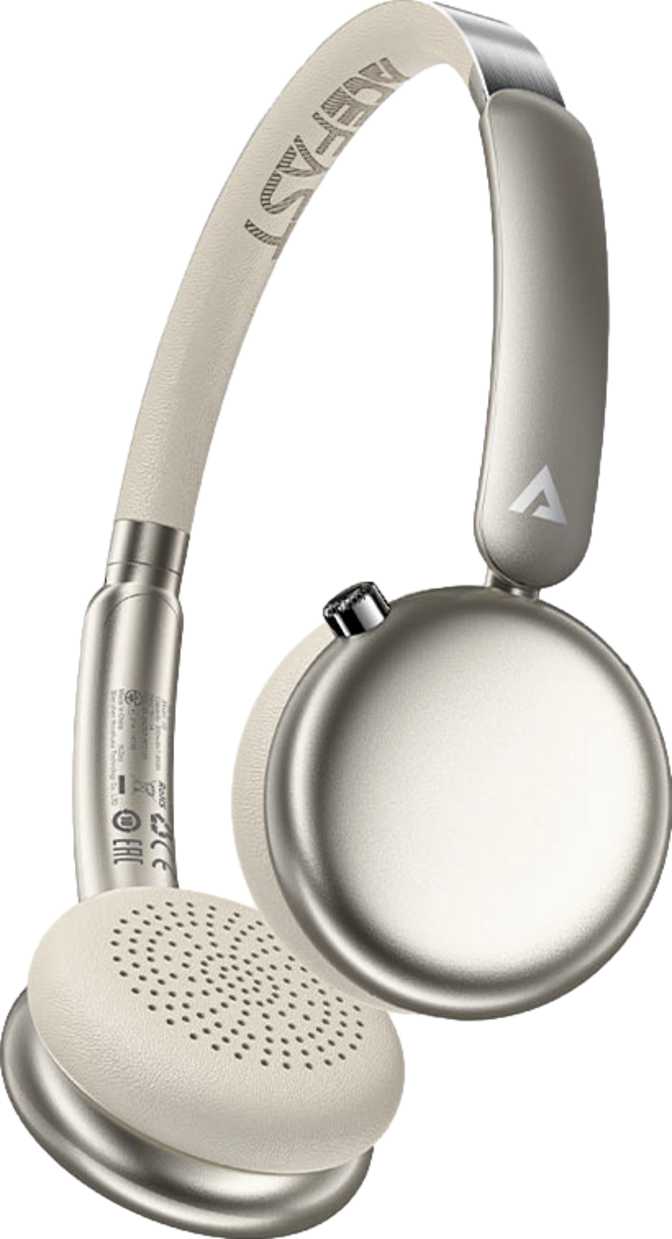
Acefast H8 Review: Exceptional Battery Life, Real-World Trade-Offs
HeadphonesSixty hours. That single figure defines the Acefast H8 more than anything else about its design, and it is the number that reframes the entire question of who these headphones are actually for. In a wireless headphone market where active noise cancellation and long battery life rarely coexist at accessible price points, the H8 arrives with a stamina claim that makes most competitors look underprepared. Battery endurance alone does not close a purchase decision — but it starts the conversation in a way that demands attention.
The Bottom Line
A wireless ANC headphone engineered for one defining purpose: exceptional battery endurance. The staying power is class-leading at any price point and genuinely changes how you relate to daily charging. AAC-only codec support, a non-folding frame, and the complete absence of moisture resistance make this a targeted buy rather than a universal recommendation.
What It Does Well
- Category-leading battery endurance
- Very lightweight for an ANC headphone
- Latest-generation Bluetooth stability
- Full ANC plus ambient sound mode
- Noise-canceling microphone for calls
Limitations to Know
- AAC codec only — no aptX or LDAC
- No water or sweat resistance
- Non-folding frame limits portability
- No ear detection or fast pairing
- Wireless-only — no wired fallback
Design and Build
On-Ear Fit: What This Means Before You Buy
The Acefast H8 is an on-ear headphone — a form factor distinction that deserves considerably more attention than most buyers give it before purchasing. On-ear designs position the earcups directly against your outer ear rather than fully encircling it. The practical result is a physically lighter, more compact structure than most over-ear alternatives, but with a wear experience that is meaningfully different and worth understanding upfront.
At roughly 129 grams, the H8 is genuinely light for a wireless headphone equipped with active noise cancellation. Full-sized over-ear ANC competitors typically weigh somewhere between 200 and 300 grams — a difference that sounds minor on paper but registers distinctly during extended sessions. The H8 is the kind of headphone you can wear through a complete workday without your neck registering its presence. The caveat is fit pressure: on-ear designs work by resting on the ear rather than around it, meaning the headband exerts more direct force on that contact point. If on-ear headphones have caused discomfort before, that history is reliable information this headphone will not override.
The Non-Folding Frame
One design choice stands out as unusual for this category: the H8 does not fold. Most on-ear headphones compete partly on portability, and foldable hinges that collapse the earcups flat are nearly universal in the segment. The H8 skips this entirely.
Durability and Environment: Know the Limits
The H8 carries no moisture resistance rating. This makes it strictly an indoor headphone — offices, libraries, living rooms, and dry travel environments are its natural habitat. Gym use, running in variable weather, or any setting where sweat or rain is a realistic possibility is off the table entirely. Controls are mounted directly on the earcup body, accessible by touch without needing a phone. There is no cable control panel, which is the correct design choice for a fully wireless product.
Sound Performance
Drivers and Audio Coverage
The H8 uses a standard driver diameter common across on-ear and many over-ear designs — large enough to reproduce the complete range of human hearing from the lowest audible bass through to the finest high-frequency detail. Full-range audio coverage is the expected baseline for any headphone claiming general-purpose performance, and the H8 meets that benchmark.
One detail worth flagging for enthusiasts: the H8's driver design does not use the neodymium magnet that is standard in the overwhelming majority of performance-oriented headphone drivers. Neodymium is the industry default precisely because it delivers high magnetic strength relative to its weight, contributing to both efficiency and dynamic performance. What the H8 uses instead — and what that means in practice for sensitivity or dynamic range — cannot be determined from specifications alone. It is an atypical choice worth noting, even if its sonic implications remain unquantifiable without physical review.
Active Noise Cancellation
The H8 includes active noise cancellation — the electronic system that uses onboard microphones to continuously sample ambient sound and generate opposing audio signals to neutralize it in real time. This is a genuinely meaningful feature that distinguishes the H8 from purely passive alternatives in its competitive space.
The companion ambient sound mode is the complement that completes the picture. When full isolation would create problems — a boarding gate announcement, a coworker addressing you, approaching traffic — ambient mode deliberately pipes environmental sounds through using the same microphone hardware. Both modes are operable from the earcup controls, giving complete command over your acoustic environment.
Noise-Canceling Microphone
The built-in microphone includes noise-filtering processing specifically for voice pickup — background sound in your environment is reduced from the recording before your voice reaches the other end of a call. For remote workers, students, and anyone using these as a daily communication device, this is exactly the implementation you want. The H8 is genuinely positioned as a headset capable of handling calls, not merely a music device with a microphone attached as an afterthought.
Battery Life
What the Headline Endurance Figure Means for You
The H8's rated battery endurance is among the highest figures available in wireless ANC headphones across any price tier. Category leaders from established premium brands typically land between 20 and 30 hours of ANC-enabled playback. The H8's claim exceeds that by a factor that puts it in a categorically different relationship with your charging cable — you simply stop thinking about it with the frequency you would with any competitor.
A typical 8-hour workday consumes roughly one-seventh of the rated capacity. A full week of daily extended use would not completely exhaust the battery if the rating holds under real conditions. For frequent travelers crossing multiple time zones without reliable charging access, for students whose charger is perpetually in the bag they left at home, and for anyone already managing too many devices to track headphone battery status diligently, this endurance functions as genuine daily relief rather than merely an impressive specification.
Charging: Modern Port at a Measured Pace
The H8 charges via USB-C — the current universal standard that lets you use the same cable as your phone, laptop, and most other modern devices. A complete charge from fully depleted takes under three hours, which is measured and reasonable rather than the rapid-charge speeds found in some premium competitors. Wireless charging is not available; for a headphone with this battery capacity, the absence is considerably less impactful than it would be for earbuds requiring daily charging cycles. A battery level indicator is built in, confirming remaining charge before depletion becomes urgent.
Connectivity and Codec Support
Bluetooth 5.4: What the Latest Generation Brings
The H8 uses the most recent commercially available version of the Bluetooth wireless standard. The practical benefits include improved connection stability in environments dense with wireless signals — airports, offices, apartment buildings — lower energy consumption per unit of data transferred (a direct contributor to battery longevity), and more graceful handling of interference without audible interruptions. The wireless range comfortably covers a typical room, with enough margin to step briefly beyond without losing signal. Multi-room use through walls is not what this headphone is engineered for. Audio latency over Bluetooth falls below the threshold of perception for music listening and most video streaming — standard buffering in modern video apps typically compensates without visible lip-sync issues. For gaming, where granular reaction-time accuracy matters, the absence of any low-latency codec support is a genuine limitation.
Codec Support: AAC Only — The Most Important Detail for Android Users
The H8 supports AAC as its highest-tier Bluetooth audio codec. For Apple users — iPhone, iPad, Mac — this is genuinely a non-issue. AAC is Apple's native Bluetooth audio codec, and Apple hardware implements it efficiently. The H8 operates at its maximum possible wireless audio quality on Apple devices. For Android users, the picture is more nuanced. Android's handling of AAC varies by device and manufacturer and is generally less optimized than Apple's implementation. Android users whose devices support LDAC or aptX — and who use high-resolution streaming services specifically because they can hear the difference — will encounter a wireless quality ceiling that those higher-bandwidth codecs would otherwise lift.
| Codec | Available on Acefast H8 | Context |
|---|---|---|
| AAC | Supported | Native on Apple devices; variable on Android |
| aptX | Not Available | Common on mid-range Android headphones |
| aptX HD | Not Available | Higher-quality aptX variant |
| aptX Adaptive | Not Available | Premium adaptive quality codec |
| LDAC | Not Available | Sony's Hi-Res wireless audio codec |
Features in Practice
Ambient Sound Mode
The toggle that changes how you work. Full ANC creates focused isolation; ambient mode uses the onboard microphones to feed environmental sound through at a controlled level so you can hold a quick conversation, hear an announcement, or stay aware of traffic without removing the headphones. In shared office environments, this feature alone changes how practical the headphones are across a full workday. The friction reduction is small per instance and substantial in aggregate.
On-Device Controls
Physical controls on the earcup housing manage volume, playback, and mode switching — no phone required for standard functions. The H8 does not include automatic ear detection, meaning audio continues when the headphones are removed from your head. This requires a manual pause habit before taking them off. It becomes routine quickly, but it remains an absence relative to headphones that include the sensor — and users coming from premium devices will notice it.
Pairing and Connection
The H8 does not support NFC tap-to-pair or any manufacturer fast-pair protocol. Initial Bluetooth pairing requires the standard process: activate pairing mode, find the headphones in your device's Bluetooth settings, connect. This is a one-time process per device; subsequent connections occur automatically on power-up. The absence of instant-pairing convenience is felt only in initial setup — not in ongoing daily use once paired devices are established.
Who the Acefast H8 Is Built For
Ideal For
-
Remote and Office Workers
All-day wear without charging anxiety. The ANC plus ambient mode combination handles both focus time and impromptu conversations without friction.
-
Long-Haul Travelers
Covers multi-day distances between charging points. The included travel bag and extended runtime make this a practical carry-on companion for uncertain-charging journeys.
-
Students
Focus tools for shared environments without the distraction of monitoring battery levels between classes or study sessions.
-
Apple Ecosystem Users
AAC is native and efficient on Apple devices — the H8 operates at its maximum wireless audio quality in the Apple ecosystem without compromise.
Not the Right Fit For
-
Gym-Goers and Active Users
No moisture protection means real risk from sweat or weather. This is a category dealbreaker for athletic use — there is no margin for error here.
-
Android Audiophiles
Users with LDAC-capable devices and high-resolution streaming subscriptions will hit a wireless quality ceiling the H8 cannot lift.
-
Gamers
No low-latency codec support is available. Reaction-time audio accuracy required for competitive gaming is not a strength of this headphone.
-
Those Who Need a Wired Fallback
No cable port, no wired listening mode. When the battery is depleted, the headphone produces no audio — full stop.
Competitive Positioning
The ANC wireless headphone market divides into premium, mid-range, and budget tiers. The H8 competes in the budget-to-mid-range space, where the dominant challenge for competing products is offering genuine ANC without exhausting the battery in a day. The H8's defining advantage is battery longevity, and no direct competitor at this price point routinely matches it. The codec limitation and non-folding form factor are equally real limitations for certain buyers. The trade-off map here is unusually clear.
| Feature Area | Acefast H8 | Typical Budget ANC Competitor |
|---|---|---|
| Battery Endurance | Class-Leading at this tier | Competitive but roughly half the duration |
| Bluetooth Generation | Current latest standard | Often one to two generations behind |
| Codec Support | AAC only | Frequently includes aptX |
| Ambient Sound Mode | Included | Not universal at this price tier |
| Water / Sweat Resistance | None | Often rated for light moisture |
| Foldable Design | No | Usually yes |
| Physical Weight | Very light (on-ear) | Heavier, especially over-ear alternatives |
Honest Assessment
Where It Delivers
The battery performance is not an incidental advantage — it comes from pairing an efficient modern Bluetooth implementation with smart power management architecture, not from brute-force capacity. That focus is commendable and rare at this price tier.
The weight advantage makes all-day wear genuinely comfortable by on-ear standards. ANC and ambient mode together cover the full range of daily environmental control needs. The noise-filtering microphone makes it a legitimate work headset rather than a music-only device.
USB-C charging keeps it compatible with every other modern device in your bag, and the battery level indicator means you are never caught off guard by an unexpected low-power situation.
Where It Falls Short
The lack of advanced wireless codec support is the most functionally significant limitation, particularly for Android users who have invested in the audio ecosystem that benefits from higher-bandwidth wireless standards. For casual listening this is inaudible; for dedicated audiophiles on lossless streaming platforms, it is a real constraint.
The non-folding design is a puzzling omission in a form factor historically defined by compact portability. The included travel bag helps but cannot change the headphone's physical footprint inside a case or bag.
The absence of water resistance, ear detection, and fast-pair support are all features that have become standard inclusions at several competing price points. Their absence does not doom the product, but it does position the H8 behind competitors who include them as baseline.
Frequently Asked Questions
The Verdict
The Acefast H8 makes one clear, defensible promise: a wireless, ANC-equipped headphone that you almost never need to think about charging.
For users whose priorities align with that promise — Apple ecosystem listeners, remote workers, students, long-haul travelers, and dry-environment users who prioritize all-day endurance over audiophile codec support — the H8 delivers genuine, tangible value that most comparably priced alternatives cannot match on this particular axis.
For Android audiophiles, active outdoor users, anyone who has historically found on-ear designs uncomfortable, or anyone who needs a wired fallback — the trade-offs push against rather than for this headphone. The H8 is not attempting to be the universal best option at its price. It is attempting to be the endurance-optimized right option for a specific profile of buyer, and for that profile, it succeeds.