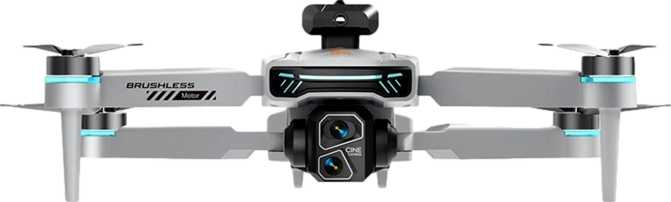
ZHRC Z105 Review: An Honest Look at This Entry-Level FPV Drone
DronesKey Specs at a Glance
What the ZHRC Z105 Is — and What It Isn't
The ZHRC Z105 occupies a specific and well-defined corner of the drone market: the entry-level quadcopter designed for first-time flyers, casual hobbyists, and younger users taking their first steps into aerial exploration. Understanding that context upfront will save you from misplaced expectations and help you judge whether this drone belongs in your hands.
This is not a drone for landscape photographers, video content creators, or anyone expecting sharp, publishable footage. But for what it is — a beginner-friendly flyer with an FPV camera, a smartphone-compatible app, and a remote control with its own built-in screen — it delivers a reasonably complete package at a price point that makes the hobby accessible without major financial commitment.
The Z105 does its job honestly. It doesn't overreach. The key is knowing exactly what that job is before you buy.
Design and Build: A Compact Quad with Familiar Proportions
The Z105 measures 245mm wide and 245mm deep, with a standing height of just 70mm. To picture that physically: the footprint is roughly the same as a standard sheet of paper, and the profile is no taller than a thick paperback book. The result is a drone that feels substantial in the hand — not a pocket toy, but not an imposing unit either.
That size hits a practical sweet spot. The Z105 is compact enough to carry in a backpack alongside its controller without needing dedicated drone luggage, while being large enough to handle outdoor air movement better than ultra-miniature alternatives.
The construction is lightweight plastic throughout. This keeps overall weight low — which directly benefits flight time — and gives the frame some capacity to absorb minor crash impacts without shattering. This is not the rigidity of carbon-fiber frames found on higher-end quads; it is a budget build, and it looks and feels like one.
Physical Overview
- Width & Depth245 × 245 mm
- Height70 mm
- Build MaterialLightweight Plastic
- Weather SealingNone
Flight Performance: What the Numbers Really Mean
Flight Time: 12 Minutes Per Charge
At up to 12 minutes per battery, the Z105 sits slightly above average for drones in this class, where many competitors manage only 7 to 10 minutes. In practice, expect closer to 10 minutes of active flight once you account for takeoff, landing, and aggressive throttle inputs that draw more power.
Twelve minutes passes quickly when you're learning. New pilots typically spend the first few minutes just orienting to the controls before attempting anything deliberate. The Z105's removable battery directly solves this — swapping to a spare takes seconds and effectively extends your session without any other compromise.
Range: 150 Meters
The Z105 operates reliably up to 150 meters from the pilot — roughly the length of one-and-a-half football fields, or about one city block. Within a park, school field, or open backyard, that's sufficient to practice directional control and build genuine confidence in the controls.
For beginners, limited range functions almost as a safety feature. One of the most common causes of lost or crashed drones is flying too far to maintain visual orientation. At 150 meters, you'll always see the drone clearly with the naked eye, which directly reduces that risk.
Stability and Control
The Z105 includes an accelerometer for basic flight-attitude sensing. What it does not include is a gyroscope or GPS — two components that more advanced drones depend on for smooth, stabilized hovering and meaningful wind resistance.
In practical terms: the Z105 requires continuous, active stick input to hold position. There is no automatic hover mode. Light wind of even 10 to 15 km/h will cause noticeable drift that demands correction. This is standard behavior for beginner-category quadcopters — it builds genuine piloting skill — but it means the Z105 is never a relaxed, hands-off flyer.
Obstacle Detection
The Z105 includes basic proximity sensing — a meaningful and uncommon addition at this price tier. For a drone aimed at pilots still developing spatial awareness, having any obstacle detection reduces collision frequency and associated learning costs. Budget proximity sensors provide a helpful safety layer, not a collision guarantee; treat it as backup, not insurance.
No Return to Home
There is no Return to Home (RTH) function. If you lose signal, lose orientation, or experience any control issue, the drone will not autonomously navigate back to its takeoff point. Maintaining visual line-of-sight at all times is not just recommended — it is essential. This is a firm constraint of the design, not a minor footnote.
Camera Performance: FPV First, Footage Second
The Z105 is equipped with an FPV (First Person View) camera — a forward-facing lens that streams live video to your smartphone through the companion application. The FPV experience is the primary appeal of the camera system: the ability to see what the drone sees in real time creates a sense of immersive flight that no other feature can replicate at this price point.
What the Video Quality Looks Like
Recorded video is captured at standard definition — equivalent to 640×480 pixels at 30 frames per second. That's comparable to early smartphone cameras or basic webcams. Edges will look soft, fine detail will be limited, and low-light performance will be modest by any current standard.
For casual personal recording — reviewing flight paths, capturing moments for your own reference, sharing clips informally with friends or family — it's functional. For any purpose involving content creation or wider sharing, the resolution gap compared to modern expectations will be immediately apparent. The Z105 does not support RAW image capture or HDR video modes.
Storage and Smartphone Integration
An external memory card slot allows footage to be saved directly to a microSD card. You control storage capacity, and transferring files to a computer is a simple card-swap process — no app or cable required.
The companion smartphone app enables real-time FPV viewing. The controller's built-in display handles basic flight data separately, so a phone is specifically needed for the live camera feed — not for general flying.
| Specification | Value |
|---|---|
| Video Resolution | 480p (640×480) |
| Frame Rate | 30 fps |
| Camera Type | FPV Forward View |
| RAW Support | No |
| HDR Mode | No |
| Stabilization | None |
| Memory Card Slot | Yes |
| Smartphone Live View | Yes (app) |
Battery and Charging: Making the Most of Each Session
The Z105's battery charges from flat to full in approximately 50 minutes — a quick turnaround relative to the flight window it supports. In a scenario with two batteries, you can land, recharge, and be back in the air within the hour.
The removable battery design is one of the most underappreciated features of this drone. Battery swaps take seconds rather than requiring the entire drone to sit connected to a charger. For pilots who want sustained practice sessions rather than a single 10-minute window, building a small battery kit is a straightforward and cost-effective upgrade.
For a drone at this price tier, having a user-removable pack rather than a sealed integrated battery is a genuine convenience win. Replacement packs for drones in this class are typically inexpensive, making the multi-battery approach accessible rather than costly.
Full Features Overview
| Feature | ZHRC Z105 | What It Means in Practice |
|---|---|---|
| FPV Camera | Yes | Real-time live view on your smartphone while flying |
| Remote with Display | Yes | Basic flight data visible without mounting your phone to the controller |
| Smartphone Support | Yes | Live FPV camera feed through the companion app |
| External Memory Slot | Yes | Expandable video storage via microSD — you choose the capacity |
| Obstacle Detection | Yes | Basic proximity protection — genuinely uncommon at this price tier |
| Removable Battery | Yes | Swap a spare and extend your session without waiting to recharge |
| GPS | No | No position hold or automatic hover — always requires active manual control |
| Return to Home | No | No auto-return if signal is lost — visual line-of-sight is always essential |
| Intelligent Flight Modes | No | Fully manual control only — no orbit, follow-me, or waypoint modes |
| Weather Sealing | No | Fair-weather only — rain or moisture poses a genuine damage risk |
Who Should Buy the ZHRC Z105
This Drone Suits You If...
- You're buying your first drone and want to explore the hobby before investing in a GPS-equipped model
- You're purchasing as a gift for a teenager or curious adult wanting to discover recreational flying
- You want to build genuine manual flight skills without digital stabilization masking your learning
- You want the FPV experience at an accessible price without a major upfront commitment
- You plan to fly occasionally in parks or open gardens in calm, dry conditions
It Will Frustrate You If...
- You need video quality above standard definition for any sharing, content, or professional purpose
- You want GPS-assisted stability, automated position hold, or a return-to-home safety net
- You plan to fly at meaningful distance — 150 meters is a genuine ceiling, not a loose guideline
- You expect to fly in anything other than calm, wind-free conditions
- You already have flight experience and are looking to expand capability rather than build it
How the ZHRC Z105 Compares to Similar Drones
The table below positions the Z105 against the typical feature sets found in beginner-class alternatives and the step-up tier above. No specific models are named; spec ranges reflect the general market at each price level.
| Specification | ZHRC Z105 | Entry-Level Rival | Mid-Range Step-Up |
|---|---|---|---|
| Video Resolution | 480p / 30fps | 720p – 1080p | 2.7K – 4K |
| Flight Time | ~12 min | 10–15 min | 20–30 min |
| Maximum Range | 150 m | 150–500 m | 500m – 3km+ |
| GPS | Rare at this tier | ||
| Obstacle Detection | Uncommon | ||
| Return to Home | Rarely included | ||
| Removable Battery | Varies | ||
| FPV Camera | Common | ||
| Remote with Display | Uncommon | Varies |
An Honest Assessment: Strengths and Weaknesses
Where the Z105 Earns Credit
The obstacle detection feature stands out at this price point. For a drone designed for first-time pilots who will inevitably miscalculate distances, having any form of proximity sensing is a real quality-of-life addition. Crashes are costly — even at the modest scale of budget drones — and anything that genuinely reduces their frequency is worth acknowledging.
The controller with a built-in display is another practical win. Many budget drones ship with bare-bones remotes that require you to clamp your phone to the controller to see any flight data at all. The Z105's standalone screen reduces phone dependency and simplifies your pre-flight setup.
The removable, fast-charging battery is among the best practical design choices on the drone. Under an hour to a full charge combined with a user-swappable pack makes it easy to build a multi-battery kit — transforming what would be a brief 10-minute window into a genuine extended flying session.
Where It Falls Short
The camera is the most significant gap. Standard-definition footage is noticeably soft and lacks the detail that even casual viewers now expect from shared content. The absence of any image stabilization compounds this — drone vibration and movement translate directly into the recording with nothing to smooth them out.
The lack of GPS is the most significant constraint for pilots who want a relaxed flying experience. Without position hold, the Z105 demands constant attention. Crosswinds, throttle variations, and momentary lapses in focus all cause drift that builds quickly without correction.
The 150-meter range is tight. Experienced flyers will feel constrained almost immediately. For pure beginners it's workable, but it is a genuine ceiling — one you'll likely reach sooner than expected as your confidence grows beyond the basics.
Frequently Asked Questions
Final Verdict
The ZHRC Z105 is a beginner's drone built honestly for its purpose. It doesn't overreach, and it doesn't pretend to be something it isn't — provided you know what you're buying.
For a first-time pilot, the combination of obstacle detection, a standalone remote display, fast charging, and a removable battery creates a well-rounded starter package. The limited range keeps things safe. The FPV camera delivers the defining experience of drone flight at an accessible price point. For anyone with prior flight hours, or who needs video quality above standard definition, the Z105 reaches its capability ceiling quickly — and those limits are hard, not soft.
Buy the ZHRC Z105 If...
You want an affordable first drone that teaches real stick skills, delivers the FPV experience, and includes obstacle detection as a genuine safety addition for the learning curve. It fulfills the beginner brief effectively and without pretense.
Look Elsewhere If...
Video quality above standard definition, GPS-assisted stability, extended range, or Return to Home capability appear anywhere on your list. Those features exist at a modest price premium in the next tier — and for those specific needs, the upgrade earns its cost.
Overall Score: 3.5 / 5
A capable entry-level FPV drone for first-time flyers — limited but honest about its boundaries.