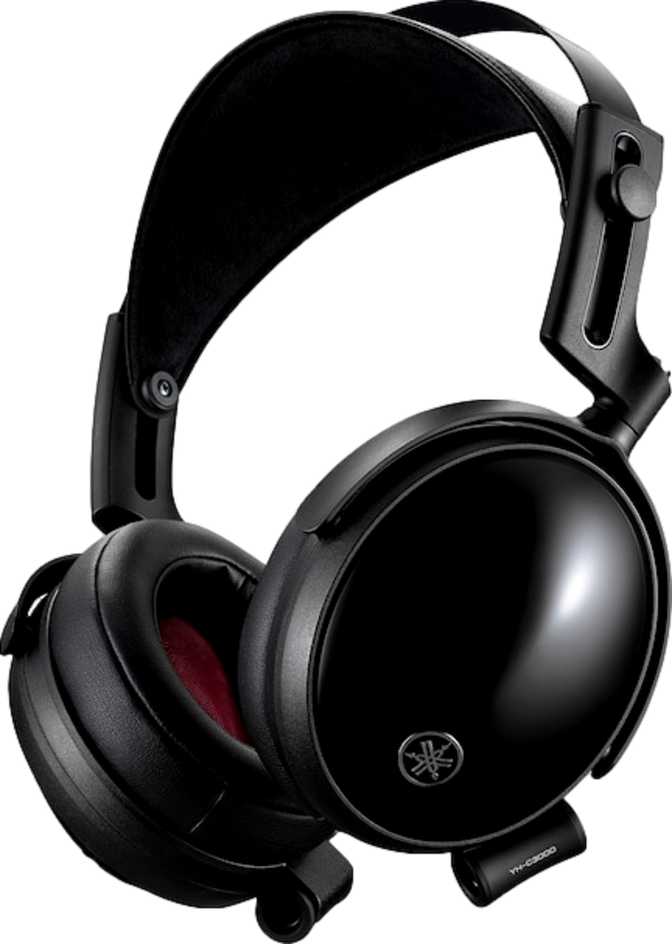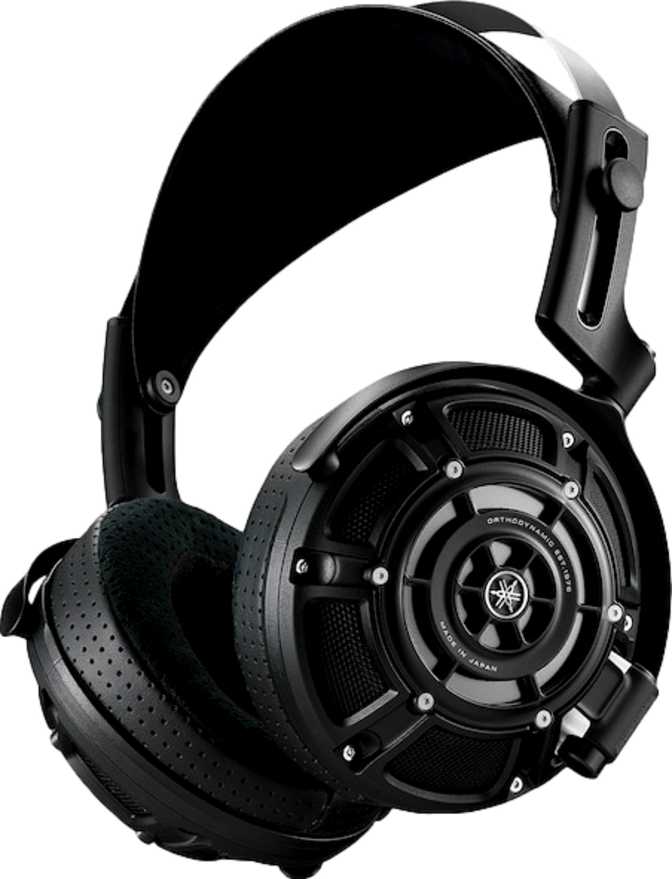
Yamaha YH-4000 Full Review: Open-Back Audiophile Headphone
HeadphonesAt a Glance
The Yamaha YH-4000 is a wired, open-back, over-ear audiophile headphone designed without compromise for dedicated home listening. Every decision in its design — what it includes and what it deliberately omits — serves a single purpose: the most accurate, extended sound reproduction possible from a personal listening device.
- Wired Only
- Over-Ear / Open-Back
- 320 g
- 34 Ohm Impedance
Who the YH-4000 Is Built For
The Yamaha YH-4000 makes no attempt to be everything to everyone. Understanding exactly who this headphone serves — and who it does not — is the most important question to settle before purchase.
- You have a dedicated home listening setup with a quality headphone amplifier or DAC/amp combination
- You listen in a private, quiet environment — a home office, dedicated listening room, or personal space
- Your library includes lossless or high-resolution audio files (FLAC, DSD, or similarly uncompressed formats)
- You prioritize soundstage, detail retrieval, and tonal accuracy above portability or convenience
- You treat listening as an intentional, attentive activity rather than a background habit
- You listen on public transport, in open-plan offices, or anywhere sound isolation or courtesy matters
- You need wireless freedom or a headphone that works from a smartphone without additional hardware
- You require call functionality, gaming chat, or any microphone capability whatsoever
- Your primary source is standard-quality streaming — the YH-4000's resolution will outpace the signal
- You want one headphone that adapts flexibly across multiple contexts and environments
Design and Build: Purposeful Restraint
The YH-4000's physical design communicates its intent immediately — understated and refined, built to convey acoustic purpose rather than consumer-market appeal.
Construction and Fit
Over-ear cups sit generously around the ears rather than pressing against them — a deliberate choice that serves extended listening sessions far better than on-ear alternatives. The 320-gram total weight occupies the deliberate balance point that serious listening headphones favor: structured enough for acoustic rigidity in the housing, manageable enough across a two-hour session when the headband distributes the load properly.
Open-Back Architecture
The acoustically vented ear cups define the YH-4000's identity — and they create a fundamental trade-off every buyer must understand before purchase. Sound leaks freely in both directions. In a quiet private room this is acoustically irrelevant. Anywhere else it is a complete disqualifier.
The design rationale is driven entirely by sound quality: sealed enclosures create pressure buildup and internal reflections that color audio in subtle but audible ways. An open back allows the driver to breathe freely, resulting in a more natural presentation and a more convincing sense of spatial depth.
Cable System
The detachable, tangle-resistant cable matters more than it might initially appear. Cables are the most mechanically stressed component in any wired headphone — the single point most likely to fail after years of daily use. Replaceability means the headphone's lifespan is not hostage to one vulnerable connection. No travel bag is included, which is entirely consistent with the YH-4000's identity as a fixed-position home listening instrument, not a portable device.
Sound Performance: What the Specifications Actually Mean
The numbers on the YH-4000 are genuinely extraordinary. Understanding what they mean in practice — not just on paper — changes how you evaluate this headphone against its competition.
Frequency Response: The Full Spectrum and Beyond
The YH-4000 reproduces sound from 5 Hz — below the threshold of conscious hearing and into the territory of physical sensation — all the way to 70,000 Hz, a ceiling more than three times above the upper limit of normal human hearing. The visualization below shows how that range relates to what most ears detect:
Bar widths are proportional on a logarithmic scale. The YH-4000 extends substantially beyond both the floor and ceiling of normal human hearing.
Why reproduce frequencies you cannot consciously hear? Among acoustic engineers and dedicated listeners, the argument is that ultrasonic content above 20 kHz interacts with the audible range in ways that affect the perceived texture and "air" around instruments. With high-resolution audio formats that capture content beyond 20 kHz, a driver capable of reproducing this range delivers a subtly but perceptibly different experience. At the low end, the 5 Hz floor extends into sub-bass territory felt as much as heard — a physical weight and foundation that headphones with more modest low-frequency limits simply cannot provide.
Driver Technology: Reading Between the Specifications
The YH-4000's specification profile — particularly its extraordinary high-frequency ceiling and the magnetic configuration indicated in its technical data — is strongly consistent with a planar magnetic driver design. In this architecture, sound is generated by an ultra-thin diaphragm suspended between arrays of magnets, with a conductive circuit printed directly onto the diaphragm surface. Force is applied across the entire diaphragm simultaneously, not pushed from a single point as in conventional moving-coil drivers.
What This Driver Architecture Means for Your Listening
- Lower distortion at volume: Distributed-force diaphragm drive produces less mechanical stress, which typically results in cleaner output at higher listening levels.
- Faster transient response: Instruments that start and stop abruptly — plucked strings, struck percussion — render with greater precision and snap.
- Reduced listening fatigue: Many listeners describe the presentation as less tiring across extended sessions compared to conventional dynamic drivers.
- Extended high-frequency control: The lightweight, rigid diaphragm accurately tracks very fast waveforms — the foundational reason the 70 kHz ceiling is achievable in the first place.
Sensitivity and Amplification Requirements
At 98 dB per milliwatt, the YH-4000 sits in a moderate sensitivity range — not as demanding as some planar magnetic designs, but not as effortless as typical consumer earbuds. Its 34-Ohm impedance places it in an accessible middle ground between the high loads some competing audiophile headphones demand and the near-zero loads of everyday earbuds. A quality portable DAC/amplifier will reach adequate volume, but the full tonal and dynamic potential of the driver becomes accessible only through a dedicated headphone amplifier with a clean output stage. Running the YH-4000 from a standard laptop headphone port is a mismatch of purpose — you will hear the headphone, but not what it is actually capable of.
What This Headphone Deliberately Leaves Out
These are not oversights or budget compromises. They are considered engineering decisions made in service of acoustic purity — and each one disqualifies the YH-4000 for certain buyers as clearly as it qualifies it for others.
No Wireless
Bluetooth introduces signal compression, latency, and a battery lifecycle into the audio chain. For critical listening, those trade-offs are disqualifying. The YH-4000 is wired only — always and by design.
No Active Noise Cancellation
ANC generates an inverted signal to cancel ambient sound — a process that introduces its own subtle coloration. For a headphone built around acoustic purity, it is a philosophical compromise and, given the open-back design, a functional irrelevance.
No Microphone
Zero microphones, zero in-line controls, zero call or communication capability. This is a deliberate product definition, not a limitation of engineering. The YH-4000 is a listening device only — full stop.
No Water Resistance
There is no rated moisture protection of any kind. The YH-4000 belongs at a desk — not in a gym, not outdoors, not in humid environments. Treating it as a portable headphone would be both a practical and acoustic mistake.
Real-World Listening Scenarios
Where and how you actually listen determines whether the YH-4000 is a transformative purchase or an expensive mismatch with your daily habits.
The YH-4000 is at its best in quiet, private listening environments. A home office at the end of the day. A dedicated listening chair paired with a quality desktop amplifier. A music production workspace where critical evaluation of recordings is the primary task.
High-resolution audio files — 24-bit FLAC recordings, DSD files, and similarly uncompressed formats — are where the extended frequency response pays tangible dividends. The headphone reveals the spatial placement of instruments, the decay of notes in a concert hall, and the tonal texture in acoustic music at a level of detail that most consumer headphones never approach.
Listeners who value soundstage — the perception of musicians occupying distinct positions in imagined space — will find the open-back design delivers this more convincingly than sealed alternatives at comparable price points.
Public transport, open-plan offices, shared living spaces — anywhere that requires isolation or consideration for those nearby — immediately disqualifies the open-back design. The sound leakage is real and audible. No volume management strategy changes it.
If your primary source is a smartphone playing standard-quality streaming audio, the YH-4000 is more headphone than the signal chain can justify. The recording quality becomes the bottleneck, and a well-made sealed headphone at a fraction of the cost will deliver a comparable result from that source.
If you need a single headphone that handles calls, gaming chat, music, and portable use, the YH-4000 serves exactly one of those four needs. Be honest about how you actually listen before committing.
Competitive Positioning
The YH-4000 competes in the open-back wired audiophile tier alongside respected offerings from Sennheiser, Beyerdynamic, and Audeze. Rather than listing specific competitor specifications, this table shows how the major headphone categories compare on the attributes that drive real purchase decisions — making clear exactly where the YH-4000 leads, matches, and concedes.
| Attribute | YH-4000 (Open-Back Wired) |
Closed-Back Wired | Wireless ANC | Gaming Headset |
|---|---|---|---|---|
| Sound Isolation | None | Good | Excellent | Moderate |
| Soundstage Quality | Exceptional | Moderate | Variable | Simulated |
| Frequency Extension | 5 Hz – 70 kHz | Standard range | Compressed | Consumer-tuned |
| Amp / DAC Required | Recommended | Sometimes | No (built-in) | No |
| Microphone / Calls | None | Sometimes | Yes | Yes |
| Portability | Home only | Limited | Full | Limited |
| Hi-Res Audio Capability | Fully capable | Varies | Compromised | Not optimized |
| Ideal Environment | Home / Studio | Office / Studio | Commute / Travel | Home / Gaming |
Honest Assessment: Strengths and Limitations
A genuinely useful review does not soften weaknesses or oversell strengths. Here is a clear-eyed evaluation of what the YH-4000 genuinely delivers — and where its limitations are real and consequential.
The frequency extension from 5 Hz to 70,000 Hz is the headline achievement — and it is not merely a number. It places the YH-4000 in a tier of drivers that can faithfully reproduce content that most headphones cannot attempt. For listeners with high-resolution audio libraries, this is a meaningful, audible difference, not a specification exercise.
The open-back architecture, combined with what the specifications strongly imply is a planar magnetic driver, produces the kind of soundstage that defines the best of this headphone category. Instruments occupy distinct positions. The sense of space feels like a private acoustic environment rather than sound locked inside your head.
The detachable cable is a practical strength that compounds over years of ownership. Wired headphones at this level are long-term investments, and replacing the most failure-prone component without retiring the headphone adds meaningful service life to the purchase.
At 34 Ohms, the impedance load is considerably more accessible than the 300-Ohm demands of some competing audiophile headphones — a real advantage for buyers building their first dedicated desktop setup who aren't yet running high-powered amplifiers.
The amplification requirement is not optional if you intend to hear what this headphone is capable of. Budget for a quality DAC/amplifier alongside the headphone itself — the YH-4000's full potential is genuinely throttled by a weak signal chain, and that throttling is audible in the loss of dynamic subtlety and spatial precision.
The open-back design creates a single-environment headphone by definition. It is structurally unsuitable anywhere sound isolation or courtesy to others is required. There is no configuration or volume management workaround — it is a physical reality of the architecture.
At 320 grams, the weight is manageable for most listeners but is not featherlight. Those with a known sensitivity to headphone weight over multi-hour sessions should evaluate the specific fit and headband distribution before purchasing.
The YH-4000's resolution works in both directions. It reveals the quality in exceptional recordings with impressive clarity — and reveals the limitations of compressed or low-bitrate source material with equal transparency. This is an honest headphone. It will make mediocre source material sound exactly like what it is.
Frequently Asked Questions
These are the questions real buyers search for before purchasing a headphone at this level. Direct answers, no hedging.
Final Verdict: Built for One Purpose, Exceptional at It
The Yamaha YH-4000 is a focused, uncompromising headphone for one specific kind of listener: someone who listens at a desk, through quality source equipment, and approaches music as an experience worth dedicated attention. Its frequency range is extraordinary. Its open-back architecture serves the natural, spatially convincing presentation that defines the best of this headphone category. The wired-only, stripped-down design is not a shortcut — it is the entire point.
Buy the YH-4000 if you have a home listening setup with a quality amplifier, if you listen in a private and quiet environment, and if your primary interest is hearing recordings with the highest possible fidelity. Do not buy it if you need wireless freedom, noise isolation, call functionality, or a headphone that adapts across contexts — those needs are real and valid, but they require a different product entirely.