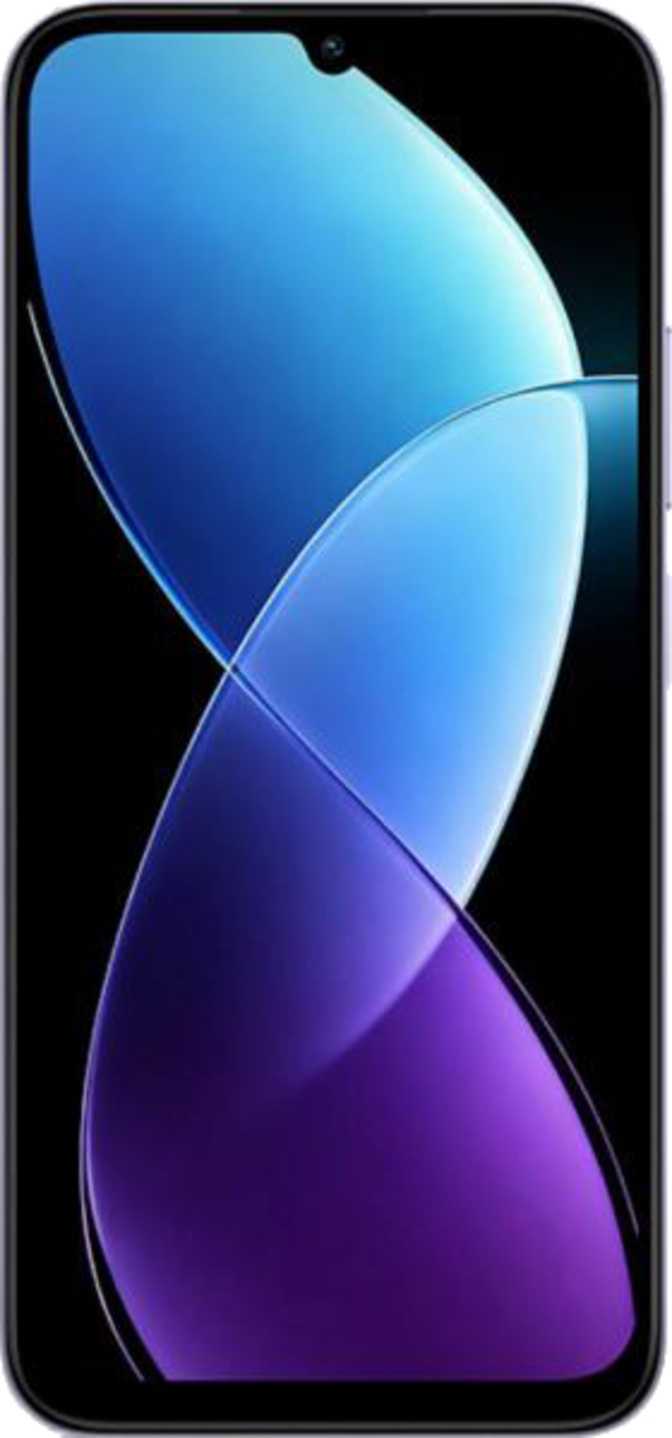
The Redmi R70 at a Glance: A Phone That Bets on the Right Things
Xiaomi's Redmi line has always been about extracting the best possible value from a constrained budget. The Redmi R70 follows that tradition with a formula that prioritizes battery endurance, storage generosity, and a large, smooth-scrolling display — then asks you to accept a few deliberate compromises to get there. Whether those trade-offs work for you depends almost entirely on what you actually use a smartphone for.
This isn't a phone that tries to compete with premium devices on every front. It makes confident choices: go big on screen size, go massive on battery, include 5G, and deliver meaningful storage out of the box. Then, in areas that drive up cost — camera hardware, display resolution, charging speed — it holds back. Understanding those choices is what this review is about.
Quick Verdict
The Redmi R70 is a battery-first budget smartphone that delivers exceptional endurance, generous storage, and 5G connectivity at a price that demands real compromise in camera hardware, display resolution, NFC support, and biometric security.
Standout Strengths
- Exceptional two-day battery endurance
- 256GB built-in storage plus expandable slot
- 120Hz smooth display at a budget price
- 5G integrated directly into the chipset
- 8GB RAM for comfortable multitasking
- Android 16 from day one
Notable Weaknesses
- No NFC — contactless payments not supported
- No fingerprint sensor of any kind
- HD+ resolution on a nearly 7-inch screen
- Slow 15W wired-only charging
- Single 13MP camera with limited low-light performance
- No gyroscope — limits gaming and AR features
Key Specifications at a Glance
Design and Build: Big by Design, Restrained in Materials
The Redmi R70 is a large phone, and it doesn't try to disguise that. The screen runs nearly seven inches diagonally, and the physical body scales accordingly — it is tall, wide, and requires two hands or one large hand for comfortable one-handed use. For many buyers, that size is the whole point. For others, it will be the first reason to walk away.
At just over 210 grams, the phone is on the heavier side of modern smartphones. You'll feel it in a shirt pocket and notice it during extended one-handed use. The weight is largely explained by the oversized battery inside — an honest trade-off rather than poor engineering. What helps is the thickness: at 8.2mm, the R70 stays genuinely slim for a phone carrying this much battery capacity. It doesn't feel like a brick, just a substantial slab.
The build materials are functional, not premium. There is no hardened, branded glass protecting the display — everyday drops and keys-in-the-same-pocket encounters carry real risk. There is also no dust or water resistance certification of any kind.
No folding mechanism, no secondary display, no rugged credentials. The R70 is a conventional candy-bar smartphone — simple in its physical form, straightforwardly sized, designed to hold up under normal daily use rather than edge-case punishment.
Physical Dimensions
- Height
- 171.6mm
- Width
- 79.5mm
- Thickness
- 8.2mm
- Weight
- 210g
- Water Resistance
- None
The Display: Smooth and Bright, With a Resolution Honest Conversation
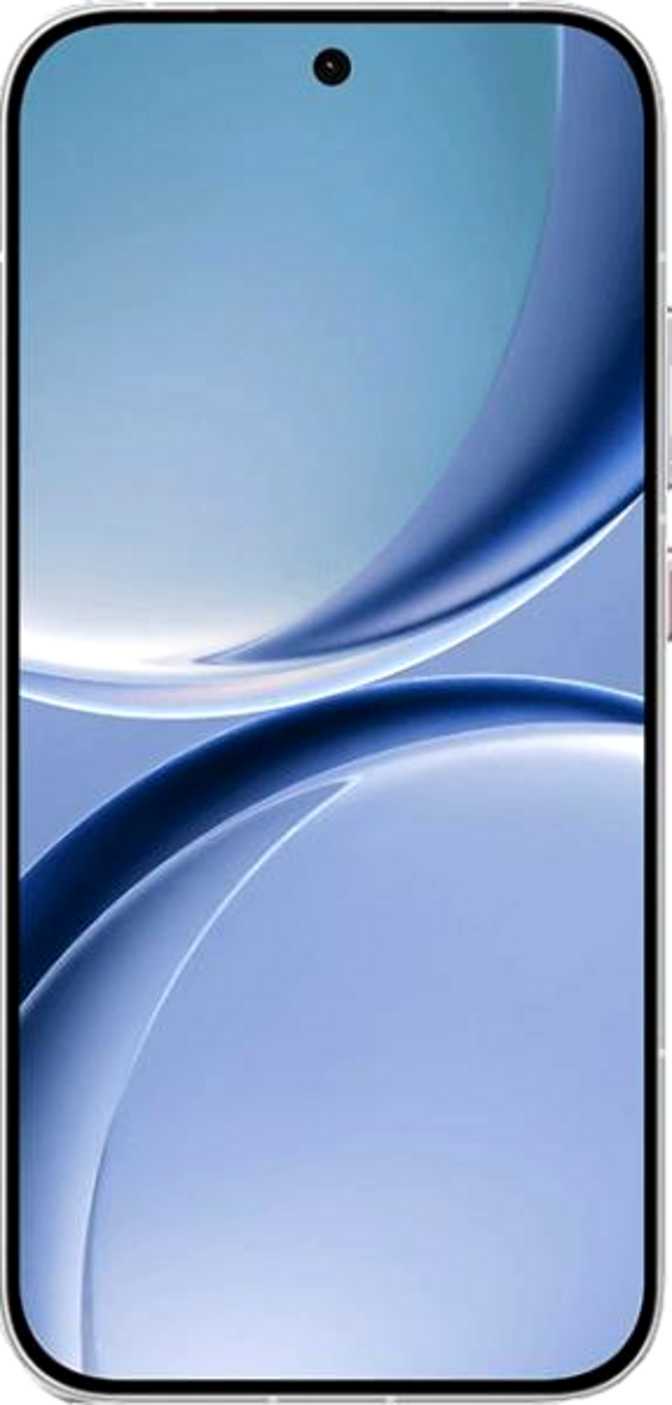
The 6.9-inch IPS LCD panel delivers a viewing experience that gets a lot right — and one thing noticeably wrong.
120Hz Refresh Rate
At this refresh speed, everything you do on the phone — scrolling social feeds, swiping between apps, navigating menus — feels genuinely fluid. This is a feature more commonly associated with mid-range and premium devices, and its inclusion here makes the phone feel far more responsive than the underlying hardware might suggest.
800-Nit Brightness
Brightness reaches a solid 800 nits under typical conditions, which handles most daylight viewing without forcing you into the shade to read a message. Direct sunlight will still be a challenge, as it is for any LCD panel, but casual outdoor use is comfortable.
Accurate IPS Colors
The IPS technology ensures accurate colors and good viewing angles — you won't see the image shift when handing the phone to someone beside you, and colors stay consistent rather than washing out.
The panel runs at 720 x 1600 pixels — classified as HD+. Across a 6.9-inch screen, that works out to roughly 254 pixels per inch.
In plain terms: text won't look razor-sharp the way it does on a Full HD+ display. Most competing phones in this bracket now offer FHD+ panels that achieve around 400 pixels per inch. You may notice a softness in small font sizes, and fine-detail photography will lack the crispness a higher-resolution screen provides.
Casual browsing, YouTube, and WhatsApp all work fine — but if you regularly zoom into documents or read long-form content on your phone, the resolution difference will be perceptible over time.
Performance: The Unisoc T8300 in Real Daily Use
Built on a 6-nanometer process, the Unisoc T8300 is engineered for efficiency — it runs cooler and extends battery life compared to older chip architectures, a deliberate match for a phone built around endurance.
The processor uses an eight-core configuration split between higher-performance cores clocked at 2.2GHz and efficiency cores at 2.0GHz. This big-little architecture means the phone can step up processing power when opening an app or loading a page, then dial back during lighter tasks or idle time — exactly the behavior a long-battery device needs.
In practical terms: messaging, social media, streaming, Google Maps, and routine app use are all comfortable. Demanding 3D mobile games will run, but typically at reduced graphics settings. If your daily use stays within communication and content consumption, the R70 keeps pace without complaint.
The eight-core layout also means multitasking is where this chip performs above its budget-tier expectations — switching between apps, running background downloads, and handling simultaneous processes are all handled with less friction than single-focused competitors at this price.
Geekbench 6 Results
Industry-standard CPU performance benchmark
Memory and Storage: Genuinely Generous
Enough to keep multiple apps active simultaneously without constant reloading — mid-range territory at a budget price
More than enough for a multi-year photo archive, a healthy app library, and an offline media collection without running tight
A microSD card slot means 256GB is the floor, not the ceiling — push capacity even further whenever you need it
Camera System: Capable Basics, Defined Limits
The Redmi R70 carries a single rear-facing camera with no telephoto, no ultra-wide, and no macro — one lens, asked to cover every situation. Here is what it does well and where it retreats.
Main Camera Performance
The 13-megapixel main sensor focuses using phase-detection autofocus, which locks onto subjects quickly in good light. Continuous autofocus during video recording keeps moving subjects sharp without constant manual adjustment — a practical detail that casual video shooters will appreciate.
Daylight photography is where the camera performs best. In bright outdoor conditions, images are clean, focused, and shareable across social platforms without apology. The real limitation appears when light disappears.
The sensor uses a standard front-illuminated CMOS design rather than the backside-illuminated variant that collects light more efficiently. In dim environments — indoor parties, evening restaurants, any scene after golden hour — noise increases, detail softens, and the auto-HDR mode can only compensate so much for a hardware limitation.
There is no optical image stabilization. Handheld video shows camera movement that a stabilized lens would smooth out. All footage records at 1080p and 30 frames per second — clean and platform-ready in well-lit settings.
Camera Feature Breakdown
- Phase-detection autofocus (stills)
- Continuous AF during video
- Manual ISO, exposure, white balance & focus
- HDR mode & burst shooting
- Panorama & slow-motion video
- No optical image stabilization (OIS)
- No RAW file output
- No optical zoom
- No backside-illuminated sensor (BSI)
Front Camera
The front-facing 8-megapixel camera handles selfies and video calls competently in good ambient light. There is no front-facing flash, so poorly lit indoor portraits depend entirely on whatever light the room provides — a consideration worth noting for evening video calls or social media portraits in dim settings.
Battery Life: The R70's Most Compelling Argument
The battery capacity in the Redmi R70 is among the largest in its class — and in daily use, that difference is substantial enough to change how you think about charging entirely.
Real-World Endurance
For a typical user — a few hours of screen-on time per day across social media, calls, navigation, and some video — this phone should comfortably reach two days on a single charge. Heavy users who stream video for extended periods or play games will likely see it through one full day with battery to spare.
The combination of the efficient 6nm chip and the oversized battery cell means you'll spend less time thinking about charging than with almost any competitor in this category. Many users will stop thinking about battery altogether — leaving the house without a charger stops being a calculated risk.
The battery is sealed and cannot be user-replaced — standard for modern smartphones in this class, but worth knowing if multi-year battery longevity factors into your purchase decision.
The Charging Speed Limitation
At 15 watts, fully replenishing the battery from empty takes approximately two to three hours — longer than many competing phones that have moved to 33W, 45W, or faster charging.
The practical upshot: If you charge overnight, the slow fill rate won't affect you at all. If you rely on quick top-ups before heading out, budget extra time. This is a phone that rewards a nightly charging habit with extraordinary daytime freedom.
Software: Android 16 and a Practical Privacy Feature Set
Shipping with Android 16 places the Redmi R70 at the current edge of the Android ecosystem — current-generation privacy controls and security patches from day one.
Privacy & Security Controls
- Camera & microphone access controls
Per-app permission management with active-use indicators - Clipboard monitoring alerts
Notifies when apps read clipboard data in the background - In-app tracking restrictions
Block apps from tracking your activity across services - Location privacy options
Granular control over which apps can access GPS data - Child lock & multi-user support
Separate user profiles and parental controls built in
Productivity & Usability Features
- Split-screen multitasking
Run two apps simultaneously on the large display - Picture-in-Picture (PiP)
Keep video playing in a floating overlay while using other apps - Full-page screenshots
Capture entire web pages in a single image - Offline voice recognition
Voice commands that work without an internet connection - Dark mode & extra-dim screen
Extra-dim goes beyond standard dark mode for true low-light use
Biometric Security: An Important Gap
The Redmi R70 has no fingerprint sensor — not on the screen, not on the back panel, not built into a side button. There is also no hardware-based 3D facial recognition system.
In practice, security will rely on software-based 2D face unlock via the front camera, or traditional PIN, pattern, or password entry. Software face unlock is less secure than a fingerprint reader, is slower in low light, and is not authorized for financial authentication within banking and payment apps.
Fingerprint readers have become such a baseline expectation that their omission is conspicuous at any price point. Buyers who regularly unlock their phone one-handed or use banking apps with biometric login will feel this absence daily.
No Biometric Hardware
- No fingerprint reader
- No 3D face recognition hardware
- No biometric payment authorization
Connectivity: 5G Included, NFC Absent
The R70 connects to the modern world in most of the ways that count — with one significant exception that will stop certain buyers outright.
The NFC Absence: A Hard Stop for Contactless Payment Users
Near-field communication is what enables contactless payments through Google Pay and similar apps. The Redmi R70 does not have it. If you tap your phone at checkout terminals as a habit, this phone is incompatible with that workflow — no workaround exists. For buyers in regions where contactless payments are habitual, this is the single most impactful missing feature on the specification sheet.
Audio: Practical, Not Immersive
3.5mm Jack Present
Wired headphones, earbuds, and car aux connections work without any adapter. A genuinely useful inclusion as the jack disappears from more devices.
Mono Speaker
A single speaker handles speakerphone calls and casual video playback. Stereo separation and spatial sound are not part of the experience.
Standard BT Audio
No LDAC, aptX HD, or other lossless wireless codecs. Bluetooth audio quality is adequate for everyday listening, not for audiophile evaluation.
Who the Redmi R70 Is For — and Who Should Look Elsewhere
The R70 has a sharper buyer profile than most phones. Get this section right and you won't need to return it.
Buy It If You Are...
Travelers, commuters, field workers — anyone who spends long days away from a charger will find the R70's endurance exceptional, not just "good for a budget phone."
The large screen at 120Hz is a genuinely enjoyable surface for YouTube, streaming, and social video. The size and smoothness combination is hard to beat at this price.
Access next-generation cellular networks without paying for premium hardware across the board. 5G at this price tier is genuinely unusual.
256GB built-in plus expandable storage means this phone can serve as a media library, photo archive, and app collection without running tight for years.
Managing two lines — work and personal, or home and travel — is a daily-use convenience the R70 handles without compromise.
Look Elsewhere If You Need...
No NFC means no Google Pay, no tap-to-pay, no contactless card workflow of any kind. For anyone who uses their phone as their wallet, this is a hard stop.
The single 13MP sensor without OIS or a backside-illuminated sensor retreats visibly in dim environments. Indoor and evening photography will disappoint.
No gyroscope eliminates gyro-based aiming controls. The chipset handles casual gaming but struggles with demanding titles at high settings.
No fingerprint reader means daily friction for anyone accustomed to quick biometric unlock or banking app authentication.
Coming from a phone 0.5–0.8 inches smaller will require real adjustment. The R70 simply won't fit the same pockets or the same one-handed habits.
How the Redmi R70 Compares to Its Nearest Rivals
The R70 competes against phones from Samsung's Galaxy A line, Motorola's endurance-focused G Power series, and Xiaomi's own Poco M-series. None of those alternatives is categorically better across the board — the R70 simply makes a different set of choices.
| Feature | Redmi R70 | Typical Budget Alternative |
|---|---|---|
| Display Size | 6.9″ — Larger | 6.5″–6.7″ |
| Display Resolution | HD+ (720p) | Full HD+ (1080p) common |
| Refresh Rate | 120Hz | 90Hz or 120Hz |
| Chipset Process | 6nm — Efficient | 6nm typical |
| RAM | 8GB — Above avg. | 4GB–6GB typical |
| Internal Storage | 256GB — Generous | 128GB typical |
| Battery Capacity | Exceptional | Moderate to large |
| Charging Speed | 15W — Slow | 18W–33W common |
| 5G Connectivity | Yes | Not universal at this tier |
| NFC | No | Often included |
| Fingerprint Sensor | No | Usually included |
| Main Camera | 13MP single-lens | 50MP+ common |
| Expandable Storage | Yes | Varies by model |
Common Questions Buyers Ask Before Purchasing
The questions real people search before deciding on the Redmi R70 — answered directly.
Final Verdict
Xiaomi Redmi R70 — Battery Champion With Honest Trade-offs
The Redmi R70 is an honest device. It doesn't pretend to be a camera powerhouse, a gaming rig, or a premium-tier experience. What it offers instead is a clear and specific value proposition: an enormous battery that outlasts the day, a large smooth display for media and general use, 5G connectivity, and more storage than competitors typically offer at this price — all in a slim-for-its-size form factor.
The weaknesses are real and shouldn't be minimized. The HD+ screen is a visible step down from what many competing phones now offer. The charging speed asks for patience that fast-charging owners won't be comfortable with. The absence of NFC and a fingerprint sensor each eliminate a category of buyer who would otherwise be a natural fit. The camera handles bright-day snapshots but retreats under challenge.
Buy It
If battery life is your top priority and your daily use stays within social media, streaming, navigation, and communication — the Redmi R70 delivers exceptional value and will outlast the competition on a single charge.
Pass On It
If you rely on contactless payments, care about camera quality beyond daylight snapshots, or want a fingerprint sensor as your standard unlock method — there are better-suited alternatives at a comparable price.
It's a phone that earns its place in a specific buyer's hands — just make sure those hands are yours.