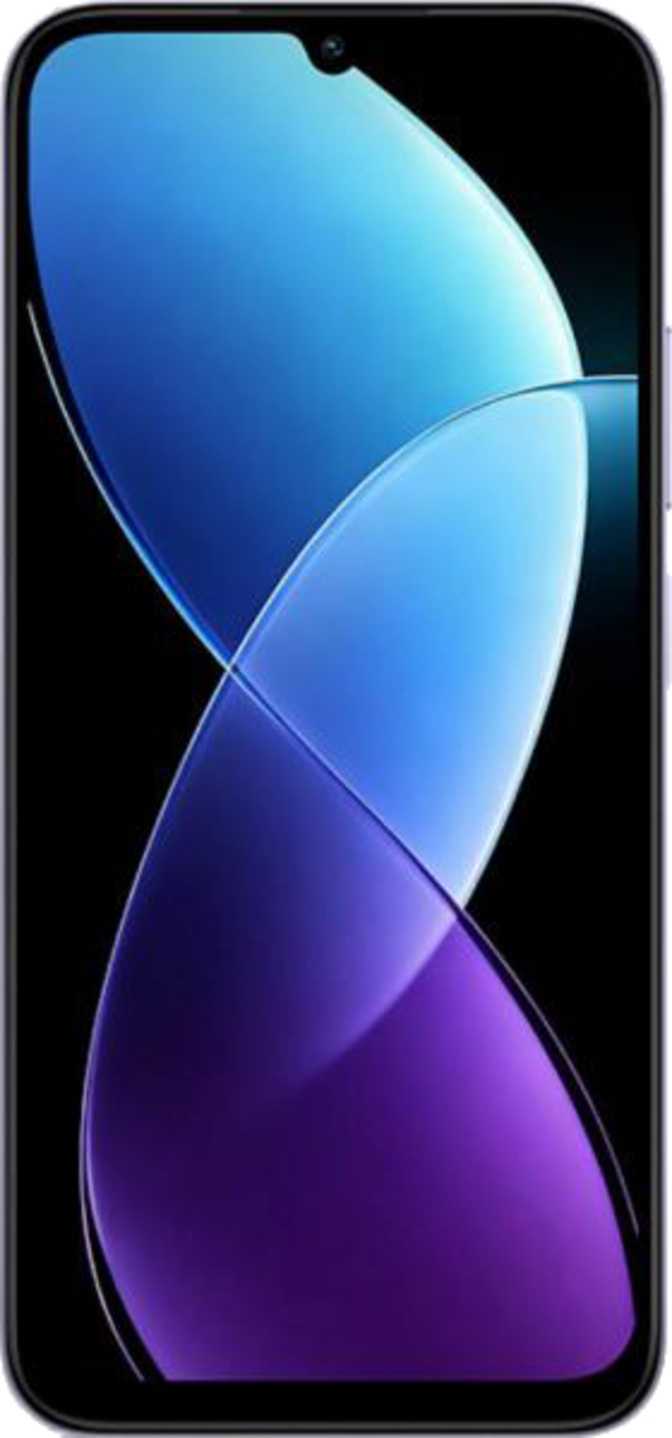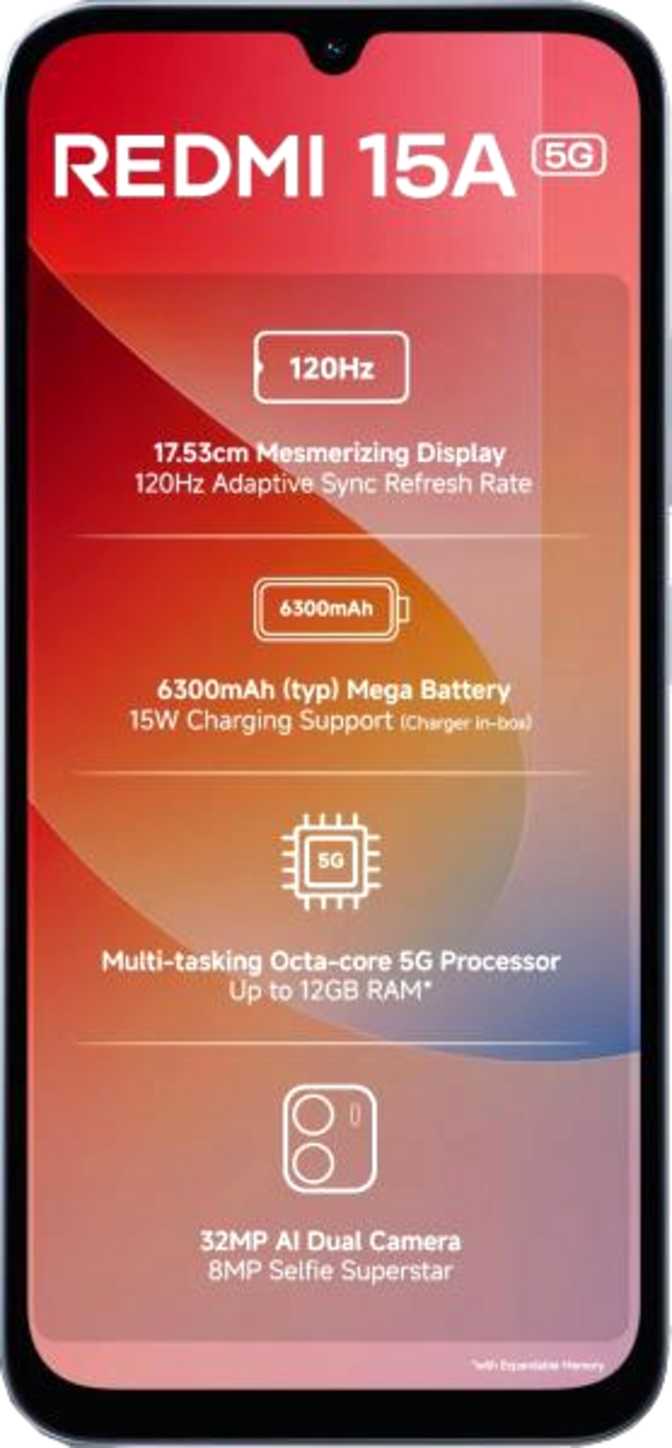
Xiaomi Redmi 15a 5G Review: Big Battery, Budget 5G, Honest Trade-Offs
SmartphonesAt a Glance
5G Ready
Unisoc T8300 SoC
6300 mAh
Exceptional Endurance
6.9″ 120Hz
IPS LCD Display
32 MP
Main Camera
Budget 5G phones have a reputation for compromising in all the wrong places. You get the network badge on the box, then discover the screen hurts your eyes, the processor stalls during everyday tasks, and the battery barely makes it to dinner. The Xiaomi Redmi 15a 5G is built to push back against that pattern — not by pretending to be a flagship, but by making deliberate choices about where the money goes. For buyers who need 5G connectivity and all-day endurance without spending flagship money, this phone deserves a serious look. For buyers who need something else entirely, this review will tell you that clearly.
Best For
All-day battery users, budget 5G seekers, and dual-SIM users
Not Ideal For
Display-first buyers, mobile photographers, and AR gamers
Quick Summary
The Redmi 15a 5G wins on endurance and feature density. Its 6300mAh battery, 120Hz screen, NFC, dual SIM, headphone jack, and 5G form a rare combination at this price. The 720p resolution and absent gyroscope are real limitations — and this review covers both honestly.
Design & Build Quality
Physical experience, dimensions, and what it feels like to own it daily
At roughly 172mm tall and nearly 80mm wide, the Redmi 15a 5G is a genuinely large phone. Holding it comfortably in one hand for extended periods works well for people with larger hands — for everyone else it is more of a stretch. At 210 grams, it has a presence you will feel in a pocket. That weight is not a flaw so much as a trade-off: it comes directly paired with the large battery inside.
The phone measures just over 8mm thin — a respectable profile for a device carrying a battery of this size. It does not feel bloated. The overall chassis is practical rather than premium: designed to survive daily life, not to impress on a table.
The build includes basic water resistance, which means splashes, light rain, and accidental sink contact are survivable events. This is not an invitation to submerge the phone. One notable absence: there is no damage-resistant branded glass protecting the display. A screen protector is a genuinely worthwhile day-one investment here.
Worth Knowing Before You Buy
No branded damage-resistant glass means the screen scratches more easily than phones in higher price brackets. Budget for a tempered glass protector alongside your purchase.
| Height | 171.6 mm |
| Width | 79.5 mm |
| Thickness | 8.2 mm |
| Weight | 210 g |
| Water Resistance | Splash Resistant |
| Rugged Build | No |
| Screen Protection | No branded glass |
Display: A Genuinely Useful Screen With One Real Limitation
Size, smoothness, sharpness — and the honest trade-off you need to know about
Size and Refresh Rate
The 6.9-inch screen is one of the most immediately noticeable things about this phone, and for most everyday users it will feel like a genuine advantage. Watching video, reading, browsing, and scrolling social media all benefit from the extra real estate.
The 120Hz refresh rate means scrolling and animations appear fluid and smooth — a feature that used to be reserved for phones costing significantly more. The difference between a 60Hz and a 120Hz screen is visceral: text scrolls cleanly, transitions do not stutter. Having it at this price point is meaningful.
The panel is IPS LCD technology, which delivers accurate colors and good off-angle viewing. There is no always-on display, and no HDR10 or Dolby Vision support — streaming HDR content will render in standard dynamic range.
Resolution: The Honest Assessment
The resolution sits at 720 x 1600 pixels. On a screen this size, that translates to roughly 254 pixels per inch — noticeably less sharp than a 1080p display at the same size. Individual pixels become visible when reading small text or viewing detailed images up close.
For casual media consumption at normal viewing distances, most users adjust. For anyone who reads extensively on their phone or works with detailed graphics, this is the most significant hardware compromise on the entire spec sheet.
| Panel Type | IPS LCD |
| Screen Size | 6.9 inches |
| Resolution | 720 × 1600 px |
| Pixel Density | 254 ppi |
| Refresh Rate | 120Hz |
| HDR10 Support | No |
| Dolby Vision | No |
| Always-On Display | No |
| Damage-Resistant Glass | No |
Display sharpness is the key trade-off. On a 6.9-inch screen, 720p resolution is visible at close range. If display clarity is your top priority, a 1080p device at a slightly higher price will serve you better.
Performance: A Capable Processor for the Right Tasks
Chip architecture, real-world speed, storage, and where the limits are
The Chip and What It Actually Means
The Redmi 15a 5G is powered by the Unisoc T8300, built on a 6-nanometer manufacturing process. In plain terms, a smaller fabrication node means the processor uses power more efficiently and runs cooler during everyday work compared to older chip designs. This is a direct contributor to the phone's battery endurance — the processor does not burn through charge unnecessarily during routine tasks.
The CPU uses an eight-core layout combining two higher-performance cores running at 2.2GHz with six efficiency cores at 2.0GHz. This configuration balances responsive performance during demanding moments with conservative power draw during lighter work — the same architectural principle used in chips across the industry.
Everyday Speed vs. Demanding Workloads
For daily tasks — calls, messaging, web browsing, social media, navigation, streaming video, and light gaming — this chip handles everything without meaningful friction. Apps open in acceptable time, and multitasking with 6GB of RAM is functional.
Where limits become visible: graphically intensive mobile games at maximum visual settings, extended simultaneous background processes, or any workflow that keeps the processor under heavy load for long stretches. Geekbench 6 results place this chip in a clearly entry-to-mid tier — competitive within its class, but not near upper-mid-range processors.
For gaming specifically: casual titles run well. Demanding 3D games will require settings adjustments. The GPU (Mali-G57 MP2 running at 950MHz) benefits from only needing to drive a 720p display — at lower pixel counts it does not have to work as hard, which makes game performance feel more fluid than the raw specifications might suggest.
| Chipset | Unisoc T8300 |
| Fabrication | 6nm process |
| CPU Cores | 8 cores |
| CPU Config | 2×2.2 + 6×2.0 GHz |
| RAM | 6 GB (2133 MHz) |
| Storage | 128 GB |
| Expandable Storage | Yes |
| GPU | Mali-G57 MP2 |
| GPU Clock | 950 MHz |
Entry-to-mid tier; responsive for everyday tasks
Solid multi-threaded performance for this price bracket
Cameras: More Capable Than the Category Average, With Caveats
Main sensor, front camera, manual controls, video — and the limitations that matter
Main Camera
The primary camera features a 32-megapixel sensor with an f/2.0 aperture. 32MP at this price tier is higher than typical — standard entry-level cameras often ship with 13MP or 16MP sensors — and the extra resolution does provide more detail in well-lit conditions. The f/2.0 aperture lets in a reasonable amount of light, supporting usable photos in moderately low-light situations.
The manual controls available here are more extensive than expected for the price. ISO adjustment, manual focus, manual white balance, and exposure control give users real tools to improve shots when automatic processing misses. HDR mode, burst shooting, panorama, timelapse, and continuous autofocus during video are all present.
Video tops out at 1080p at 30 frames per second with slow-motion recording available. This is adequate for social sharing and everyday documentation; it is not matched to semi-professional video needs.
Front Camera
The 8MP front camera with an f/2.0 aperture handles video calls and everyday selfies without issue. There is no dedicated front flash, so selfies in dark environments rely on screen brightness assist. Entirely acceptable for the price bracket.
| Main Sensor | 32 MP, f/2.0 |
| Sensor Type | CMOS |
| BSI Sensor | No |
| OIS | No |
| Optical Zoom | Fixed focal length |
| Video (Max) | 1080p @ 30fps |
| Slow Motion | Yes |
| Front Camera | 8 MP, f/2.0 |
| Front Flash | No |
Manual Controls Available
Battery Life: The Strongest Argument for This Phone
Capacity, real-world endurance, charging speed, and daily habits
The battery capacity here is large enough that two full days of moderate use between charges is genuinely achievable for many users, and even heavier users will consistently make it through a full day without anxiety. This matters more than people often admit when choosing a phone. A device that needs charging every night at a specific time creates a dependency; a device that lasts comfortably into a second day creates freedom.
The combination of the 6nm processor's efficiency and this battery capacity is the most compelling hardware pairing on this phone. The two work together: the chip does not burn through power unnecessarily, which stretches what the large battery can already provide.
The charging speed comes in at 15W via USB-C cable — functional, but not fast. From a fully depleted state, a complete charge will take a couple of hours. This is a deliberate cost trade-off. Given the battery's capacity, overnight charging is a natural and effective strategy for most users.
No wireless charging. There is no wireless or reverse wireless charging on the Redmi 15a 5G. The trade-off is deliberate: the savings go toward the large battery capacity instead. If wireless charging is a daily-use requirement, this is a hard limitation.
| Capacity | 6300 mAh |
| Charging Speed | 15W wired |
| Wireless Charging | No |
| Reverse Wireless | No |
| USB-C Connector | Yes |
| Battery Health Check | Yes |
| Removable Battery | No |
Estimated Real-World Endurance
Connectivity & Features
5G, NFC, Wi-Fi, Bluetooth, sensors, and what is — and is not — included
The headline feature is 5G support — both the LTE and 5G radios are built directly into the Unisoc T8300 chipset. For users in areas with 5G coverage, this translates to faster data speeds and better network responsiveness. For users whose carrier has not yet deployed 5G widely, 4G LTE is equally present and performant.
NFC is included, enabling contactless payments where supported. This is notable at this price point — NFC is frequently omitted from entry-level devices to cut costs. The dual SIM configuration supports two active SIM cards simultaneously, which is useful for anyone managing separate personal and work numbers or for frequent travelers.
The 3.5mm headphone jack is included. This matters because many manufacturers have removed it across their lineups. Anyone using wired headphones — by preference, for audio quality, or simply because they own a good pair — does not need an adapter here.
One significant sensor omission: there is no gyroscope. Augmented reality applications that depend on gyroscopic input will not function correctly, and games using the gyroscope for motion controls will either fail or fall back to touch controls only.
The USB-C port operates at USB 2.0 speeds — sufficient for charging and standard file transfer, but not suited to high-speed data workflows like editing video directly from the phone.
5G band compatibility check required. Before purchasing, confirm the variant sold in your region supports your carrier's specific 5G frequency bands. This is standard due diligence for any budget 5G device.
Software: Android 16 With Xiaomi's Layer
OS version, privacy tools, usability features, and update cadence
Running Android 16, the Redmi 15a 5G ships with one of the more recent major Android versions available. The software experience includes a meaningful set of privacy and usability features that go beyond what lower-budget Android builds typically offer.
Updates arrive through Xiaomi's distribution process rather than directly from Google, which typically means a slightly delayed schedule compared to Pixel devices. This is a standard characteristic of branded Android — not unique to Xiaomi — but worth noting for buyers who prioritize receiving security patches promptly.
Who This Phone Is For — And Who Should Look Elsewhere
A direct guide to whether the Redmi 15a 5G fits your specific needs
-
First-time smartphone buyers
A large, modern-feeling device at minimum cost with no feature corners cut on the essentials
-
Battery-first users
Anyone who resents daily charging or is frequently away from an outlet for extended periods
-
Budget-conscious 5G seekers
Users in areas with active 5G deployment who want the network upgrade without a premium price
-
Dual-SIM users
Travelers, people managing work and personal numbers, or markets where dual SIM is standard
-
Wired audio users
Anyone with a collection of wired headphones who does not want to rely on an adapter
-
Display-first buyers
The 720p resolution on a near-7-inch screen is genuinely soft. Step up to a 1080p device if sharpness is a daily priority
-
Mobile photographers
No optical stabilization and no BSI sensor mean consistent low-light results will disappoint
-
Competitive or graphics-heavy gamers
Sustained high-frame-rate 3D performance requires settings compromises; demanding titles will push the chip's limits
-
AR and motion-gaming enthusiasts
The missing gyroscope is a hard limitation — AR apps that depend on it will not function
-
Heavy data transfer users
USB 2.0 speeds are a bottleneck for anyone who moves large files regularly between phone and computer
How It Compares to the Alternatives
Positioning against logical entry 5G and mid-range rivals at comparable price points
| Feature | Redmi 15a 5G | Entry 5G Rival | Mid-Range Alternative |
|---|---|---|---|
| Display Size | 6.9″ | 6.5″ | 6.6″ |
| Display Resolution | 720p | 720p | 1080p |
| Refresh Rate | 120Hz | 90Hz | 90–120Hz |
| Battery Capacity | Very Large | Moderate | Moderate–Large |
| 5G Support | |||
| NFC | Sometimes omitted | ||
| Headphone Jack | Sometimes omitted | Sometimes omitted | |
| Expandable Storage | Sometimes omitted | Sometimes omitted | |
| Optical Stabilization (OIS) | Sometimes included | ||
| Gyroscope | Sometimes included |
Competitor columns represent typical devices in corresponding price categories, not specific named models.
Honest Strengths and Weaknesses
A balanced assessment — because credibility depends on stating both clearly
The case for this phone is built on endurance and value density. The battery is large enough that the Redmi 15a 5G breaks the most frustrating pattern of budget phones — needing a charge before the day ends. Paired with a processor engineered for efficiency, the combination delivers endurance that punches well above this price tier.
The 120Hz display feel is a meaningful upgrade at this price. Scrolling, transitions, and touch response all benefit from the higher refresh rate, and it creates a perception of responsiveness that makes the phone feel more expensive than it is.
The feature checklist — 5G, NFC, dual SIM, headphone jack, expandable storage, 32MP camera, Bluetooth 5.4, and GPS with Galileo support — represents a combination that would have required spending considerably more just a few years ago. For the target buyer, this phone delivers everything on the needs list without asking them to pay for things they do not want.
The 720p resolution is real and visible on a screen this size. Buyers who care about display crispness will notice it every single day — when reading, viewing photos, or watching video with text on screen. This is not an issue that disappears after adjustment; it is a consistent characteristic of the hardware.
The absent gyroscope is a hard cut, not a compromise. AR applications that depend on it simply will not work. For a device aimed at a younger or mobile-gaming audience, this is a more significant omission than it first appears.
The 15W charging speed means that despite the battery's capacity advantages, refilling takes patience. A two-hour charge window is workable for most people but is noticeably slower than competing devices in higher price brackets that charge at 33W or faster.
The mono speaker is functional but unremarkable. Media consumption is better served through headphones or an external speaker — the built-in audio does its job for calls and alerts, but it does not deliver a satisfying entertainment experience on its own.
Common Buyer Questions Answered
The questions real buyers search for before spending their money
Final Verdict
Xiaomi Redmi 15a 5G
/10 Overall
The Xiaomi Redmi 15a 5G is a phone that knows what it is and delivers on that identity. It is not competing with mid-range devices on camera versatility, display sharpness, or processing headroom. What it offers instead is a combination of 5G connectivity, exceptional battery endurance, a large smooth-scrolling display, and a full feature checklist — NFC, headphone jack, expandable storage, dual SIM — at a price where compromises are expected to be steeper.
The purchase case is clear for buyers whose top priorities are all-day battery life, 5G connectivity, and a large screen at minimum cost. The 6nm processor and large battery work together in a way that makes the phone genuinely useful as an always-with-you device rather than a device you have to manage carefully to keep running.
For anyone who ranks display quality, low-light photography, or serious gaming near the top of their priority list, the Redmi 15a 5G will frustrate rather than satisfy. Spending more for a 1080p device with OIS and a gyroscope is the right call in those cases.
Recommended For
Battery-first users, budget 5G seekers, dual-SIM users, and anyone upgrading from an older entry-level device who wants more of everything that matters most day to day.
/10 Overall
Score Breakdown