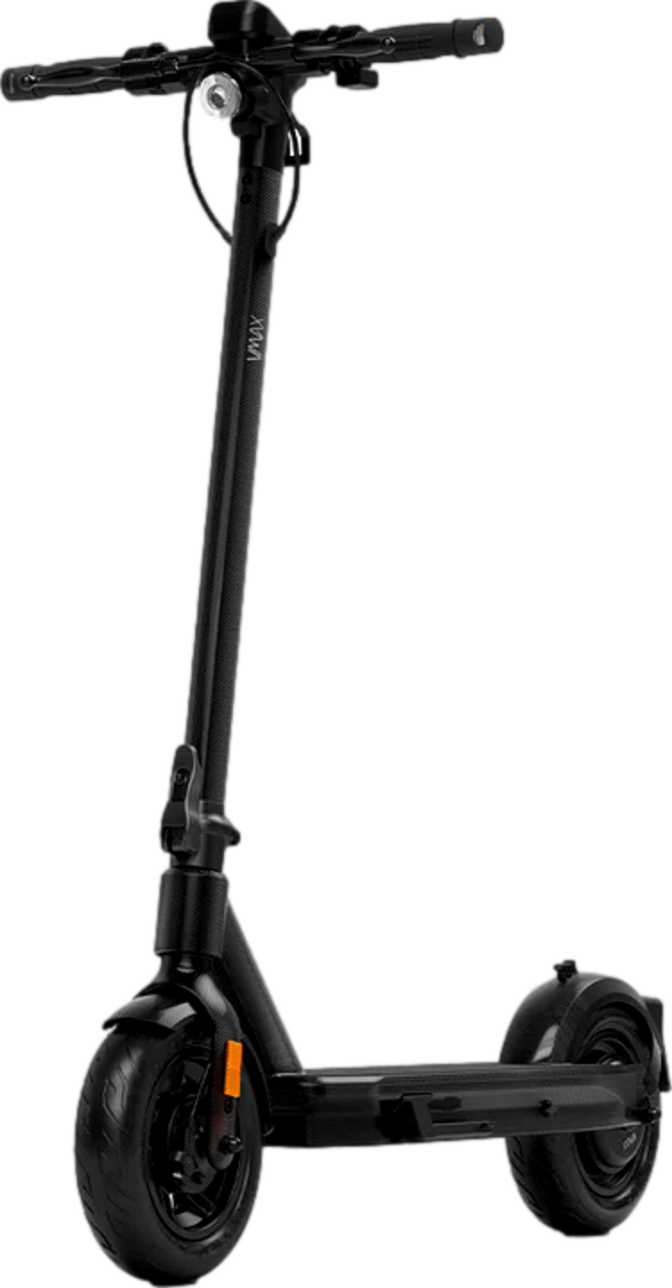
VMax VX8 Electric Scooter – Full Review and Real-World Analysis
Electric ScootersThe electric scooter market has no shortage of options, but most riders eventually hit the same wall: a scooter that either feels underpowered for real commuting or carries a price tag that demands a serious commitment. The VMax VX8 positions itself as a serious daily driver — not a weekend toy, and not a premium flagship priced accordingly. A 1400W motor, 65 kilometres of claimed range, and a sub-2.5-hour charge cycle make bold promises. This review unpacks exactly how well those promises hold up.
Build Quality and Physical Design
Weight, Portability, and Fold
At around 15.5 kilograms, the VX8 occupies a meaningful middle ground. It is heavier than the ultralight commuter scooters designed primarily for carrying rather than riding, but noticeably lighter than dual-motor performance machines that tip past 25kg. In practical terms: you can carry it up a single flight of stairs without regret, but doing so six times a day will wear on you quickly. The VX8 is built to be ridden, not lugged.
The frame folds for storage and transport — the baseline expectation for any commuter-oriented model. Folded, it manages reasonably for car boots, under-desk storage, or narrow apartment hallways. It is not compact in the way a sub-10kg city scooter is, but it covers the scenarios most commuters actually face.
Rider Fit and Dimensions
Standing 1375mm tall with a 1125mm width, the VX8 is built unambiguously for adults. Deck height and handlebar positioning suit standard adult proportions. Taller and broader riders should find the stance comfortable; shorter riders may want to assess handlebar reach in person. This is explicitly not a scooter for younger riders — nothing about its geometry, power, or speed ceiling suggests otherwise.
The maximum supported rider weight of 120 kilograms is one of the more generous figures in this segment. Many mid-range scooters cap at 100kg and treat 110kg as a premium distinction. The VX8 reaches 120kg as a standard engineering specification.
Tires, Wheels, and the Suspension Question
The VX8 runs 10-inch pneumatic (air-filled) tires. For context: pneumatic tires absorb road texture the way a bicycle tire does, naturally cushioning vibration. Solid rubber or foam-filled alternatives never puncture but transmit every crack and pebble directly to your feet and wrists. On a scooter, this is one of the most impactful comfort decisions a manufacturer makes — and pneumatic is the right call.
The VX8 has no front fork springs or rear shock absorber. The pneumatic tires handle all absorption on their own. On smooth urban pavement and maintained bike lanes, this is largely unnoticeable. On cobblestones, potholed roads, or rough tarmac, you will feel significantly more road feedback than you would on a suspended scooter. This is a deliberate design trade-off that keeps weight down and mechanics simple — but it is a genuine limitation worth knowing before committing.
Lighting and Weather Protection
Integrated front and rear lights are included as standard. These are functional safety components for low-visibility commuting — dawn, dusk, rain, overcast days — not decorative LEDs bolted on as an afterthought.
The VX8 carries an IPX6 water resistance rating. In practical terms, IPX6 means the electrical system withstands powerful water jets from any direction. Rain, road spray from passing vehicles, puddle splashes — all within its tolerance. What it does not cover is submersion. Getting caught in a downpour mid-commute is fine. Intentionally riding through deep standing floodwater is not what this rating protects against.
Performance: Motor, Speed, and Stopping Power
What 1400 Watts Actually Means on the Road
Motor output only means something in context. Entry-level adult scooters typically run 250–500W motors — fine for flat urban streets at low speeds, noticeably strained the moment a hill appears. Mid-range commuter models land in the 500–800W band. The VX8's 1400W single motor puts it into the upper tier of commuter-class machines: below the performance bracket of dual-motor scooters, but significantly more capable than anything designed purely for city flatlands.
In practice, this power headroom means confident acceleration from a standstill, sustained speed on moderate inclines without momentum loss, and a motor that is not working near its limit during normal riding. A motor straining at capacity consistently runs hotter, wears faster, and delivers a less composed experience. The VX8's power reserve is as much a durability asset as a performance one.
Top Speed and the Legal Reality
The hardware ceiling of 35 km/h means most riders will rarely reach maximum speed in regulated environments. The majority of countries and cities that govern electric scooters set road and bike-lane limits between 20 and 25 km/h. The VX8 is capable of exceeding those limits, and riders in regulated contexts will typically configure a speed mode that keeps them within local rules — something the companion app facilitates directly.
The headroom matters in a subtler way: a scooter limited to 25 km/h at its mechanical maximum feels strained and buzzy when pushed. A scooter capable of 35 km/h cruises at 25 km/h with composure and reserve torque available for hills and headwinds.
Braking: Front and Rear
The VX8 is fitted with both front and rear brakes — the correct configuration for a scooter operating at these speeds. Single-brake scooters, especially those relying solely on a rear drum or foot brake, produce significantly longer stopping distances and reduced control in emergencies. The dual-brake setup lets riders modulate stopping force properly: trailing brake to stabilise, leading brake to maximise deceleration when a situation demands it.
Battery, Range, and Charging
Range: The Claimed Number vs. Real-World Expectation
The VX8 carries a 432Wh battery pack — meaningfully larger than the 250–350Wh packs found in most popular commuter scooters at this segment. That larger capacity is what enables the 65-kilometre maximum range claim.
Manufacturer range figures are measured under controlled, optimistic conditions: flat terrain, moderate speed, average rider weight, and ideal temperatures. Real-world range for most riders on mixed urban terrain will land closer to 45–55 kilometres per charge, depending on weight, average speed, route gradient, and ambient temperature.
Real-world range varies with rider weight, speed, route gradient, and temperature conditions.
Even at the conservative end, the VX8's range comfortably covers a typical urban commute in both directions without a mid-day top-up. A rider with a 20km round-trip could realistically complete three full days of commuting before needing to plug in.
Charge Speed: The Underrated Advantage
The 2.3-hour full charge is fast for a battery of this capacity. Standard charging for comparable packs typically runs four to six hours. Recovering from empty to full in roughly the time of a long working lunch means the VX8 can be ready again within a single workday — no overnight charge ritual required. For riders who forget to plug in before bed, this matters more in daily life than the range number itself.
The battery is not removable. This is a deliberate design choice that prioritises weather sealing and structural integration over the convenience of swapping packs. If your daily distance consistently exceeds real-world range and you have no charging access at your destination, that is a constraint worth planning around. For the majority of urban commuters, a fixed battery with this charge speed will not create meaningful friction in a daily routine.
Regenerative Braking and Battery Monitoring
The VX8 includes regenerative braking — a system that recovers kinetic energy during deceleration and returns it to the battery. Its range contribution is modest and most noticeable on routes with frequent stops or descents. Think of it as a supplementary benefit rather than a headline range-extender. The slightly different brake feel compared to purely mechanical systems is something most riders adapt to within a few sessions.
A real-time battery level indicator is built in, giving riders charge visibility before and during a ride. This feeds into the companion smartphone app for more precise monitoring than the onboard display alone provides.
Smartphone App Integration
The VX8 pairs with a dedicated smartphone application that extends the onboard controls into a more detailed interface. For scooters in this category, companion app functionality typically covers speed mode configuration — switching between economy modes for range extension and performance modes for open routes — along with detailed battery monitoring, ride data tracking, and anti-theft alert functionality.
The app connection also enables firmware updates to be delivered without a workshop visit, which is a genuine long-term ownership benefit that keeps the scooter's software current. Tech-comfortable riders who want granular control will find this connectivity valuable. Riders who prefer simpler hardware-only operation will find the scooter entirely usable without ever opening the app — the two experiences co-exist without friction.
Who the VMax VX8 Is Built For
Ideal Riders
- Urban commuters with routes up to 40–50km round-trip who need a scooter that finishes the journey with range to spare and charges fast enough to be ready the same evening.
- Riders who prioritise range and power over ultralight portability — the VX8 is designed to be ridden, not carried.
- Heavier adult riders who have found other scooters uncomfortably close to their weight limit — the 120kg capacity is one of the more generous in this segment.
- Commuters in wet or unpredictable climates who need confidence that a rain shower will not end a ride or damage the scooter's electrics.
- Tech-comfortable commuters who want app controls and connected features without stepping into premium pricing territory.
Who Should Look Elsewhere
- Riders on rough, uneven, or potholed roads — without suspension, the VX8 delivers a noticeably harder ride on poor surfaces. A suspended model will serve those routes significantly better.
- Frequent transit commuters who carry their scooter on trains or buses daily. At 15.5kg, it is manageable occasionally — not sustainable as a daily carrying habit across platforms and staircases.
- Riders who need a removable battery — apartment dwellers without ground-floor power access, or anyone who needs to charge the pack away from where they park.
- Budget-first buyers — the VX8's specification set reflects mid-to-upper commuter segment positioning, and its price will reflect that accordingly.
How the VMax VX8 Compares to Alternatives
Understanding where the VX8 sits against logical alternatives clarifies what you are paying for — and what you are trading away.
| Feature | VMax VX8 | Budget Commuter | Dual-Motor Performance |
|---|---|---|---|
| Motor Output | 1400W (single) | 250–500W | 2×800W–1000W |
| Real-World Range | ~45–55 km | ~20–30 km | ~40–60 km |
| Top Speed | 35 km/h | 20–25 km/h | 40–50+ km/h |
| Weight | ~15.5 kg | ~10–13 kg | ~22–30 kg |
| Charge Time | ~2.3 hours | ~4–6 hours | ~5–8 hours |
| Suspension | None | None | Usually front or dual |
| Water Resistance | IPX6 | IPX4 or unrated | IPX5–IPX6 |
| Max Rider Weight | 120 kg | 100 kg | 120–150 kg |
| Smartphone App |
Competitor figures represent typical category ranges, not specific model comparisons.
Honest Assessment: Strengths and Weaknesses
The VX8's most compelling quality is its range-to-charge-time ratio. That combination — a large-capacity battery paired with an unusually fast charge cycle — is practically valuable in a way raw range numbers alone cannot express. A scooter that takes seven hours to charge becomes a logistical obstacle for shift workers, evening riders, and anyone whose schedule does not permit overnight charging as a non-negotiable habit. The VX8 eliminates that friction entirely.
The 1400W single-motor setup is genuinely capable for urban commuting. The 120kg weight ceiling extends its appeal to a broader range of adult riders than most mid-range competitors accommodate. The pneumatic tires and IPX6 rating reflect a manufacturer who has thought through real-world commuting conditions — rain, real loads, unpredictable surfaces — rather than designing around a controlled product demo.
The weaknesses are real, and they are worth stating plainly. The absence of suspension is the clearest limitation — not a defect, but a deliberate trade-off favouring weight management and mechanical simplicity. Riders on rough or poorly maintained surfaces will feel the difference every time. The fixed battery removes one flexibility option for riders who cannot charge at their destination. And 15.5kg, while appropriate for the performance class, is genuinely heavy for anyone whose commute involves more carrying than riding.
- Industry-leading range-to-charge-time ratio for the class
- 1400W motor handles hills and carries real loads confidently
- 120kg capacity broader than the segment standard
- IPX6 rating stands up to genuine commuting weather
- Pneumatic tires, dual brakes, and app integration included
- No suspension — rough roads are felt directly by the rider
- Fixed battery limits charging flexibility for some users
- 15.5kg makes frequent carrying a genuine daily burden
- Mid-to-upper pricing excludes the budget-first buyer
Common Questions Before Buying
Final Verdict
The VMax VX8 is a capable, well-specified adult commuter scooter for riders whose priority is real range and real power — without crossing into the weight and cost territory of full performance machines.
Its fast charge cycle and generous range make it a practical daily commuting tool rather than a range-anxiety device. The IPX6 rating and pneumatic tires reflect genuine engineering attention to real-world conditions. The 1400W motor delivers the kind of capability that makes urban commuting feel controlled and effortless rather than fraught.
The absence of suspension is the clearest reason to consider a competitor — specifically for anyone whose daily route involves cobblestones, degraded tarmac, or rough bike paths. If your roads are reasonably well-maintained, it is a compromise you will rarely notice in everyday use.
For urban and suburban adults commuting up to 50 kilometres round-trip on typical city roads — who need a scooter that charges in under two and a half hours, and want a connected riding experience with solid weather tolerance — the VMax VX8 earns a clear recommendation. It solves the right problems for that rider without asking you to pay for dual-motor performance you do not need.