Tozo HT3 Review: Exceptional Battery Life, Real Trade-Offs
HeadphonesThe budget wireless headphone market is crowded with compromises. Most manufacturers at this price tier force you to choose between battery life, sound quality, or build quality — rarely all three. The Tozo HT3 enters the conversation with a specification sheet that raises eyebrows, particularly around endurance and connectivity generation. Whether those numbers hold up in practice — and whether the trade-offs are ones you can live with — is exactly what this review unpacks.
Design and Build: Light, Foldable, and Travel-Ready
Physical construction & portability
Weight & Comfort
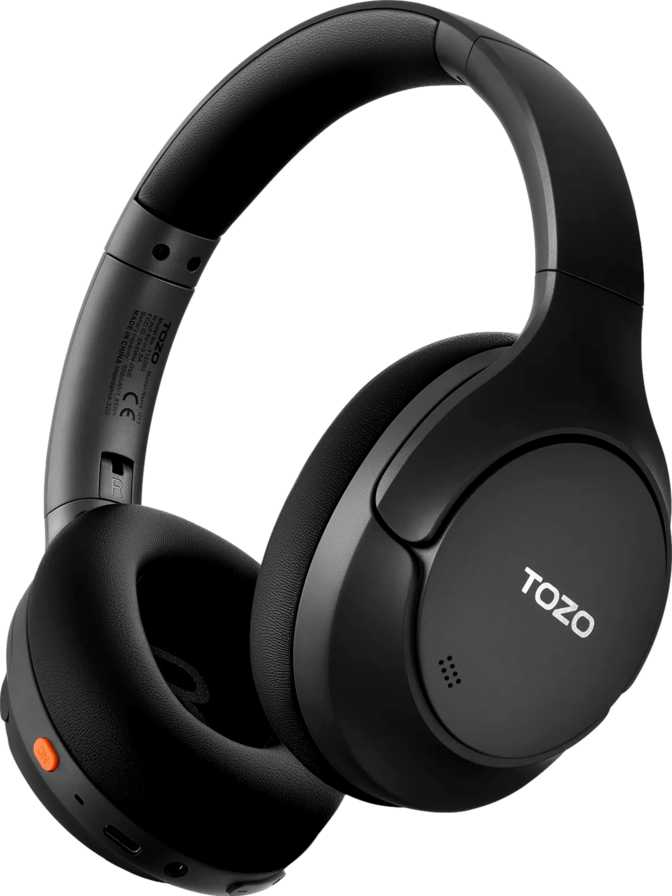
At 257 grams, the HT3 sits on the lighter end of the over-ear headphone spectrum. Many over-ear competitors in this category weigh between 270 and 320 grams — that extra weight becomes noticeable during long commutes or extended work sessions. The HT3's weight advantage is one you'll appreciate over hours, not minutes.
The closed-back design means the ear cups form a seal around your ears, supporting both passive noise isolation and a more bass-focused sound signature. Unlike open-back headphones — typically used in quiet studio environments — the HT3's closed cups are built for real-world use where ambient noise is part of the equation.
Portability & Cable Setup
The headphones fold flat, making them practical to slip into a backpack or carry-on without a bulky case. This isn't a trivial feature — plenty of over-ear headphones at this price point skip foldability entirely, leaving you with a rigid frame that's awkward to transport.
The cable is detachable, so if it wears out or breaks, you replace the cable — not the headphones. The included cable is tangle-free by design, which matters more than it sounds if you've ever spent three minutes unraveling a knotted cord before a flight.
No water resistance rating. Rain, sweat, and gym environments are real risks. These headphones are built for everyday listening — not athletic use.
Sound Quality: More Range Than Most Headphones Can Claim
Driver performance, frequency response & noise handling
Driver & Frequency Performance
The HT3 uses 40mm drivers — a size that's become the standard for over-ear headphones because it balances physical driver area (which influences bass capability) with a reasonable ear cup size. Smaller drivers struggle to move enough air for deep bass; larger ones can make cups uncomfortable and heavy. 40mm is a proven middle ground.
The response extends from 16 Hz at the low end to 45,000 Hz at the high end. Human hearing typically ranges from around 20 Hz to 20,000 Hz. The HT3's low-end extension reaches into sub-bass territory — the physical sensation of deep electronic bass or movie score rumble. At the top end, 45,000 Hz coverage is relevant for high-resolution audio files that carry detail above the standard audible ceiling.
Noise Handling: Active and Passive Together
Active noise cancellation (ANC) uses microphones to sample ambient sound and generate opposing audio signals to neutralize it. This is most effective against consistent low-frequency sounds — air conditioning hum, airplane cabin noise, train rumble — and less effective against sudden or mid-to-high frequency sounds like voices or keyboard clicks.
Passive noise isolation works alongside ANC. The closed-back, over-ear design physically blocks some ambient sound before the electronics even engage. The combination of both systems typically produces better results than either alone.
An ambient sound mode (also called transparency mode) reverses the process, using the microphones to pipe in outside sound so you can hear a conversation or announcement without removing the headphones.
Wireless Audio Codec: What Bluetooth 6 and AAC Mean for You
The HT3 uses Bluetooth 6 — a current-generation standard that prioritizes connection stability and efficiency. However, the only advanced audio codec supported is AAC. AAC performs well with Apple devices and delivers good quality over standard streaming platforms.
Listeners using Android devices or high-resolution audio apps who want the best possible wireless audio quality may find this limiting. LDAC, aptX, aptX HD, and other high-fidelity wireless codecs are absent. The wireless audio quality ceiling is set by AAC — not the hardware — and for the majority of streaming listeners, that ceiling is perfectly adequate.
- AAC
- LDAC
- aptX
- aptX HD
- LE Audio
Battery Life: The Standout Specification
Endurance, charging & power management
Endurance That Changes Your Charging Habits
At 90 hours, a listener who uses the headphones for three hours per day would go nearly a month between charges. Even at 55 hours with ANC running, that same listener gets over two and a half weeks per charge cycle. Many well-regarded over-ear headphones in the mid-range tier deliver 30 to 40 hours with ANC off — the HT3 more than doubles that benchmark.
Features and Everyday Usability
Microphones, connectivity & daily-use controls
Microphone System
Six microphones is a count more typically associated with premium-tier headphones than budget ones. These serve two functions: active noise cancellation and voice pickup for calls and voice assistants. The microphones filter out background noise so the person on the other end of a call hears you more clearly.
For remote workers who take calls through their headphones, this microphone array is a meaningful feature. For casual listeners who only use headphones for music, it's a nice bonus.
Multipoint Connection
Simultaneous connection to two devices means you can have the headphones paired to both your laptop and your phone at the same time. When a call comes in on your phone, the headphones switch to it automatically; when the call ends, they return to your laptop audio.
For anyone who moves between devices throughout the day, this removes a constant friction point that cheaper single-device headphones can't address.
Controls & Smart Features
- On-device control panel on ear cup
- Find My Device feature to locate misplaced headphones
- Ambient sound / transparency mode
- Usable as a wired headset (detachable cable)
- No auto-pause when headphones are removed
- No dedicated mute button
- No in-line cable controls
Who Should Buy the Tozo HT3 — and Who Shouldn't
Matching the right buyer to the right headphone
The HT3 Is a Strong Fit For…
-
Frequent travelers and commuters
Noise cancellation, a foldable frame, and a battery that outlasts any long-haul journey make this a natural travel companion. -
Remote workers
Six noise-canceling microphones and dual-device connectivity provide professional-grade headset functionality at a budget price. -
Casual everyday listeners
Podcast fans, streaming subscribers, and casual music listeners get great sound without paying premium prices. -
Anyone who hates charging devices
The battery life is genuinely exceptional and removes a recurring daily task from the routine entirely.
Look Elsewhere If You Are…
-
An audiophile or hi-res audio listener
Lossless streaming users and TIDAL Masters subscribers will hit the AAC codec ceiling wirelessly. A headphone with LDAC or aptX HD will make better use of your source material. -
Athletes and gym users
The complete absence of water or sweat resistance makes the HT3 a poor fit for workout environments of any kind. -
Listeners who need premium ANC performance
The HT3 has capable ANC, but Sony and Bose flagships at higher price points offer a more complete noise-blocking experience in variable noise environments like open offices.
Competitive Positioning
How the HT3 stacks up against logical alternatives in the same range
| Feature | Tozo HT3 | Typical Budget Competitor | Typical Mid-Range Competitor |
|---|---|---|---|
| Battery (ANC Off) | 90 hours | 40–60 hours | 30–40 hours |
| Battery (ANC On) | 55 hours | 20–35 hours | 25–35 hours |
| Bluetooth Version | 6.0 | 5.0–5.3 | 5.2–5.3 |
| Multipoint | 2 devices | Often 1 device | 1–2 devices |
| Hi-Res Wireless Codec | AAC only | SBC / AAC | LDAC or aptX HD |
| Microphone Count | 6 | 2–4 | 4–6 |
| Water Resistance | None | Often none | Sometimes IPX4 |
| Foldable | Sometimes |
The HT3's clearest competitive advantage is battery life — it's not close. The Bluetooth 6 adoption puts it ahead of most competitors on connection reliability. The trade-off is wireless audio codec support, where mid-range competitors from Sony in particular offer LDAC, delivering noticeably better wireless audio quality to compatible Android devices.
Honest Assessment: Strengths and Weaknesses
What the HT3 genuinely gets right — and where it genuinely falls short
Where It Genuinely Excels
The battery life is the product's defining strength. It's not incrementally better than competitors — it's categorically better, and it changes the user experience in a concrete way. Not thinking about charging headphones is a real quality-of-life improvement that only becomes clear after you've lived with it for a week.
The six-microphone array and dual-device connectivity are features that punch above the HT3's price tier. Remote workers in particular get meaningful professional-grade functionality here — the kind that competing headphones at this price point either skip entirely or handle with two or four microphones.
The sound hardware — 40mm drivers, a wide frequency response covering both sub-bass and well beyond the audible ceiling, plus both active and passive noise isolation — is genuinely capable for everyday listening. This isn't a headphone that makes compromises on the core audio experience.
Where It Falls Short
The wireless audio quality ceiling is the HT3's most significant limitation. No LDAC, no aptX, no high-resolution codec means the best possible wireless audio quality is capped at what AAC can deliver. This won't matter to most buyers — it only matters to the subset who specifically prioritize wireless audio fidelity above price.
The absence of water resistance, auto-pause when removing the headphones, and a dedicated mute button are smaller gaps individually, but together they represent a set of quality-of-life features that competing products — sometimes at the same price — do offer.
None of these gaps disqualify the headphones for most use cases. But they are real limitations a well-informed buyer should factor into their decision, especially if any one of them maps to something they use daily.
Questions Real Buyers Ask Before Purchasing
Answers to the most common searches about the Tozo HT3
Final Verdict
Our clear, direct purchase recommendation
The Tozo HT3 is a well-considered product that makes a clear strategic choice: prioritize battery life and everyday versatility over audio codec sophistication and premium finishes. That choice will be the right one for the majority of buyers shopping in this category.
If you stream from Spotify, Apple Music, or YouTube Music, take calls regularly, switch between your phone and laptop throughout the day, and travel or commute — the HT3 delivers a lot per dollar and removes charging friction almost entirely from the ownership experience.
If you've invested in lossless streaming and want the best possible wireless audio quality, or if you need headphones that survive gym sessions, the HT3 isn't the right tool and you should direct your budget toward a product built for those specific requirements.
Recommended for commuters, remote workers, and casual listeners who want ANC, multipoint connectivity, and exceptional battery life without audiophile-grade wireless audio requirements.