TCL 98C7L 98-Inch TV: A Full Review of the Near-Cinema Home Screen
TVsThere's a threshold in television size where a product stops being an appliance and starts being an architectural decision. The TCL 98C7L sits firmly beyond that threshold. At just a hair under 98 inches measured diagonally, this screen changes the geometry of whatever room it enters. Before evaluating picture quality or smart features, understand that buying this television is a commitment — to the wall, to the room, and to a viewing experience that cannot be replicated at smaller sizes regardless of how much you spend. This review helps you decide whether that commitment is worth it, and whether the TCL 98C7L specifically is the right version of that experience.
Design and Physical Presence
Build quality, real dimensions, and what installation actually involves
Scale in Numbers That Actually Mean Something
The 98C7L measures approximately 2,180mm across — just over 7 feet wide. Vertically, it stands at roughly 1,247mm from the bottom of the panel to the top bezel, or about 4 feet tall. These numbers matter before you purchase, not after delivery. Measure your wall. Measure your doorways. The television weighs approximately 54.8kg without a stand — around 121 lbs — which is a two-person installation minimum, and ideally three if you are wall-mounting.
At 61mm deep, the panel itself is relatively slim given its output capabilities, though not in the same category as flagship OLED panels. This depth is a fair trade-off for the Mini-LED backlighting hardware housed behind it.
Key Dimensions at a Glance
- Width
- 2,180mm / 7.2 ft
- Height
- 1,247mm / 4.1 ft
- Depth
- 61mm
- Weight (no stand)
- 54.8kg / 121 lbs
- VESA Mount
- Supported
- Operating Temp Range
- 5°C – 35°C
Before You Buy: Installation Notes
- Measure doorways and hallways before accepting delivery
- Two people minimum for lifting; three recommended for wall-mounting
- Professional installation is strongly recommended at this size
- Confirm wall structure can support 55+ kg before mounting
- Keep ambient temperature between 5°C and 35°C for reliable operation
Build Quality and Aesthetics
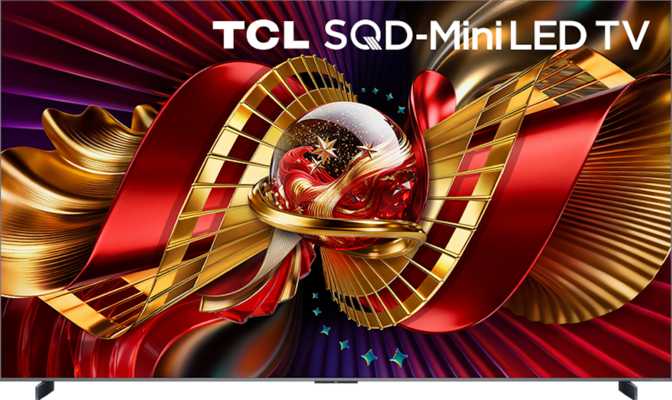
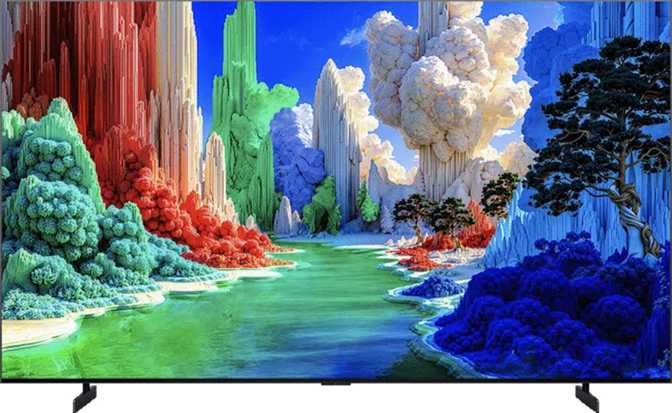
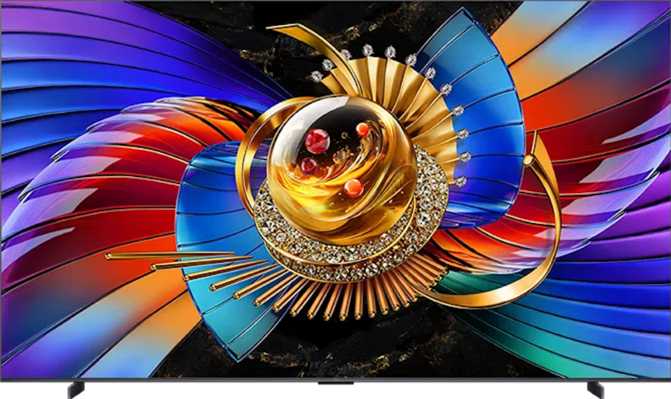
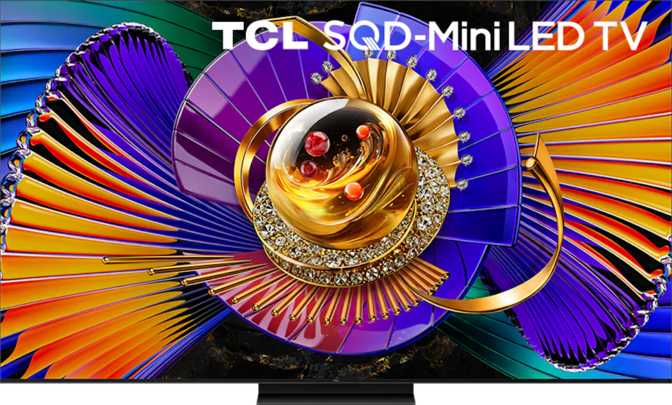
TCL has kept bezels on the 98C7L minimal enough that the frame becomes essentially invisible once content is playing — which matters enormously on a canvas this large. Thin borders keep your eye inside the image rather than on the frame around it. Wall installation via VESA mount typically produces the cleanest, most intentional result with near-100-inch panels, and the 98C7L is built to accommodate exactly that.
Display Technology: What Mini-LED QLED Actually Delivers
Panel technology, brightness, HDR formats, refresh rate, and viewing angles explained plainly
The Technology Stack Explained
The 98C7L uses a layered display approach that combines Mini-LED backlighting, QLED color enhancement, and a traditional LCD panel. Each layer serves a specific purpose — and understanding what each one does makes the resulting picture quality less mysterious.
Mini-LED backlighting replaces a small number of large LEDs with thousands of tiny ones arranged across the backlight zone. These can be individually dimmed or brightened in groups — a technique called local dimming — allowing dark scenes to appear genuinely dark while bright objects hold their intensity in the same frame. The result is contrast that approaches, though does not fully replicate, what OLED achieves through self-emissive pixels.
QLED refers to a quantum dot film placed in the backlight path. Quantum dots emit precise wavelengths of color when energized by light, producing a wider and more accurate color gamut than standard LED panels — particularly in reds and greens that conventional LED phosphors struggle to reproduce faithfully.
Brightness: A Number Worth Taking Seriously
A peak brightness of 3,000 nits places the 98C7L in territory that very few televisions at any price point reach. A typical mid-range 4K panel peaks somewhere between 400 and 700 nits; high-end models often reach 1,000 to 1,500 nits. The 3,000-nit figure is associated with displays engineered to render HDR highlights with genuine physical intensity — specular reflections on water, sunlight through a window, lightning in a storm scene — rather than simply relative contrast.
This level of brightness also makes the 98C7L a practical option for bright living rooms and spaces with significant ambient light. The onboard ambient light sensor complements this by automatically adjusting output to match room conditions, so the panel is not unnecessarily blinding at night and is not visually outcompeted by afternoon daylight.
Resolution and Pixel Density at 98 Inches
The panel outputs 3,840 × 2,160 pixels — standard 4K Ultra HD. Distributed across a 97.5-inch screen, the resulting pixel density is approximately 45 pixels per inch. A 55-inch 4K panel achieves around 80 ppi; a 65-inch panel around 68 ppi. The lower density on a screen this large is a physical reality of the format, not a design flaw, and it only becomes perceptible at very close viewing distances.
Seated 10 to 14 feet from a near-100-inch screen, individual pixels are invisible. The picture reads as detailed, sharp, and fully immersive. The 98C7L is not the television to place 4 feet from a couch — at the right distance, the pixel density concern evaporates entirely.
Color Depth and HDR Format Support
The 10-bit panel depth enables it to render over a billion distinct color shades — compared to the 16.7 million of a standard 8-bit panel. This deeper color palette produces smooth gradients in skies, skin tones, and complex underwater scenes without visible banding artifacts. Coverage across all four major HDR formats means the 98C7L extracts the best possible image from any content source without compromise or workarounds.
Refresh Rate and Gaming Performance
A 144Hz native refresh rate means the panel can display 144 individual frames per second. For film and broadcast content, this headroom supports motion processing. For gaming, it is more directly meaningful: modern consoles and PCs targeting 60 or 120 frames per second are handled without any bottleneck at the display level.
AMD FreeSync Premium Pro — the highest FreeSync certification tier — synchronizes the panel's refresh rate dynamically with the connected GPU's output. This eliminates screen tearing and reduces stuttering during frame rate fluctuations. FreeSync Premium Pro requires both low framerate compensation and low-latency HDR support. On a screen this large, visual artifacts like tearing are proportionally more disruptive than on smaller panels, making this certification genuinely important rather than a box-ticking feature.
Audio Performance: Built-In Sound at This Scale
Speaker system capabilities and what to realistically expect from them
What the Speaker System Includes
The 98C7L ships with a stereo speaker configuration that includes a built-in subwoofer — a notable distinction from panels that handle all frequencies through full-range drivers alone. The subwoofer reproduces low frequencies physically rather than processing them artificially, which has a direct effect on the sense of weight and impact in action sequences, film scores, and live music content.
The system decodes Dolby Atmos and DTS:X — both object-based audio formats that define sound as three-dimensional objects in space rather than fixed channels. Physical height speakers are not embedded in the flat panel, but the formats are processed and virtualized, producing a wider and more spatially convincing sound field than standard stereo-only decoding.
Connectivity: Everything You Need to Connect
Ports, wireless standards, and how they serve real-world connected home setups
HDMI 2.1 Across All Four Ports
Four HDMI ports, all at version 2.1, is the connectivity specification that enthusiasts should pay closest attention to. HDMI 2.1 represents a bandwidth increase significant enough to support 4K at 120Hz with HDR simultaneously — something HDMI 2.0 ports cannot deliver. PS5, Xbox Series X, and high-end PC graphics cards can all output their maximum signal through any port on this panel, with no restrictions.
Many televisions in this category ship with two or three HDMI 2.0 ports and a single 2.1 port, forcing buyers to decide which devices connect to the premium input. The 98C7L removes that hierarchy entirely. One designated port additionally carries both ARC and eARC functionality — the latter providing enough bandwidth for lossless Dolby Atmos and DTS:X passthrough to a connected soundbar or AV receiver without a separate optical cable.
Physical Ports
- 4 × HDMI 2.1 — all full-bandwidth, 4K@120Hz + HDR capable
- HDMI ARC + eARC on one designated port for lossless audio
- 2 × USB — media playback and USB recording support
- 1 × RJ45 Ethernet for a stable wired network connection
- Digital audio output for legacy audio equipment
- No 3.5mm headphone jack — Bluetooth required for private audio
Wireless and Broadcast Standards
- Wi-Fi 5 (802.11ac) — fully capable for 4K streaming
- Wi-Fi 4 (802.11n) legacy fallback support included
- Bluetooth 5.4 — stable pairing for headphones and accessories
- Miracast wireless display mirroring
- DVB-T/T2, DVB-C, DVB-S/S2 broadcast tuner standards
- Wi-Fi 6 not included — minor future-facing limitation
Smart TV Platform and Features
Google TV ecosystem, voice control, and built-in utilities explained
Google TV with Full Ecosystem Integration
The 98C7L runs Google TV, which builds a curated content layer on top of Android TV — organizing recommendations and watchlists from multiple streaming services into a single unified interface. The practical advantage over a generic smart TV platform is deep app availability through the Google Play Store and native integration with Google services and the broader Android ecosystem.
Chromecast built-in allows any smartphone, tablet, or laptop to cast content directly to the television without additional hardware. AirPlay support extends equivalent functionality to iPhone, iPad, and Mac users, covering Apple devices natively without needing an Apple TV box.
Built-In Utilities
Power Consumption and Running Costs
Energy draw, standby efficiency, and what it actually costs to keep running daily
Running at full output, the 98C7L draws approximately 124 watts — a surprisingly efficient figure for a near-100-inch panel capable of 3,000-nit peak brightness. Standby consumption drops to just 0.5 watts, which is negligible across any usage pattern.
Running this television for five hours per day produces a running cost that is modest relative to the upfront investment at typical residential electricity rates. The EU energy label rating of D reflects the physical scale of the panel — larger screens inherently consume more energy than smaller ones, and this rating is consistent with the near-100-inch category rather than indicative of an inefficient design.
Who the TCL 98C7L Is For — and Who It Is Not
Real-world use cases, ideal audiences, and situations where you should look elsewhere
-
Dedicated home cinema room. A near-100-inch screen in a light-controlled room with proper seating distance is as close to a private cinema as residential electronics currently offer.
-
Large open-plan living space. Floor plans that dwarf a conventional 65 or 75-inch panel can finally be served properly — the 98C7L fills sight lines that nothing smaller would.
-
Sports viewers with a group audience. Live sport at this scale delivers spatial match awareness — full playing field visible and contextual — in a way smaller screens simply cannot replicate.
-
Console and PC gamers. Four HDMI 2.1 ports, 144Hz, FreeSync Premium Pro, and 3,000-nit HDR capability make this a legitimate living-room gaming display at near-cinema scale.
-
Your viewing room is under 12 feet deep. A 98-inch screen at close distance is uncomfortable for everyday use. Text-heavy interfaces, menus, and standard programming feel awkward at short range.
-
You prioritize absolute black levels above everything else. OLED panels maintain an advantage in dark scene rendering. Mini-LED local dimming can produce faint halo effects around bright objects on very dark backgrounds — a known trait of the technology.
-
Your smart home is Apple HomeKit-centric. AirPlay is present and functional, but native Siri and HomeKit integration is absent. Apple-centric smart home setups will find a different platform a better match.
How the TCL 98C7L Compares to Logical Alternatives
Competitive positioning within the large-screen television category
The primary alternative consideration at near-100-inch sizes is screen size itself. Choosing between an 85-inch and a 98-inch television is not a subtle upgrade — the larger screen delivers approximately 32% more viewing area. At similar price points, the TCL 98C7L represents a different category of experience, not simply a better version of the same thing.
| Feature | TCL 98C7L | Typical 85" Mini-LED | Typical 98" OLED |
|---|---|---|---|
| Screen Size | ~98 inches | ~85 inches | ~97–98 inches |
| Peak Brightness | ~3,000 nits | ~1,500–2,000 nits | ~1,000–1,500 nits |
| Black Level Performance | Very Good (Mini-LED) | Very Good (Mini-LED) | Exceptional (Self-emissive) |
| Native Refresh Rate | 144Hz | 120Hz (typical) | 120Hz (typical) |
| HDMI 2.1 Ports | 4 (all ports) | 2–4 (varies) | 4 (premium models) |
| Adaptive Sync | FreeSync Premium Pro | Varies by brand | Varies by brand |
| Built-in Subwoofer | Yes | Sometimes | Rarely |
| Smart Platform | Google TV | Varies by brand | Varies by brand |
| Price Category | Large-screen mid-to-premium | Mid-range | Premium to ultra-premium |
Strengths and Weaknesses in Honest Perspective
A balanced assessment of what this television does well and where it genuinely falls short
The 98C7L's single most compelling attribute is the combination of its screen size and peak brightness. Achieving 3,000 nits on a near-100-inch panel is technically impressive and delivers HDR performance that smaller televisions with higher pixel density simply cannot match in absolute terms. The image, in favorable conditions, is capable of results that stop first-time viewers in their tracks.
The four HDMI 2.1 ports are a well-considered engineering decision. Most buyers will have a gaming console, a streaming device, a set-top box, and possibly a soundbar or AV receiver all competing for HDMI access. Full 2.1 bandwidth across every input removes a genuine frustration that affects competing models. The comprehensive HDR format coverage and 144Hz FreeSync Premium Pro support prepare the panel for current and near-future content standards without requiring any workarounds.
Mini-LED local dimming, despite its sophistication, cannot fully eliminate the halo effect around bright objects on very dark backgrounds — this is a known characteristic of the technology, not a defect specific to TCL. Anyone moving from an OLED panel and considering this television for its size should evaluate this trade-off in person before committing.
The one-year warranty is the shortest standard coverage period available for consumer electronics at this price tier. For a television this size — requiring professional installation and difficult to transport or service — extended warranty coverage at point of sale is a practical recommendation, not optional peace of mind.
Wi-Fi 5 rather than Wi-Fi 6 is a limitation that will matter more over time as home network demands grow, though its practical impact on current streaming performance is minimal for most users. The absence of a headphone jack is a minor convenience limitation for private listening setups.
Common Questions Before You Buy
Answers to what real buyers search for before committing to a near-100-inch screen
Final Verdict: Should You Buy the TCL 98C7L?
A clear, direct purchase recommendation
The TCL 98C7L makes the strongest case for itself when evaluated on its own terms rather than as a conventional television purchase. It is not a television you buy to improve what you already have — it is a television you buy to fundamentally change what watching television means in your home.
The 3,000-nit Mini-LED QLED panel delivers visual performance that is genuinely striking. Comprehensive HDR format coverage, full-suite HDMI 2.1 connectivity, and 144Hz FreeSync Premium Pro support mean the 98C7L is prepared for current and near-future content standards without workarounds. The Google TV platform is mature, widely supported, and feature-complete. The built-in audio — while not a substitute for a proper sound system — is functional, and the included subwoofer adds hardware that most panels at any size omit.
Buy It If
- Your room dimensions and seating distance justify 98 inches
- Your primary use is cinema content, sports, or gaming
- You want four fully capable HDMI 2.1 ports for multiple devices
- Brightness and HDR intensity matter more to you than perfect black levels
Skip It If
- Your primary viewing room is smaller than 12 feet deep
- Absolute OLED black levels are your top image quality priority
- Your smart home is built around Apple HomeKit and Siri
- You expect the built-in speakers alone to carry the full cinematic experience
The Bottom Line
If the room fits, the seating distance is right, and the use case aligns — this television will redefine your benchmark for what a home screen should be. At this screen size, the TCL 98C7L delivers specification depth and feature completeness that positions it strongly against alternatives at comparable or higher price points. The right buyer will find it very difficult to look at a smaller panel afterward.