Skullcandy Aviator 900 ANC: Battery Leader, Real-World Tested
HeadphonesQuick Specifications
Editor's Rating
Overall Score
4.0
out of 5
Battery Life
Sound Quality
Design & Build
Call Quality
Value
The battery life claim alone is enough to make you stop scrolling: sixty hours of wireless playback, and fifty hours with active noise cancellation running. At a time when most wireless headphones in this category clock out somewhere between twenty and thirty-five hours with ANC engaged, those numbers earn a second look. The Skullcandy Aviator 900 ANC is not, however, a simple battery story. It comes with a well-considered feature set in some areas, genuine gaps in others, and a few decisions that will determine whether it belongs in your bag or on someone else's desk.
Design and Physical Build
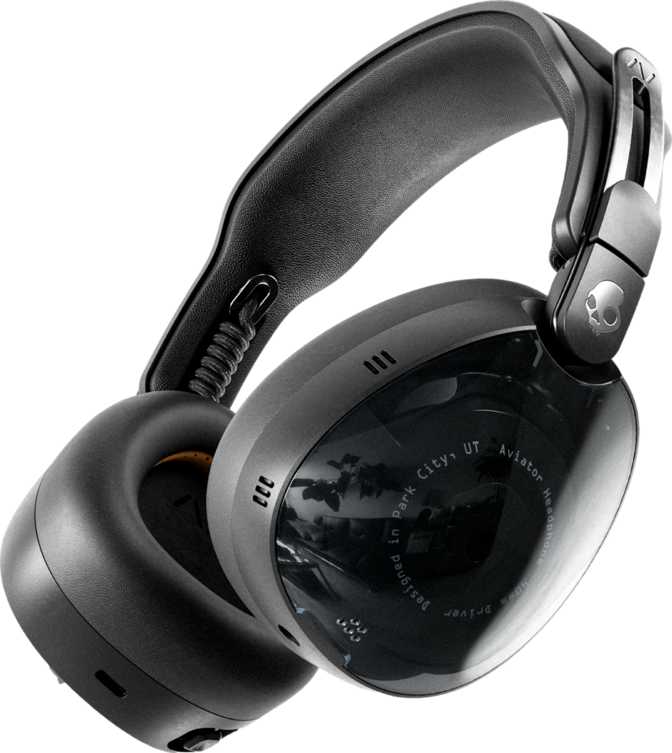
The Aviator 900 ANC is built for long sessions, though its weight tells a complicated story. At 332 grams, these headphones sit noticeably heavier than the typical flagship ANC headphone, which generally lands between 240 and 260 grams. That gap — roughly equivalent to carrying an extra half-cup of water on your head — matters less during a short listening session and more during a six-hour work-from-home stretch or a long-haul flight.
The over-ear fit means the cushions encircle your ears rather than pressing against them, which is the right approach for prolonged wear and helps passive noise-blocking work effectively. The closed-back design keeps sound in and some external noise out before active noise cancellation even activates — a useful redundancy in genuinely loud environments.
Physical controls sit on the ear cup rather than requiring swipe gestures on a touch-sensitive surface — a preference shared by many users who find capacitive touch panels unreliable in cold weather or during physical activity.
- Over-ear, closed-back fit
- Folds flat for travel
- Detachable, tangle-free cable
- Travel bag included
- On-cup physical controls
- 332g — heavier than average
For travel, the headband folds flat for packing, a travel bag is included in the box, and the cable is detachable. That last detail matters more than it sounds: a detachable cable means you can still listen wired if you arrive somewhere with a dead battery, and a damaged cable can be replaced without replacing the entire headphone. The tangle-resistant cable is a small detail that pays off over hundreds of bag deployments.
Sound Quality: What the Driver Specs Actually Mean
The Aviator 900 ANC uses 40-millimeter drivers — a standard size for over-ear headphones that provides enough surface area to move air with authority without adding unnecessary bulk. The frequency response spans the full range of human hearing, from the lowest bass frequencies your ears can detect to the highest treble shimmer. Covering that complete range is a baseline expectation for headphones at this level, not a distinguishing feature in itself.
Where things get more interesting is the sensitivity. The Aviator 900 ANC is an extremely loud headphone by design — its output capability sits well above what most people would consider comfortable for daily listening. The practical implication is significant headroom: the drivers never sound strained or compressed even at high volumes. The caveat is equally significant: exercise genuine care with listening levels during extended sessions, especially if you wear them for hours at a time.
The impedance — the measure of electrical resistance the headphones present to a signal — sits at a level that any modern device drives without effort. Your phone, tablet, or laptop will power these headphones comfortably in wired mode. No dedicated amplifier required. For context, studio-grade monitoring headphones often demand impedance levels ten times this figure and require separate amplification to perform properly.
Technical Note: Driver Magnet Choice
The Aviator 900 ANC departs from industry convention by not using neodymium magnets in its drivers. Neodymium — a rare-earth element — is the near-universal standard in quality headphones because it delivers a stronger magnetic field in a smaller, lighter package than conventional alternatives. Its absence here is unusual and almost certainly contributes to the headphone's above-average weight. Whether it produces an audible difference cannot be confirmed from specifications alone, but for buyers weighing this against competitors at the same price, it is a meaningful technical departure worth knowing about.
Active Noise Cancellation and Ambient Awareness
The Aviator 900 ANC layers two forms of noise reduction. The closed-back, over-ear design physically blocks a portion of ambient sound before ANC processing begins — acting as a first filter in loud environments like trains, open-plan offices, or coffee shops. The active system then handles what the physical seal cannot, using the microphone array to continuously sample and cancel external noise in real time.
Passive Isolation
The closed-back over-ear seal physically blocks ambient sound before ANC activates — a redundant layer that matters most in genuinely loud environments.
Active Cancellation
Six microphones sample exterior noise continuously. The ANC system generates counter-sound to neutralize low-frequency rumble — engines, air conditioning, open-office hum.
Ambient Sound Mode
Routes environmental sound through the headphones so you can hear a flight attendant, a colleague, or oncoming traffic without removing the headphones.
Battery Life: The Aviator 900 ANC's Defining Advantage
Sixty hours of playback without ANC, fifty hours with it running — those figures represent a category-leading claim that holds up to scrutiny. If you use your headphones for eight focused hours every workday, you would need to charge these roughly once per week with noise cancellation active. A typical ANC headphone in the same price range requires two to three charges in that same period. For frequent flyers, the difference could mean the gap between charging before a long international flight and not thinking about it at all.
Battery Life Comparison
Competitor figures represent typical measured results for flagship ANC headphones at comparable price points.
Charging uses the universal USB-C standard — no proprietary cables needed. A battery level indicator lets you verify remaining capacity before a long session. The one convenience feature absent is wireless charging. Given that most people charge headphones overnight anyway, this will not matter to the majority of buyers.
Wireless Connectivity: Modern Standards, Honest Limitations
The Aviator 900 ANC ships with Bluetooth 5.3 — the current generation — which brings improved connection reliability and lower power consumption. It also supports Bluetooth LE Audio, a next-generation audio protocol capable of delivering better audio quality at lower data rates than the legacy SBC standard. Here is where the codec picture becomes more complicated, and where the specifications deserve a candid read.
The Aviator 900 ANC does not support aptX, aptX HD, LDAC, or AAC — the premium wireless audio codecs most competing headphones in this category offer. This is the single most significant technical limitation of the headphone, and its real-world impact depends entirely on what device you use and how attentively you listen.
Codec Support
| Codec | Aviator 900 ANC | Who This Affects |
|---|---|---|
| Bluetooth LE Audio | Next-gen standard; device-side support still maturing | |
| SBC | Universal fallback — supported by all Bluetooth devices | |
| AAC | Critical for iPhone and Apple device users | |
| aptX | Common on Android flagship phones | |
| aptX HD / LDAC | High-resolution wireless streaming |
iPhone Users: Be Aware
Without AAC support, audio from Apple devices falls back to SBC — the baseline wireless standard. For attentive listeners comparing this against AAC-capable alternatives on the same device, the gap in wireless audio quality is perceptible.
Android Users
LDAC and aptX are both absent. Bluetooth LE Audio may provide some benefit over SBC on compatible devices, but device-side support is still maturing across the Android ecosystem.
The Bluetooth range is specified at ten metres — shorter than many competing models claim. Two-device multipoint connectivity allows simultaneous connections to two sources with audio switching between them without manual re-pairing. Fast pairing is supported. NFC tap-to-pair is not, which is a convenience omission rather than a functional gap.
Microphone Array and Call Performance
Six microphones is a high count for a consumer headphone, and the practical benefit shows up most clearly on calls. The system suppresses background noise while you speak — keyboard clatter, office chatter, coffee shop ambient sound — so the person on the other end hears your voice more clearly than a basic two-microphone setup could manage.
For remote workers, hybrid-office users, or anyone who spends significant time on video or voice calls, a six-microphone noise-canceling system is a genuine differentiator over headphones that treat call quality as an afterthought.
Missing: Hardware Mute Button
On a headphone with six microphones and evident call-use credentials, the absence of a dedicated hardware mute button is a frustrating oversight. Muting during calls requires reaching for the source device or using software controls — a step that adds real friction across a full day of video calls. If calls are your primary use case, this is the one omission most likely to cause daily irritation.
Everyday Features and Practical Usability
Dual-Device Multipoint
Connect to your phone and laptop simultaneously. Audio follows whichever device is actively playing — no manual re-pairing needed when switching sources.
Find My Headphones
A built-in find-device feature helps locate misplaced headphones through a connected app — useful when they end up between sofa cushions or at the bottom of a carry-on.
Physical Ear-Cup Controls
Tactile buttons handle playback, volume, and ANC switching reliably in cold weather, at the gym, or any situation where touch panels tend to fail.
Fast Pairing
Quick-connect pairing reduces initial setup friction with compatible devices. NFC tap-to-pair is not supported — a minor convenience omission rather than a functional gap.
Universal USB-C Charging
No proprietary cables. Any USB-C cable or adapter you already own will work. Wireless charging is not supported.
No Ear-Detection Auto-Pause
Music continues playing when you pull a cup away from your ear. Over a full workday, this small friction accumulates into a recurring minor inconvenience.
Who Should Buy the Skullcandy Aviator 900 ANC
- Travelers and commuters who want multiple days between charges without battery anxiety
- Remote workers spending extended hours on calls who value a strong microphone array
- Users upgrading from aging headphones wanting a complete, travel-ready package
- Android users with LE Audio-compatible devices looking to future-proof their audio setup
- Anyone who prioritizes endurance and reliability over reference-grade wireless audio fidelity
- An iPhone user who relies on AAC for optimal Bluetooth audio quality — the codec gap is real and perceptible
- An audiophile using LDAC or aptX-enabled devices for high-resolution wireless streaming
- A remote worker on all-day video calls who needs a hardware mute button within arm's reach
- Sensitive to headphone weight — at 332 grams, noticeably heavier than most premium alternatives
- Those who depend on ear-detection auto-pause as a core part of their daily listening workflow
How the Aviator 900 ANC Compares
The table below positions the Aviator 900 ANC against the general characteristics of typical flagship ANC headphones in the same competitive space. This reflects the category norm rather than any specific competing model.
| Feature | Aviator 900 ANC | Typical Flagship ANC |
|---|---|---|
| Battery with ANC active | 50 hours | 20–30 hours |
| Battery without ANC | 60 hours | 25–40 hours |
| Wireless codec support | LE Audio / SBC | aptX / LDAC / AAC (varies) |
| Microphone count | 6 | 2–4 |
| Weight | 332g | 240–265g |
| Wireless charging | Some models | |
| Ear-detection auto-pause | Common at this tier | |
| Hardware mute button | Common on call models | |
| Detachable wired cable | Standard | |
| Travel bag included | Standard at this price | |
| Simultaneous connections | 2 devices | 2 devices (standard) |
| Warranty period | 1 year | 1–2 years |
Honest Assessment
The battery life is the kind of specification that actually changes ownership behavior — instead of remembering to charge every other night, you treat these headphones more like furniture that occasionally needs attention. For a wireless device, that shift in daily experience is meaningful and difficult to fully appreciate until you've lived it.
The six-microphone call setup shows Skullcandy designed this headphone to serve working users, not just passive music listeners. The travel bag, foldable construction, detachable tangle-free cable, and USB-C charging all point to a product team that thought through real-world use rather than focusing exclusively on specification sheet metrics.
Bluetooth 5.3 and LE Audio represent a forward-looking connectivity choice that positions these headphones to benefit as device-side support for the standard continues to grow across the Android ecosystem and beyond.
Codec support is the most significant limitation. The decision to exclude aptX, LDAC, and AAC while embracing LE Audio is a calculated bet on the future over the present — and for many buyers today, the present is what matters most.
The weight is the other honest limitation. Three hundred and thirty-two grams is an abstraction until you wear these for a full workday or a seven-hour international flight. Users with neck sensitivity or those prone to listener fatigue will feel the difference compared to lighter alternatives.
The missing mute button, absent ear-detection, and lack of wireless charging are individually smaller shortfalls. Viewed together, they describe a product that made significant investment in battery capacity and microphone count, and trimmed some convenience features in the process.
Frequently Asked Questions
Final Verdict
4.0 out of 5
The Skullcandy Aviator 900 ANC makes a coherent and defensible case around a single defining argument: you will charge these headphones far less often than almost any competing alternative, and the experience of not worrying about battery life is genuinely valuable. That argument is backed by a feature set — six microphones, LE Audio connectivity, foldable travel-ready design, detachable cable — that goes beyond what a one-trick product would offer.
The competing argument is codec support, and it carries real weight. If your primary listening device is an iPhone, or if high-resolution wireless audio quality matters to your enjoyment of music, the absence of AAC, LDAC, and aptX is not a minor footnote. It is the most significant reason to evaluate alternatives before committing.
Recommended For
Endurance-first buyers: frequent travelers, remote workers, and anyone for whom battery anxiety is the primary problem they want solved. The payoff is real and category-leading.
Look Elsewhere If
You primarily use an iPhone, need a hardware mute button for daily calls, demand premium codec support for high-res streaming, or are sensitive to headphone weight during extended wear.