Segway Muxi Review: Long-Range Commuter E-Bike Thoroughly Tested
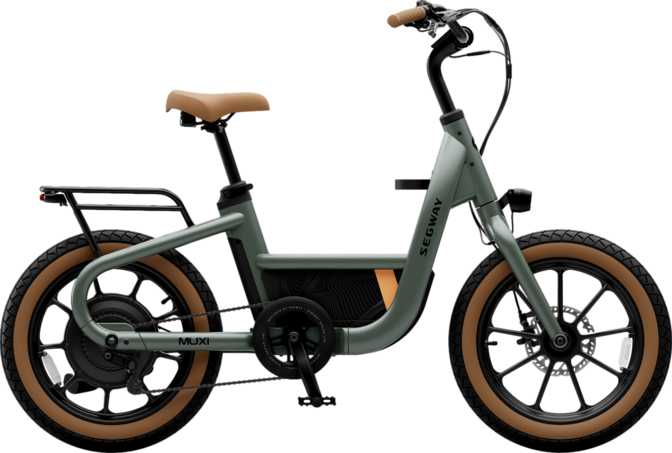
Electric BikesSegway built its reputation on personal mobility, but the Muxi is a different kind of statement. This is a full-size commuter e-bike designed to replace car trips rather than supplement gym sessions — a bike with enough battery to make your weekly charging ritual a once-or-twice affair, enough stopping power to handle real traffic, and enough smart features to make your phone feel like a co-pilot. At 33 kilograms, it is not the lightest machine on the market. But the weight tells a story, and it is worth reading carefully before you decide whether the Muxi belongs in your life.
| Specification | Detail | Specification | Detail |
|---|---|---|---|
| Frame Material | Aluminum Alloy | Motor Type | Hub-Drive (Rear) |
| Total Weight | 33 kg | Motor Power | 750W |
| Battery Capacity | 716 Wh | Peak Torque | 80 Nm |
| Battery Position | In-Frame, Removable | Top Speed | 32 km/h |
| Charge Time | ~5.5 Hours | Gearing | Single-Speed |
| Max Range | Up to 130 km | Brakes | Hydraulic Disc |
| Regen Braking | Yes | Suspension | None |
| Pedal Sensor | Cadence + Torque | Folding | No |
| GPS | Yes | Display | Yes |
| Built-In Lock | Yes | Smartphone App | Yes |
| Anti-Theft System | Yes | Front Light | Integrated |
| Riding Modes | Eco + Turbo | Rear Light | Integrated |
Design and Build Quality
Aluminum Frame and Structural Philosophy
The Muxi is built around an aluminum alloy frame — a material choice that prioritizes corrosion resistance and long-term rigidity over the ultralight properties of carbon fiber found on performance road bikes. For daily commuting in variable weather, aluminum is the practical call. It handles road salt, rain, and years of use without the structural anxiety that comes with cheaper steel or the repair complexity of carbon.
The frame houses the battery internally, concealed within the downtube rather than strapped to the outside like an afterthought. The visual result is a cleaner, more cohesive silhouette — the Muxi looks like a bike first and an e-bike second. That matters if you are locking it outside an office or coffee shop and would rather not advertise expensive technology on board.
Cable routing is external rather than internal. This is a practical concession — external cables are far easier and cheaper to maintain or replace. The trade-off is aesthetics and minor vulnerability to snagging, but for a utility-focused commuter, it is a sensible priority.
Weight: The Number That Demands Honesty
Thirty-three kilograms is substantial. Most mid-range e-bikes fall between 20 and 28 kilograms, and many cyclists consider 25 kg already on the heavier side. The Muxi's weight is a direct result of its large battery pack, robust motor, and hydraulic braking hardware — all things that contribute genuine value.
What this means practically: the Muxi is not a bike you want to carry up three flights of stairs every day. It suits riders with ground-floor storage, a garage, a bike room, or a secure outdoor spot. On the road, the motor more than compensates — you will not feel those 33 kilograms when the motor is assisting you. You will only feel them when it is not.
No Suspension — Who Should Care
The Muxi has no front fork suspension and no rear suspension system. For smooth urban roads, cycle paths, and well-maintained tarmac, this is a non-issue. The bike handles those surfaces efficiently with minimal energy loss.
For riders who regularly encounter broken pavement, cobblestones, gravel detours, or significant potholes, the absence of suspension means more vibration transferred to hands, wrists, and lower back over long distances. If your commute includes rough stretches, wider tires at lower pressure can partially compensate — but that is worth investigating against the Muxi's specific tire specification before purchasing.
Performance: Motor, Speed, and Real-World Power
What 750 Watts Actually Feels Like
The Muxi runs a 750-watt hub-drive motor — meaning the motor is integrated directly into the rear wheel hub rather than positioned at the crank. At 750W, this puts the Muxi at the upper end of what most regions classify as a standard pedelec or class 3 e-bike. It is enough power to accelerate confidently from a standing start, hold speed on inclines without leaning hard into the pedals, and carry a loaded pannier rack without feeling sluggish.
Hub-drive motors are quieter and mechanically simpler than mid-drive alternatives. They require less maintenance because they do not interact with the drivetrain — the motor spins the wheel directly. The trade-off is that hub motors are less efficient on steep, sustained climbs compared to mid-drives, which can leverage the bike's gearing. Since the Muxi is single-speed, there is no gearing for a mid-drive to exploit anyway, making the hub-drive choice logically consistent with the overall design.
Motor Power: Category Comparison
Nominal wattage comparison. Real-world output varies by load, terrain, and riding mode. Mid-drive competitors compensate via mechanical gearing efficiency.
Torque That Handles Hills
The motor produces 80 Newton-meters of torque. Most entry-level e-bikes produce 40–50 Nm, while premium mid-drive motors typically peak around 85–90 Nm. At 80 Nm, the Muxi sits firmly in the upper range of what hub motors deliver — genuinely impressive for its category. This is the number that determines how the bike feels on a hill or when pulling away from a traffic light with cargo on board. It will not struggle.
Top Speed and Riding Modes
The Muxi tops out at 32 km/h under electric assist — a figure that aligns with class 3 e-bike regulations in many markets and feels brisk for urban commuting without tipping into territory that makes shared paths feel dangerous.
Eco Mode
Reduces motor output to prioritize battery conservation over speed. Ideal for flat stretches or when you need to stretch every last kilometer from a charge before reaching your destination.
Turbo Mode
Unleashes the motor's full output for maximum acceleration and hill-climbing capability. Use it to keep pace with traffic, clear a steep bridge, or simply experience what the Muxi is fully capable of.
Braking: Hydraulic Discs Are the Right Call
Hydraulic disc brakes on an e-bike that weighs 33 kilograms and carries a rider at 32 km/h is not a luxury — it is a safety requirement. Hydraulic systems generate significantly more stopping force than mechanical (cable-actuated) disc brakes, and they modulate more predictably under hard braking. They are also self-adjusting as pads wear, requiring less maintenance than their mechanical counterparts. For city riding where sudden stops are routine — cars pulling out, pedestrians stepping off curbs, delivery vehicles double-parked — hydraulic discs provide the kind of confident, repeatable braking that keeps you out of trouble. This is one of the Muxi's clearest quality signals.
Battery and Range: The Numbers Behind the Freedom
A Battery Built for Serious Distances
The Muxi carries a 716 Wh battery — a capacity that places it well above most commuter e-bikes, which commonly ship with cells in the 400–500 Wh range. Think of watt-hours as the fuel tank of an electric bike: a larger tank means more distance before you need to stop and refuel.
The battery is integrated into the frame for a clean look, but it is also removable. That removability is a significant practical advantage: you can take the battery indoors to charge without bringing the entire 33-kilogram bike with you. For apartment dwellers, office workers, or anyone without outdoor power access, this is the feature that makes daily use genuinely viable.
Range: What 130 Kilometers Really Means
Segway rates the Muxi at up to 130 km on a single charge. Range figures from manufacturers are typically achieved under optimal conditions — flat terrain, light rider, eco mode, mild temperatures, smooth roads. Real-world range for most riders in mixed conditions will be meaningfully lower, likely in the 70–100 km band. Even at a conservative estimate, that is enough for a week of urban commuting for most riders without needing a mid-week charge.
Range estimates reflect real-world usage. Actual results vary by rider weight, terrain, ambient temperature, and riding mode selection.
Charge Time and Regenerative Braking
A full charge from empty takes approximately 5.5 hours. Plugged in overnight, you wake up to a full battery — there is no need for midday top-ups or fast-charging anxiety. This charging window fits naturally into a sleep schedule without requiring any special planning.
The Muxi also recovers a portion of energy through regenerative braking, which uses the motor's resistance during deceleration to feed small amounts of power back into the battery. In stop-and-go urban environments, regenerative braking contributes a meaningful — if not dramatic — extension to overall range. It also reduces reliance on the brake pads during light deceleration, which can extend their service life over time.
Smart Features: Beyond Getting From A to B
Dual Pedal Sensing for Natural Assist
The Muxi uses both a cadence sensor and a torque sensor to interpret how and when to apply motor assistance. This dual-sensor approach is worth understanding in detail — it is what separates the Muxi's ride feel from cheaper alternatives.
Cadence Sensor
Detects whether the pedals are turning and activates the motor accordingly. Simple and reliable — the baseline for most e-bike assist systems. On its own, it can feel mechanical: motor on, motor off.
Torque Sensor
Measures how hard you are pushing on the pedals and scales motor output in direct proportion to your effort. Push harder, get more help. Ease up, and the motor eases with you — far more intuitive than cadence sensing alone.
Many budget e-bikes rely solely on cadence sensing, which can feel jerky and artificial. The Muxi's dual-sensor system makes assistance feel organic — especially valuable for new e-bike riders who want the experience to feel like riding a capable bike, not operating a machine.
GPS, Anti-Theft, and the Built-In Lock
The Muxi includes onboard GPS — a feature with real implications for theft recovery and ride tracking. GPS-equipped bikes can be located remotely if stolen, which may also reduce insurance premiums depending on your provider. For an asset of this value, that deterrence and recovery capability has meaningful financial relevance.
The anti-theft system is complemented by a built-in lock, eliminating the need to carry a separate heavy chain or cable lock for short stops. For daily commuters who frequently park outside shops, cafés, or transit stations, this convenience compounds significantly over time. A hardened external lock should still be your primary security layer for extended unattended parking, but the integrated system covers the quick-stop scenarios that account for a large proportion of urban theft.
Smartphone App, Display, and Always-On Lighting
The dedicated smartphone app pairs with the Muxi's onboard GPS to bring the bike's intelligence to your pocket. While specific app features extend beyond the available specification data, GPS-integrated e-bikes with app connectivity typically offer navigation integration, battery status monitoring, security alerts, and mode configuration. The onboard display provides essential ride data — speed, battery level, assist mode — without requiring you to reach for your phone while riding.
Integrated front and rear lights are wired directly into the bike's electrical system rather than battery-powered accessories you might forget to charge. This matters for commuters who ride year-round: you are never caught without lights, and in many regions, front and rear lighting is a legal requirement for road riding after dark — the Muxi covers this without any additional purchase or maintenance burden.
Who Is the Segway Muxi For?
Ideal Riders
-
Daily commuters covering 15–40 km each way who need a reliable, high-capacity machine that does not require charging every single night.
-
Car replacement riders who want to eliminate a car trip entirely. The range, lighting, lock, and smart features all point toward this use case.
-
Riders with secure ground-level storage — a garage, bike room, or secure outdoor spot where the weight is not a daily obstacle.
-
Urban riders on predominantly smooth roads — cycle lanes, tarmac, and well-maintained paths where the lack of suspension is not a limitation.
-
Buyers who value smart integration — GPS tracking, app connectivity, and anti-theft features for riders who treat their bike as a connected device.
Look Elsewhere If...
-
You need to carry your bike up stairs regularly. At 33 kg, this becomes physically taxing and risks strain injury over time.
-
Your routes feature rough terrain, gravel paths, or sustained steep climbs where suspension or a mid-drive motor would serve you better.
-
You need a folding e-bike for multimodal commuting — transit, then bike. The Muxi does not fold.
-
You are primarily a recreational rider who wants something nimble for weekend rides. The Muxi's weight and city-centric features are overkill for that purpose.
-
You need multiple gears for varied gradient riding. Single-speed drivetrains are elegant in flat cities and a genuine limitation everywhere else.
How the Segway Muxi Compares to Alternatives
The Muxi occupies a specific competitive position: full-featured urban commuter, large battery, smart-connected, premium stopping power. Here is how its profile stacks up against the logical alternatives a buyer in this category would consider.
| Feature | Segway Muxi | Typical Budget Commuter | Premium Mid-Drive Competitor |
|---|---|---|---|
| Battery Capacity | 716 Wh (large) | 400–500 Wh | 500–625 Wh |
| Est. Real Range | ~70–100 km | ~40–60 km | ~60–90 km |
| Motor Type | Hub-drive | Hub-drive | Mid-drive |
| Motor Output | 750W / 80 Nm | 250–500W / 40–60 Nm | 250W nominal / 70–90 Nm |
| Brakes | Hydraulic disc | Mechanical disc | Hydraulic disc |
| Pedal Sensing | Cadence + Torque | Cadence only | Torque only |
| GPS Built-In | Yes | No | Rarely |
| Built-In Lock | Yes | No | No |
| Removable Battery | Yes | Sometimes | Yes |
| Suspension | None | Front only (basic) | Front fork (typically) |
| Weight | ~33 kg | ~22–26 kg | ~24–28 kg |
| Folding | No | Sometimes | No |
The Muxi wins clearly on battery capacity, range potential, braking quality, sensor sophistication, and smart features. It concedes on weight and suspension. Against budget commuters, it is in a different league technically.
Strengths and Weaknesses: The Honest Assessment
Where the Muxi Earns Its Praise
The Segway Muxi succeeds as an integrated urban mobility platform. The combination of a large battery, capable motor, hydraulic brakes, dual pedal sensing, GPS, and built-in security features adds up to something that feels genuinely considered rather than spec-padded. These features do not exist independently — they reinforce a coherent product philosophy around long-range, connected, low-maintenance commuting.
The hydraulic disc brakes alone separate the Muxi from a large portion of the e-bike market at similar price points. Paired with 80 Nm of torque and regenerative braking, the ride dynamics — acceleration and stopping — are handled by properly engineered hardware, not afterthoughts.
The removable battery is another high-value feature that is easy to underestimate. When your battery is effectively a carry-on bag you can charge anywhere, range anxiety drops significantly and your storage options expand considerably.
Where the Muxi Asks for Compromise
Thirty-three kilograms is real, and no amount of enthusiastic framing makes it disappear when you need to move the bike manually. Riders who anticipated a nimble, easily maneuverable city bike should recalibrate their expectations. This is a substantial machine that trades lightness for capability — and that trade is not reversible.
The absence of any suspension — front or rear — deserves clear acknowledgment. On a bike of this weight at this price tier, even a basic front suspension fork would meaningfully improve ride comfort on imperfect urban surfaces. Its omission suggests a deliberate weight-and-simplicity trade-off, but it does narrow the Muxi's comfortable operating environment.
The single-speed drivetrain is the least likely friction point for the core audience — flat-to-moderate urban commuting rarely requires gears when you have 80 Nm of torque available. But for hilly cities, the lack of mechanical gearing is a genuine limitation that torque alone cannot fully solve.
Answers to Common Buyer Questions
The Segway Muxi: Built for One Job, Done Well
The Segway Muxi is a well-engineered commuter e-bike that has made deliberate decisions about what to prioritize — and lives with the consequences of those decisions honestly. The battery capacity is exceptional for its category, the braking is properly specified for the weight and speed involved, and the smart feature stack adds real daily utility rather than checkbox marketing.
For a rider whose commute is long, whose storage is ground-level, and whose roads are primarily smooth urban surfaces, the Muxi is a compelling and capable machine that can genuinely replace car trips. It does this job better than most alternatives at a comparable investment.
Buy the Segway Muxi if your commute is your primary use case, your storage situation suits a heavy non-folding bike, and you want a connected, long-range machine with properly engineered components. Look elsewhere if weight, rough terrain, or portability are non-negotiable requirements.