Muffs M7 Review: Flexible Multi-Platform Headset Built to Last
PC and Gaming HeadsetsEditor's Quick Take
Not every headset needs to chase the premium market. The Muffs M7 stakes out a clear position: a versatile, multi-platform wireless headset aimed at gamers and everyday listeners who want flexibility without the complexity. With three connection methods, a staggering battery claim, and a detachable microphone, it presents itself as a do-it-all companion for PC, PlayStation, and Nintendo Switch users alike. Whether that pitch holds up under scrutiny is exactly what this review addresses.
At a Glance
- Triple connectivity: 2.4GHz, Bluetooth 5.4, 3.5mm
- Up to 50 hours per charge
- Compatible with PC, PlayStation, Nintendo Switch
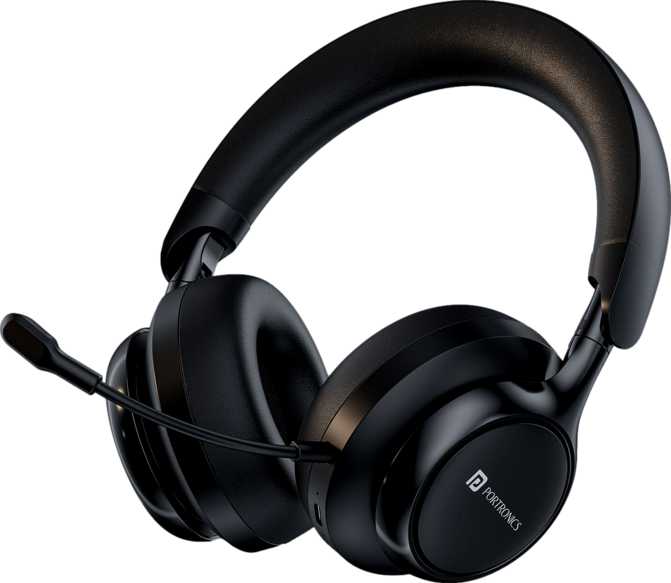
- Removable boom microphone
- USB-C charging with battery indicator
Design and Build: Understated and Functional
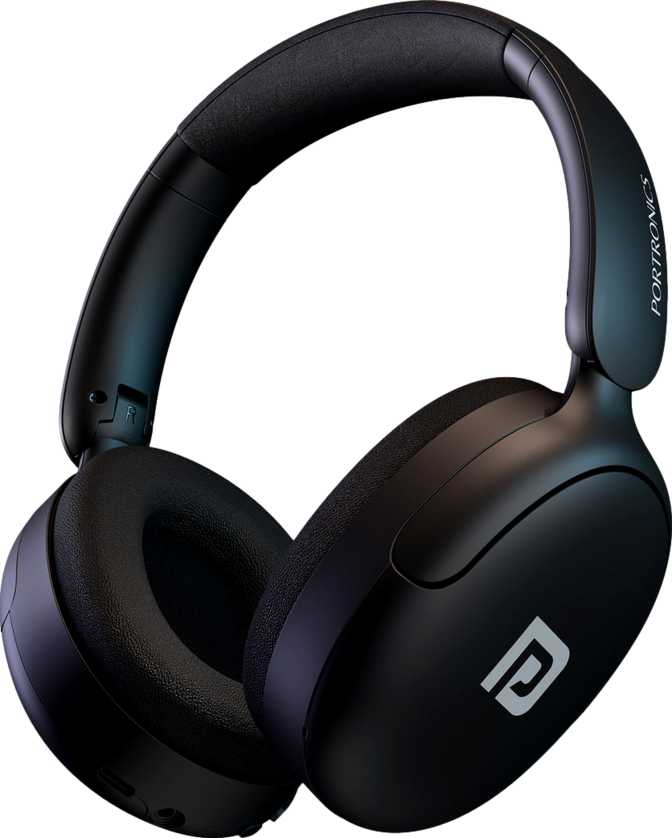
The M7 opts for an over-ear, closed-back design — a deliberate choice that shapes nearly every aspect of the listening experience. Closed-back earcups seal around the ear rather than sitting on top of it, which serves two purposes: they keep your audio in and external noise out. For anyone gaming in a shared space or commuting, this matters immediately.
There is no RGB lighting on the M7. For some, that is a dealbreaker; for many others, it is quietly welcome. The headset looks like something you would feel comfortable wearing in a coffee shop or at a library — not a beacon advertising your hobby. The aesthetic leans practical and clean.
The cable situation is handled thoughtfully. The M7 uses a detachable cable, meaning the most failure-prone part of any wired headset can be replaced rather than forcing you to retire the entire unit. The cable itself is tangle-free, which sounds minor until you have spent thirty seconds sorting out a knotted mess before a session.
On-device controls sit on the earcup, keeping adjustments within reach without requiring you to fumble for an in-line remote mid-game. There is no in-line control panel on the cable itself — all management happens directly on the headset.
Physical Highlights
- Fit Style
- Over-ear (circumaural)
- Back Design
- Closed-back — passive isolation
- Cable
- Detachable and tangle-free
- RGB Lighting
- None — clean, minimal look
- Controls
- On-device earcup panel
Sound Performance: What Those Drivers Actually Deliver
Frequency Range in Plain Terms
The M7 covers the full range of human hearing — from the lowest bass frequencies a person can perceive all the way to the upper ceiling of high-frequency detail. In practical terms, this means it is specced to reproduce everything from deep cinematic rumbles and bass-heavy game soundtracks to the crisp high-end detail of footsteps on gravel or the shimmer of hi-hats in music.
Whether the tuning actually flatters all of that depends on driver quality and cabinet acoustics, but the range itself is there on paper.
Driver Configuration
Each earcup houses a single 40mm driver — a size that sits comfortably in the mainstream of gaming headset design. Larger drivers are not automatically better; a 40mm driver with well-executed engineering routinely outperforms a larger driver in a poorly designed enclosure.
The stereo configuration divides audio between left and right channels, which is the baseline expectation for spatial awareness in gaming — knowing where a sound is coming from without requiring software processing tricks.
Active vs. Passive Noise Reduction
The M7 does not feature active noise cancellation (ANC). ANC uses microphones and signal processing to detect and counteract ambient noise in real time, and its absence means the M7 cannot actively suppress the sound of a running fan, street traffic, or office chatter. However, the closed-back design does provide passive noise isolation — the physical seal of the earcups blocks a meaningful amount of ambient sound simply through barrier and padding.
Passive Isolation (Present)
Works without any power draw. Does not introduce the slight audio artifacts some ANC systems create at certain frequencies. Effective in quiet to moderately noisy environments.
Active Noise Cancellation (Absent)
Not included. Dynamic, louder, or lower-frequency ambient noise that physical sealing cannot fully block will remain audible. Heavy commuters or open-plan office workers will notice this.
Surround Sound Note: There is no virtual surround sound processing and no spatial audio support. Audio output is conventional stereo. Buyers seeking simulated 3D soundscapes through proprietary software will not find that here natively.
Bluetooth Audio Quality: The Codec Caveat
Here is where technically minded buyers need to pay close attention. The M7's Bluetooth implementation does not support aptX, aptX HD, LDAC, LDHC, AAC, or LE Audio. This means audio over Bluetooth is transmitted using the SBC codec by default — the universal fallback standard. SBC is adequate for general listening and gaming, but it introduces more compression and slightly higher latency than premium codecs.
| Bluetooth Codec | Supported | Practical Implication |
|---|---|---|
| SBC (default) | Universal fallback — functional for all uses | |
| AAC | Better quality for Apple devices — not available | |
| aptX / aptX HD | Lower latency and higher fidelity — not available | |
| LDAC | Hi-res audio streaming — not available | |
| Bluetooth LE Audio | Next-gen efficiency and Auracast — not available |
Practical tip: For gaming, always use the 2.4GHz wireless connection — it bypasses Bluetooth entirely and delivers gaming-grade low latency. Bluetooth is best reserved for casual listening and Switch handheld sessions where the dongle cannot be plugged in.
Connectivity: Three Ways to Connect, One Clear Winner
The M7's most distinctive feature is its triple-connection flexibility. Each mode serves a different scenario, and understanding which to use when is the key to getting the most out of this headset.
| Connection Type | Best Used For | Latency Profile |
|---|---|---|
| Primary2.4GHz Wireless | PC and PlayStation gaming | Very Low — gaming-grade |
| SecondaryBluetooth 5.4 | Mobile devices, casual listening, Nintendo Switch handheld | Moderate — acceptable |
| Fallback3.5mm Wired | Any device, zero-latency, battery-dead scenarios | Zero — analog signal |
2.4GHz Wireless
Uses a dedicated USB dongle to communicate at very low latency. This is the connection mode to use for PlayStation and PC whenever a USB port is available. Audio sync is tight enough for competitive gaming.
Bluetooth 5.4
Offers improved stability and connection range over older Bluetooth versions — up to 10 meters in open space. Best for Nintendo Switch in handheld mode and casual music listening. Audio quality ceiling is limited by codec support.
3.5mm Wired
A genuine safety net. Plugs into a plane seat controller, older console, or any analog source. Remains fully functional even when the battery is completely drained. USB-C charging while using the 3.5mm jack is possible simultaneously.
Microphone: Detachable and Functional
The M7 includes a single removable microphone. Detachability matters here for two reasons: first, it keeps the headset socially presentable when used for music or media without turning you into someone wearing a headset in a café. Second, it removes a fragile component when not in use, reducing long-term wear.
With a single microphone element, the M7 does not offer the beam-forming or dual-mic noise rejection found in higher-end gaming headsets. Voice pickup will be functional for gaming and calls, but background noise rejection will be more limited compared to multi-mic setups. Buyers who spend significant time in voice chat during competitive multiplayer should factor this in.
- Removable — keeps headset versatile outside gaming
- Protects mic from damage when stored away
- Single mic — limited background noise rejection vs. dual-mic alternatives
Battery Life: 50 Hours Is the Headline — Here's the Reality
Fifty hours of stated battery life is a genuinely large number for a wireless headset. To put it in concrete terms: if you use the M7 for four hours every day, a full charge would theoretically last nearly two weeks before you need to reach for a cable. Casual users who listen for eight to ten hours a week could go more than a month between charges.
Casual User
8–10 hrs/week
~5 weeks
per charge
Regular Gamer
~4 hrs/day
~12 days
per charge
Heavy User
8+ hrs/day
~6 days
per charge
Real-world caveat: Manufacturer battery estimates are typically measured under controlled conditions — moderate volume, no microphone use, favorable wireless conditions. Real-world use at higher volumes or with the mic active will reduce playtime, though the 50-hour buffer is large enough that most users will still comfortably outlast any single session.
Platform Compatibility: PC, PlayStation, and Switch
The M7 is explicitly designed for three ecosystems: PC, PlayStation, and Nintendo Switch. Xbox is not listed in the compatibility specification — a detail worth flagging for console buyers. The absence of Xbox from the compatibility list is likely related to Microsoft's controller-based audio routing approach and 2.4GHz dongle support constraints. Buyers on Xbox should verify compatibility independently before purchasing.
PC
2.4GHz dongle provides low-latency primary connection. Bluetooth and 3.5mm available as alternatives.
PlayStation
2.4GHz dongle connects via USB. Low latency, full feature support for gaming sessions.
Nintendo Switch
Bluetooth 5.4 handles handheld mode. 3.5mm wired available for docked mode or Switch Lite.
Who the Muffs M7 Is For — And Who It Is Not
- You play primarily on PC and/or PlayStation and want a single headset that handles both without swapping or re-pairing
- You resent frequent charging and want a headset that lasts through multi-day use without reaching for a cable
- You want a clean, RGB-free look that works outside of a gaming context — at a desk, in a café, or during a commute
- You play in moderately quiet home environments where passive isolation is sufficient
- You value the reliability of a detachable cable as a backup to wireless
- You game on Xbox and expect full native compatibility out of the box
- You commute or work in loud environments and require active noise cancellation to focus
- You prioritize high-fidelity Bluetooth audio and want codec support like LDAC or aptX for music listening
- You want virtual surround sound for immersive single-player titles
- You stream or communicate frequently and need multi-mic noise rejection for cleaner voice capture
How the M7 Compares to Its Natural Competitors
At this connectivity and battery level, the M7 competes in a crowded mid-range wireless gaming headset category. The table below frames where it sits relative to typical alternatives.
| Feature | Muffs M7 | Typical Competitor A | Typical Competitor B |
|---|---|---|---|
| Wireless Modes | 2.4GHz + BT + 3.5mm | 2.4GHz + 3.5mm | BT + 3.5mm |
| Battery Life | ~50 hours | ~20–30 hours | ~35 hours |
| Active Noise Cancellation | Some models | ||
| Advanced BT Codecs | Varies | Varies | |
| Microphone Type | Single, removable | Fixed boom | Fixed boom |
| RGB Lighting | None | Often | Varies |
| USB-C Charging | Varies |
The M7's differentiators are its triple connectivity and battery endurance. Where it concedes ground is in audio codec support and microphone sophistication.
Honest Assessment: Strengths and Weaknesses
The M7 gets several things genuinely right. Fifty hours of battery life is not a spec that exists for marketing alone — it changes how you think about the headset. You stop tracking charge cycles. You stop keeping a cable nearby as a contingency. That freedom is real. The triple-connection design is similarly practical: the 2.4GHz and Bluetooth modes cover different devices, and the 3.5mm jack catches everything else.
The closed-back, over-ear design with passive isolation is a sensible choice for the target audience — it creates a quieter listening environment without the cost and complexity of ANC. The detachable microphone and cable both extend the headset's lifespan by protecting its most vulnerable components. USB-C charging in this category is an expectation, and the M7 meets it.
Where the M7 shows its compromises: the Bluetooth audio ceiling is lower than it should be for a headset carrying Bluetooth 5.4. Having the latest Bluetooth version without any advanced audio codec support means you gain connection stability but not audio quality improvements. Casual Bluetooth listeners will not notice; audio-conscious users will. The single microphone also limits voice clarity in noisier environments.
The one-year warranty is standard rather than generous. The lack of a travel bag means the M7 is not particularly optimized for portability, though the wired fallback option makes it more travel-capable than all-wireless alternatives.
Common Questions Before You Buy
Final Verdict
Muffs M7: Recommended for Multi-Platform Home Gamers
The Muffs M7 is a well-considered mid-range headset built around practical flexibility rather than spec-sheet spectacle. Its combination of 2.4GHz wireless, Bluetooth 5.4, and 3.5mm wired connectivity makes it genuinely versatile across PC, PlayStation, and Switch — and the 50-hour battery rating means you can use it across many sessions without charging anxiety. The closed-back, no-RGB design skews toward everyday wearability over gamer branding.
The compromises are real but clearly bounded. The Bluetooth audio quality is limited by codec support, the single microphone is functional rather than exceptional, and the absence of ANC makes it a home-first headset. Buyers who understand those trade-offs and do not need them addressed will find the M7 delivers reliably on what it promises.
Buy the Muffs M7 if:
You want a multi-platform wireless headset with long battery life and flexible connection options, and you primarily game on PC or PlayStation in a home environment.
Look elsewhere if:
You need active noise cancellation, high-quality Bluetooth audio codecs, or a multi-microphone setup for streaming or professional voice communication.