JVC HA-FR29UC USB-C In-Ear Headset: A Full Real-World Review
HeadphonesMost people don't think about their earphones until the ones they have stop working. Then they search, get overwhelmed by dozens of options with wildly varying prices, and eventually wonder: do I really need to spend a lot to get something decent? The JVC HA-FR29UC exists precisely to answer that question — and its answer is a firm, qualified no.
This is a wired, in-ear headset built around a USB Type-C connector, aimed at everyday listeners and remote workers who want reliable audio and basic call controls — without dealing with batteries, pairing rituals, or bloated companion apps. Whether that's enough depends entirely on what you actually need, and this review covers exactly where it delivers and where it doesn't.
- USB-C wired — no charging, ever
- 10mm neodymium dynamic drivers
- Built-in mic with physical mute
- Inline control panel on cable
- Passive noise isolation
- No ANC, no water resistance
- No wireless, no spatial audio
Build and Design: Simple, Practical, No Surprises
In-ear form factor · Closed-back · Tangle-free cable · USB-C connector
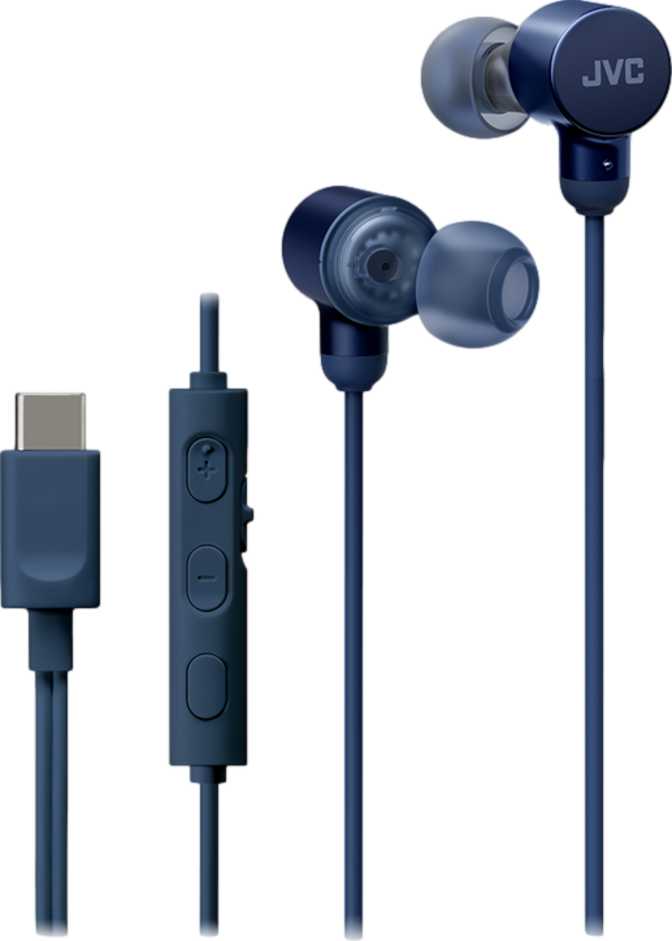
The HA-FR29UC follows a straightforward in-ear form factor — the kind that rests inside the ear canal with soft tips rather than sitting on top of the ear. This isn't a lifestyle product with aggressive styling; it's a functional tool with clean, understated aesthetics that won't look out of place in a professional video call or a busy open-plan office.
One of the more immediately useful design choices is the tangle-free cable. Anyone who has ever pulled a pair of earphones out of a bag only to spend three minutes unraveling them will understand exactly why this matters. The cable's construction resists the knot-forming chaos that plagues cheaper wires, making it a reliable grab-and-go option.
The connector is USB Type-C, which matters more than it might first seem. It plugs directly into modern laptops, Android phones, tablets, and desktop computers without needing a separate DAC dongle or adapter — the digital-to-analog conversion happens inside the earphone itself. For anyone burned by the omission of a headphone jack on their device, this is a direct, no-fuss solution.
One honest note on durability: there is no listed water or sweat resistance. These earphones are not built for gym sessions, outdoor runs in unpredictable weather, or sweaty commutes. Keep them for desk use, transit listening in dry conditions, and calls — that's where they're designed to live.
Sound Quality Explained
10mm neodymium drivers · Full 20Hz–20kHz frequency range · Passive isolation
Driver and Magnet Setup
At the heart of each earpiece is a 10mm dynamic driver — a circular element that physically moves air to produce sound. Ten millimeters is a well-established, proven size in the in-ear category: large enough to move meaningful amounts of air for decent low-end body, yet compact enough to sit comfortably in a standard ear canal. The drivers are powered by neodymium magnets, a rare-earth material that delivers stronger magnetic fields in a smaller physical footprint than older ferrite alternatives. In practical terms, this means the driver responds faster and more accurately to audio signals — contributing to cleaner overall performance relative to what a budget price point might otherwise suggest.
Frequency Coverage
The earphones reproduce sound across the full range of human hearing — from the lowest bass notes a person can detect to the highest treble frequencies most adults can perceive. This complete coverage means you won't encounter artificial roll-offs at either end of the spectrum. Bass-heavy music won't feel truncated, and the shimmer on acoustic guitar strings or high-hat cymbal detail in jazz recordings won't disappear into silence. At this driver tier, expect a reasonably balanced sound with adequate bass presence and clear mids — the tuning is likely tilted toward accessibility rather than audiophile precision, which is entirely appropriate for the intended audience.
Passive Noise Isolation
Without any powered noise-cancellation circuitry, these earphones rely on physical seal and fit to block external sound. When seated correctly in the ear with the right-sized tip, the silicone creates a barrier that meaningfully reduces ambient noise — office chatter, keyboard clatter, air conditioning hum — by physically blocking the ear canal. This works well for moderate environments. In extremely loud spaces, the isolation will be incomplete, but for most indoor settings, it does the job without requiring you to charge anything or toggle a single setting.
Call and Communication Features
Single microphone · Physical mute control · Inline panel · Full headset capability
Microphone and Mute Control
A single built-in microphone handles voice pickup for calls and voice assistant interactions. It doesn't use digital signal processing to actively filter out room noise behind your voice, so in a quiet environment, call quality will be perfectly adequate — but in noisier settings, the person on the other end may hear some background sound alongside your voice.
The mute function stands out here. Rather than relying on a software mute buried inside a video call app, the inline control panel gives you a physical mute option directly on the cable. For anyone doing frequent calls, this single feature prevents the awkward scramble to find the right button on screen when you need to silence yourself quickly.
Inline Control Panel
The control panel sits on the cable at a comfortable distance from the earpiece — close enough to reach without looking, far enough to avoid accidental presses. From this panel, you can manage playback, handle incoming calls, and activate the mute function. The tactile, immediate access matters more during calls than many buyers initially anticipate.
The HA-FR29UC can fully function as a headset — handling both audio output and microphone input simultaneously. This is the minimum requirement for remote work calls, and it meets it cleanly. Plug it in and your device recognizes it instantly; no special setup, no companion app.
Who This Earphone Is For — and Who Should Look Elsewhere
Match your real-world use case before committing
- Remote workers on a budget who need a reliable USB-C headset for video calls without spending on premium hardware
- Students attending online classes from laptops or tablets with USB-C ports
- Commuters with modern phones who want a wired option without the ongoing charging obligations of wireless earbuds
- Office workers who want something simple, predictable, and low-maintenance for desk listening and occasional calls
- Backup earphone users who need a trustworthy spare to keep in a bag or desk drawer
- Fitness and outdoor use: no moisture resistance whatsoever makes this a poor companion for workouts, runs, or any situation involving sweat or rain
- Audiophiles and critical listeners: the driver setup prioritizes accessibility over precision — dedicated enthusiasts will want more advanced configurations
- Frequent callers in noisy environments: the standard microphone picks up background noise alongside your voice — a headset with active mic noise suppression serves better in open offices
- Spatial audio or gaming enthusiasts: no surround processing rules this out for immersive gaming audio or cinematic experiences
- Non-USB-C device users: Lightning-port iPhones, Micro-USB Android phones, and analog-only audio outputs are all incompatible
How It Compares to the Alternatives
JVC HA-FR29UC vs budget Bluetooth earbuds vs budget 3.5mm wired earphones
| Feature | JVC HA-FR29UC | Budget BT Earbuds | Budget 3.5mm Earphones |
|---|---|---|---|
| Connection Type | Wired USB-C | Wireless Bluetooth | Wired 3.5mm |
| Charging Required | No | Yes (daily/weekly) | No |
| Device Compatibility | USB-C devices only | Universal (Bluetooth) | 3.5mm jack devices only |
| Audio Latency | Near-zero (wired) | Noticeable (Bluetooth) | Near-zero (wired) |
| Mic Quality | Standard single mic | Varies; often multi-mic | Basic, often none |
| Passive Noise Isolation | |||
| Active Noise Cancellation | Rarely at this price | ||
| Physical Mute Button | Yes (inline) | Varies | Rarely |
| Setup Required | Plug and play | Pairing required | Plug and play |
The clearest advantage over Bluetooth earbuds at a comparable price is the complete elimination of audio latency and battery management. Wired USB-C delivers audio instantaneously — there is zero dead-battery risk, and no lip-sync drift on video calls.
Strengths and Weaknesses: An Honest Assessment
The USB-C connection makes the HA-FR29UC immediately compatible with the devices most people actively use today, requiring zero configuration. There's no driver installation, no Bluetooth handshake, no app to download — you plug it in and it works. That reliability, repeated day after day, is genuinely underrated.
The tangle-free cable addresses a frustration that sounds minor until it becomes a daily annoyance. The inline mute is a thoughtful inclusion that competing budget options frequently skip — and for remote workers on regular video calls, it's not a convenience, it's a practical necessity.
The audio foundation is legitimate. The complete frequency range coverage with neodymium-backed 10mm drivers means this isn't a placeholder product; it's built to actually sound reasonable and handle the job it's designed for.
The absence of any water or sweat protection is a real restriction that limits where and how you can use it. This isn't a minor caveat — it effectively rules out an entire category of everyday situations that modern earphones are increasingly expected to handle without complaint.
The standard microphone will disappoint anyone who regularly takes calls in noisy environments. There's no spatial audio, no ambient sound mode, and no ear-detection to pause playback — features that have become common expectations across the category, even at budget price points.
Critically, the listed warranty period offers buyers no stated coverage. That's a meaningful factor for a product intended for daily professional use. If after-purchase reliability and support matter to you, factor this gap explicitly into your decision.
Answers to Common Buyer Questions
Real questions from real buyers before they commit
Final Verdict: A Solid Plug-and-Play Headset for the Right User
The JVC HA-FR29UC doesn't try to be everything. It's a wired USB-C in-ear headset built for convenience, compatibility with modern hardware, and reliable daily performance — without the overhead of charging or pairing. For a remote worker who needs a dependable desk headset, a student who wants something simple for online classes, or anyone who has given up on wireless earbuds that die mid-call, it delivers exactly what it promises.
Buy This If...
- Your primary device has a USB-C port
- You work primarily from a desk or fixed location
- You want zero charging and zero setup complexity
- Your call environments are reasonably quiet
Pass on This If...
- You exercise or use earphones outdoors in variable conditions
- You regularly take calls in noisy, open environments
- You need spatial audio or immersive gaming sound
- You need compatibility across multiple connector types
For buyers whose use case matches the first profile, the HA-FR29UC is a practical, low-friction choice that respects your time and keeps things genuinely simple. The absence of warranty coverage is a legitimate concern worth factoring in — but the core product delivers on its stated purpose without pretense.