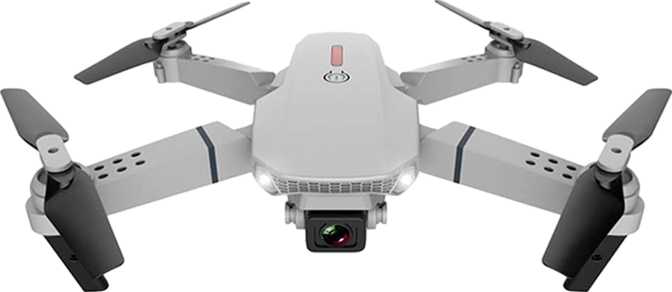
Holy Stone HS790 Review: An Honest Look at the 60-Minute Drone
DronesThe consumer drone market has a crowded middle — dozens of models promising great cameras and solid performance at accessible prices, yet rarely delivering on all fronts. The Holy Stone HS790 enters this space with a specification set that stands out in a few very specific, meaningful ways. One number in particular — its claimed maximum flight time — deserves serious attention, because it fundamentally changes the character of what this drone can do for you. This review breaks down exactly what you get, what you are giving up, and whether the HS790 earns a place in your gear bag or your regret pile.
Design and Build: Compact, But Not Featherlight
The HS790 folds into a footprint similar to a large smartphone when packed, making it genuinely portable without requiring a dedicated backpack. Unfolded, it spans 249mm wide — a size class that puts it in the same visual territory as mid-range foldable drones from well-known brands. Its 92mm profile keeps it flat and aerodynamically stable in the air.
At 377 grams, the HS790 sits above the critical 250-gram regulatory threshold that governs drone rules in the United States, the European Union, and several other jurisdictions. In the US, FAA registration is required before flying outdoors. In Europe, it triggers operator registration and operational restrictions in urban areas. This step is quick and low-cost, but it is a legal requirement before your first flight.
| Width (unfolded) | 249 mm |
|---|---|
| Depth (unfolded) | 205 mm |
| Height | 92 mm |
| Weight | 377 g |
| Operating Temperature | 0°C – 40°C |
| FAA Registration | Required |
Flight Performance: The 60-Minute Claim Takes Center Stage
Most consumer drones at this price deliver 20 to 35 minutes of real-world air time. Even at a conservative 70–80% efficiency estimate, the HS790 offers 42 to 48 minutes per charge — enough to meaningfully change what you can accomplish in a single session.
Range and Speed
9 km Signal Range
Signal stability far exceeds what legal line-of-sight flying requires. Treat this as engineering headroom — a confidence indicator rather than an operational target. Most regulatory frameworks limit usable range to 500–800 meters of visual distance.
43 km/h Top Speed
A moderate, practical ceiling adequate for smooth aerial photography, steady tracking shots, and recreational flight. This drone's character prioritizes stability and endurance over sport-mode agility, which suits most of its intended audience well.
GPS, Stability, and Navigation
GPS is fitted as standard, enabling the HS790 to hold a fixed position in space without constant stick input — locking in place even in light wind so photos come out sharp. The onboard compass and accelerometer work alongside GPS to give the drone a complete picture of its orientation, movement, and heading. For beginners, this translates to noticeably more predictable, stable behavior. For experienced pilots, it is the foundation that makes precise manual flying and automated modes reliable.
Camera System: 4K Video, 48-Megapixel Stills, and Cinematic Options
48 MP Still Photography
Images contain enough detail to support significant cropping in post — valuable when repositioning the drone for a better angle is not practical. Files hold up at large-format print sizes well beyond digital publication needs.
In-camera panorama stitching merges overlapping frames automatically, removing the need for manual assembly in editing software — a practical feature beginners will find genuinely useful.
4K Video with Cinema Mode
4K at 30fps is the current baseline for footage that holds up on high-resolution displays. The 24fps cinema mode — the frame rate most closely associated with cinematic storytelling — is uncommon at this price point and a meaningful creative tool for content creators.
FPV Camera and Storage
A separate FPV camera provides a real-time feed for navigation — distinct from the main camera. It aids orientation when the aircraft is far enough away that reading its attitude from the ground becomes difficult.
The microSD card slot accepts external storage for unlimited recording capacity. Use a UHS Speed Class 3 (U3) or V30 card for 4K to prevent recording errors.
Smart Features and Automation
Intelligent Flight Modes
Automated orbit paths, follow modes, and pre-programmed trajectories keep the camera aimed at a subject while the drone moves in a controlled arc. Beginners get cinematic results without practiced skill; experienced pilots can focus entirely on the shot.
Return to Home
Triggered manually, by critically low battery, or by signal interruption, RTH navigates back to the recorded takeoff point and lands automatically. GPS provides the accuracy that makes this reliable — it is the single most effective safety feature in the consumer drone category.
Integrated Controller Display
Battery level, altitude, distance, and signal status are visible directly on the remote — readable in bright outdoor conditions without managing a phone mount or notification interruptions. Smartphone connectivity is supported but not required to fly.
Battery Endurance in Real-World Terms
The removable battery is a practical multiplier. Unlike drones with sealed packs — which ground you completely while recharging — the HS790 lets you swap to a charged spare in seconds. Your downtime between flights becomes swap time, not charging time.
Battery weight is one of the primary limiting factors in drone endurance. The HS790's capacity has been tuned to push flight time while keeping total aircraft weight manageable — a genuine engineering balance rather than a marketing claim built on test-chamber conditions.
Who This Drone Is For — and Who Should Look Elsewhere
The HS790 Is the Right Choice If...
You are a hobbyist frustrated by short battery life — the HS790's endurance changes the experience from battery management to actual flying.
You create content and want 4K footage with a cinematic 24fps option without investing in professional-grade drone systems.
You document large properties or landscapes where extended flight time and high-resolution stills enable comprehensive coverage on a single charge.
You want GPS-stabilized flight, intelligent automation, and safety features that lower the skill barrier for getting confident, quality results quickly.
Consider Alternatives If...
You fly in regions where temperatures regularly drop below freezing — the HS790's hard lower operating limit will ground you on the coldest days.
You rely on obstacle detection. This drone has none. It will not stop, slow down, or warn you about trees, power lines, or buildings. Full collision avoidance is always the pilot's responsibility.
You are a professional videographer requiring Log color profiles, larger sensors, higher frame rates, or gimbal-stabilized footage.
You want a sport or speed-focused flying experience — this drone's character is built around stability and endurance, not agility.
How the HS790 Compares to the Competition
| Feature | Holy Stone HS790 | Typical Competitor (This Tier) |
|---|---|---|
| Max Flight Time (Claimed) | 60 minutes | 20–35 minutes |
| Camera Resolution | 48 MP / 4K 30fps | 12–48 MP / 4K 30fps |
| 24fps Cinema Mode | Yes | Uncommon at this price |
| Obstacle Detection | Not included | Occasionally, at higher price points |
| GPS + Return to Home | Yes | Standard at this tier |
| Integrated Controller Display | Yes | Sometimes omitted |
| Removable Battery | Yes | Not always included |
| In-Camera Panorama | Yes | Common at this tier |
| Weight / FAA Registration | 377g — Registration Required | Varies; sub-250g models avoid registration |
Strengths and Weaknesses, Stated Honestly
Where the HS790 Earns Its Place
The HS790's strongest argument is flight time, and it is a compelling one. For outdoor creators and hobbyists who have experienced the frustration of packing up a shoot just as the light turns golden — because the battery hit 20% — a drone rated for an hour of flight represents a qualitatively different tool. Add a spare battery and you have a workflow genuinely unconstrained by endurance anxiety.
The camera package is genuinely capable for its class. High-resolution stills, 4K video, in-camera panorama assembly, and a real 24fps cinema mode add up to a system that produces footage you can publish and be satisfied with — content that can be edited into something that looks considered and intentional, not footage that merely qualifies as "acceptable for a consumer drone."
The integrated controller display removes a friction point that smartphone-dependent remotes introduce, and the removable battery design means the extended flight window is genuinely exploitable in the field — not just a spec on paper.
Where It Asks for a Real Concession
The absence of obstacle detection is not a minor footnote. At 377 grams moving at up to 43 km/h, this drone will not stop for a tree branch, a roofline, or another object that enters its path. Intelligent flight modes and RTH create an impression of automation that could lull an inexperienced pilot into a false sense of security. Active collision avoidance never kicks in, because it does not exist. Every flight in a complex visual environment requires full, sustained pilot attention.
The 75-degree field of view will feel limiting to pilots familiar with wider-angle cameras, and the hard 0°C operating floor closes off cold-weather flying entirely — a non-trivial restriction for much of the world's population and something no firmware update can address.
Answers to the Questions Real Buyers Search For
A Strong Drone for the Right Pilot
The Holy Stone HS790 makes a specific, honest argument: if flight endurance matters to you, this drone offers more of it than almost anything competing in its price class. The camera is capable for content creation and serious hobbyist use, the smart features are genuinely useful, and the removable battery design makes extended sessions practical with minimal preparation.
The absence of obstacle detection is the one factor that defines whether this drone is right for you. For pilots who understand — and accept — that full collision avoidance responsibility rests with them, the HS790 is a competitive and high-value choice. For complete beginners who want a forgiving, self-protective system, that gap deserves careful consideration.
If you are a confident recreational pilot, a content creator who wants 4K footage and cinematic frame rates without a professional-tier budget, or a hobbyist who has simply been frustrated by short battery life on other drones, the HS790 earns a clear recommendation. Fly it with informed expectations and it is very likely to deliver genuine value.
- Exceptional flight endurance
- Capable 4K camera with cinema mode
- GPS + RTH safety system
- Removable battery with swap workflow
- No obstacle detection
- Narrow 75° field of view
- Cannot fly below 0°C