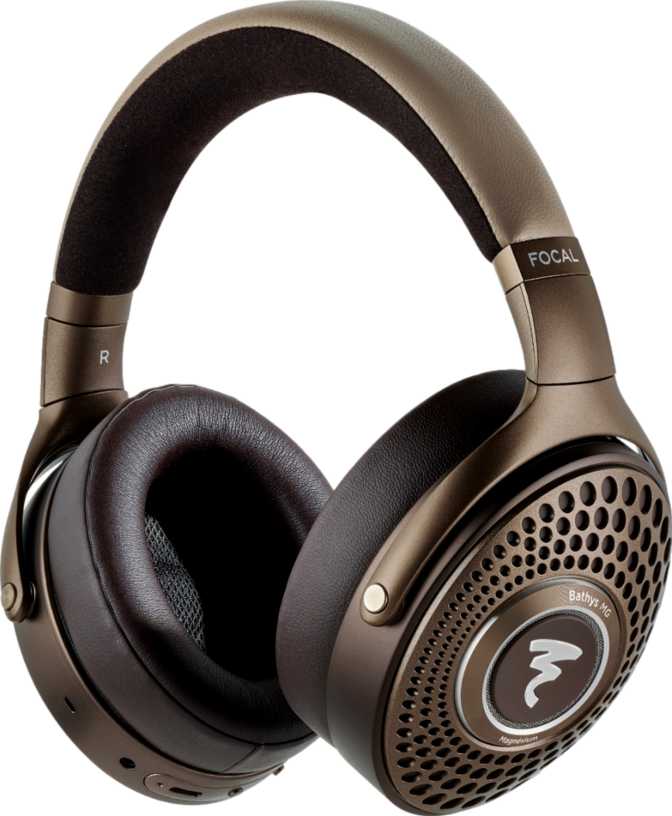
Focal Bathys MG Full Review: Sound Quality Before All Else
HeadphonesWhere Audiophile Heritage Meets Wireless Freedom
Focal has spent decades building some of the world's most respected speakers and wired headphones from its base in Saint-Étienne, France. The challenge for any such company entering the wireless ANC market is always the same: can genuine acoustic integrity survive the compromises that Bluetooth, battery, and circuitry typically impose? The Bathys MG is Focal's answer — and it's a more deliberate one than most competitors manage.
This is not a headphone built to win a feature comparison chart. It concedes ground on several specifications that rivals at similar prices include as standard. What it does instead is make a case — audible and measurable — that the listening experience should lead every other decision. Whether that trade-off suits you depends entirely on what you actually need from a premium wireless headphone.
Key Specifications
| Type | Over-ear, closed-back |
| Connectivity | Wireless + Wired |
| Bluetooth | 5.2 — aptX Adaptive |
| Battery Life | 30 hours (ANC on) |
| Charge Time | ~90 minutes via USB-C |
| Driver | 40mm magnesium alloy |
| Frequency Range | 10 Hz – 22,000 Hz |
| Impedance | 32 Ohms |
| Multipoint | 2 devices simultaneous |
| Weight | 350 g |
Design and Build
Premium construction that earns its weight
Over-ear headphones that fold are common at the budget end of the market. Premium headphones that fold without feeling like they've been compromised are considerably rarer. The Bathys MG manages it cleanly — the earcups collapse inward and the headphone drops into the included travel case without requiring any spatial negotiation. This is a genuinely travel-ready design, not a nominally portable one.
The weight sits at the substantive end of the category — this is a headphone that makes its presence felt on your head. Focal offsets this with earcup padding and headband geometry designed to distribute pressure carefully, but users who are particularly sensitive to clamping force should audition before committing. Long-haul flights and full work days are achievable; they'll simply require more conscious adjustment than lighter alternatives demand.
Aesthetically, the Bathys MG is characteristically Focal: restrained, European, purposeful. It avoids the shiny-plastic vocabulary that makes so many wireless headphones look like fashion items rather than listening instruments. The materials convey seriousness without displaying it loudly.
The detachable cable — long enough for typical seated use without trailing awkwardly — is tangle-resistant by construction and enables fully wired operation whenever you want it. The closed-back earcup design provides a degree of physical acoustic blocking independent of any active electronics, which matters before we even get to the noise-cancellation circuitry.
Physical at a Glance
- Foldable earcups with included travel case
- Tangle-free detachable cable
- Closed-back passive acoustic isolation
- 350g — heavier than most wireless rivals
- No water or sweat resistance rating
At this price level, the complete absence of any ingress protection is a genuine gap — particularly for commuters who take these outdoors in unpredictable weather.
The Drivers and What They Mean for Sound
Why magnesium diaphragms matter — and what the technical specs actually tell you
Magnesium Diaphragms: The Core Argument
The "MG" in the Bathys MG's name points to magnesium-alloy driver diaphragms — the thin membranes that physically move air to create sound. Focal applies the same driver material philosophy here that informs its reference-class wired headphones, and the reasoning is straightforward: magnesium is light enough to respond quickly to transient musical signals — the leading edge of a drum hit, the attack of a piano note — and rigid enough to resist the flexing distortions that cheaper materials introduce under dynamic stress.
This matters in a way that spec sheets don't communicate well. The difference isn't a single audible characteristic you can point to and label — it's the cumulative absence of small inaccuracies across the entire frequency range. Instruments sound more like themselves. Spatial cues in recordings are clearer. The experience is more tiring to explain than to hear.
What the Frequency Range Tells You
The Bathys MG's driver reaches below the floor of normal human hearing at its bottom end. That deep bass extension matters not because you'll consciously perceive those sub-bass frequencies, but because a driver capable of reaching that low handles the upper bass and low-midrange with more composure. A driver working near its limits sounds different from one with room to spare.
On the high end, the driver extends slightly beyond the ceiling of typical human hearing. The audible benefit is that the driver operates well within its comfort zone for all audible content — the uppermost registers you can actually hear aren't being repro duced by a driver under strain.
The 32-Ohm Sweet Spot
The 32-ohm impedance serves the Bathys MG's dual-mode nature well: the wireless circuitry drives it efficiently without burning through battery, yet it's high enough that plugging into a dedicated DAC or headphone amplifier via the cable produces audible improvement over a phone's analog output. The wired connection isn't a backup plan here — it's a legitimate alternate listening mode with its own performance ceiling.
Wireless Codec Support
The strengths and one honest gap worth knowing before you buy
What aptX Adaptive Means in Practice
The Bathys MG's flagship wireless codec is aptX Adaptive — Qualcomm's current leading Bluetooth audio specification. aptX Adaptive is capable of carrying high-resolution audio at quality levels that come meaningfully close to a wired connection. If your source device supports it — many recent Android phones do — the gap between this headphone's wireless and wired performance narrows to a degree that would have been difficult to achieve just a few years ago.
AAC support ensures Apple device users get a solid wireless experience within the limits of that codec, which Apple implements more aggressively than most Android manufacturers. Bluetooth 5.2 underpins the wireless connection, with an operational range of around 10 meters in open space — functional for home and office contexts, though some competing products quote longer ranges.
The headphone maintains simultaneous pairing with two Bluetooth sources — your laptop and phone, for example — switching output between them as calls arrive or media plays. There's no NFC tap-to-pair and no fast-pair protocol, so initial connection requires the standard manual Bluetooth discovery process.
Codec Compatibility
| Codec | Support | Quality Tier |
|---|---|---|
| aptX Adaptive | Hi-res capable | |
| aptX | CD-quality wireless | |
| AAC | Good (Apple-optimized) | |
| LDAC | Not available | |
| LE Audio | Not available |
No LDAC Support
Sony's high-resolution wireless codec is absent here. LDAC-dependent Android listeners should verify whether aptX Adaptive meets their specific needs before committing.
Noise Cancellation and Ambient Awareness
Two layers of isolation working in parallel
The Bathys MG approaches isolation from two angles simultaneously. The closed-back earcup creates a physical acoustic barrier that blocks a meaningful portion of environmental sound before any electronics activate. The active noise cancellation layer then generates inverse audio signals to counteract what gets through — particularly the steady, low-frequency drones of aircraft cabins, open-plan HVAC systems, and train carriages that passive isolation handles least well.
Two microphones serve the ANC system and double as voice capture for calls. The voice performance is intelligible in typical indoor environments — meetings, calls from quiet offices — though users who regularly take calls in very loud locations may find it less confident than dedicated communications headsets.
Ambient sound mode lets external audio into the headphones while music plays, using the microphones to pipe in your surroundings rather than blocking them. It's the feature you activate when an announcement is made, when someone at the desk needs your attention, or when you're navigating an unfamiliar transit system.
Isolation Features
-
Active Noise CancellationElectronic inverse-signal ANC
-
Passive Noise IsolationClosed-back physical acoustic seal
-
Ambient Sound ModeTransparency / hear-through
-
No Auto Ear DetectionMusic continues when headphone is removed
No automatic ear detection means the headphone continues playing when removed. Manual pause becomes a conscious habit you'll need to build — a small daily friction that adds up over time.
Battery Life and Charging
What 30 hours actually means for your week
Thirty hours of wireless playback places the Bathys MG at the capable end of what ANC headphones typically deliver. Translated into a usage pattern: a five-day work week of moderate daily listening — including active noise cancellation — passes comfortably without an intermediate charge. Long international flights in both directions can be completed without ever opening the charging cable.
Charging from empty to full completes in around ninety minutes — genuinely fast given the total capacity. USB-C charging means the Bathys MG draws from the same cable pool as your laptop, tablet, and Android phone. One cable type, multiple devices in your bag.
What the Bathys MG doesn't offer: wireless charging. At this price tier, the absence will frustrate buyers who've built their desk around a Qi charging pad. The wired charging experience is fast and convenient enough that it's not a functional hardship — but it is a missing luxury that comparable competitors have added to their feature set, and it's reasonable to notice.
Power at a Glance
- USB-C universal charging
- Battery level indicator on headphone
- No wireless (Qi) charging
Controls and Everyday Usability
Physical buttons over touch — a deliberate and defensible choice
Physical controls sit on the earcup itself — no inline remote on the cable, no touch surface with a steep learning curve. The on-device control panel handles playback, volume, ANC toggling, and call management. Physical buttons carry a real advantage over touch panels in everyday conditions: you can operate them without looking, they work with gloves, and they don't misfire when you adjust the headband.
The headphone functions as a headset for voice calls. The two-microphone array captures voice for phone calls and video conferences. There's no hardware mute button — something podcasters and heavy video-call users will notice — so muting requires either the software controls on your connected device or the mute function in your conferencing application.
The included cable enables wired use whenever Bluetooth isn't appropriate: inflight entertainment systems, studio monitoring setups, or simply when you prefer to keep the battery conserved. The analog connection bypasses the Bluetooth circuitry entirely, which some listeners prefer for critical listening on capable source equipment.
Feature Checklist
-
On-device physical controlsReliable in all conditions, no learning curve
-
2-device multipoint connectionLaptop and phone paired simultaneously
-
Wired analog connectionBypasses wireless circuitry entirely
-
Noise-canceling dual microphoneCall-ready headset functionality
-
No hardware mute buttonMute via device or conferencing app only
Who Should Buy the Focal Bathys MG
Finding the right owner for a deliberately focused product
Right Fit
-
Audiophile listeners going wirelessYou want wireless ANC without abandoning acoustic quality. This is one of very few headphones that bridges that gap without apology.
-
Frequent long-haul travellersBattery endurance and ANC combine for an exceptional flying experience. The foldable design and travel case make it genuinely packable.
-
Office workers valuing sustained focusANC, 30-hour battery, and call-capable microphone cover everything a full work day demands.
-
Android users with aptX AdaptiveUnlocks the hardware's full wireless performance ceiling. The codec and driver are matched, not mismatched.
Not the Right Fit
-
Apple spatial audio enthusiastsNo spatial audio support, and iPhone users are limited to AAC wirelessly — not the aptX Adaptive ceiling the hardware offers.
-
Gym users and outdoor listenersZero ingress protection means any moisture exposure is a risk. This headphone is designed for controlled, dry environments.
-
LDAC-dependent listenersSony ecosystem users who rely on LDAC will need to verify that aptX Adaptive works for their specific workflow before committing.
-
Weight-sensitive long-wear usersAt 350g, multi-hour sessions require more adjustment than lighter alternatives. An in-person audition is strongly recommended.
Competitive Positioning
How the Bathys MG stands apart — and where rivals close the gap
The major mainstream competitors offer more extensive feature lists, frequently at lower prices. They also tend to lead on ANC aggressiveness, companion app integration, and sensor features. What they don't offer is the acoustic engineering lineage or driver material refinement that Focal brings from decades of high-end transducer development. Buying the Bathys MG means choosing a headphone where "what does this actually sound like?" consistently impresses, and consciously accepting that some adjacent features weren't the priority.
| Comparison Factor | Focal Bathys MG | Typical ANC Premium Rival |
|---|---|---|
| Driver Heritage | Audiophile magnesium | Consumer-optimized materials |
| Wireless Codec Peak | aptX Adaptive | aptX Adaptive or LDAC (varies) |
| LDAC Support | Not available | Often available |
| Spatial Audio | Not supported | Often supported |
| Battery Duration | 30 hours ANC on | Typically 20–35 hours |
| Wireless Charging | Not available | Often included at this tier |
| Auto Ear Detection | Not included | Commonly included |
| Water Resistance | None | Often IPX4 or similar |
| Bluetooth Range | ~10 meters | Often 10–30 meters |
| Foldable + Travel Case | Yes, both included | Varies by model |
| Core Differentiator | Acoustic quality first | Feature breadth |
Strengths and Honest Weaknesses
A balanced view — because credibility depends on it
Where It Excels
The Bathys MG's clearest strength is coherence. Every element of the listening experience — driver material, frequency extension, codec priority — points toward the same goal. The result is a wireless headphone that audiophile listeners can actually respect, not simply tolerate while missing their wired setup.
The aptX Adaptive support is genuinely valuable here. Where other headphones offer high-resolution codec support as a checkbox, the Bathys MG provides hardware that can justify it — the drivers are capable of resolving the additional information that hi-res wireless transmission carries. The codec and the driver are matched, not mismatched.
The battery story is strong without being the headline. Thirty hours is more than most users will consume in a typical week, and a ninety-minute charge time means recovery from empty is never a long wait.
Where It Pulls Back
Spatial audio is absent in a market where several competitors have made it a meaningful part of the experience — particularly for film and gaming. Wireless charging is missing in a product where the buyer is clearly investing seriously.
Auto ear detection — a daily convenience that users accustomed to it on other headphones will notice losing — didn't make the cut. And at 350 grams, multi-hour listening sessions are achievable but less effortless than with lighter alternatives. Focal prioritized materials and acoustic architecture over minimizing mass — understandable, but with physical consequences.
The Bluetooth range of around ten meters is conservative and will occasionally feel limiting in larger workspaces. The complete absence of any water resistance rating leaves the headphone exposed to risks that a product at this price should arguably handle better.
Questions Real Buyers Ask
Answers to what people actually search for before purchasing
Final Verdict
Our considered recommendation
The Focal Bathys MG is a premium wireless headphone that made a choice — sound quality above feature completeness — and executed that choice with conviction. The result is one of the few wireless ANC headphones that audiophile-oriented listeners don't have to mentally bracket as "good for a wireless headphone." It's simply a good headphone that also happens to be wireless.
That clarity of purpose comes with real costs. LDAC is absent. Spatial audio isn't supported. Wireless charging didn't make the cut. Auto ear detection isn't there. The Bluetooth range is conservative. For a product at this investment level, each of those gaps is a legitimate reason to evaluate an alternative.
But if you're the listener who has tried the mainstream options and found yourself wishing the music sounded more like itself — the Focal Bathys MG is built for exactly that complaint. For that buyer, the recommendation is unambiguous. For everyone else, the mainstream ANC competition offers broader feature packages and is easier to recommend without qualifiers.