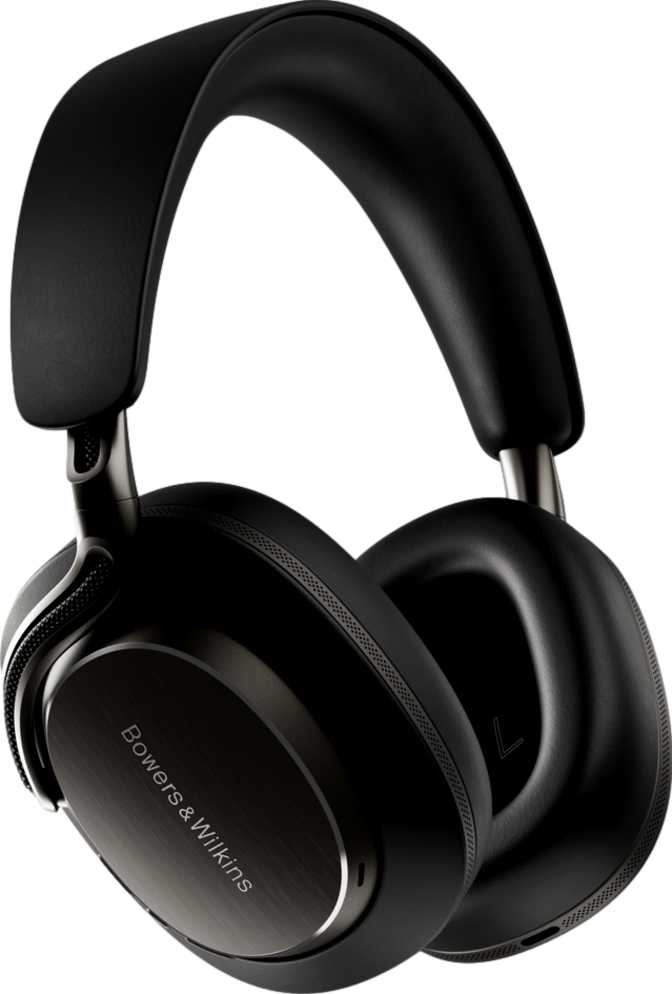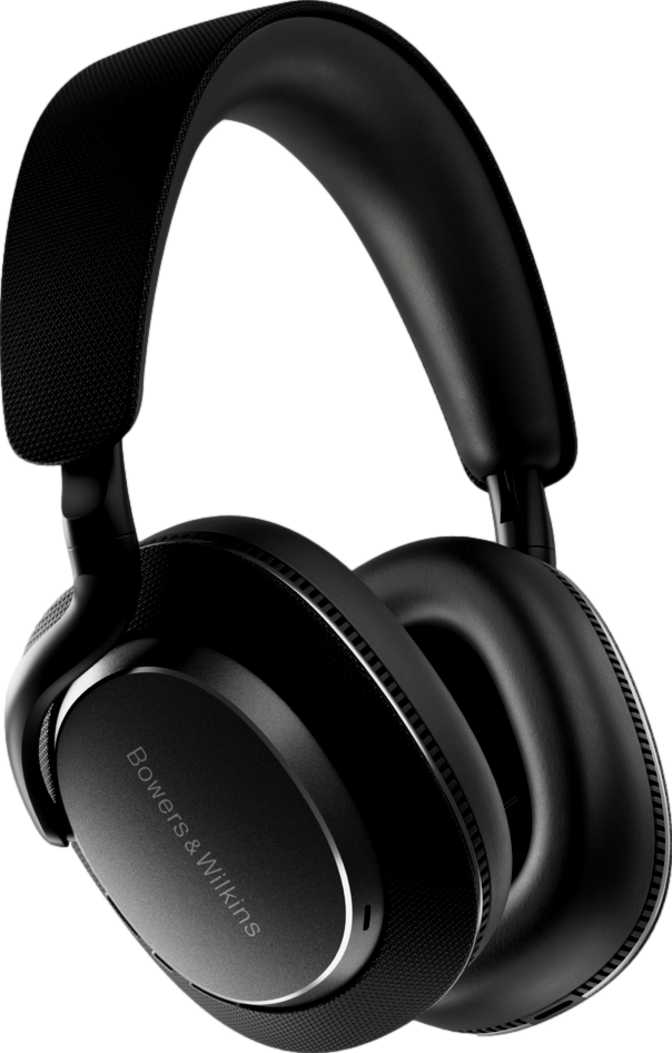
The wireless headphone market at the premium tier has never been more crowded or more capable. What used to separate a great headphone from a good one — better noise cancellation, longer battery, wider codec support — is now table stakes. When Bowers & Wilkins positions the Px7 S3 at the upper end of that market, the question is not whether it checks the standard boxes. It is whether the choices B&W has made, both the inclusions and the deliberate omissions, add up to the right headphone for the way you actually listen.
The answer is yes — for a specific type of buyer. And a clear no for others. This review explains exactly where that line falls.
Specifications at a Glance
Build Quality and Design: Understated and Purposeful
Physical Build · Comfort · Portability
The Px7 S3 is an over-ear headphone, meaning the ear cups enclose the ear entirely rather than pressing against it. That distinction matters for two reasons: acoustic isolation and long-session comfort. When the ear is not being compressed against a foam pad, fatigue sets in later, and the enclosed space around the ear allows for more controlled sound delivery. For extended listening — a long work session, a transatlantic flight, an afternoon at a coffee shop — this design philosophy pays off.
At 300 grams, the Px7 S3 sits in the middle of the premium wireless category by weight. It is noticeably heavier than the lightest competitors in this segment, while remaining lighter than some of the most prestigious options on the market. Three hundred grams worn well — through good headband padding and balanced weight distribution — is a very different experience from 300 grams worn poorly. At this price tier, B&W has clearly invested in the former.
Physical controls sit on the headphone itself, with no in-line remote on the cable. The on-device placement is intuitive once learned and practical for the hands-free adjustments most listeners make regularly.
Portability & Travel
- Folds flat for compact storage in bags and carry-ons
- Travel bag included in the box — your investment is protected out of the gate
- 1.2 m tangle-resistant cable with detachable design for wired fallback on flights
- Wired mode bypasses Bluetooth entirely — works with airplane entertainment systems
What to Be Aware Of
- No water or sweat resistance rating — not suitable for gym use or outdoor exercise
- No in-line cable remote — all control comes from the headphone body
- At 300 g, heavier than the lightest options in this category
No moisture protection. The Px7 S3 is designed for focused listening in controlled environments — commuting, working, traveling — not workouts or outdoor use in unpredictable weather.
Sound Drivers and Acoustic Architecture
Driver Design · Closed-Back Acoustics · Engineering Philosophy
The Px7 S3 uses a 40-millimeter driver — a size that has established itself as the standard for premium over-ear headphones for good reason. Forty millimeters provides enough surface area to move air meaningfully at low frequencies, where smaller drivers begin losing authority, while keeping the driver-to-ear geometry consistent inside an over-ear cup. This is a driver size that engineers know how to use well, and at B&W's level, accumulated knowledge shows in how the driver is tuned rather than just how it is sized.
What stands out technically is that these drivers do not rely on the rare-earth neodymium magnet that essentially every other headphone manufacturer defaults to. Neodymium magnets are the industry standard because they are compact, powerful, and efficient. B&W's departure from that norm in the Px7 S3 is a deliberate engineering decision — not a cost-cutting one. For a company whose speaker division produces reference-grade transducers used in professional and audiophile settings, this kind of material conviction reflects a philosophy about how to get a driver to sound right, not just how to build it efficiently.
The closed-back design locks the acoustic environment in two directions simultaneously. External sound is blocked from reaching the listener by the physical enclosure, and internal sound stays contained — so the person next to you on public transit is not hearing your music. Closed-back headphones inherently provide more passive isolation than open-backed designs, and in the Px7 S3 that physical isolation works in concert with active noise cancellation rather than competing with it.
Closed-Back Design
Keeps sound in and ambient noise out — a natural pressure seal before ANC even switches on
40 mm Driver
Enough surface area for convincing low-end authority without the geometry trade-offs of larger or smaller drivers
Non-Neodymium Magnet
An unconventional choice that signals acoustic conviction — rare at this market level
Active Noise Cancellation and Ambient Sound Mode
ANC Performance · Transparency Mode · Microphone Array
The Px7 S3 deploys an eight-microphone array to manage its acoustic environment — an unusually high count for a consumer headphone. Most products at this price level use two to four microphones for active noise cancellation. The higher microphone count gives the signal-processing system more reference points about the surrounding acoustic environment, which can translate to cancellation that is more accurate, more responsive to directional changes in noise, and less likely to produce the pressure sensation that aggressive ANC sometimes causes.
Whether the implementation fully exploits all eight microphones for cancellation processing, or distributes some of them to call duties, the hardware foundation for strong ANC performance is in place. Eight microphones is a ceiling more than it is a guarantee — but it is a high ceiling.
The ambient sound mode — sometimes called transparency mode — allows environmental audio to pass through the headphones via the microphone array, letting you hear what is around you without removing the headphones. The ability to toggle between full isolation and situational awareness is one of those features that once used regularly, becomes hard to give up.
A hardware advantage over most competitors, providing richer environmental data for cancellation accuracy
Closed-back passive isolation and active ANC work together — not in competition — for deeper quiet
No automatic ear detection. The Px7 S3 will not pause playback when you lift a cup or hang the headphones around your neck. Pausing requires manual input. If you rely on auto-pause elsewhere, this is a workflow adjustment worth knowing about.
Bluetooth Codec Support: The Full Picture — Including a Critical Gap
Wireless Quality · Android vs iOS · Connectivity Range
This section may determine whether the Px7 S3 is the right headphone for you or the wrong one entirely. Read it carefully.
Codec Suite: Where the Px7 S3 Excels on Android
| Codec | Quality Level | What It Delivers | Supported |
|---|---|---|---|
| aptX Lossless | Lossless | Bit-perfect CD-quality audio over Bluetooth — zero compression loss | |
| LDAC | Hi-Res | Up to 3x the bit rate of standard Bluetooth — Sony's high-resolution codec | |
| aptX Adaptive | Hi-Res Adaptive | Adjusts bit rate in real time to maintain quality in congested wireless environments | |
| aptX HD | High Quality | 576 kbps transmission — bridges standard and lossless quality | |
| aptX | Enhanced | A clear step above baseline SBC Bluetooth audio quality | |
| AAC | Standard | Apple's primary Bluetooth codec — the default for all iPhones |
Critical Warning: iPhone Compatibility
The Px7 S3 does not support AAC — the primary high-quality Bluetooth codec used by Apple devices. Without AAC, an iPhone falls back to SBC, the most basic Bluetooth audio codec available. SBC transmits at significantly lower quality than AAC and is dramatically inferior to the lossless and high-resolution codecs that define this headphone's technical identity.
Put plainly: iPhone users pay a premium for a headphone whose central technical advantage is almost entirely inaccessible to them wirelessly. The wired connection via the included cable bypasses this limitation completely and works equally well from any device — but if you wanted a wired headphone, you would not be evaluating wireless models at this price.
Additional Connectivity Details
-
Bluetooth 5.3 — current-generation specification with improved efficiency and connection stability
-
Wired + Wireless — detachable cable enables full Bluetooth bypass for pure wired listening
-
10 m Bluetooth Range — functional for apartments and offices but conservative; walls and obstacles reduce it further
-
No aptX Low Latency — audio-visual sync drift will occur during gaming and video on most setups
-
No NFC / Fast Pair — initial pairing takes slightly longer without tap-to-connect or quick-connect convenience
Battery Life and Charging Realities
Endurance · Charging Method · Real-World Usage
Thirty hours of playback from a single charge is a practical and generous number for this category. Most listeners who wear these four to six hours per day — commuting, working, and winding down — can cover a full working week before needing to recharge. Frequent travelers covering long international flights can complete the journey and its aftermath on a single charge with capacity to spare.
- USB-C charging means the same cable used for most modern devices works here — no proprietary connector to lose
- Built-in battery level indicator keeps you informed of remaining charge before it becomes a problem
- No wireless charging — if you have eliminated USB cables from your setup in favor of charging pads, this headphone requires an exception
- Battery is internal and non-removable — standard for the category, but worth knowing for long-term ownership planning
The absence of wireless charging is a convenience trade-off, not a performance one. USB-C is reliable and fast enough that most listeners will not feel its absence. For those who have fully transitioned to wireless charging pads, it is worth factoring in.
Call Quality and Microphone Performance
8-Mic Array · Call Handling · Notable Absences
The eight-microphone array pulls double duty: powering the ANC system and handling voice calls. The Px7 S3 is a fully capable headset — phone calls and video conferences work through it, not just music playback.
Eight microphones give the system strong raw capability for beam-forming and voice isolation on calls. The noise-canceling microphone designation means the array actively works to suppress background noise for the person on the other end of the call. In an open-plan office or during a commuter call, this matters noticeably.
- 8-mic beam-forming isolates your voice from surrounding noise effectively
- Noise-canceling microphone array suited to busy office and transit environments
- Fully capable headset — phone calls and video conferencing supported natively
- No dedicated mute button on the headphone — muting requires reaching for your device or app
- No in-line cable controls — wired call management requires the source device
Conference call users: the absence of a dedicated mute button is a genuine daily friction point. If you spend significant time in back-to-back meetings, plan to mute through your laptop or meeting application rather than from the headphone itself.
Who the Px7 S3 Is Built For — and Who Should Look Elsewhere
Ideal Buyer Profiles · Use Case Fit · Honest Limitations
An Android Audiophile
If you stream lossless or high-resolution audio from an Android device supporting LDAC or aptX Adaptive, the Px7 S3 delivers a wireless pathway that most competitors cannot match
A Frequent Business Traveler
Week-plus battery, proper ANC, a travel bag in the box, and a wired fallback for in-flight entertainment — this headphone is logistically ready for travel out of the box
A Focused Listener
Someone who treats headphone time as deliberate listening — sitting with an album, shutting out the world, paying attention to what the music does — will find the Px7 S3 engineered for exactly that relationship
An iPhone-Primary User
No AAC means wireless audio defaults to SBC — the lowest quality Bluetooth codec. The Px7 S3's high-resolution wireless advantage is inaccessible to Apple devices
A Gym User or Athlete
No moisture or sweat resistance means no workout environments, no outdoor runs in rain, and no peace of mind if you perspire heavily
A Gamer or Heavy Video Consumer
Without aptX Low Latency, audio-visual sync drift during gaming and video playback will be perceptible on most setups
A Convenience-First Buyer
No wireless charging, no auto-pause ear detection, no NFC, no dedicated mute — the Px7 S3 trades daily conveniences for sonic performance at every decision point
How the Px7 S3 Positions in a Crowded Market
Competitive Context · Market Position · Key Differentiators
The dominant players in premium wireless ANC headphones have converged on a broadly similar formula: solid noise cancellation, cross-platform AAC support, comfortable wearability, and companion applications that extend functionality through software. These headphones are polished, broadly compatible, and carefully refined for mass-market appeal.
What they typically do not offer together is aptX Lossless, LDAC, and aptX Adaptive in the same pair of headphones. The Px7 S3 makes a deliberate trade — narrowing its audience by declining AAC support, but raising its wireless audio quality ceiling beyond where most competitors are willing to go.
| Feature | Px7 S3 | Typical Competitor A | Typical Competitor B |
|---|---|---|---|
| Hi-Res Wireless (LDAC) | |||
| Lossless Bluetooth (aptX Lossless) | |||
| AAC (iPhone compatibility) | |||
| Wireless Charging | |||
| Auto Ear Detection | |||
| 30+ Hour Battery | |||
| Audiophile Speaker Heritage |
Competitor columns represent generalized category profiles in the premium ANC segment — not a review or claim about any specific product.
Questions Buyers Ask Before Purchasing
Common Concerns · Honest Answers
Final Verdict
The Bowers & Wilkins Px7 S3 is a high-conviction product that rewards buyers whose use case matches its engineering decisions. The codec stack — aptX Lossless, LDAC, aptX Adaptive, aptX HD, and aptX — represents an unusually complete high-resolution Bluetooth suite that gives Android users a genuine path to wireless audio quality that most competitors are unwilling or unable to match.
The design is considered, portable enough for travel, and built with B&W's characteristic attention to acoustic fundamentals. The ANC system has the hardware to be effective, and the eight-microphone array handles call duties competently. The 30-hour battery is generous, and USB-C charging is the right modern choice.
But the Px7 S3 is not for everyone, and it is important to say that plainly. The absence of AAC support effectively disqualifies it as a primary recommendation for iPhone users. The missing water resistance rules it out for active use. The lack of an ear-detection auto-pause and an on-device mute button are small comfort compromises that matter to some buyers more than others.
Buy It If
- Your primary device is Android with LDAC or aptX Adaptive support
- You stream lossless or high-resolution audio and want to hear the difference wirelessly
- Your listening happens in commuting, travel, or focused seated sessions
- You value sonic performance over ecosystem convenience features
Look Elsewhere If
- Your primary device is an iPhone and you listen wirelessly
- You plan to use these during workouts or in outdoor environments
- You need gaming-grade low-latency audio performance
- Convenience features — wireless charging, auto-pause, mute button — are non-negotiable for you
For its intended audience, the Px7 S3 is an audiophile headphone wearing the clothing of a premium wireless product. It narrows its audience deliberately, and in doing so, it goes further for that audience than almost anything else in the category can.